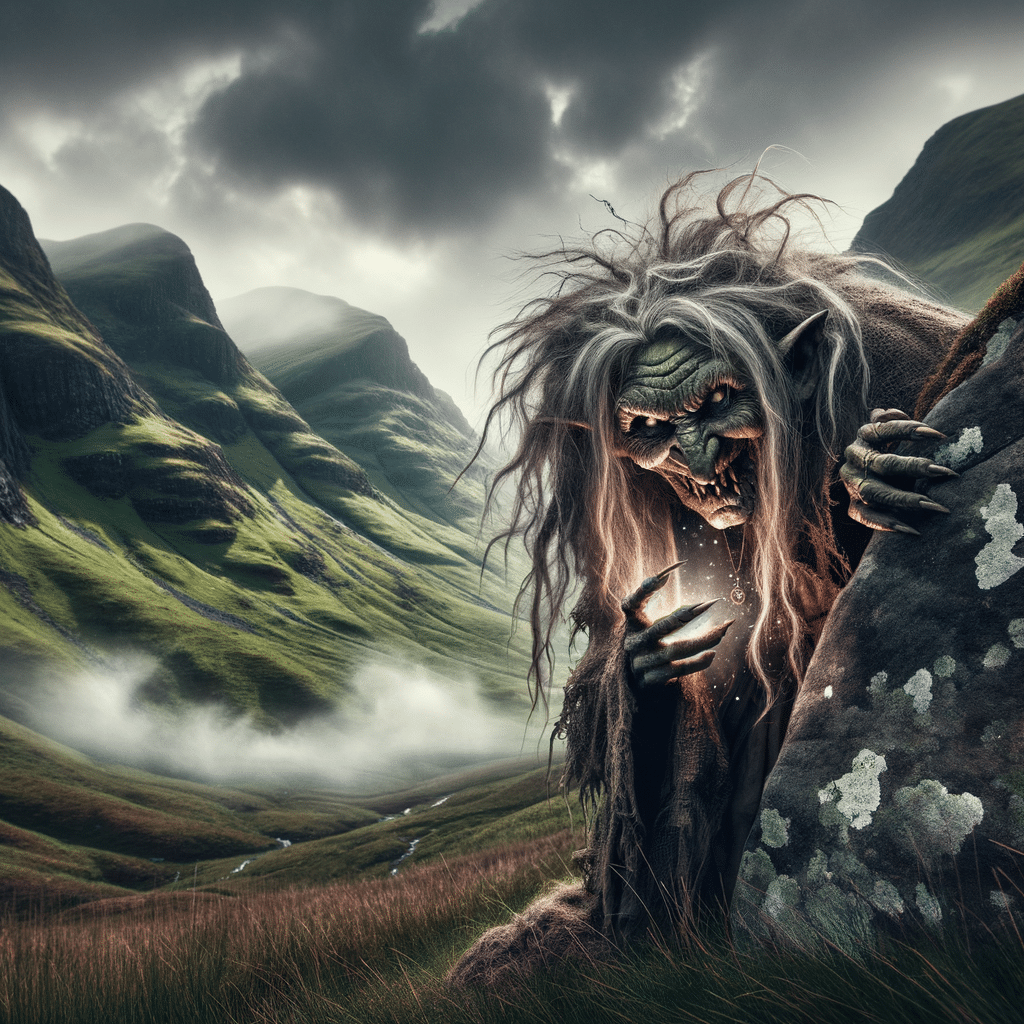
An interesting feature of Celtic culture, especially in Welsh mythology, is the Gwyllion hag. Although the term Gwyllion can also apply to a collection of entities, it is sometimes used to refer to a single entity. Similar to the more popular conception of witches or hags, these mythical beings are female spirits that are infamous for being cunning or evil.
The English translation of the term Gwyllion is hags or dark ones. The word can mean many different things and has additional meanings. They are typically connected to mountains, isolated places, and inclement weather.
Appearance
Gwyllion hags are frequently portrayed as elderly, untamed ladies wearing tattered clothing, with ferocious eyes and untidy hair. They are frequently shown as fitting in with the rocky or mossy surroundings while sporting ragged grey or green attire. According to some stories, they may steer their victims off course with flaming lanterns or with a single, enormous, burning eye. They are said to prey on gullible tourists by haunting desolate roads, mountain passes, and foggy moorlands in Wales. The purpose of the Gwyllion’s appearance is to terrify and warn anyone who enters their territories.

Actions and Traditional Narratives
The Gwyllion hags are frequently portrayed in the stories as cunning tricksters. It is claimed that they mislead tourists and leave them for dead. Occasionally, they may perch at the side of a trail in the mountains, ready to startle or perplex anyone who happens to pass by.
The most popular myth about the Gwyllion hag is that it begs food from passing travelers. People who share their meal may be spared, while those who don’t may face harassment or curses. According to certain myths, the Gwyllion may be appeased or even turned into stone by using the appropriate words or charms.
One of their favorite pranks is to use magic to create a fake trail that takes the traveler kilometers away from them. To entice the tourist off the main path, they may even imitate the sounds of wailing infants.
A traveler may encounter obstacles in the form of thorns and briars from the Gwyllion if he discovers he has been duped and attempts to take the right road again. They are experts at deceit and illusion.
Travelers would walk backwards and turn their coats inside out to ward off the Gwyllion. Expressions of piety and faith also drove the Gwyllion away.
A friendly Gwyllion may also assist a traveler in making their way safely through the hills. However, this was unusual because they were typically associated with mischief.
Because gwyllion hag sightings are associated with misfortune or poor luck, they are typically seen as ominous signs. In order to avoid becoming a victim of these cunning spirits, it is advisable to stay away from alone wandering in isolated locations, especially in the event of bad weather or fog.

Relationships with Other Celtic Beings
Similarities exist between the Gwyllion and other Celtic and wider European folklore figures, like the Scottish Bean Nighe and the Irish Banshee. However, the Gwyllion’s main goal appears to be mischief or injury rather than prophecy, in contrast to the Banshee, who is frequently seen as a death omen.
The stories of the Gwyllion hag are primarily told in Wales, but they most likely have their roots in older Celtic fairy legend. They might be related to the Welsh concept of “Bwca”—fairy ghosts that can change their form.
The Gwyllion’s image has been included into a number of modern media, such as video games, literature, and artwork. They are frequently depicted as spirits or monsters resembling witches that are connected to the untamed and wild parts of nature.
Cultural Importance
Like many other elements of Celtic mythology, the Gwyllion provides insight into the animistic notion that spirits inhabit a variety of natural phenomena. They also act as warning symbols, standing in for the perils of the unknown and the untamed.
In conclusion, the fascinating legendary beings known as Gwyllion in Celtic folklore represent the anxieties and superstitions of the prehistoric Celts. They add to the complex fabric of Celtic myth and continue to pique the curiosity of people interested in folklore and the paranormal, despite not being as well-known as some other legendary figures.
Further Reading
Davies, S. (2003). The Mabinogion. Oxford University Press.
Sioned Davies’ translation of The Mabinogion offers a modern and accessible version of the classic Welsh tales that form the bedrock of Celtic mythology. This book is included because it is essential for understanding the context in which figures like the Gwyllion are situated within Welsh folklore. The stories within provide a comprehensive look at the mythological and cultural landscape of medieval Wales.
Matthews, J. (1991). The Celtic Shaman: A Practical Guide. Inner Traditions.
John Matthews’ exploration into the shamanistic practices of the Celts provides a unique perspective on the spiritual beliefs and rituals that were intertwined with the natural world and its spirits, such as the Gwyllion. Chosen for this list, this book delves into the more mystical aspects of Celtic tradition, offering readers an understanding of how entities like the Gwyllion fit into the broader spiritual realm of the Celts.
Jones, T. G., & Jones, G. (1993). Welsh Folklore and Folk-Custom. D.S. Brewer.
This comprehensive work by T. Gwynn Jones and Gwyn Jones stands as an authoritative text on Welsh folklore, including discussions on various supernatural entities characteristic of Welsh myth. This book is essential for readers who wish to delve deeper into the subject of Gwyllion and other similar creatures, providing rich accounts and analyses of folk practices, tales, and the figures that inhabit them.
Leave a Reply