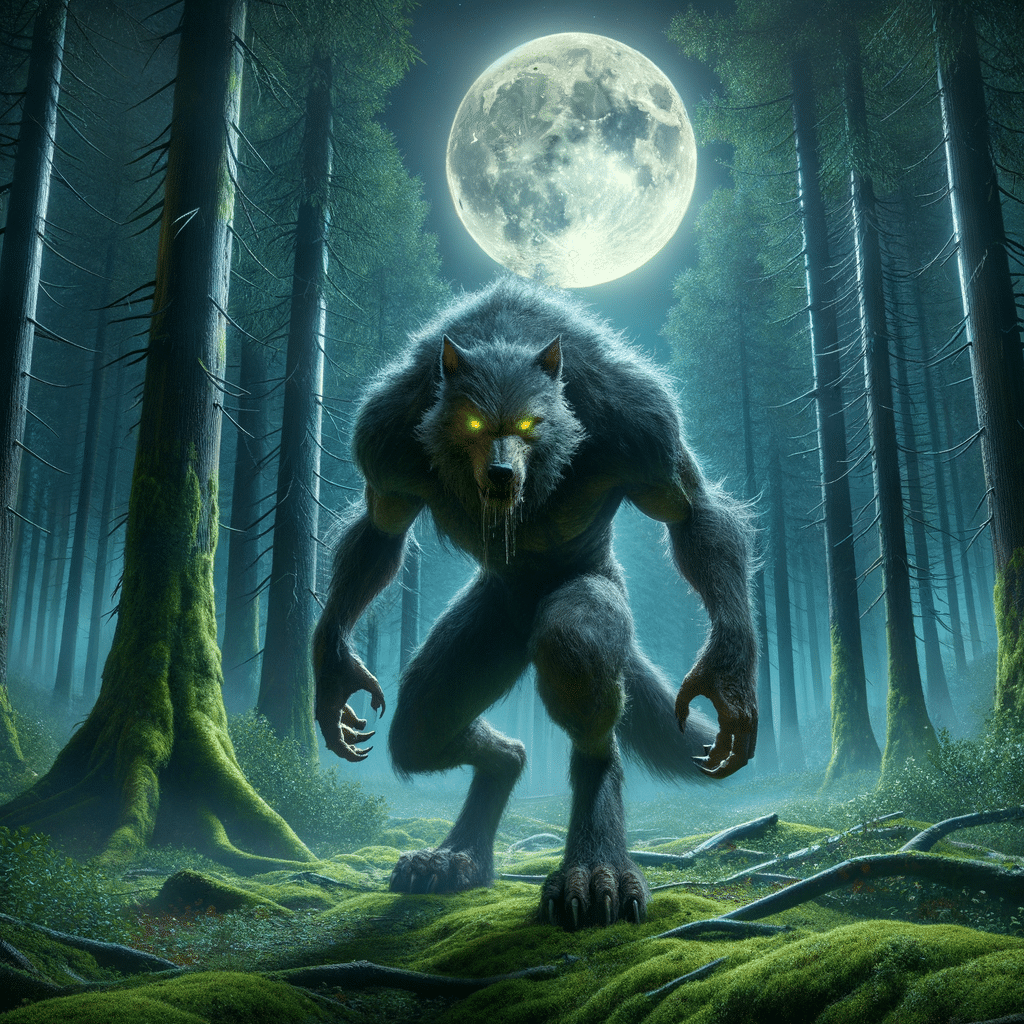
Both werewolves and dogmen, rooted in folklore and frequently portrayed in popular culture, differ in certain ways due to their unique traits and histories. It is necessary to examine each of their distinct mythologies, physical attributes, habits, and cultural representations in order to comprehend these differences. We can learn more about these two mysterious animals by looking at historical documents, scholarly works, and literature. We can also gain a deeper understanding of werewolves’ unique identities by contrasting the natural characteristics of dogmen with the magical or scientific reasons for werewolf transformations.

Werewolves
Stories about werewolves, sometimes known as lycanthropes, have a long history in European folklore, originating in the classical eras of Greece and Rome. As per the groundbreaking publication The Book of Were-Wolves (1865) by Dr. Sabine Baring-Gould, the Old English terms “wer” (meaning man) and “wulf” (meaning wolf) are the origin of the name “werewolf.” According to these stories, a werewolf is usually a human who chooses to change into a wolf, either on their own volition or as a result of a curse or other ailment. Literature and film in the 20th century popularized this theme, often associating this metamorphosis with the full moon.
Folklore is rife with magical justifications for werewolf transformations. According to many myths, people might turn into werewolves by drinking a potion made from specific plants or donning a magical wolf pelt. For some, the metamorphosis is the result of a witch or other supernatural entity cursing them. For instance, a supernatural curse turns a knight into a wolf in Marie de France’s poem Bisclavret from the 12th century. These magical components, which highlight the transformation’s supernatural and frequently unpredictable nature, are a reflection of society’s anxieties about the unknown and unpredictable parts of human nature.
On the other side, scientific explanations aim to make sense of werewolf myths by applying contemporary psychology and medicine. Some scientists and historians speculate that werewolf beliefs may have originated from diseases like rabies or hypertrichosis, which cause excessive hair growth. Hypertrichosis, sometimes referred to as “werewolf syndrome,” is a condition in which people develop thick hair all over their bodies, possibly giving the impression that they are werewolves. Rabies, a virus that spreads through bites and incites aggressive behavior, may have influenced stories of violent metamorphoses. These scientific hypotheses aim to demystify the werewolf phenomenon, which is based on visible medical issues.
Characters depict conventional werewolves as either fully transforming into wolves or adopting a hybrid form that combines elements of both human and wolf characteristics. Contemporary depictions more frequently feature the hybrid form, characterized by a furry humanoid body, a wolf-like head, pointed claws, and fangs. Usually excruciating and uncontrollable, this metamorphosis adds to the anguish and tragedy of the werewolf’s existence. For instance, Bram Stoker’s Dracula (1897) portrays the character’s transformation into a wolf-like beast as both horrifying and melancholic, emphasizing the loss of human identity.

Dogmen
On the other hand, dogmen are a relatively recent phenomenon primarily associated with cryptid mythology in North America. In contrast to werewolves, dogmen are depicted as erect dogs that never change into wolves; rather, they are humans that change into wolves on a constant basis. Numerous eyewitness reports and cryptozoological studies have popularized dogman sightings, originating from Native American traditions. In her 2003 book The Beast of Bray Road: Tailing Wisconsin’s Werewolf, Linda S. Godfrey gives in-depth testimonies of her experiences and sightings of dogmen throughout the American Midwest. These animals are typically characterized as having a canine head, sharp claws, a muscular, human-like body coated in fur, and standing on two legs.
Dogmen typically portray themselves as less human and more physically formidable than werewolves. People often associate dogmen with forests and rural locations, asserting that they exhibit both animalistic and sentient tendencies. In contrast to the tragic and doomed character of werewolves, most depictions of dogmen portray them as natural wilderness creatures without a human alter ego. This portrays them as elusive predators, not tortured souls, endowing them with an aura of mystery and primordial horror. For instance, Godfrey recounts numerous instances where witnesses experience a wave of dread and terror upon encountering a dogman, underscoring their role as guardians of the wild.
Differences
When they shift, werewolves frequently act out of an insatiable need to hunt and murder, which gives rise to stories of deadly rampages and the ethical quandaries faced by their human counterparts. Dogmen, on the other hand, are typically characterized as being more elusive and less hostile toward people; however, glimpses of them frequently evoke feelings of dread and apprehension. In Cryptozoology A to Z (1999), cryptozoologist Loren Coleman writes that dogmen are considered to be territorial animals that don’t usually act as violently as werewolves do; however, they could become aggressive if they feel threatened.
Werewolves have been a cultural mainstay of horror literature and film for more than a century, representing the conflict between civilization and barbarism as well as the dual nature of humanity. People have seen them as symbolic representations of various anxieties and fears, ranging from illness and mental illness to puberty and sexual awakening. On the other hand, dogmen hold a unique position in popular culture, frequently appearing in horror films, urban legends, and documentaries on cryptozoology. They depict a more primitive fear of the wild and the limits between human civilization and nature, which resonates with the modern fascination with enigmatic creatures and the unknown.
Conclusion
Despite having some outward resemblance to other wolf-like species, werewolves and dogmen differ greatly in terms of their ancestry, physical characteristics, mannerisms, and social positions. Werewolves, cursed to transform into wolves, symbolize the struggle between bestiality and humanity. The fact that people frequently attribute their metamorphosis to scientific phenomena or supernatural curses further complicates it. Dogmen, on the other hand, are enigmatic beings that exist apart from human alteration and represent the wild and enigmatic facets of the natural world.
References
Baring-Gould, S. (1865). The Book of Were-Wolves. Smith, Elder & Co.
Coleman, L., & Huyghe, P. (1999). Cryptozoology A to Z: The Encyclopedia of Loch Monsters, Sasquatch, Chupacabras, and Other Authentic Mysteries of Nature. Simon and Schuster.
Godfrey, L. S. (2003). The Beast of Bray Road: Tailing Wisconsin’s Werewolf. Big Earth Publishing.
Stoker, B. (1897). Dracula. Archibald Constable and Company.



Leave a Reply