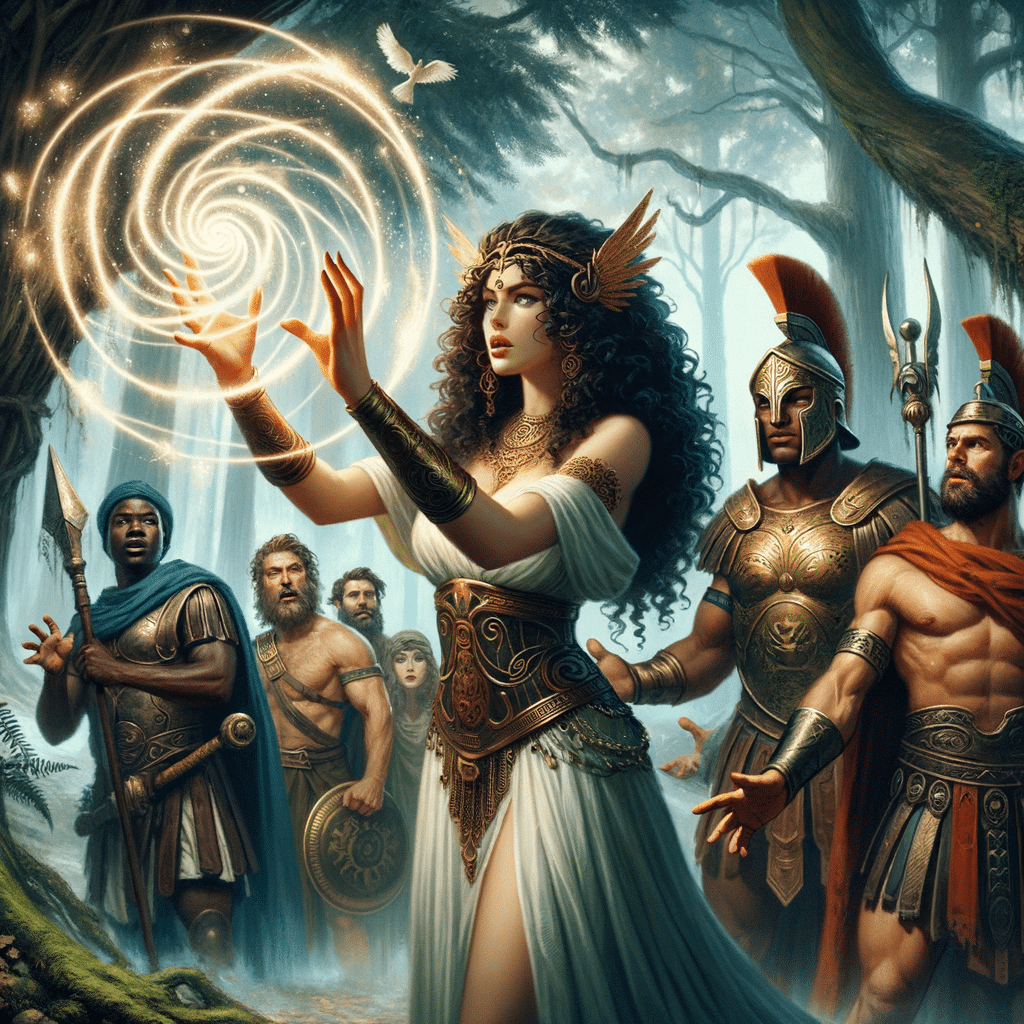
For a very long time, famous witches has captivated people because they represent a combination of power, dread, and otherness that has been widely discussed in literature and popular culture. People have portrayed witches in a variety of ways, from cunning villains to intelligent, independent individuals. The Wicked Witch of the West, Circe, Hermione Granger, Sabrina Spellman, and Maleficent are five of the most well-known witches in fiction, and this essay explores their tales and significance. In addition to being entertaining, these characters also speak to broader cultural perceptions of morality, authority, and gender.

Wicked Witch of the West
Originating from L. Frank Baum’s The Wonderful Wizard of Oz, the Wicked Witch of the West is easily recognizable thanks to her pointed hat, green complexion, and evil disposition. She plays the role of the archetypal antagonist in the 1939 movie version, representing pure evil and following Dorothy nonstop. Because of her portrayal, she has come to be associated with evil in popular culture, standing in for the stereotypical antagonist who obstructs the protagonist’s path. According to Tatar (2002), her fearsome appearance and ruthless actions have cemented her status as an iconic figure of malevolence and probably the most well known of the famous witches.
The Wicked Witch’s relevance extends beyond her role as an adversary. She embodies societal fears and biases, personifying the fear of the unfamiliar and the outsider. One example of how this character has undergone interpretation over time is the Broadway musical Wicked, which delves into themes of discrimination and misunderstanding, providing a past that humanizes the character. This change is indicative of a larger tendency in literature and the media to explore the complexity of villains, implying that evil is frequently a question of viewpoint. Wicked turns the Wicked Witch from a one-dimensional villain into a tragic figure by exploring her motivations and circumstances, emphasizing the effects of society’s judgment and the desire for power (Maguire, 1995).

Circe
Greek mythology’s Circe is another well-known witch. Homer portrays Circe as a powerful witch capable of transforming her opponents into animals. In Homer’s Odyssey, Circe first appears as a seductive threat, but she ultimately turns into Odysseus’s buddy. Her dual persona as a menace and a helper highlights the conflicting ideas that ancient tales had about female authority. Johnston (1990) claims that Circe’s island, Aiaia, transforms and becomes a challenging setting that puts the hero’s fortitude and discernment to the test. She is a figure of terror and wonder due to her magical abilities and capacity to manipulate her environment.
Circe’s relevance stems from the way she personifies long-standing anxieties and fascinations with female sexuality and authority. She represents the duality of magic and its potential for good and evil. Madeline Miller’s book Circe retells her narrative, giving voice to her adversities and fortitude. This contemporary interpretation gives Circe a very sympathetic representation, highlighting her independence and strength. Miller’s work highlights a shift in literature towards more complex and powerful representations of women by delving deeply into Circe’s story, turning her from a mere legendary figure into a sympathetic and inspirational protagonist. Miller’s Circe presents readers with a multi-layered character analysis as it addresses issues of identity, loneliness, and the quest for self-determination (Johnston, 1990).
Hermoine Granger
One of the most adored witches in modern fiction is undoubtedly Hermione Granger from J.K. Rowling’s Harry Potter books. As a bright and competent young sorceress, Hermione dispels the myth that witches are enigmatic or evil entities. She is an excellent role model for young readers because of her bravery, loyalty, and intelligence. Hermione stands out in a world full of evil magic and perilous enemies because of her unshakable loyalty to her friends and her moral sense. Her adeptness with spells and extensive understanding of magical knowledge frequently come in handy during the trio’s escapades (Gupta, 2003).
Beyond her magical prowess, Hermione is significant because she embodies the value of knowledge and speaks up for what is right. Her persona has garnered recognition for advocating for feminist principles and fortitude. Hermione has emerged as a symbol of empowerment and strength in popular culture, encouraging a new generation to place a high value on morality and knowledge. She dispels gender preconceptions by being exceptionally bold and intelligent, indicating that these qualities are not mutually exclusive. She also excels academically. Hermione’s journey from a serious and occasionally domineering young woman to a crucial figure in the battle against Voldemort illustrates her development and the beneficial effects of her moral principles on the wizarding community (Gupta, 2003).
Sabrina Spellman
The young witch from the Archie Comics series and its later adaptations, such as Sabrina the Teenage Witch and Chilling Adventures of Sabrina, Sabrina Spellman, provides a contemporary and approachable perspective on witchcraft. The story presents Sabrina as a young woman balancing her dual identities as a witch and a mortal. Her stories frequently touch on issues of adolescence, moral quandaries, and human development. The darker, more mature themes of the Netflix adaptation contrast sharply with the lighter, comic tone of the original TV series, reflecting shifting cultural attitudes about young adult storylines (O’Keefe, 2023).
Sabrina is significant because she embodies the difficulties of growing up and discovering one’s identity. Her persona takes on darker and more complicated themes in Chilling Adventures of Sabrina, reflecting current societal challenges and the constant internal conflict between beneficial and evil. Sabrina struggles with the weight of her heritage, the results of her decisions, and the ethical difficulties of having authority. Her journey from an innocent teenager to a formidable witch who must navigate the perilous waters of both the mortal and magical realms highlights the universal themes of development, accountability, and self-discovery (O’Keefe, 2023).
Maleficent
Maleficent is another famous witch who has experienced a dramatic transformation. Disney’s Sleeping Beauty introduced her to the world. The 1959 animated picture portrays her as the epitome of wickedness, cursing Princess Aurora in retaliation. Her striking appearance—her dark robes and horned headdress—has come to represent the stereotypical image of a malicious witch. But her character becomes history in the 2014 live-action movie Maleficent, which portrays her as a mistrusted and misunderstood fairy. This rendition of Maleficent (Tatar, 2002) explores themes of treachery, retaliation, and ultimately redemption.
The significance of Maleficent’s metamorphosis from a one-dimensional evil to a complex figure emphasizes the value of comprehension and empathy. Her representation has evolved, reflecting broader cultural developments toward an appreciation of people’s complexity and the reasons behind their actions. By giving Maleficent a complex past and implying that circumstances frequently influence people and that redemption is possible, the movie questions the conventional concept of good against evil. Her character’s transformation from one of retaliation to forgiveness highlights the strength of love and the potential for transformation, providing a more sympathetic perspective on what it means to be a villain (Tatar, 2002).
Conclusion
The portrayal of famous witches in popular culture and literature reflects cultural ideas regarding power, gender, and morality. Whereas modern depictions of witches are typically more sophisticated and compassionate, historical and mythological witches frequently represent anxieties and prejudices. Whether they are good or evil, these witches never fail to pique our curiosity and cause us to consider the nature of otherness and power. Their experiences give us new perspectives on the human condition and the complex relationships between morality and identity. The development of these witch characters from classical tales to contemporary literature shows the enduring ability of storytelling to engage, enthrall, and inspire.
References
Gupta, S. (2003). Re-Reading Harry Potter. Springer.
Johnston, S. I. (1990). Hekate soteira: a study of Hekate’s roles in the Chaldean oracles and related literature (Vol. 2100). Scholars Press.
Maguire, G. (1995). Wicked: The Life and Times of the Wicked Witch of the West. ReganBooks.
O’Keefe, D. (2023). The Archie/Sabrina Universe. McFarland.
Tatar, M. (Ed.). (2002). Annotated Classic Fairy Tales. WW Norton & Company.



Leave a Reply