The biblical reference to satyrs offers an intriguing nexus of classical mythology, ancient Near Eastern beliefs, and biblical translation. These creatures have been the focus of scholarly dispute regarding their real nature and the proper interpretation of the original Hebrew text since they appear in particular passages of the King James Version of the Bible. From the earliest translations to contemporary Bible studies, our understanding of these creatures has changed dramatically.

Description
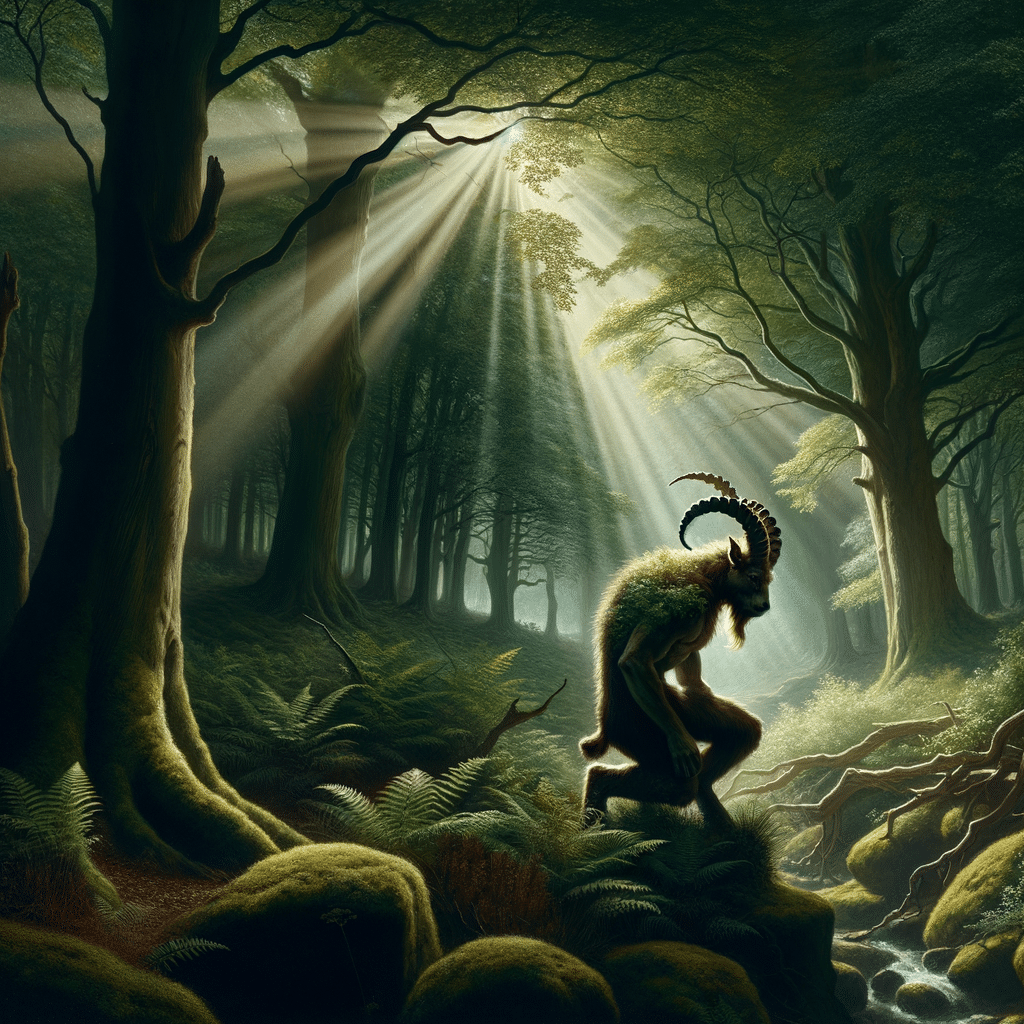
Classical mythology greatly influenced the King James translators, portraying satyrs as hybrid animals that combined goat and human traits. While their bottom bodies were clearly goat-like, with fur-covered legs and hooves, their upper bodies were human, with a man’s torso, limbs, and head. They were recognizable by their short tails, pointed ears, and horns that sprang out of their heads. Male satyrs’ wild, untidy beards and shaggy hair typified their untamed, bestial temperament (Sax, 2013).
These animals were known for acting hedonistically and without inhibition. Greco-Roman mythology closely associated satyrs, as devotees of Dionysus/Bacchus, with wine, wild music, ecstatic dancing, and unrestrained sensuality. Literature and art commonly depicted satyrs as symbols of the wilder sides of nature and human desire, depicting them chasing nymphs and indulging in drunken revelries (Lissarrague, 1990).
The Hebrew word se’irim, which literally translates to hairy ones, is the source of the term satyr. Ancient Near Eastern civilization could have used this term to refer to actual goats, goat-demons worshipped by various ancient peoples, or wild animals living in barren areas. People occasionally used the word, which shares the same source as se’ir, meaning hairy or shaggy, to refer to demons or other supernatural beings worshipped as goats.
Cultural Comparisions
While retaining unique traits that are indicative of their particular cultural setting, the biblical se’irim exhibit striking similarities to a variety of mythological animals from past cultures. Their occurrence in religious writings and folklore demonstrates recurring themes in the conceptions of nature spirits and demonic beings held by ancient peoples. These types of beings appeared all over in different forms.
The se’irim are comparable to the gallu demons, otherworldly creatures that inhabited abandoned buildings and barren areas in Mesopotamian mythology. These animals, like the se’irim, were associated with deserted areas and symbolized destructive and chaotic powers. However, the biblical se’irim appear to occupy a more equivocal position as wild creatures or nature spirits, whereas gallu demons were totally hostile entities.
Ancient Egyptian mythology frequently portrays Bes, a guardian deity, as a bearded dwarf with goat- or lion-like characteristics. In contrast to the usually menacing se’irim, Bes was generally kind, yet they both had physical qualities that combined elements of humans and animals. Another example of the regional frequency of hybrid human-goat deities is the Egyptian god Khnum, who is depicted with a ram’s head (Apostola, 2018).
The closest similarity between the Roman fauns and the satyrs of Greek mythology likely motivated the King James Version’s translation decision. The association of se’irim with hairiness and goats suggests that these animals have goat-like traits. However, biblical se’irim are often associated with desolation and divine judgment, while satyrs and fauns are typically associated with fertility, wine, and celebration.
The púca are shape-shifting monsters that frequently are disguised as goats in Celtic mythology. Similar to the se’irim, púcas were revered and feared in equal measure, and they were linked to untamed locations. However, while biblical references to se’irim typically portray them as emblems of spiritual corruption and desertion, púcas could be beneficial or detrimental to individuals.
Another intriguing analogy is the Greek deity Pan, who is associated with flocks and shepherds. Although he resembles a goat and is associated with untamed areas, Pan differs greatly from the se’irim in that he is a deity rather than a group of animals. According to some academics, the biblical disapproval of se’irim may be partially a reflection of nearby peoples’ hostility toward Pan worship.
In Arabian folklore, the jinn are mythical beings often associated with bleak landscapes and untamed areas. The jinn were considered to inhabit somewhere beyond human civilization, just like the se’irim. Although jinn mythology evolved into a more intricate system of beliefs about these spirits, both kinds of entities have associations with the desert and ruins.
Mesopotamian lore also depicts the lamassu, protective spirits with hybrid forms that typically combine human and bull or lion features instead of goat aspects. The lamassu, a more institutionalized kind of supernatural entity than the se’irim, were guardian spirits frequently portrayed in monumental sculpture at city gates and palaces. The Canaanite goat demons, likely the closest geographical and cultural parallel to the biblical se’irim, were actively worshipped as part of local religious practices. Given that se’irim represented rival religious traditions that opposed Hebrew monotheism, their worship may help us understand why the biblical scriptures were antagonistic toward them.
Ancient Hittite texts, which describe a variety of demon-like beings living in the wilderness, also associate the se’irim with places outside of civilization. However, biblical se’irim seem more like symbols of desolation than actual threats, whereas Hittite demons were frequently depicted as more actively malicious, regularly posing a menace to mankind. That is an important contrast.
These parallel instances show how the biblical se’irim fit into a larger pattern of beliefs about supernatural entities connected to wilderness and abandonment in the ancient Near East and Mediterranean. Instead of portraying these animals as participatory spirits or objects of worship, the biblical story highlights them as symbols of divine judgment and desolation. This presentation reflects the monotheistic viewpoint of ancient Hebrew religion, which transformed these creatures from gods or natural spirits into symbols of degradation and desertion (Segal, 1963).
The ubiquitous occurrence of supernatural beings resembling goats across a variety of ancient cultures demonstrates a typical human predisposition to identify wild, untamed environments with hybrid entities that combine human and animal qualities. While the biblical se’irim reflect more general regional patterns of supernatural beliefs, their interpretation of these creatures is specific to a specific culture, influenced by its own religious and social viewpoints.

Biblical Satyrs
In the Bible, two chapters in the Book of Isaiah particularly mention satyrs. When Babylon falls, “satyrs shall dance there,” according to Isaiah 13:21, and when Edom is destroyed, according to Isaiah 34:14, “the satyr shall cry to his fellow.” Passages depict the complete collapse of once-powerful cities and kingdoms, implying that only untamed animals and ghosts would live there.
Contemporary biblical scholars have mostly abandoned the satyr translation, viewing these allusions in a different light. Modern translations frequently use terms like wild goats, wild beasts, or shaggy goats to depict se’irim. According to some academics, these verses might allude to the pagan worship customs of the nearby nations, including the adoration of goat-demons. Historical-critical academics typically interpret these allusions in the context of the ancient Near East, where many different societies held the belief in goat-demons.
These divergent perspectives influence the contemporary understanding of religion. While some contemporary religious interpreters claim that these texts only describe wild animals living in deserted areas, others see them as metaphorical depictions of demon possession or evil spirits. Although it might not accurately convey the original Hebrew meaning, the King James Version’s selection of the word satyr has had a long-lasting impact on religious culture in the English-speaking world.
The confusion over what satyr means in the Bible is not unique to these mythical beings. Other parts of the Bible also require contextualization, and few actually interpret the entire Bible literally. It is open to different viewpoints and is taught differently in various Christian traditions. It is safe to say few believe satyrs were real based on Bible verses (Haleblian, 1983).
Conclusion
The development of the biblical understanding of satyrs illustrates the difficult tasks involved in translating and interpreting the Bible. Classical mythology initially influenced a translation decision that sparked a wider debate about the characteristics of these creatures and their role in biblical storytelling. Contemporary scholarship continuously enhances our understanding of these passages by acknowledging the various interpretations of these texts throughout history and maintaining a balance between linguistic accuracy and cultural and historical context.
References
Apostola, E. (2018). Representations of the demon-god Bes in Rhodes and Samos during the 7th and 6th centuries BC and their influence on popular religious beliefs: Bes and the ‘fat-bellied’demons. G. Vavouranakis, K. Kopanias, Chr. Kanellopoulos (eds) Popular Religion and Ritual in prehistoric and ancient Greece and the eastern Mediterranean, 113-124.
Haleblian, K. (1983). The problem of contextualization. Missiology, 11(1), 95-111.
Lissarrague, F. (1990). The sexual life of satyrs. Before sexuality: The construction of erotic experience in the ancient Greek world, 53-81.
Sax, B. (2013). Imaginary animals: The monstrous, the wondrous and the human. Reaktion Books.
Segal, M. H. (1963). The Religion of Israel before Sinai (Continued). The Jewish Quarterly Review, 53(3), 226-256.


Leave a Reply