
With its deep roots in Aboriginal Australian folklore and subsequent adoption into wider Australian society, the bunyip is one of Australia’s most mysterious cryptozoological species. Claimed to inhabit billabongs, rivers, and swamps, this legendary creature has frightened and enthralled Australians for years. It has transformed from a genuine spiritual belief into an important part of the country’s mythology.

Description
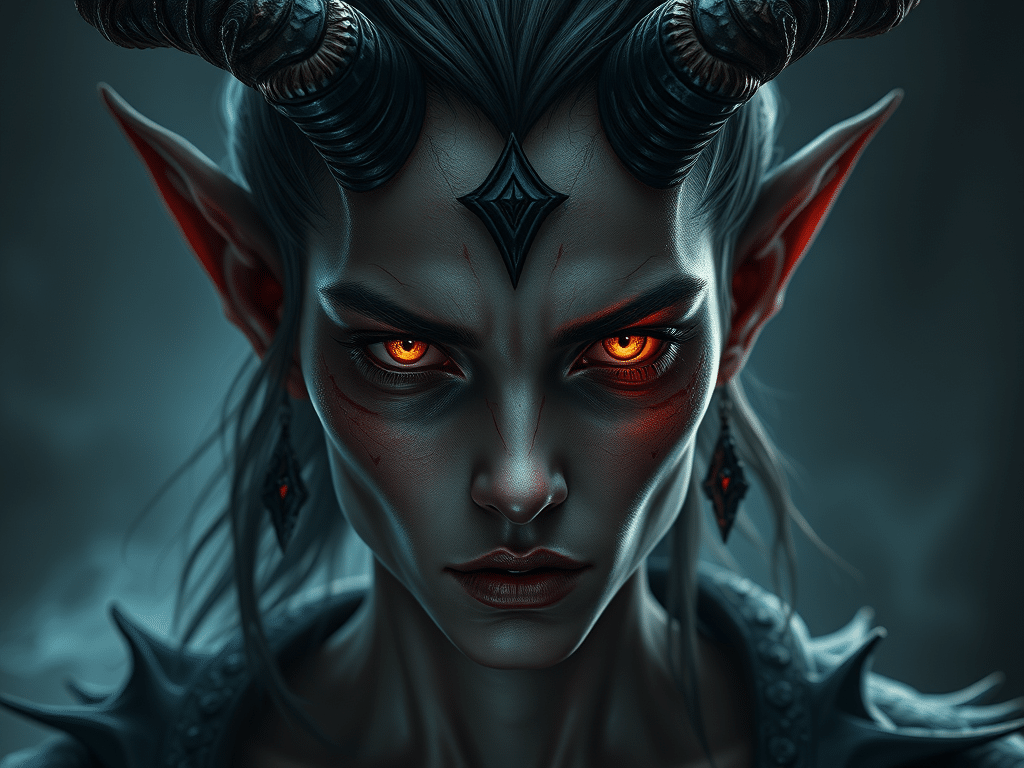
Historical records and various Aboriginal cultures provide highly varying physical descriptions of the bunyip. According to some portrayals, the bunyip is a massive animal with a large head and dark fur, roughly the size of a horse or larger. Some people use characteristics like a long neck, flippers, tusks, horns, or a bill that resembles a duck to characterize it. Numerous reports mention its terrifying teeth and luminous crimson eyes. The creature’s mystique and continuing allure in Australian folklore have only grown as a result of this inconsistent physical depiction (Seal, 2010).
Traditional Aboriginal traditions describe the bunyip as being fiercely territorial and mostly nocturnal. People report hearing its terrifying cries, which resemble roaring or booming, especially at night. Usually depicted as hostile and menacing, the creature is notorious for dragging gullible people—particularly women and children—into deep water. According to some legends, it is a punitive beast that upholds order by preventing people from entering hazardous or holy waterways.
In the 19th century, European settlers made an effort to catalog and categorize the bunyip after taking early Aboriginal stories seriously. Museums even displayed several unusual skull specimens as potential bunyip bones, prompting numerous expeditions to collect concrete evidence. Subsequently, researchers determined that these specimens were either remnants of extinct marsupials or malformed calf skulls. According to some academics, Aboriginal bunyip stories may help people remember extinct megafauna, especially the Diprotodon, which went extinct about 46,000 years ago (Edmonds, 2018).

Evolution of Myth
With the expansion of European settlement, the bunyip myth underwent major change. In Aboriginal culture, he started out as a serious spiritual being, but with time, he became a well-liked character in Australian mythology. The bunyip, which parents frequently used to warn their kids away from hazardous waterways, was a regular motif in children’s fables and cautionary tales by the late 19th century. This change was a reflection of the integration of Aboriginal aspects of mainstream Australian culture, as well as other general cultural changes in Australian society (Quirk, 2023).
Throughout Australian history, there have been arguments for and against the existence of the bunyip, with the dispute reaching its peak in the 19th century when European settlers first learned about the animal from Aboriginal people. Advocates of Bunyip’s existence have cited a number of facts that they believe to be convincing. Some people believe that the legends, consistent across several Aboriginal countries separated by great distances and different languages, may be based on actual experiences with a real creature. Proponents further point out that Australia has generated a number of previously unidentified animals and that the continent’s distinct evolutionary history may have produced such a monster (Widdowson, 1993).
Believers have offered physical proof in the form of odd skeletal remains, strange tracks along streams, and weird nighttime noises. A strange skull found in the Murrumbidgee River attracted a lot of attention when it was on display at the Australian Museum in Sydney in 1845. Throughout the 19th century, a number of similar discoveries fueled conjecture regarding the existence of the monster.
Some biologists believe the bunyip to be a surviving prehistoric animal, likely a residual population of a marsupial megafauna species. They argue that Australia’s isolated bogs and waterways may harbor undiscovered species, similar to the discovery of the coelacanth, which was once thought to be extinct. More optimistically, others contend that the Bunyip is comparable to well-known cryptids like Bigfoot or the Yowie, being equally real but unknown.
Skeptics, however, have made compelling counterarguments. It is challenging to determine what kind of monster the bunyip might be because of the conflicting and inconsistent reports of its appearance. There has never been any confirmed physical proof discovered; the enigmatic 1845 skull was subsequently determined to be that of a malformed horse or calf, and other purported bunyip remains have also been explained away as either real animals or fakes.
Critics point out that many sightings of bunyips can be mistaken for other known animals, such as seals, which often swim far upriver, or big wombats, which are observed in dimly lit areas. People have attributed the loud nighttime noises of bunyips to the calls of recognized native creatures, particularly water birds and bitterns. The most plausible answer is not Bunyip.
Additionally, skeptics point out that no hard proof of an unidentified giant aquatic species has been discovered in Australian rivers, despite technological advancements like video traps and environmental DNA analysis. They contend that rather than being an actual animal, the bunyip’s varied descriptions and behaviors are more in line with those of a cultural myth. Rather than being a cryptozoological occurrence, anthropologists and folklorists typically consider the bunyip to be a cultural phenomenon. Instead of depicting a real animal species, they imply that the creature fulfills significant social and cultural roles, such as alerting kids to hazardous waterways and conserving environmental knowledge (Nicholls, 2020).
According to scientific opinion, the bunyip belongs more in the category of folklore than zoology. Nonetheless, the discussion itself offers an intriguing point of convergence between colonial science, Indigenous knowledge, and the human predilection for mystical beings. The bunyip’s persistent position in Australian cultural discourse is a result of this conflict between believing and doubt.
Conclusion
The bunyip has resurfaced in a variety of mediums in modern popular culture. Children’s books such as Jenny Wagner’s The Bunyip of Berkeley’s Creek feature it, along with video games, movies, and TV series. Comic interpretations and horror stories demonstrate the creature’s versatility as a cultural emblem. Numerous Australian companies and sports teams now use the bunyip as their namesake and mascot.
The bunyip, which bridges Indigenous and colonial traditions, is nevertheless a potent symbol of Australia’s distinctive cultural legacy today. The bunyip continues to captivate people’s imaginations and serve as a reminder of the mystery and magic that persist in the natural world, even though few contemporary Australians may believe in its physical reality. It is a timeless and important figure in Australian mythology, symbolizing both the growth of Australian cultural identity and the preservation of ancient Aboriginal wisdom.
References
Edmonds, P. (2018). The bunyip as uncanny rupture: Fabulous animals, innocuous quadrupeds and the Australian anthropocene. Australian Humanities Review, 63(1), 80-98.
Nicholls, C. J. (2020). Monster Mash: What Happens When Aboriginal Monsters Are Co-opted into the Mainstream?. Monster Anthropology: Ethnographic Explorations of Transforming Social Worlds through Monsters, 89-112.
Quirk, M. A. (2023). From Banib to Bunyip: Tracking Bricolage and Knowledge Systems in Colonized Aboriginal Spirituality. Folklore, 134(1), 111-129.
Seal, G. (2010). Great Australian Stories: Legends, yarns and tall tales. ReadHowYouWant. com.
Widdowson, J. D. A. (1993). In Pursuit of the Bunyip: Australian Folklore Comes of Age. Australian Folklore, 8.


Leave a Reply