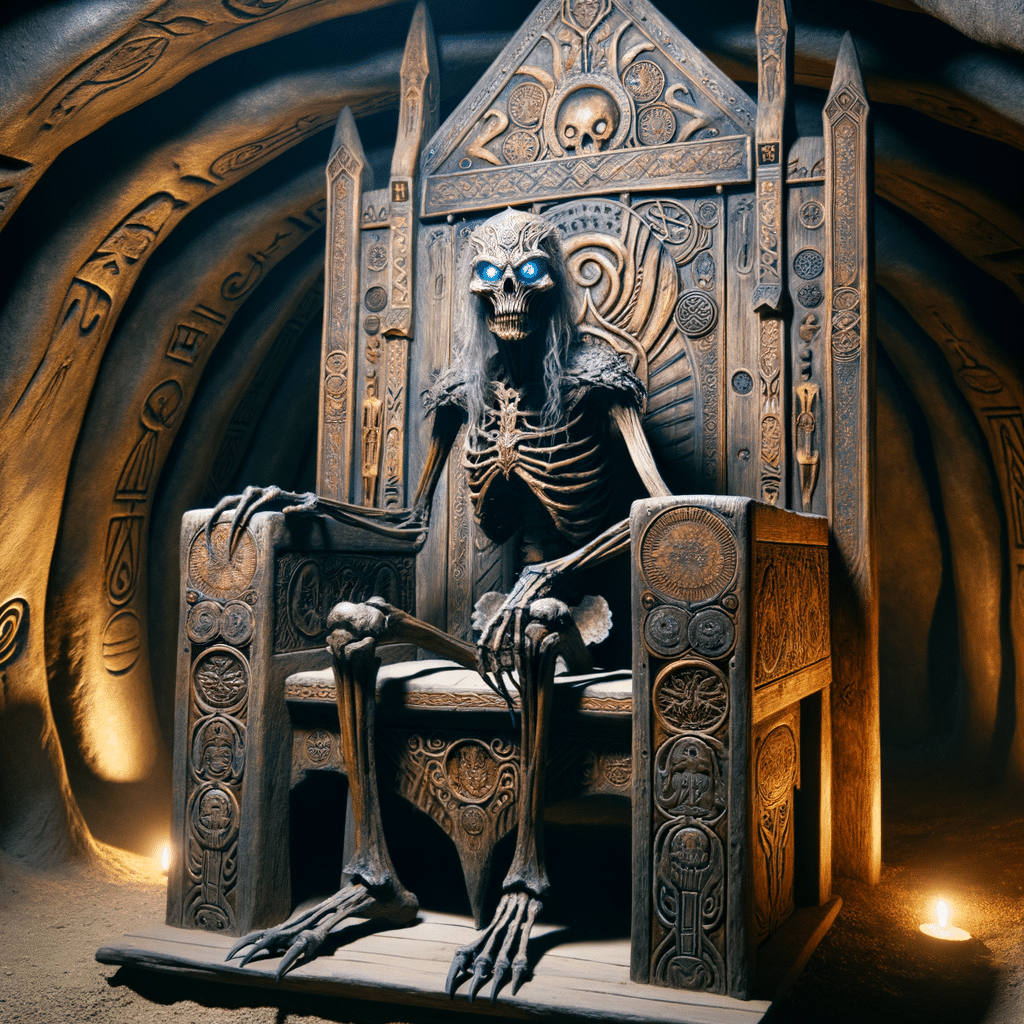
One of the most recognizable and significant supernatural creatures in Germanic folklore is the draugr, a terrifying undead creature from Norse mythology. For generations, people have been fascinated by these physical revenants, and they still influence contemporary popular culture interpretations. People continued to discuss and integrate these Norse undead into popular culture.

Description
Usually described as bloated, blackened, or having a sickening blue-black color, the term draugar (plural of draugr) refers to corpses that have not decayed but have instead maintained their physical form. They can grow larger at will and have superhuman strength. Despite preserving their flesh, Draugar’s flesh is reportedly frigid and putrid, unlike the skeletal undead. The unearthly, penetrating brightness of their eyes is often characterized as frightening the living (Chadwick, 1946).
The physical presence and extreme violence of these undead creatures set them apart from passive ghosts. The Draugar are notorious for crushing their captives, consuming the flesh of the living, and fiercely guarding their burial riches. They can change their shape, manipulate the weather, and glimpse into the future, among other supernatural powers. Perhaps most terrifyingly, they can drive living people mad through psychological torment and can create new draugar by killing others (Esten, 2020).
Ancient Germanic ideas about the dead and appropriate burial customs are probably where the mythology of the Draugr originated. Initially, people believed the Draugr to be the remains of individuals who had committed extreme evil during their lifetime, died violently, or had improper burial practices. As Norse culture evolved, the significance of burial items led to their association with the preservation of material prosperity. The Draug myth also functioned as a warning against greed and the value of honoring burial customs.
Norse and Other Undead
The draugr is merely one of many kinds of undead creatures in Norse mythology, and each has unique traits and ways of acting that distinguish them from one another. The Haugbui, another group inhabiting burial mounds, differ significantly from the Draugr. While both Haugbui and Draugr are physical undead who fiercely guard their belongings, the Haugbui remain confined to their burial mounds, unable to leave. On the other hand, Draugar have the freedom to roam the world, particularly during nighttime, and actively seek out their victims. Unlike the haugbui, who are typically more peaceful and only become violent when disturbed, Draugar actively hunt and torment the living (Guerrero,2003).
Draugar and Aptrgangr (meaning after-walkers) are two different categories that occasionally appear in the sagas. While all draugar are aptrgangr, not all aptrgangr are draugar. The term aptrgangr is more general and can refer to both walking dead and other types of revenants. Instead of the draugr’s obviously physical presence, these beings may appear as more ghostly entities (Vişovan, 2014).
Although not specifically undead, the fylgja is another type of otherworldly creature connected to death in Norse mythology. In contrast to the evil draugr, the fylgja is a spiritual protector who can transform into a woman or an animal and frequently acts as a death omen rather than the actual cause of death. The direct and brutal nature of the draugr contrasts sharply with this. Unlike draugar, valravens—the spirits of individuals who passed away without dignity or a proper funeral—appear more as spectral entities than as resurrected bodies. Although both may result from untimely death or burial, their actions and expressions differ.
Similar undead beings appear in many world myths. In terms of body type and propensity to prey on living people, the Chinese jiangshi, often known as the hopping vampire, is similar to the draugr. The upir, a forerunner of the contemporary vampire who comes from the dead to haunt the living, is a figure in Slavic mythology. The Romanian strigoi, a physical undead that returns to attack its family and community, shares similarities with the upir. These similarities point to a universal human fear of dying and the potential for the dead to come back to haunt the living.

Impact
Beliefs concerning draugr had a big impact on Norse burial customs, resulting in a number of preventative measures and particular funeral ceremonies intended to prevent the dead from rising. The Vikings frequently prepared bodies through specific rituals before burial. The Vikings occasionally placed iron scissors on the chest, tied unique knots called corpse-knots in the corpses’ shrouds, and connected the corpses’ toes together. It was believed that these customs would keep the deceased from walking again. More drastic procedures, such as putting iron or wooden spikes through the corpse to pin it to the ground, may be used for people who are thought to be more prone to becoming draugr (such as those who have a history of terrible crimes or violent behavior in life).
Orientation to the grave was also significant. People occasionally buried bodies vertically because they believed this made it harder for the deceased to return to the surface. Certain cemeteries created a physical barrier by placing slabs or large stones on top of the corpse, preventing the deceased from rising again (Teichert, 2013).
The Vikings also invented the custom of transporting a corpse out through a specially constructed hole in the wall, rather than through the door, before sealing the hole. People believed that this confusion caused the dead to lose their way home. Similarly, graveyards occasionally transported bodies over convoluted, winding pathways to confuse any potential draugr.
In this case, grave goods had two functions. Designed to support the dead in the afterlife, grave goods also served as a pacifying tool for the deceased, preventing them from feeling compelled to return and collect their belongings. However, the draugar were known to fiercely preserve their burial treasures, especially rich grave items, which could lead to their own problems.
It is impossible to overestimate the draugr’s impact on contemporary popular culture. Draugar have emerged as a unique type of undead in modern fantasy literature, video games, and media, distinct from vampires, zombies, or ghosts. Notably, the Elder Scrolls video game series portrays Draugr as formidable dungeon guardians, closely adhering to their legendary origins as tomb defenders. The influence of the creature is also evident in George R.R. Martin’s A Song of Ice and Fire trilogy, where the wights resemble conventional draugar in many ways. Contemporary interpretations frequently preserve the creature’s essential traits of corporeality, superhuman power, and malicious intelligence.
Conclusion
The draugr, who symbolizes humanity’s eternal obsession with death, the afterlife, and the possibility that the dead could impact the world of the living, is still a powerful character in both ancient mythology and contemporary entertainment. Its transformation from a warning Norse story to a well-known fantasy monster shows how timeless these old stories are at capturing our imaginations and addressing our most profound anxieties about dying and what might be after.
References
Chadwick, N. K. (1946). Norse Ghosts (a Study in the Draugr and the Haugbúi). Folklore, 57(2), 50-65.
Esten, K. (2020). The transmutation of the draugr: Christianizing Icelandic mythology. University of Massachusetts Undergraduate History Journal, 4(1), 50–74.
Guerrero, F. (2003). Stranded in Miðgarðr: draugar folklore in old Norse sources (Master’s thesis).
Teichert, M. (2013). ‘Draugula’: The Draugr in Old Norse-Icelandic Saga Literature and His Relationship to the Post-Medieval Vampire Myth. The Universal Vampire. Origins and Evolution of a Legend. Lanham, MD, 316.
Vişovan, C. (2014). The Draugr Seen as ‘The Other’in the Family Icelandic Sagas. Studia Universitatis Babes-Bolyai-Philologia, 59(1), 123-136.
Leave a Reply