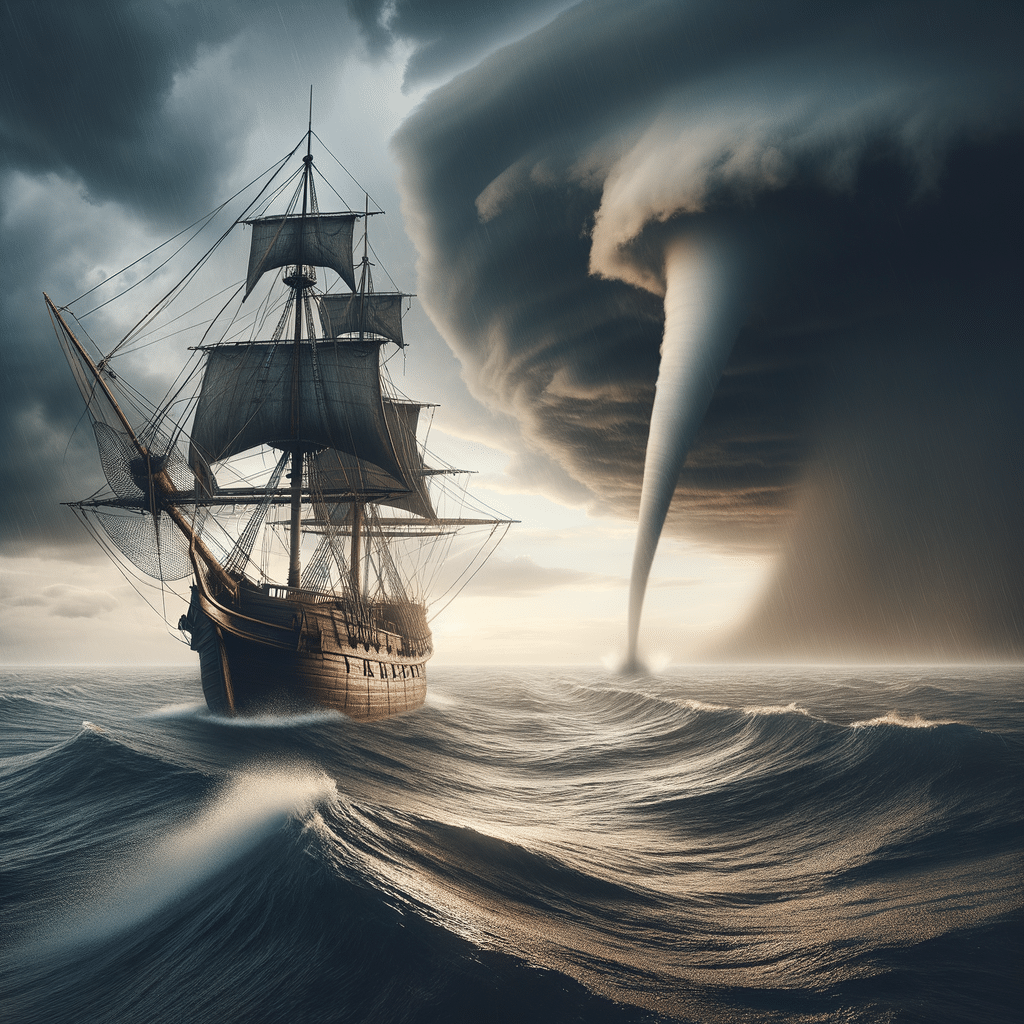
One of the most puzzling riddles in marine history, the Mary Celeste is a merchant vessel found abandoned in the Atlantic Ocean in 1872, devoid of evidence of fight or suffering. For more than 150 years, the public’s imagination has been captivated by the many theories generated by the ship’s discovery and further investigation—from logical explanations to supernatural events. This unresolved riddle has shaped popular culture, literature, and movies, as well as becoming a metaphor for inexplicable marine disappearances.

Overview
The British brig Dei Gratia came upon the Mary Celeste floating between the Azores and Portugal on December 5, 1872; the vessel was in seaworthy condition but utterly deserted. The ship’s industrial alcohol load was mostly intact, while the crew’s personal items—including valuables—remained unaltered. Ten days earlier was the last log entry; although one lifeboat vanished, the ship had six months’ worth of food and water (Hicks, 2004).
The crew’s absence has natural explanations, including ideas like a waterspout or seaquake that would have set off crew terror. Some investigators speculate that the skipper ordered an evacuation due to concerns about an explosion resulting from fumes from the spilled industrial alcohol container. Others suggest that the crew abandoned ship early on because of the illusion of an approaching catastrophe generated by a momentary displacement of water, sometimes referred to as a seiche.
More pragmatic ideas center on human elements, including piracy or insurance fraud. Though no notable damage was discovered, some researchers speculate that Captain Benjamin Briggs might have ordered abandonment because of hull damage to the ship. Though this doesn’t explain why the crew would leave behind essential supplies and possessions, another idea suggests that they might have deserted the ship during rough weather and perished in the lifeboat.
Paranormal explanations about the Mary Celeste span alien abduction via time slips and dimensional portals. Certain paranormal investigators claim the group came into an enigmatic fog bank that carried them to another realm or time period. Others point to claimed witness reports of unusual lights and inexplicable events in the vicinity to support their claims that supernatural forces—such as ghost ships or sea monsters—were behind the crew’s disappearance (Faiella, 2022).
Skeptics have methodically refuted these paranormal assertions by pointing out the dearth of physical data supporting supernatural theories. They note that rather than paranormal activity, the most plausible explanation consists in a mix of natural elements, such adverse weather and human mistake. Although rare, maritime experts underline that the situation might be justified by logical means without turning to supernatural ones.
Similar Disappearances
Many unexplained disappearances from past times have fascinating similarities and contrasts with the Mary Celeste event. While the Mary Celeste was discovered whole with treasures aboard, other stories show different situations that call for different interpretations of inexplicable disappearance (Low, 2006). Discovered in 1921 near North Carolina’s coast, the SS Carroll A. Deering most resembles the Mary Celeste case. Like the Mary Celeste, the Deering was discovered with its cargo unharmed and personal items in place but all crew members had disappeared. Unlike the Mary Celeste, the Deering displayed indications of recent habitation, though, with food evidently made in the galley when the crew vanished, implying a more rapid departure.
A fresh kind of maritime mystery arises from Flight 19, also known as The Lost Patrol, disappearing. The five Navy bombers who disappeared in the Bermuda Triangle in 1945 left no trace, while the Mary Celeste left behind solid evidence. The Mary Celeste’s whole condition contrasts dramatically with the total lack of debris or remains, implying different causes of these vanishances.
Found adrift in the South Pacific in 1955, the crew of the MV Joyita offers fascinating similarities and contrasts. Similar to the Mary Celeste, the abandoned vessel remained seaworthy upon discovery. While the Mary Celeste seemed mostly undisturbed, the Joyita revealed symptoms of discomfort, including water damage and non-functioning radio equipment. Besides, the Joyita carried twenty-five persons, whereas the Mary Celeste crew consisted of eight.
The Dutch ghost ship Ourang Medan offers a darker variant on the concept. The Ourang Medan, unlike the Mary Celeste’s empty deck, appears to have discovered all its crew dead, their faces frozen in dread. Although many question the mere existence of the Ourang Medan, the difference between discovering no remains on the Mary Celeste and a whole dead crew emphasizes the spectrum of nautical secrets.
Though they differ in context and scope, modern disappearances like Malaysia Airlines Flight 370 have the element of vanishing without obvious cause. MH370’s total disappearance, despite contemporary tracking technology, begs another form of mystery, while the Mary Celeste left behind a physical vessel for inquiry. This contrast highlights how technological advancements have not always made such disappearances less likely or simpler to solve.
Unlike many other well-known disappearances, the Mary Celeste case gained from quick discovery and documenting in terms of investigative techniques. Although modern cases usually entail advanced search equipment and international cooperation, the Mary Celeste inquiry relied on basic marine investigation procedures and eyewitness statements but produced more physical evidence than many modern instances.

Impact
The Mary Celeste’s cultural influence on marine legend sets it apart from earlier disappearances. Although other incidents have attracted public attention, the Mary Celeste has evolved as a model for ghost ship tales and nautical riddles, therefore motivating a wider spectrum of artistic output than most other vanishances. Its influence on movies and literature surpasses that of comparable cases, possibly due to its occurrence during the Victorian era’s fascination with the supernatural (Martin, 2015).
The Mary Celeste distinguishes itself among other well-known disappearances in its mix of retained evidence, lack of clear reason, and cultural influence. Although other cases may have certain features, none combine all these elements in quite the same manner; hence, the Mary Celeste is a special benchmark against which other unexplained disappearances are sometimes evaluated. Despite technological advancements and numerous hypotheses, these incidents continue to challenge our understanding of disappearances, posing more questions than providing answers (Krasner, 2015).
Inspired by the Mary Celeste, several books, movies, and television shows have been produced, therefore permanently changing popular culture. Though it took notable creative license with the facts, Sir Arthur Conan Doyle’s 1884 short story J. Habakuk Jephson’s Statement helped popularize the enigma. From horror movies to factual investigations, the history of the vessel has provided a template for innumerable ghost ship stories in contemporary media.
The distinctive cultural scene of the Victorian era greatly influenced the Mary Celeste’s metamorphosis from a marine mystery into a ghostly legend. During this time, the convergence of rapid scientific progress with conventional spiritual beliefs produced the ideal setting for such secrets to grab the public’s attention. The emergence of spiritualism in Victorian culture gave supernatural explanations of the Mary Celeste event rich ground. Séances and spirit connection particularly appealed to Victorians, which resulted in many alleged meetings with the crew of the vessel via media. These spiritual sessions often featured complex stories of supernatural encounters, with alleged messages from beyond depicting everything from sea monsters to dimensional gates.
The Mary Celeste’s otherworldly reputation was cemented in great part by Victorian writers. Though it greatly deviated from the facts, Sir Arthur Conan Doyle’s fictitious version included mystical and enigmatic elements that grew inexorably interwoven with the ship’s narrative. Gothic literature’s popularity during this era meant that readers were inclined to welcome otherworldly explanations for the inexplicable disappearance (Doyle & Bleiler, 1979).
The supernatural story benefited ironically from the Victorian obsession with scientific rationalism. As researchers and scientists failed to provide convincing answers for the crew’s disappearance, the public increasingly turned to supernatural theories. This conflict between empirical research and enigmatic events was exactly what the Victorian battle between reason and faith reflected.
Victorian newspapers and publications extensively covered the Mary Celeste mystery, sometimes exaggerating the facts with dramatic embellishments that stressed supernatural undertones. With its mix of facts and imagination, the era’s journalism helped turn the ship’s narrative into a cultural phenomenon fit for Victorian perceptions of the strange and terrible. Often included in reports were purported witness stories of ghostly beings on the ship and unexplained lights around it.
The Mary Celeste narrative was seen and told in line with the Victorian obsession with death and rituals of grieving. Victorian fears about death without proper burial or grieving connected strongly with the absence of bodies or any obvious sign of the crew’s fate. This cultural setting produced complex ideas about the souls of the crew members caught between worlds or sentenced to eternity beyond the oceans.
The global network of storytellers produced by colonial expansion and maritime trade helped enhance the Mary Celeste narrative. Incorporating local folklore and beliefs reflecting Victorian interest with exotic and enigmatic features of foreign cultures, sailors from many backgrounds added their own spooky elements to the tale. The Mary Celeste became a worldwide supernatural phenomenon thanks in great part to cross-cultural pollination of ideas.
The Victorian era’s development of photography and recorded research added still another layer of mystery. Victorian viewers filled with supernatural conjecture could find a striking narrative gap between the thorough documentation of the empty vessel and the total lack of proof clarifying the crew’s disappearance. Both scientific and supernatural perspectives primarily relied on this visual evidence, or the absence of it.
Conclusion
The Mary Celeste’s legacy from the Victorian era still shapes our view and conversation of marine mysteries today. Despite our superior scientific knowledge and methods of inquiry, the supernatural components added during this period have become so firmly ingrained in the narrative that they continue even in current retellings. This ongoing influence shows how strongly Victorian cultural attitudes affected our knowledge and interpretation of unexplainable events.
The Mary Celeste case is evidence of mankind’s insatiable curiosity with riddles and our search for meaning in the incomprehensible. Although logical answers may prove more feasible, this marine mystery’s continuing attraction stems from its challenge to our knowledge of the natural world and the inspiration it generates. Whether viewed through the lens of scientific inquiry or paranormal conjecture, the Mary Celeste consistently captivates viewers and inspires future generations of scholars and storytellers.
References
Doyle, A. C., & Bleiler, E. F. (1979). The Best Supernatural Tales of Arthur Conan Doyle. Courier Corporation.
Faiella, G. (2022). The Mysterious Case of the Mary Celeste: 150 Years of Myth and Mystique. The History Press.
Hicks, B. (2004). Ghost Ship: The Mysterious True Story of the Mary Celeste and Her Missing Crew. Ballantine Books.
Krasner, B. (2015). Mystery of the Mary Celeste. ABDO.
Low, A. (2006). Seafarers and passengers who disappear without a trace from aboard ships. International maritime health, 57(1-4), 219-229.
Martin, V. (2015). The ghost of the Mary Celeste. Vintage.
Leave a Reply