
Hidden in the dark recesses of Irish tradition is a creature whose story has endured for millennia despite its relative obscurity in relation to other mythological figures. A figure from ancient Irish legend, the Abhartach is one of the earliest vampire-like creatures in European folklore and still fascinates people who research supernatural customs. Said to have come from County Derry, Northern Ireland, this wicked creature reflects mankind’s eternal interest in the dead and the fine line separating life from death. The Abhartach legend provides a fascinating view of how myths evolve, expressing communal fears and functioning as cautionary stories for successive generations.

Overview
Though the Abhartach’s physical description changes with each recounting, some features create a troubling picture of this otherworldly being. Most stories depict him as a dwarf-like character, little in height but with outstanding magical abilities that made up for his physical constraints. Reports state that upon rising from the grave, the creature took on a horrifying appearance, characterized by pale, rotting flesh and stretched nails that continued to grow after death. While others stress his corpse-like look, with sunken eyes that sparkled with evil knowledge, some versions of the story show the Abhartach with fangs or sharp teeth appropriate for his blood-drinking proclivities. The Abhartach’s physical characteristics reflect prevalent anxieties about death and decomposition, and thus they materialize the abstract dread of mortality (McCully, 2015).
Perhaps the most frightening part of the Abhartach legend is his behavior, which identifies him as a predatory force that harmed the living. Traditional stories say he would rise from his grave at night to ask local people for blood taken from their veins as tribute, which he would use to sustain his abnormal life. If society denies the Abhartach, he would wreak havoc, bringing disease, death, and tragedy. Unlike contemporary vampire portrayals that sometimes feature a seductive aspect, the Abhartach was entirely predatory and evil, reflecting an unrelenting danger to human societies. His frequent returns from death, despite several graves, reflect old worries about the finality of death and appropriate burial customs, revealing his supernatural tenacity and the challenge of permanently disposing of such a creature (Curran, 2009).
Local tales about the Abhartach are mostly focused in the Slaghtaverty (or Slaughtaverty) region of County Derry, where a megalithic monument called The Giant’s Grave or Leacht Abhartach (Abhartach’s Sepulchre) is still pointed to as his last resting place. Oral stories kept in the area say Abhartach was originally a harsh chieftain or druid who lived under the evil and tyranny of his people. Whether due to natural causes or murder, Abhartach returned to haunt his former subjects, demanding a blood tribute. The local people asked another chieftain called Cathán for assistance; he killed Abhartach but was disappointed when the monster came back the next night. The cycle of death and resurrection went on until Cathán spoke with a Christian saint or druid who recommended particular burial techniques to keep the evil creature under the earth. This location was a cautionary story about the effects of brutality and dabbling in forbidden knowledge as well as a historical justification for the enigmatic stone monument.
The shifting cultural and theological background in Ireland shapes the Abhartach story over time. Likely originating in the pre-Christian era, when pagan beliefs in the supernatural dominated, the first versions may have served as an explanation for unexplained deaths or diseases in remote areas. With other versions calling for Christian saints’ assistance to vanquish the undead monster, the story included aspects of Christian burial customs and the power of faith to fight evil as Christianity swept over Ireland. When folklorist Patrick Weston Joyce documented the story in his collection The Origin and History of Irish Names of Places, it had joined Ireland’s rich fabric of supernatural mythology by the 19th century. The Abhartach has drawn fresh interest in modern times, especially after being proposed as a probable influence for Bram Stoker’s Dracula, thereby linking this little-known Irish story to the worldwide vampire mythology that dominates modern popular culture (McFadden, 2021).

Modern Impact
Beyond its supernatural aspects, other hypotheses seek to clarify the beginnings and endurance of the Abhartach mythology. Some academics believe the idea may have started with misconceptions about particular medical diseases, including porphyria or catalepsy, which could cause someone to seem dead before reviving or produce physical symptoms mimicking traditional representations of the undead. Some say the psychological purpose of such stories is as reflections of societal worries about death, burial, and the crossing of natural limits. From an anthropological standpoint, the Abhartach story warned against tyrannical leadership and strengthened community values by means of the final punishment of the harsh chieftain; hence, it functioned as a social control tool. Some historians believe that the mythology might preserve fragmented recollections of real events or people from Ireland’s distant past, transformed over centuries of oral transmission into otherworldly stories. Every hypothesis shows several ways in which myths can be read beyond their face value by offering a distinct perspective on how to grasp this ageless story (Bane, 2017).
Archaeological factors add another layer to the Abhartach story by linking physical evidence with myth. The megalithic site linked to the Abhartach near Slaghtaverty predates the legend significantly, probably a Neolithic burial mound or monument repurposed in folk memory to serve as the vampire’s prison. Common across civilizations, the custom of linking old monuments to supernatural stories offers justifications for buildings whose original uses were no longer clear. Some studies have indicated that burial practices described in the Abhartach legend—such as interring the body upside down with thorns or stakes—have parallels in actual “deviant burials” found by archaeologists around Europe, where communities took particular care with people feared to return after death. The material connections between legend and archaeological data suggest that the supernatural parts may be made up, but the beliefs and practices that are shown in the story have historical roots in how people dealt with people they were afraid of or things they didn’t know about.
Demonstrating the adaptation of ancient folklore to modern settings, the narrative of the Abhartach has seen a notable resurgence in current media and literature. Boys from County Hell, a 2021 Irish horror film, openly alludes to the Abhartach mythology, reinterpreting it for modern viewers while preserving ties to its Irish roots. The Irish Vampire: From Folklore to the Imaginations of Charles Robert Maturin, Joseph Sheridan Le Fanu and Bram Stoker by Sharon M. Gallagher investigates the possible links between the Abhartach and Ireland’s major contributions to vampire literature. This contemporary revival has drawn more focus to this obscure person, more understanding of Ireland’s supernatural traditions outside the well-known leprechauns and banshees, and more travel to the alleged burial location. The Abhartach’s path from local legend to worldwide fame shows how ancient myths may find new relevance and audiences in every generation, adjusting to modern concerns while preserving their fundamental narrative strength.
Conclusion
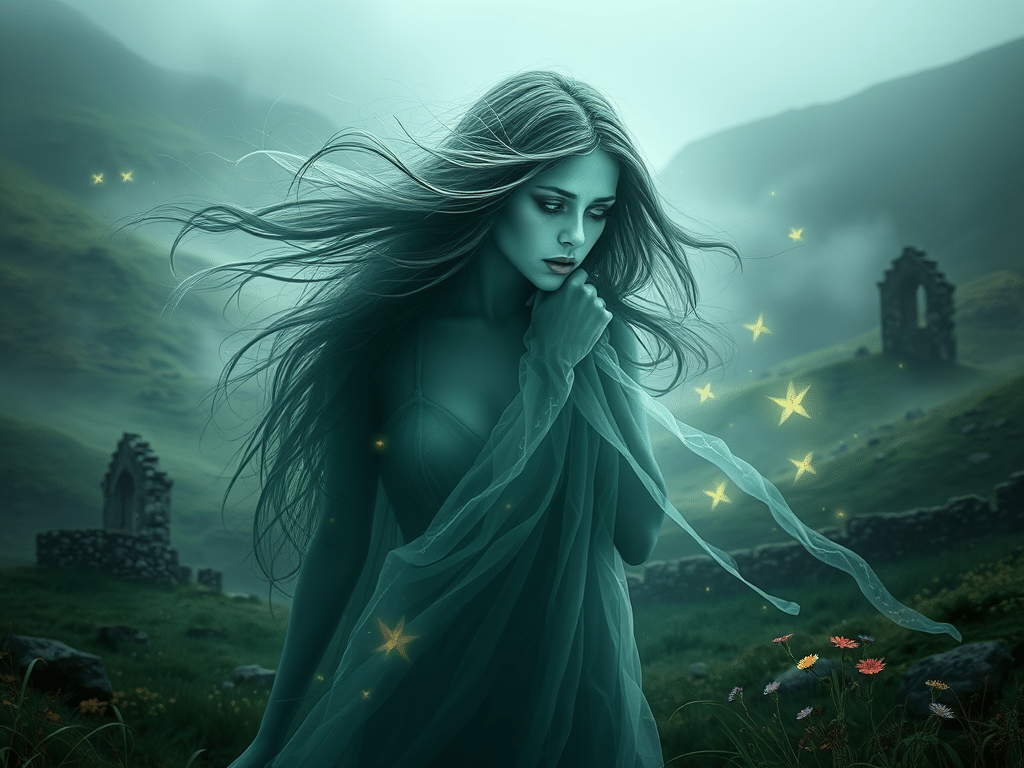
The Abhartach narrative is a captivating crossroads of history, tradition, and the human obsession with death. The Abhartach, from his beginnings as a harsh ruler to his metamorphosis into a blood-drinking revenant, reflects timeless anxieties about death, power, and the supernatural that transcend cultural and chronological boundaries. The story still speaks in our contemporary world, whether one sees it as a warning against cruelty and its repercussions, an early vampire prototype that shaped subsequent literary traditions, or a psychological manifestation of societal fears. The Abhartach warns us that our obsession with the line between life and death—and those beings claimed to cross it—remains as strong today as it was when these stories first emerged from the mist-shrouded hills of ancient Ireland. We continue to reinterpret and adapt these old narratives. Through shared stories of the uncanny, we see in the ongoing development of this legend the lasting strength of folklore to fascinate, frighten, and finally link us to our forebears.
References
Bane, T. (2017). Encyclopedia of vampire mythology. McFarland.
Curran, B. (2009). Encyclopedia of the undead: a field guide to creatures that cannot rest in peace. ReadHowYouWant. com.
Gallagher, S. M. (2013). The Irish vampire: From folklore to the imaginations of Charles Robert Maturin, Joseph Sheridan Le Fanu and Bram Stoker. McFarland & Company.
Game, P. B. The History of Vampire Folklore: Fear and Introspection.
Joyce, P. W. (1875). The origin and history of Irish names of places. McGlashan & Gill.
McCully, M. (2015). Derry Folk Tales. The History Press.
McFadden, M. (2021). A History of Vampires and Their Transformation From Solely Monsters to Monstrous, Tragic, and Romantic Figures. Curiosity: Interdisciplinary Journal of Research and Innovation, 2.


Leave a Reply