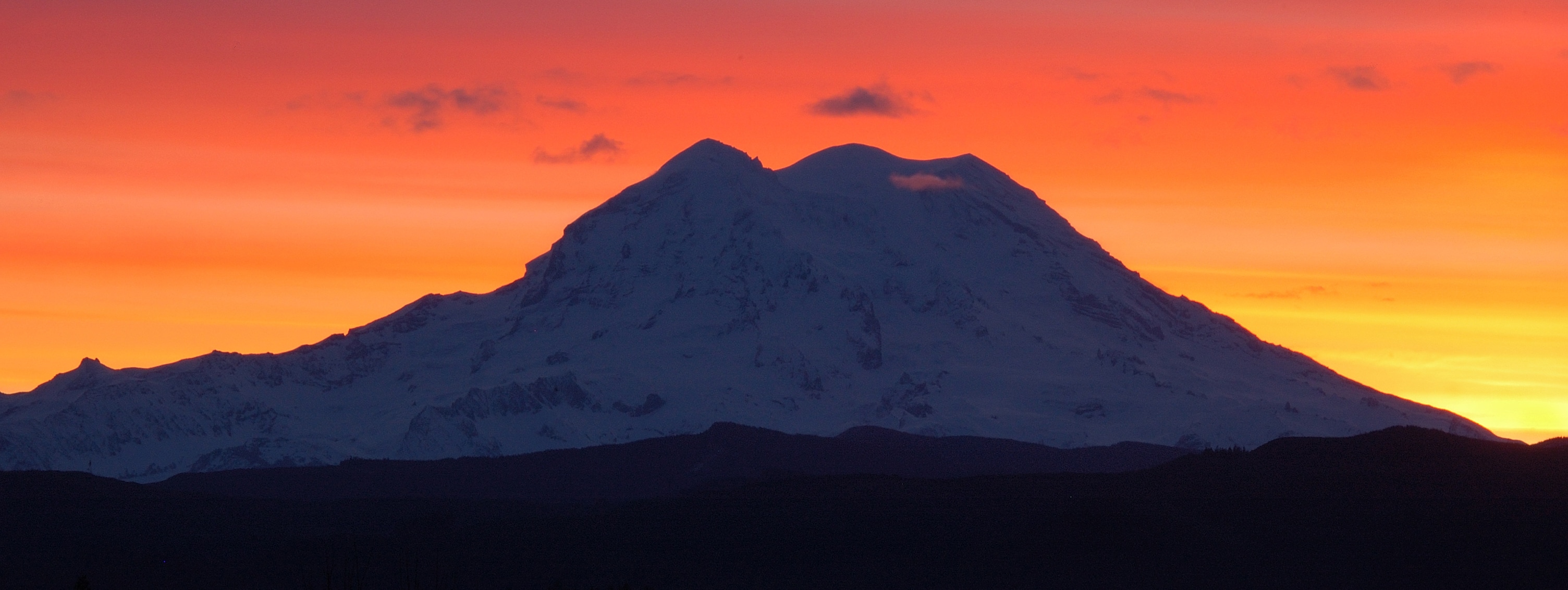
Mount Rainier National Park has long been renowned for its breathtaking natural beauty, but beneath the surface of this wilderness paradise lies a collection of unsettling tales and unexplained phenomena that have captivated visitors for generations. Rising majestically to 14,411 feet above sea level, this active stratovolcano commands the landscape of Washington state and has become a nexus for reports of paranormal activity ranging from ghostly encounters to unexplained lights in the sky. Indigenous peoples have long considered the mountain a place of spiritual significance, while modern visitors continue to report experiences that defy conventional explanation. This essay explores the mysterious phenomena associated with Mount Rainier, examining historical accounts, contemporary reports, and the various theories that attempt to explain these enigmatic occurrences.

Description
The ancient volcano dominates the Cascade Range with its snow-capped peak visible from over a hundred miles away on clear days, creating an awe-inspiring backdrop against the Pacific Northwest sky. Established as a national park in 1899, its 236,000 acres encompass old-growth forests, subalpine meadows, glaciers, and a diverse ecosystem that attracts over 2 million visitors annually. Native tribes, including the Nisqually, Puyallup, Yakama, and Muckleshoot, named the mountain Tahoma or Tacoma, meaning “the mountain that was God” or “snowy peak,” reflecting their reverence for this imposing natural feature. The mountain’s remote valleys, mysterious forests, and unpredictable weather patterns create an atmosphere where reality sometimes seems to blur, providing the perfect setting for encounters with the unknown (Williams, 1910).
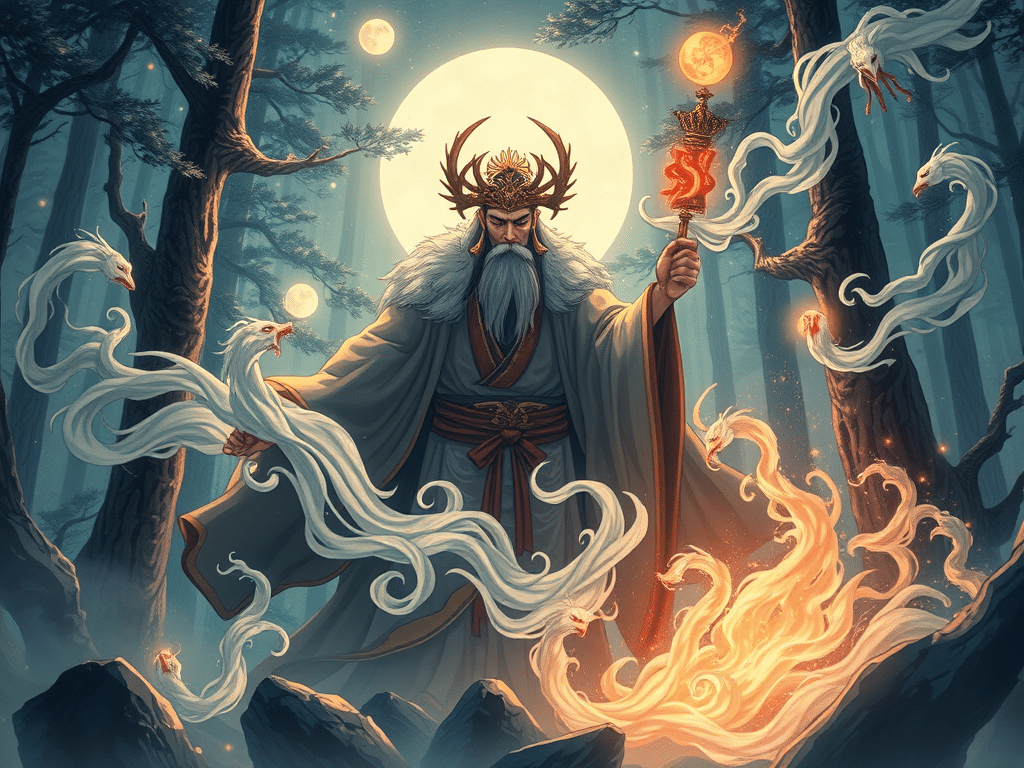
Indigenous oral traditions speak of spirit guardians and supernatural beings inhabiting the mountain long before European settlers arrived. The Salishan-speaking peoples told stories of Seatco or Stick Indians, forest spirits who could manipulate minds, create illusions, and occasionally abduct humans who ventured too deep into their domain. Native shamans would journey to specific locations on the mountain to commune with spirits and receive visions, establishing Mount Rainier as a place where the veil between worlds was particularly thin. These spiritual connections to the mountain have persisted through centuries, with many indigenous people maintaining that certain areas remain spiritually charged and should be approached with appropriate respect and caution.

Paranormal Mount Rainier
Throughout the park’s history, numerous ghost encounters have been reported by both visitors and park staff. One of the most persistent tales revolves around the Ghost Ranger, purportedly the spirit of a park ranger who lost his life in a blizzard in the 1940s, who now appears to guide lost hikers to safety before disappearing. Visitors to Paradise Inn, the historic lodge built in 1916, have reported unexplained footsteps, doors opening and closing on their own, and ghostly figures glimpsed in hallways and windows during quiet hours. Multiple accounts describe the apparition of a young woman in early 20th-century hiking attire who appears near Reflection Lakes, believed by some to be the spirit of a hiker who fell to her death from a nearby cliff nearly a century ago (Lankford, 2006).
The Longmire Historic District, site of the park’s first settlement, seems particularly active with paranormal phenomena. Staff working in the old administration buildings report hearing typewriters clicking and office chairs moving when no one else is present. Guests staying overnight at the National Park Inn have reported experiencing strange knocking sounds, disembodied voices, and a sense of surveillance in their rooms. Perhaps most disturbing are the accounts from maintenance workers who describe tools mysteriously relocating and the distinct feeling of unseen presences following them through the old buildings during renovation work. These persistent reports have led some paranormal investigators to suggest that the area’s volcanic activity and high mineral content might somehow amplify or sustain energetic imprints from the past.
Beyond ghostly phenomena, Mount Rainier has a special place in modern UFO lore as the site of Kenneth Arnold’s famous 1947 sighting, which introduced the term flying saucer into popular culture. While flying his private plane near the mountain, Arnold observed nine crescent-shaped objects moving at incredible speeds, exhibiting flight characteristics impossible for contemporary aircraft. This widely publicized incident occurred just weeks before the Roswell incident and effectively launched the modern UFO era in America. Since then, the mountain has been a hotspot for unusual aerial phenomena, with dozens of documented sightings of unexplained lights, disc-shaped objects, and triangular craft maneuvering around the peak in seemingly impossible ways (Allred, 2024).
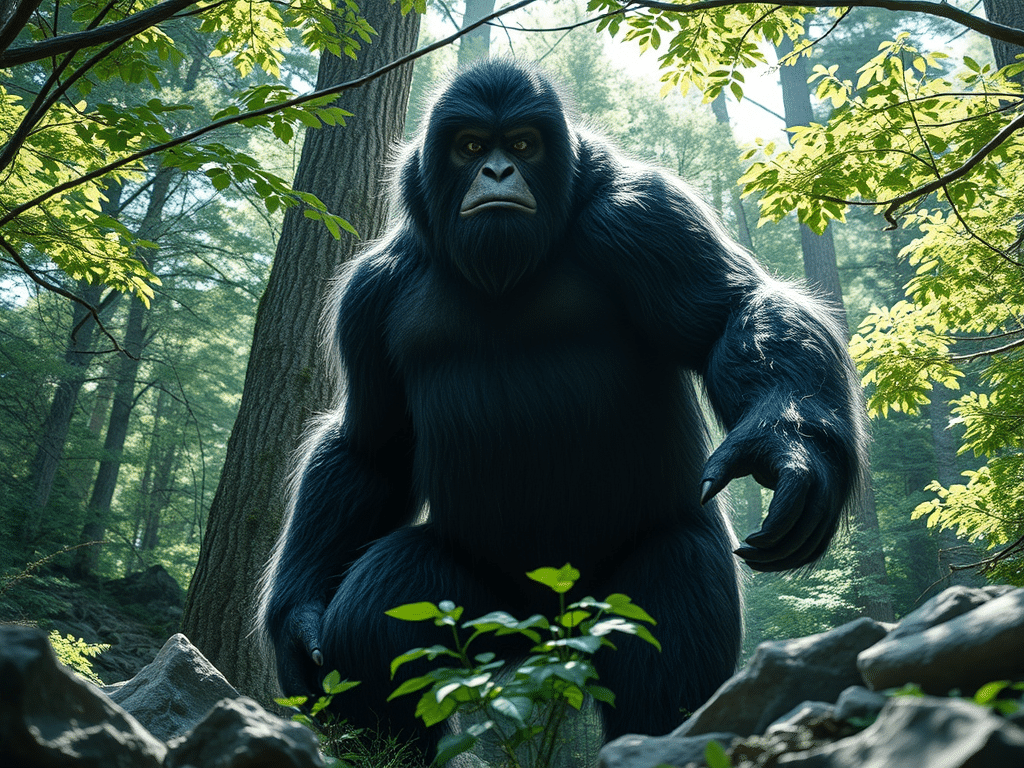
The mountain’s connection to cryptozoology is equally compelling, with Bigfoot sightings concentrated in the remote northeastern regions of the park. Hikers and campers report finding unusual footprints, hearing strange vocalizations, and occasionally glimpsing large, bipedal creatures moving through the forest. In 1995, a park ranger documented an encounter with an unidentified upright creature nearly eight feet tall that moved with surprising agility through a densely wooded area near Carbon River. Indigenous traditions speak of similar beings, sometimes called Tsiatko or Night People, who inhabit the wilderness areas and generally avoid human contact. The dense forest cover, abundant water sources, and relative isolation of certain areas could theoretically support a small population of undiscovered primates, according to some cryptozoological researchers (Pyle, 2017).
Perhaps the most unsettling paranormal aspect of Mount Rainier involves its reputation as a site of mysterious disappearances. The park has recorded numerous cases where experienced hikers and climbers have vanished without explanation, sometimes in fair weather and on well-marked trails. While many disappearances can be attributed to accidents, weather changes, or wildlife encounters, some cases defy conventional explanation, with search teams finding no trace despite extensive efforts. In a particularly baffling 1973 incident, an experienced mountaineering party of four disappeared during clear conditions on a well-traveled route, leaving behind properly secured equipment at their last camp but no signs of an avalanche, fall, or other accident. Author David Paulides has documented several Mount Rainier cases in his Missing 411 series, noting unusual patterns that seem to defy logical explanation.
Analysis
Skeptics offer rational explanations for most paranormal reports associated with the mountain. The ghostly encounters, they suggest, result from a combination of the power of suggestion, the mountain’s natural sound acoustics, and the psychological impact of being in remote wilderness settings. The high electromagnetic fields generated by the mountain’s volcanic nature could potentially affect human brain function, creating hallucinations or altered perceptions in some individuals. UFO sightings might be attributed to lenticular clouds that frequently form around the mountain’s peak, creating disc-shaped formations that can reflect light in unusual ways, or to military aircraft testing from nearby Joint Base Lewis-McChord. Most cryptid reports, skeptics argue, represent misidentifications of known wildlife, particularly bears standing on hind legs or viewed under poor visibility conditions.
Scientific explanations for paranormal phenomena at Mount Rainier often focus on its unique geological properties. As an active volcano, the mountain generates significant electromagnetic fields, releases various gases, and contains high concentrations of certain minerals that some researchers believe could affect human perception or even support theories about naturally occurring earth lights (Sisson & Vallance, 2009). The mountain’s weather patterns create unusual atmospheric conditions, including temperature inversions, fog banks, and light refractions that can distort visual perception.
Mount Rainier’s paranormal reputation may also be partially explained through the psychological concept of “thin” places—locations where the boundary between ordinary reality and something beyond seems particularly permeable. The mountain’s imposing presence, extreme weather shifts, and remote wilderness create a natural environment where humans often feel small and vulnerable. Indigenous cultures worldwide have identified similar locations as places of power, and contemporary visitors often report heightened sensory awareness and altered consciousness while in certain areas of the park. Whether these effects result from subtle environmental factors, psychological responses to awe-inspiring natural settings, or genuine paranormal properties remains a subject of ongoing debate among researchers from various disciplines.
Conclusion
Mount Rainier National Park stands as more than just a natural wonder; it represents a convergence point where the mysteries of nature, human psychology, and potentially supernatural elements intersect in fascinating ways. From ancient indigenous spiritual beliefs to modern UFO encounters, the mountain has accumulated layers of paranormal lore that continue to intrigue visitors and researchers alike. Whether one views these phenomena as manifestations of unknown natural processes, psychological reactions to an imposing wilderness, or genuine encounters with supernatural forces, the persistent reports across generations suggest something unusual occurs in this remarkable landscape. As with many paranormal hotspots, Mount Rainier invites us to maintain an open mind while critically examining the evidence, acknowledging that our understanding of reality may still contain significant gaps when confronted with the full spectrum of human experience in places of extraordinary natural power.
References
Allred, R. (2024). A History of Military Encounters with UFOs: Explanations and Combat Strategies. Air World.
Lankford, A. (2006). Haunted Hikes: Spine-Tingling Tales and Trails from North America’s National Parks. Santa Monica Press.
Pyle, R. M. (2017). Where Bigfoot walks: Crossing the dark divide. Catapult.
Sisson, T. W., & Vallance, J. W. (2009). Frequent eruptions of Mount Rainier over the last∼ 2,600 years. Bulletin of Volcanology, 71, 595-618.
Williams, J. H. (1910). The Mountain that was” God”: Being a Little Book about the Great Peak which the Indians Called” Tacoma”, But which is Officially Named” Rainier”. Tacoma: sn.
Leave a Reply