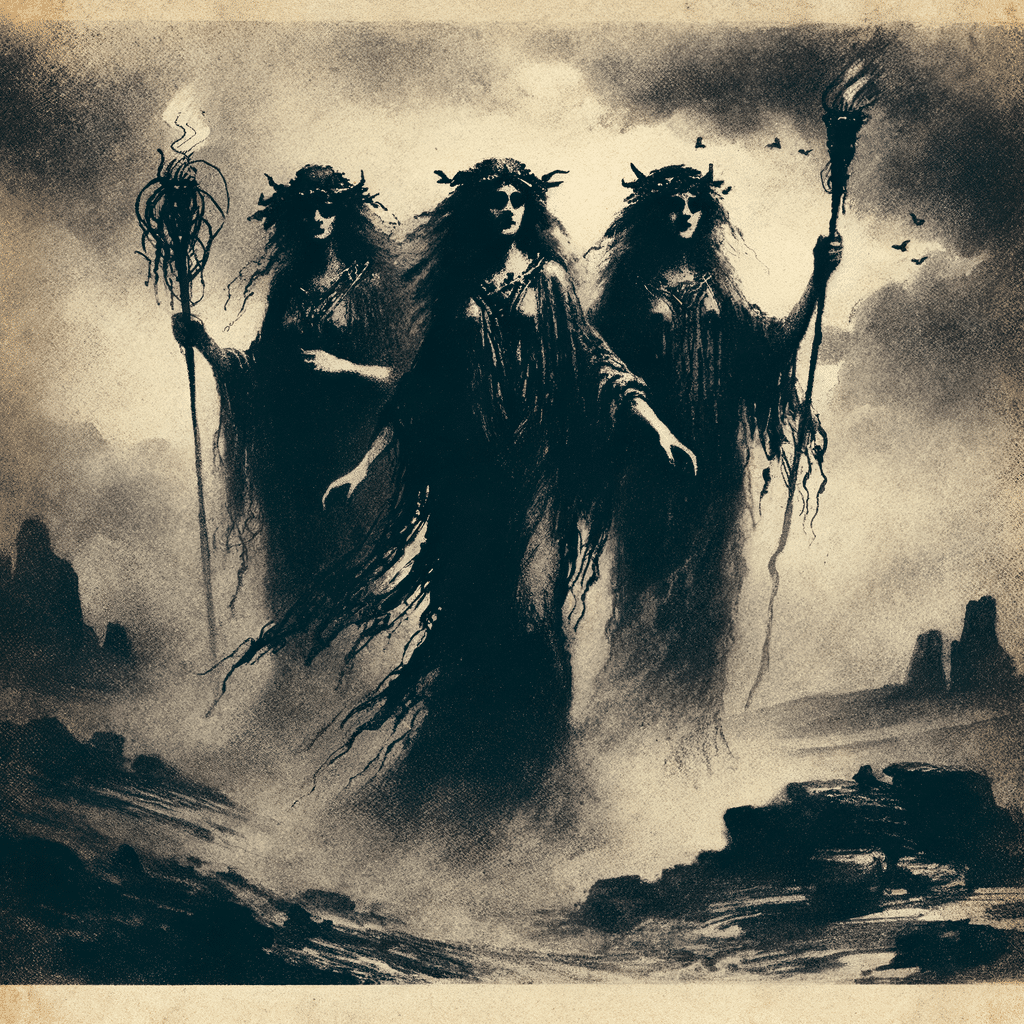
The idea of the dark goddess stands for the parts of feminine divine power that are often misunderstood and feared in myths from around the world. These gods and goddesses represent death, night, magic, and change, which can either conceal or judge. Dark goddesses are different from their caring, life-giving counterparts because they rule over the underworld, witchcraft, battle, or revenge. They remind us that creation and destruction are always happening and that facing our fears instead of running away from them can help us learn. The evil goddess archetype shows up in many cultures in a very consistent way, including ancient Greece, which suggests that all people view feminine power as having both light and dark sides.

Greek Dark Goddesses
Dark goddesses are very important in Greek mythology, yet their worship was typically kept secret, feared, or included unique rituals. These gods kept the universe in balance by controlling parts of life that kinder gods wouldn’t touch. Death, night, magic, revenge, and change were some of the areas they ruled. These are the uncomfortable but necessary parts of life that keep it going. Later, patriarchal views made these goddesses seem evil or dangerous, whereas older Greek religious traditions saw them as strong, important energies that should be respected, not feared.
Hecate is probably the most famous dark goddess in Greek mythology. She is responsible for crossroads, witchcraft, necromancy, and the voids between realms. This goddess had three forms and could see in all directions at once, the past, present, and future. Hecate was different from many gods who lived on Mount Olympus since she was free to wander between the upper world, earth, and underworld. Women especially worshiped her by leaving offerings at magical crossroads. When the Olympians became famous, Zeus respected Hecate so much that he let her keep her old powers (Henrichs, 2015).
Persephone’s story illustrates her transformation from a maiden goddess to the dark queen of the underworld. People know that Hades kidnapped her, but they don’t talk about how she became a strong monarch in her own right, sharing power over the land of the dead. Every year, for six months, Persephone dedicated herself to the dead souls. The Eleusinian Mysteries were some of the most important religious ceremonies in ancient Greece. They were based on Persephone’s descent and return, which represented death and rebirth. People who were initiated into these mysteries were said to have shed their fear of death after seeing the divine wisdom that Persephone kept safe. Her dual nature—innocent daughter of Demeter and powerful queen of shadows—showed how someone might go from being ignorant to wise by facing darkness (Makowski, 1985).
The Erinyes, also known as the Furies, were the gods’ way of punishing people who breached natural law, especially murderers and people who broke sacred promises. Alecto, Megaera, and Tisiphone were scary sisters who came from the blood of the castrated Uranus. They were the first enforcers of justice in the universe, even before Zeus. They chased down wrongdoers without stopping, driving them insane with their torments. They had snake-like hair, a coal-black complexion, and eyes that dripped blood. Despite their frightening nature, the Erinyes played a crucial role in maintaining cosmic equilibrium by ensuring that certain boundaries remained unbroken. People in Athens dubbed them the Kindly Ones (Eumenides) and brought them gifts at a holy place near the Areopagus, where people recognized the need for divine justice mixed with kindness (Aguirre, 2010).
Nyx, the goddess of night, is one of the oldest Greek gods. At the beginning of the universe, Chaos created her. Nyx was not a wicked dark goddess like later ones who had defined jobs. She was darkness itself, not as the essential opposite of day, but as the place of wonder and renewal. Even Zeus was cautious in his conversations with Nyx because of her immense power. Her children included Sleep, Death, Strife, and the Fates, all of which represent fundamental aspects of life. Even though Nyx didn’t have many official cult sites, the ancient Greeks recognized her power every night when darkness fell. They would sometimes leave offerings to make sure they could safely pass through her dominion. The Greeks respected darkness as a natural part of life, not something to conquer, since it always returned (Rigoglioso, 2010).

Analysis
People worshiped these dark deities in many ways, from state-approved festivals to private women’s mysteries that men couldn’t see. People who worshiped these gods showed them the proper respect because they knew that their realms, albeit scary, were necessary for life. People often gave dark goddesses honey, garlic, and drinks at crossroads after sunset. The worship of dark goddesses differed from that of the brilliant Olympians and their beautiful temples. Instead, people worshipped them in caverns, groves, or at crossroads, places where worlds seemed to merge. Men worshiped many state gods, but women were crucial in dark goddess cults because they saw these figures as symbols of female strength and independence that were missing in Greek society (Boutsikas, 2017).
Dark goddesses have had a giant effect on psychology, feminism, literature, and current spiritual activities, going far beyond their ancient adoration. Carl Jung saw these people as representations of the “shadow feminine,” parts of being a woman that patriarchal civilizations tried to hide but that were nevertheless important for mental health. Feminist scholars have reclaimed these goddesses as symbols of women’s freedom and power, which do not conform to traditional male roles. This tradition has influenced literary characters from Medea to current witches. The rise of goddess spirituality in the 20th and 21st centuries has brought these gods back into the spotlight. Many modern pagans and witches see Hecate and her sisters as symbols of feminine wisdom in its full form, both nurturing and destroying, both creating and changing (Blundell & Williamson,2005).
Conclusion
The dark goddesses of Greek mythology show that they have a deep sense of feminine divinity that sees both creation and destruction as sacred activities. These powerful figures remind us that life is a cycle encompassing both significant growth and important endings. Patriarchal views frequently made these goddesses seem scary or malevolent, but their real jobs were far more complicated: they kept the universe in balance, made sure justice was done, helped people through changes, and ruled over secrets that are beyond human understanding. As society now struggles with narrow ideas of femininity, these ancient dark goddesses provide a fuller picture of feminine power that includes not only life-giving warmth but also the dark sides of change, justice, and transformation.
References
Aguirre, M. (2010). Erinyes as creatures of darkness. Light and Darkness in Ancient Greek Myth and Religion, 133-141.
Boutsikas, E. (2017). The role of darkness in ancient Greek religion and religious practice (Vol. 1). Oxford: Oxford University Press).
Blundell, S., & Williamson, M. (2005). The sacred and the feminine in ancient Greece. Routledge.
Henrichs, A. (2015). Hecate. In Oxford Research Encyclopedia of Classics.
Makowski, J. F. (1985). Persephone, psyche, and the mother-maiden archetype. The Classical Outlook, 62(3), 73-78.
Rigoglioso, M. (2010). In the Beginning: Chaos, Nyx, and Ge/Gaia. In Virgin Mother Goddesses of Antiquity (pp. 15-21). New York: Palgrave Macmillan US.
Leave a Reply