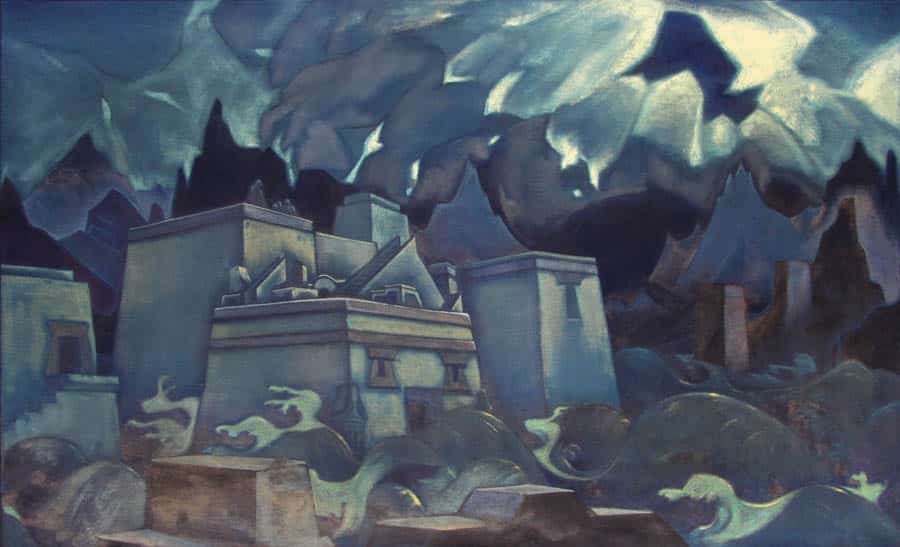
Key Points Connecting the Nephilim and Atlantis
-
In both mythologies, divine punishment or natural disaster eliminated special beings with superior knowledge.
-
Some hypotheses suggest the Nephilim, progeny of “sons of God” and human women in biblical writings, ruled or built Atlantis.
-
Similar to the biblical flood tale that destroyed the Nephilim, Atlantis’ cataclysmic sinking may have been shared by numerous cultures.
-
Though archaeological evidence is scarce, global folklore about giants and underwater regions supports these myths.
-
Literature and popular culture have widely linked these mythologies, depicting the Nephilim as providing Atlantean superhuman abilities.
-
These parallels appeal to those seeking alternate answers for ancient mysteries, while conventional scholarship views them as metaphors or allegorical narratives.

Introduction
Myths and tales have helped people comprehend where they came from, explain natural events, and keep cultural knowledge alive throughout history. The stories of the Nephilim and Atlantis are two of the most captivating examples of how ancient stories still interest us today. In modern speculation, alternative history theories, and popular media, these two different mythological ideas from different cultures have become more and more connected. Even though they come from different cultures and times, both stories talk about amazing beings and advanced civilizations that ultimately met terrible ends. This makes it possible to compare and relate them across thousands of years of storytelling.
Overview
The Nephilim are mysterious characters who appear in both biblical and non-biblical literature. Religious academics and mythologists have been arguing about what they really are for thousands of years. The Book of Genesis says they were the “sons of God” and “daughters of men.” This interpretation is widely thought to mean that they were the result of fallen angels and human women getting together. Some translations called these beings “giants,” saying they were “heroes of old, men of renown,” and that they were enormous and tall, which made them different from regular people. Ancient Middle Eastern literature, including the Book of Enoch, mentions the Nephilim. These books portray them as corrupting forces on humanity, disseminating forbidden knowledge, and ultimately inflicting divine punishment through the Great Flood (Scodel, 2021).
The idea of Atlantis originates from Plato’s philosophical dialogues, particularly Timaeus and Critias, written around 360 BC. Plato says that Atlantis was a strong maritime society that lived beyond the Pillars of Hercules (the Strait of Gibraltar). It had the best technology, architecture, and military power of any civilization. Many people believe that the Atlanteans dominated much of the Mediterranean until they were defeated in a significant war by the ancient Athenians. Plato says that after they lost, “there were violent earthquakes and floods, and in a single day and night of misfortune… the island of Atlantis disappeared in the depths of the sea.” Plato wrote about Atlantis as a philosophical metaphor, but many people have subsequently understood it as a historical account. Many religions consider the Nephilim story sacred, but this account differs from it (Gill, 1979).

Atlantis and the Nephilim
People’s stories about these two ideas share some intriguing similarities, sparking discussions about their potential relationship. Many cultures around the world tell stories of ancient giants or superhuman creatures who had a lot of knowledge but were killed because they were corrupt or too proud. Native American tribes spoke of large ancestors who governed the land. In Norse mythology, the Jötnar are enormous, powerful beings that existed before everything else. Legends about lost civilizations or sunken regions can be found in many cultures, such as the Welsh story of Cantre’r Gwaelod and the Indian myths of Kumari Kandam. These similarities between cultures show that there are universal themes in human storytelling or, as some other theories say, that people transmit along recollections of real historical events through oral tradition (Hines, 2007).
A lot of the time, the ideas that connect these stories have to do with an antediluvian (before the flood) world with high technology and otherworldly beings. Some ideas that aren’t based on facts say that the Nephilim, who had superhuman powers and secret knowledge, may have built and ruled Atlantis. Typically, these interpretations describe Atlantean society as having a strict class system, where a ruling class possessed specific skills or knowledge that distinguished them from the general population. Many theorists and storytellers think that the terrible flood that supposedly destroyed Atlantis is quite similar to the biblical flood that God sent to get rid of the Nephilim’s evil. This makes the connection even stronger in their views (Routledge, 2015).
Throughout history, religious and esoteric traditions have built on these possible links, especially in some mystical and occult systems. Some Kabbalistic interpretations suggest that the Nephilim possessed significant spiritual understanding, enabling them to alter the physical world in ways that would appear technological to contemporary observers. Theosophical literature from the late 1800s, particularly the works of Helena Blavatsky, emphasized that the Atlanteans belonged to a lineage of spiritually superior “root races” possessing superhuman abilities. Different New Age philosophies have built on these ideas, saying that the Nephilim and Atlanteans had psychic powers, advanced ways to manipulate energy, and even the ability to genetically engineer things that mainstream science doesn’t think were possible for ancient civilizations.
There is still no archaeological proof of either the Nephilim or Atlantis, but supporters of these links refer to a few disputed discoveries. Some people think that the engineering skills of giant beings built megalithic monuments all across the world, such as the Egyptian pyramids and the enormous stone blocks at Baalbek in Lebanon. Some people think that underwater formations around sites like Bimini in the Bahamas or Yonaguni in Japan could represent the remains of Atlantean structures, although most archaeologists think these are just natural formations. Some people think that ancient books that talk of great technology, such as the “vimanas” (flying machines) referenced in Sanskrit epics, could be proof that civilizations before the flood, presumably the Nephilim and Atlanteans, were quite advanced (Colavito, 2015).
Impact
The link between the Nephilim and Atlantis has been a very rich source of inspiration for writers and artists in both literature and popular culture. Since the Victorian era, writers have combined these myths in many different ways, from Jules Verne’s Twenty Thousand Leagues Under the Sea to Graham Hancock’s more modern Fingerprints of the Gods. Modern fiction frequently depicts the Nephilim as the genetic foundation of Atlantean superhuman powers. Fantasy and science fiction typically depict Atlantis as a civilization established or enhanced by beings from another world. Video games like Assassin’s Creed and Tomb Raider have used these connected myths to build their worlds. TV shows like Ancient Aliens and Atlantis Rising have popularized theories that connect these old stories to aliens or lost human potential.
The desire to connect these myths shows that people are interested in larger issues about our origins and what we can do. Both stories go against what most historians think they know about how humans have changed throughout time. They show that our ancestors may have reached higher levels of technology and spirituality than most archaeologists think. They present different reasons for the seemingly inconceivable technical marvels of ancient civilizations and help us make sense of strange objects and constructions that don’t fit well into traditional historical dates. For many people, these linked mythologies are more than simply fun stories; they are a real alternative history that makes sense to them in light of what they know about what humans can do and how important we are in the universe.
However, people who don’t like these links point out that there isn’t enough real-world evidence to support either story as historical reality. Biblical scholars usually see the Nephilim as allegorical or mythological figures instead of real people from history. Similarly, classicists usually see Plato’s Atlantis as a philosophical idea instead of a real place. Archaeologists say that the way humans have developed technology follows well-known patterns of slow progress rather than the rapid rise and fall of very advanced civilizations. The geological record also doesn’t show any evidence of catastrophic global floods during human history, even though regional flooding events may have inspired these stories of widespread disaster.
Conclusion
The link between the Nephilim and Atlantis tells us more about how people think and how much we need stories that mean something than it does about ancient history. These interconnected myths explain things that seem impossible to explain, warn us about the pitfalls of pride and corruption, and suggest that people formerly had—and may still have—knowledge and skills that are far beyond what we know now. These connected stories keep changing and growing in our minds, whether we see them as literal history, spiritual metaphors, or entertaining fiction. This evidence shows how strong and flexible ancient myths are when it comes to answering questions about our origins, purpose, and potential.
References
Blavatsky, H. P., & Gomes, M. (2009). The Secret Doctrine. Penguin.
Colavito, J. (Ed.). (2015). Foundations of Atlantis, ancient astronauts and other alternative pasts: 148 documents cited by writers of fringe history, translated with annotations. McFarland.
Gill, C. (1979). Plato’s Atlantis story and the birth of fiction. Philosophy and Literature, 3(1), 64-78.
Hancock, G. (1995). Fingerprints of the gods: The evidence of Earth’s lost civilization. Crown.
Hines, C. (2007). Gateway of the Gods: An Investigation of Fallen Angels, the Nephilim, Alchemy, Climate Change, and the Secret Destiny of the Human Race. Stygian Press.
Plato. (360 BCE). Critias (B. Jowett, Trans.).
Plato. (360 BCE). Timaeus (B. Jowett, Trans.).
Routledge, R. (2015). The Nephilim: a Tall Story? Who Were the Nephilim and How Did They Survive the Flood?. Tyndale bulletin, 66(1), 19-40.
Scodel, R. (2021). Heroes and Nephilim. Gods and Mortals in Early Greek and Near Eastern Mythology, 6, 169.
Verne, J. (1870). Twenty thousand leagues under the sea (L. Mercier, Trans.).



Leave a Reply