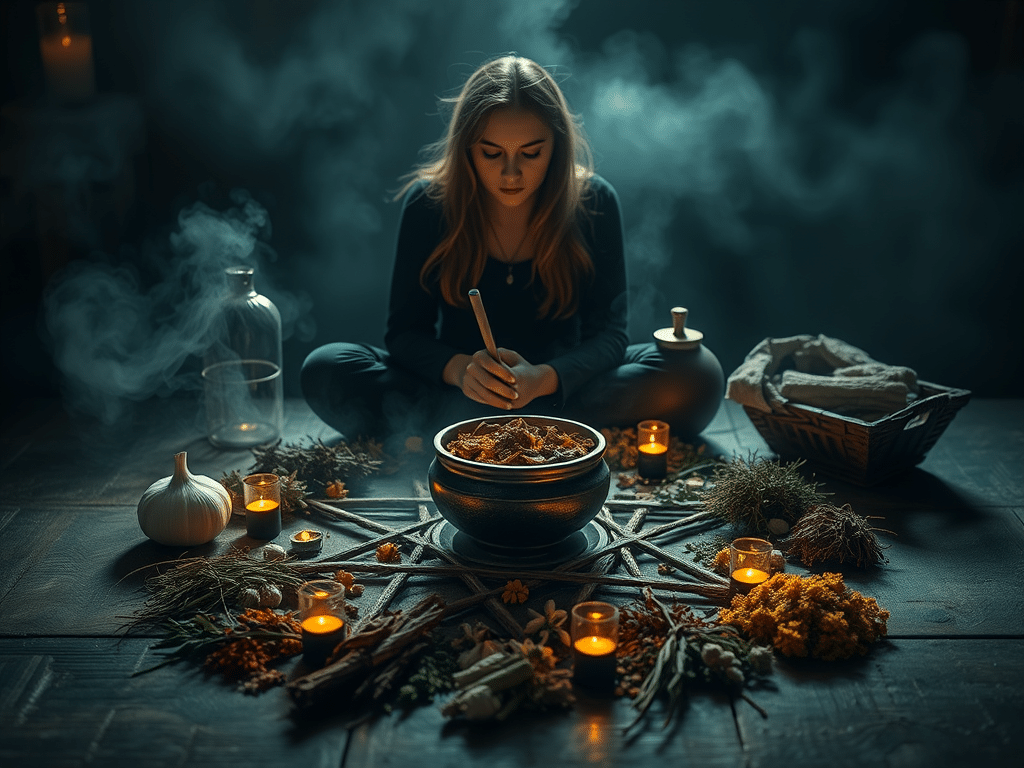
Six Key Points on Herbal Protection Against the Undead
-
“Undead” entities like vampires and spirits inspired protective traditions across cultures.
-
Garlic, wolfsbane, rowan, and St. John’s Wort were primary herbs used against undead threats.
-
Preparation methods and timing were crucial for maximizing herbal effectiveness.
-
While paranormal theories exist, many protective herbs also offered practical medicinal benefits.
-
These traditions provided psychological comfort and helped communities process grief.
-
Although these practices are largely symbolic today, they reveal insights into how humans confront mortality.

Introduction
People have always wanted protection from what they thought were evil supernatural entities. This belief has been true in many different tribes and civilizations throughout history. The undead, or beings that are neither alive nor dead, have haunted human minds in a special way, evoking both fear and a wide range of protective rituals. People thought that these beings, like vampires, revenants, draugr, or restless spirits, were dangerous not just to our bodies but to our souls as well. To deal with these worries, our ancestors came up with complicated systems of herbal protection. They passed down knowledge from generation to generation about which plants could keep these scary things away or weaken them.
Overview of Herbs for Undead Protection
“Undead” is a word that describes a wide range of supernatural beings that were once alive but are now in a state of limbo after death. Vampires, often considered the most famous of these creatures, were typically believed to be corpses that returned to life and fed on the blood or life force of living humans. Another well-known type is zombies, which were often shown as mindless corpses brought back to life by dark magic, especially in Haitian folklore. Ghosts and wraiths were the spirits of dead people who had no bodies. They were sometimes angry or stuck between realms. Revenants, a widespread belief in medieval Europe, were dead bodies that came back to life to scare the living, usually family members or others who had harmed them in life. The common thread that linked these different groups was the basic notion that they were an unnatural continuation beyond death, which broke the natural order and needed to be fought against (Nugent, Berdine & Nugent, 2018).
Garlic is probably the most well-known herb that protects against the undead, especially vampires. People thought that its strong smell would keep these monsters away, and its antibacterial powers may have helped people stay well during times when epidemics were often thought to be caused by supernatural forces. In Romanian tradition, garlic was hung in windows, smeared on doors and chimneys, and even put in the mouths of suspected vampires after they died to keep them from rising. This little bulb was thought to do more than only keep vampires away; many civilizations believed it could also remove negative energies and malevolent influences. The strength of its smell and taste seemed to be a vital life force that the zombies, who are not natural life forms, could not stand (Mantzioris & Weinstein, 2021).
Wolfsbane (aconite) is a common part of European protective traditions, even though it is quite poisonous to people. People thought that its lovely purple blossoms hid its lethal character and that it kept werewolves, vampires, and other supernatural beings away. Some cultures planted it around their dwellings or wore it as a protective charm. The plant’s deadly qualities may have led people to believe it could protect them against the undead—what could kill the living may also hurt those who lived beyond normal life. The danger of handling such a poisonous herb may have made it seem more mysterious and powerful against otherworldly threats (Waller, 2010).
Many European cultures thought that rowan trees (mountain ash) were sacred and that they were especially effective at fighting off different kinds of zombie threats. People made protective necklaces out of the brilliant red berries and carved crosses and charms out of rowan wood. Scottish mythology says that on May Day, people put rowan branches over their doorways to keep evil spirits and witches out of their homes. Many cultures believed that the unique pentagram pattern that could be seen at the base of rowan berries when they were cut crosswise was connected to protective magic. In certain places, people believed that cutting down a rowan tree brought bad luck due to its strong connection to protection (Omar et al, 2000).
In many European cultures, the dazzling yellow blossoms of St. John’s wort stood for light winning over darkness. People believed that the plant was most potent on St. John’s Eve (June 23rd), a time when the veil between worlds was particularly thin. It was draped around the neck, over doorways and windows, and around the neck to keep away evil spirits and ghosts. The plant’s natural mood-lifting effects may have helped it acquire a reputation for getting rid of the fear and sadness that come with otherworldly experiences. When crushed, the blossoms released a reddish oil that resembled blood, leading people to believe it was powerful against vampires and other blood-consuming creatures (Shelton et al, 2001).
In Eastern European customs, prickly plants like blackthorn, hawthorn, and wild roses were placed around homes and graveyards to keep the dead from wandering. People thought that the thorns would snag the shrouds or clothes of restless spirits and vampires, keeping them from moving. In Bulgaria, roses were put in coffins so vampires would have to count the petals until dawn, when they had to return to their graves. These plants were safe because they had thorns and created a spiritual barrier that the undead couldn’t easily cross. The beauty of flowering thorny plants also showed the duality of protection: they were both deadly and beautiful, just like many other things in the supernatural world that they were designed to keep away.
Folk traditions from all around Asia present different views on how herbs might protect you against the undead. During the Dragon Boat Festival, people in China burnt mugwort to keep evil spirits away and carved peachwood into protection amulets against jiangshi (jumping vampires). In Shinto purification ceremonies that kept vengeful spirits away, sacred sakaki branches were used. In Thailand, lemongrass and galangal were used in dishes to defend against phi phob, spirits that may take over the living. IIn these Asian cultures, plants were typically viewed as having purifying characteristics instead of repelling properties. The focus was on cleaning rooms and making places where evil spirits couldn’t stay in power (Barnes, 2005).
The stories about herbal protection go beyond the plants themselves and include complicated ceremonies and scheduling issues. People thought that several protecting herbs worked best when they were picked at certain seasons, such as St. John’s Eve, May Day, or the full moon. Others needed special ways to become ready, including drying them upside down, braiding them into protective chains, or soaking them in holy water before using them. When these herbs were used, they were often accompanied by words, such as prayers, incantations, or blessings, that made them more protective. These detailed requirements show how seriously our predecessors took supernatural protection. They viewed supernatural protection as a specialized knowledge system that required strict adherence.

Analysis
Contemporary paranormal investigators have put forth numerous hypotheses to elucidate the reported efficacy of these herbal safeguards. Some people believe that certain plants emit electromagnetic frequencies that disrupt the energy patterns of spectral beings, thereby reducing the likelihood of paranormal activity in haunted locations. Some people say that herbs like wormwood or mugwort can change how people see things and make them feel protected or connected to the spirit realm. Advocates of energy theories argue that the vibrational characteristics of plants can enhance the protective energy of environments, establishing barriers against lower-frequency entities. While not scientifically validated, these theories endeavor to reconcile old beliefs with modern interpretations of energy and awareness.
Skeptics provide alternate reasons for the enduring nature of these herbal traditions, highlighting that numerous defensive plants also exhibit authentic therapeutic characteristics. For example, garlic’s antibacterial properties may have lowered the number of diseases in communities, which may have led to fewer fatalities that could be blamed on vampire assaults. The powerful smells of many protection plants may cover over the smell of decay or keep scavenging animals away from graves, which would make it less likely that people would see undead activities. The ceremonial usage of protecting herbs gave people a sense of control over scary and unexplainable events, which helped them feel better during times of uncertainty. Even when people questioned the traditions’ supernatural origins, these practical benefits ensured their survival.
These herbal protection traditions have had a big impact on culture, including books, movies, and modern pagan rites. Bram Stoker’s Dracula made garlic a well-known vampire repellent, and many horror movies still use these old-fashioned ways to protect themselves. People who practice modern witchcraft and folk magic have brought back many of these herbal practices, adjusting them to modern spiritual demands while still recognizing their historical roots. Even skeptics find solace in these old ways, as they remind us how we all deal with uncertainty. The durability of these traditions indicates their significant psychological impact, confronting essential human anxieties around mortality and the unknown.
We shouldn’t underestimate how important these protective rituals were to our ancestors’ mental health. They gave them ways to cope with loss and terror. When people in a community died from strange or unexpected illnesses, the idea that preventative measures could stop such supernatural attacks gave them both a reason and a way to endure the grief. The ritual collecting and preparation of protecting herbs fostered communal ties and collective accountability for spiritual well-being. These customs turned the fear of the unknown into systems of knowledge and practice that people could handle. Their practice gave them a sense of control over things that seemed to be outside of normal existence. In this way, herbal protections met both spiritual and very human psychological requirements.
In today’s society, where scientific explanations have replaced many supernatural beliefs, we are nevertheless interested in and affected by these herbal traditions. Although few individuals genuinely believe in vampires emerging from graves, the symbolic significance of safeguarding against darkness and mortality endures as a compelling notion. People today are more interested in natural cures and traditional wisdom, which has led to a fresh respect for the intricate herbal systems our forefathers built. Some nursing homes and hospice institutions have adopted aspects of these traditions, such as planting fresh rosemary or lavender beside the recently deceased—not to keep them from becoming undead, but to reflect historical practices of transition and respect. These adjustments show how firmly these customs are ingrained in our culture, changing throughout time instead of going away completely.
The examination of herbal defenses against the undead provides significant understanding of how human societies manage dread and derive meaning in the presence of mortality. From the perspective of folklore, cultural anthropology, or practical ethnobotany, these traditions represent sophisticated approaches to addressing everyday human issues. They remind us that our ancestors weren’t only superstitious; they were also working on complicated systems to cope with the mysteries and worries of life. The plants established a connection between people and the natural world, suggesting that nature could provide solutions to even the most enigmatic dangers. This way of looking at the world was very different from how we see things now, but it had a lot of ecological wisdom and an understanding of where people fit into bigger natural systems.
Conclusion
The wide range of herbal safeguards against the undead is more than just superstition or primordial dread; it shows how humans can make sense of death and the unknown and find power in it. These customs linked people from different generations, gave people peace of mind in scary situations, and helped people interact with nature in a way that recognized both its dangers and its protective virtues. Science has changed how we think about death and what comes beyond it, but the symbolic potency of these protective plants lives on in our culture, literature, and spiritual rituals. Maybe it’s wise to remember these old defenses, not as real barriers against the undead, but as reminders of our never-ending search for answers and meaning in the greatest mystery we all face: what happens when our time in this world is over?
References
Barnes, L. L. (2005). Needles, herbs, gods, and ghosts: China, healing, and the West to 1848. Harvard University Press.
Mantzioris, E., & Weinstein, P. (2021). Garlic as a vampire deterrent: fact or fiction?. The Medical Journal of Australia, 215(11), 541-543.
Nugent, C., Berdine, G., & Nugent, K. (2018, April). The undead in culture and science. In Baylor University Medical Center Proceedings (Vol. 31, No. 2, pp. 244-249). Taylor & Francis.
Omar, S., Lemonnier, B., Jones, N., Ficker, C., Smith, M. L., Neema, C., … & Arnason, J. T. (2000). Antimicrobial activity of extracts of eastern North American hardwood trees and relation to traditional medicine. Journal of ethnopharmacology, 73(1-2), 161-170.
Shelton, R. C., Keller, M. B., Gelenberg, A., Dunner, D. L., Hirschfeld, R., Thase, M. E., … & Halbreich, U. (2001). Effectiveness of St John’s wort in major depression: a randomized controlled trial. Jama, 285(15), 1978-1986.
Waller, G. A. (2010). The living and the undead: Slaying vampires, exterminating zombies. University of Illinois Press.



Leave a Reply