Six Key Points About Ghosts and Hitchhiking
-
Hitchhiking ghosts appear normal before vanishing from moving vehicles.
-
These phenomena exist worldwide with distinct cultural variations.
-
Roads are liminal spaces mirroring ghosts’ existence between worlds.
-
Explanations range from trapped souls to psychological misperceptions.
-
Ghost stories preserve historical memory while teaching moral lessons.
-
These narratives reflect universal human concerns about mortality and meaning.

Introduction
People have always been interested in the paranormal world, which has drawn us into stories of the strange and unexplainable. Ghosts and traveling spirits are two of these strange things that really stimulate our imaginations. They combine terror, wonder, and cultural memory in a unique way. For hundreds of years, people from many different cultures have said they have seen ghostly passengers on lonely roads. These strangers appear in the darkness, request rides, and then vanish from sight. These stories endure in our ever-technical and cynical society, indicating that the concept of hitchhiking ghosts profoundly connects with our perceptions of mortality, travel, and the tenuous boundary between realms.
Overview
People from different times and places have talked about ghosts in very similar ways. This could mean that ghosts are a universal human experience or that they are firmly rooted in society. Witnesses frequently describe observing translucent or misty entities, which may initially seem solid but disclose their ethereal characteristics upon further examination. These ghosts might wear clothes from the time they were thought to have lived on Earth, which makes them look out of place and makes people feel uneasy. During these experiences, the temperature often lowers a lot. People who are interested in the paranormal call the situation a “cold spot,” and they think that ghosts suck energy from the world around them to show themselves. Some ghosts are said to talk to people by whispers, disembodied voices, or even direct telepathic impressions. Such activity makes the experience much more unnerving because it makes the witness feel close to the ghost.
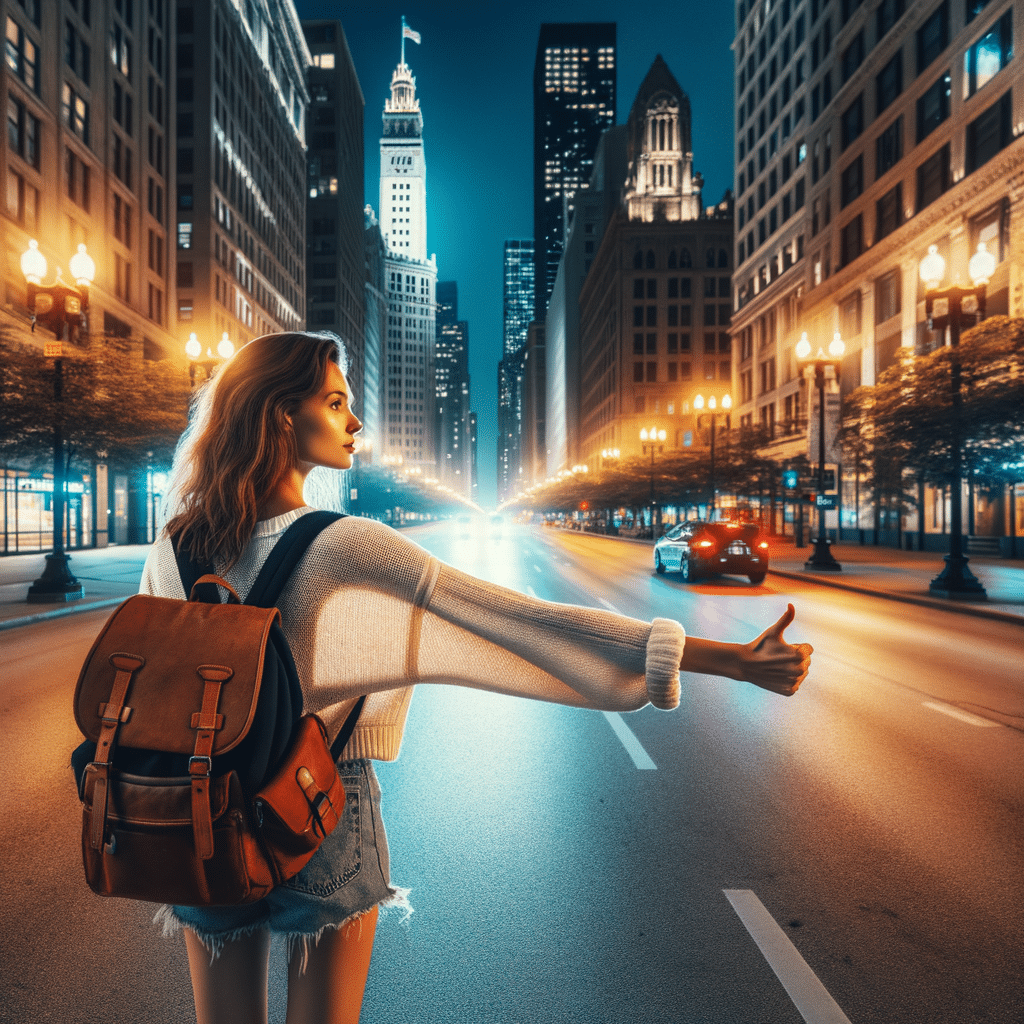
Hitchhiking ghosts are a very intriguing type of ghost experience because they combine the danger of travel with the dread of strangers that people have had for a long time. In these stories, drivers see lonely people on deserted roads, usually during storms or late at night, and feel like they have to help. The hitchhiker usually looks normal at first, like a young woman in a white dress or an old man looking for a ride home. They then disappear from the moving car without a word. These disappearances are said to happen when people move close to important places, including cemeteries, the sites of sad incidents, or old homesteads that have been abandoned for a long time. These kinds of stories have a deep emotional effect on us because they go against what we know about the physical world and play on our sympathy for people who are stuck in a strange place. These stories are uniquely scary and continue to spread in various ways over the years (Bennett, 1998).
Hitchhiking ghosts are part of folklore in almost every area, and the stories are different depending on the area’s location, history, and cultural issues. In the southern United States, many stories are about the “vanishing hitchhiker,” who needs a ride home after a dance. The driver eventually finds out that their passenger died years ago in a horrible tragedy. People say that Hawaii’s nightmarchers, which are processions of ancient warrior spirits, show up on old paths and demand respect from drivers who come across them on modern roads that were built over ancient trails. La Llorona is a Mexican tale about a woman who cries and sometimes shows up as a hitchhiker around bodies of water. She persistently searches for her drowned children. Japanese drivers are afraid of seeing the spirit of Oiwa, a betrayed wife who would show up as a disfigured hitchhiker out for revenge. Different cultures change the basic structure of the story to fit their fears, past traumas, and moral lessons (Brunvand, 1981).

Analysis
There is a deep psychological and historical reason why hitchhiking spirits and roads are connected. Roads are like ghosts in that they are places between life and death. They are also like ghosts in that they are places between destinations. Many modern roads trace ancient routes that thousands of people have traversed throughout history. Before the advent of modern technology, travelers frequently encountered genuine dangers on their journeys, often losing their lives due to exposure, accidents, or violence in remote locations. Old memories of such perils may have shaped these stories of ghostly hitchhikers into warnings for today’s travelers. Driving at night is lonely, and the limited vision and heightened awareness make it easy to misinterpret things or have real psychological experiences that feel otherworldly. This theory explains why so many tales have identical elements even if they happened on their own (Beardsley & Hankey, 1943).
Paranormal researchers put forward several ideas to explain hitchhiking ghost events, some of which are based on science and some of which are not. Some believe these beings are spirits stuck between worlds, tied to where they died or didn’t finish their purpose, and seeking help from the living to finish their journey to the afterlife. Some people say that strong emotional events might leave “recordings” in physical places that play again under particular conditions. This hypothesis could explain why ghosts regularly show up at the same times or do the same things over and over again. Some more controversial theories say that beings from other dimensions sometimes come into our reality or that awareness itself goes on beyond death in ways we can’t even begin to understand. These explanations, although persuasive to adherents, continue to pose challenges for validation through traditional scientific approaches, perpetuating the ongoing enigma associated with such narratives (Shewmaker, 2015).
Skeptics provide more ordinary explanations for ghostly hitchhiker encounters, linking them to human psychology and perception instead of supernatural forces. They discuss the power of suggestion, which occurs when individuals who have heard numerous ghost stories are more likely to perceive ordinary events as paranormal. Fatigue, highway hypnosis, or the boring visual patterns of driving at night can cause hallucinations that make people think they see ghosts, especially if they are worried or haven’t slept well. Pareidolia, our propensity to discern significant patterns in random inputs, elucidates why individuals may sense human figures in wayside plants, fog, or light reflections. Memory contamination happens when people unknowingly mix in details from stories they’ve heard with their own experiences, turning normal events into supernatural ones as they recount them again. These psychological processes do not negate the significant influence that such experiences exert on witnesses; rather, they provide alternate contexts for their comprehension (Goss, 2015).
Hitchhiking ghost stories have a cultural impact that goes beyond just being entertaining; they change how people act and how society thinks about things. These stories are generally modern morality tales that teach people to care about strangers and warn them about possible risks on the road at the same time. Many towns and cities employ local ghost stories to keep the memory of sad occurrences alive, making sure that the names and circumstances of people who might otherwise be forgotten are still known. The tourism business profits from offering guided tours of famous hitchhiking ghost sites and creating jobs, but it can occasionally present tragedies in a way that makes them seem more intriguing for profit. Books, movies, and TV shows have transformed hitchhiking ghosts into powerful symbols of unresolved pain, social isolation, and the fear of forgetting after death. What starts out as personal stories or local tales gradually becomes shared cultural touchstones that both reflect and alter how we all perceive death.
Conclusion
Hitchhiking ghost stories can be seen as real reports of supernatural events or as psychological and cultural phenomena. No matter how you look at them, their lasting presence throughout time and cultures shows something important about what it means to be human. These stories confront universal issues like our fear of mortality, our hope for something after it, our sympathy for other travelers, and our urge to find meaning in loss and sorrow. In a time when technology connects us instantly over great distances, these stories remind us of the fragility of all journeys and the blurred boundaries between what we know and what we don’t know. Maybe the lasting force of traveling ghost stories isn’t in figuring out if they’re true, but in realizing how they still connect us—living people—through shared awe and the understanding that some parts of life are still gorgeously, terrifyingly unexplained.
References
Beardsley, R. K., & Hankey, R. (1943). A history of the vanishing hitchhiker. California Folklore Quarterly, 2(1), 13-25.
Bennett, G. (1998). The vanishing hitchhiker at fifty-five. Western Folklore, 57(1), 1-17.
Brunvand, J. H. (1981). The vanishing hitchhiker: American urban legends and their meanings. WW Norton & Company.
Goss, M. (2015). The Evidence for Phantom Hitch-Hikers: An Objective Survey of the Vanishing Passenger from Urban Myths to Actual Events. Weiser Books.
Shewmaker, D. J. (2015). ” Supernatural” beginnings in North American folklore: the vanishing hitchhiker and La Llorona.



Leave a Reply