
Ghosts and Time Slips: Key Points
-
Ghosts and time slips represent phenomena where past, present, and future blur, challenging our understanding of linear time and raising questions about consciousness and reality.
-
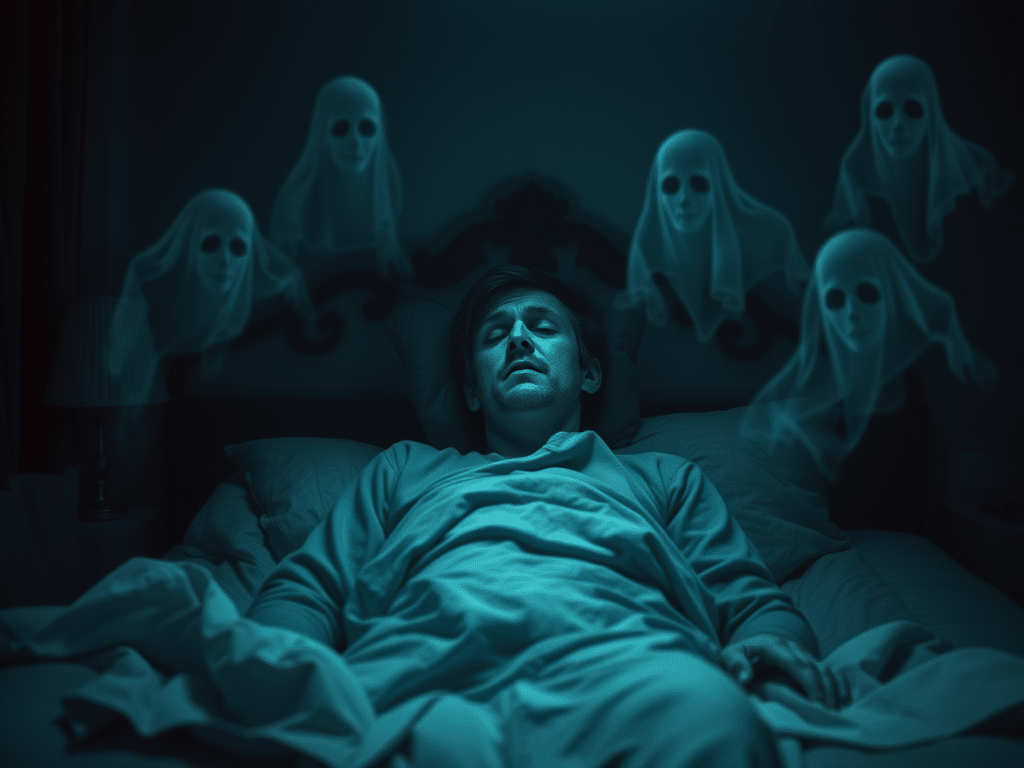
Ghosts are often described as entities trapped in temporal loops, repeatedly reenacting past behaviors while appearing unaware of the present day.
-
Time slips involve people who claim to physically experience another era, finding themselves in historical settings before suddenly returning to their own time.
-
Both phenomena may represent different manifestations of temporal disturbances, with ghosts possibly being glimpses of living people from the past rather than spirits.
-
Theories explaining these experiences include the stone tape theory, quantum physics perspectives on consciousness, and possibilities involving electromagnetic anomalies or altered brain states.
-
These experiences profoundly impact witnesses and inspire ongoing research, representing enduring mysteries about consciousness and time that science cannot yet fully explain.

Introduction
The convergence of spectral occurrences and temporal distortions constitutes a particularly captivating domain within paranormal investigation, wherein the demarcations separating past, present, and future appear to dissolve, thereby subverting our established comprehension of existence. Across the annals of history, numerous accounts have emerged, detailing encounters that imply a non-linear, mutable nature of time, especially in the context of interactions with phantoms. These enigmatic events prompt significant inquiries into the essence of consciousness, the mechanisms of memory, and the potential for certain places or occurrences to somehow leave an imprint upon the very structure of space-time.
Ghosts and Time Slips
In the realm of paranormal narratives, ghosts have traditionally been portrayed as beings existing beyond conventional temporal limitations, frequently manifesting as though they are confined within particular moments from their former existences. Many ghostly encounters are characterized by spirits exhibiting repetitive actions, including traversing the same corridors, undertaking identical activities, or reenacting tragic occurrences, seemingly trapped within a temporal cycle. Persinger (2001) posits that experiences categorized as paranormal phenomena, encompassing those associated with ghosts and time slips, are often marked by a sensed presence and suggest distortions in physical time. These occurrences are frequently documented at sites where intense emotions were felt or traumatic events transpired, implying that potent psychological energy may become imprinted within physical space.
Time slips, also known as temporal displacement experiences or dimensional slips, are when people say they briefly entered another time and saw the past or future as clearly as they see the present. Unlike standard ghost sightings, where spirits appear in the present, people who report time slips say they’ve physically traveled to another time. They describe being surrounded by people, buildings, and environments that match historical records, even though those places no longer exist. RMR (2024) uses the term “dimensional slips” to describe these experiences. Their existence is because time and space are fundamentally linked, and many unusual human experiences involve complex distortions of space and time. These episodes usually last only a few minutes, after which the witnesses suddenly return to their time, often feeling confused and struggling to understand what happened.
The connection between ghosts and time slips suggests that both might be different ways of showing the same underlying problem with time or a dimensional overlap. Some scholars posit that the phenomena we interpret as ghostly encounters could represent instances of living individuals from the past, whose experiences have somehow become accessible to us in the present, rather than manifestations of the deceased. Hall (2013) observes that the enchanting or otherworldly ambiance characteristic of time-slip narratives frequently arises from a focus on time, a concept less precisely defined than history, and that these stories often explore themes of identity and personal and cultural legacy. This perspective implies that specific circumstances might generate portals or “thin places” in time, facilitating brief interactions or visibility between disparate temporal periods.

Theories
Numerous theories endeavor to elucidate the potential mechanisms behind the occurrence of ghosts and time slips within the frameworks of physics and consciousness. Persinger (2001) links the occurrence of paranormal experiences and the circadian distribution of sensed presences to specific types of neuronal activity within the temporal lobes of the brain, a region also associated with temporal lobe seizures and distortions in subjective time. RMR (2024) performs an AI-powered content analysis and expert review of four-dimensional slips to gauge the likelihood of various explanations, such as deliberate deceit, mental time travel, and dissociative states. Braschler (2021) examines criticisms and scientific support for time slips, arguing they are not delusions or past-life remembrances but may relate to energy vortices, black holes, or astral travel. He compares time slips to the shamanic journeying and practices of yoga masters and Samadhi mystics who use trance-like states to travel outside normal space and time.
The examination of time slips has been conducted through literary and cultural analysis, elucidating how these narratives mirror profound human anxieties regarding temporality and existence. Hall (2003) traces the genesis of the time-slip narrative, observing that Kipling and Nesbit, in 1906, independently crafted the initial time-slip stories, thereby integrating historical fiction with the time travel concept that H.G. Wells had popularized. Jones and Ormrod (2015) investigate the notion of “dislodgement,” a form of temporal manipulation observable in contemporary time travel narratives and time loop films; this concept can include time slips, and they analyze how time travel narratives occasionally obscure the distinction between fantasy and science fiction, drawing upon mythological and religious interpretations of time. These literary analyses illuminate the development of time slip narratives and their enduring ability to engage the human imagination across diverse media.
Impact
The consequences of these events for individuals who experience them are often profound and transformative, regardless of whether they have objective reality or signify complex psychological phenomena. Witnesses to ghostly apparitions and temporal anomalies often describe profound emotional disturbances following their experiences, leading many to question the completeness of our established frameworks for understanding time and reality. Persinger (2001) investigates paranormal phenomena, including the sensed presence frequently linked to ghostly encounters, as a category of neurogenic processes arising from dynamic chemical and electromagnetic activities within the human brain. These occurrences have spurred extensive research, given rise to dedicated fields of paranormal study, and fueled ongoing discussions concerning the essence of consciousness and perception.
Booth (2011) analyzes temporal displacement as a distinct form of narrative complexity within contemporary television, positing that it reflects both the industry’s response to and the audience’s reconciliation with postmodern schizophrenia. Booth’s analysis of three types of temporal displacement in television narratives, including flashbacks (analepses) and simultaneous timelines, clarifies their ideological implications. The author correlates the frequent occurrence of temporal displacement in media with the current digital media environment, which fosters and requires a nuanced engagement with temporality. This study posits that fragmented narrative forms reflect the fragmented experience of time within a period characterized by digital interfaces and concurrent information flows.
Extending beyond the realm of television, Jones and Ormrod (2015) offer a thorough investigation of time travel narratives across various media, including film, television series, comic books, graphic novels, and video games. Their edited collection addresses the narrative diversity and cultural, historical, and philosophical contexts of time travel stories, which are often classified under the popular science fiction subgenre. Through specific examples such as Doctor Who, The Terminator, Back to the Future, and Inception, the authors demonstrate how time travel functions as a flexible narrative device that allows creators to explore questions of causality, identity, and historical change across different media formats.
In children’s literature, temporal displacement manifests as “time-slip fantasy,” a subgenre wherein contemporary protagonists encounter individuals and locales from the past, frequently associated with specific sites such as antiquated houses or gardens (Isobe, 2019). Focusing on two key examples from the 1950s in Britain—The Children of Green Knowe and Tom’s Midnight Garden—Isobe considers time-slip fantasy as an important genre of British children’s literature during what has been termed the second Golden Age, running from the 1950s to the 1970s. This study examines temporal displacement in the post-war era, positing that these narratives fulfilled specific cultural roles during a period marked by historical contemplation and societal rebuilding.
These works collectively illustrate that temporal displacement transcends a mere narrative device; it is a culturally significant occurrence that mirrors prevailing concerns regarding memory, history, and the experience of time within a world increasingly shaped by media. Temporal displacement serves as a conduit for both creators and audiences to traverse the complexities of the past, present, and future, as evidenced in the intricate narrative structures of television, the time travel themes prevalent in popular science fiction, and the nostalgic reflections on history found in children’s literature.
Conclusion
The enigmas of ghosts and time slips continue to intrigue both those who accept and those who question them, embodying persistent inquiries into the essence of reality that remain unresolved by scientific inquiry. The nature of these occurrences, whether they represent genuine disruptions in the temporal continuum, psychological constructs of the human psyche, or an entirely different phenomenon, is still a matter of considerable debate. However, the expanding research suggests that these experiences underscore the intricate nature of consciousness and time, highlighting that, notwithstanding our technological progress and scientific understanding, certain fundamental elements of existence remain profoundly enigmatic and potentially beyond our current comprehension. As RMR (2024), Braschler (2021), and other researchers persist in their exploration of these phenomena using diverse methodological frameworks, a more thorough understanding of the interplay between human consciousness and the temporal dimensions of reality may ultimately be achieved.
References
Booth, P. (2011). Memories, temporalities, fictions: Temporal displacement in contemporary television. Television & New Media, 12(4), 370–388.
Braschler, V. (2021). Time shifts: Experiences of slipping into the past and future. Simon and Schuster.
Gale, D. (Director). (1960). The time machine [Film]. Metro-Goldwyn-Mayer.
Hall, L. (2003). Ancestral voices—’Since time everlasting beyond’: Kipling and the invention of the time-slip story. Children’s Literature in Education, 34(4), 305–321.
Hall, L. (2013). ‘Time no longer’–history, enchantment and the classic time-slip story. In Historical fiction for children (pp. 43–53). David Fulton Publishers.
Isobe, S. (2019). Where children encounter the past: Reading time-slip fantasy as literature of place. Correspondence: Hitotsubashi Journal of Arts and Literature, 4, 85–104.
Jones, M., & Ormrod, J. (Eds.). (2015). Time travel in popular media: Essays on film, television, literature and video games. McFarland.
Nolan, C. (Director). (2010). Inception [Film]. Warner Bros. Pictures.
Persinger, M. A. (2001). The neuropsychiatry of paranormal experiences. The Journal of Neuropsychiatry and Clinical Neurosciences, 13(4), 515–524.
RMR, J. W. (2024). Magic flights or mind’s eye? Competing content analyses of dimensional-slip narratives. Journal of Transpersonal Psychology, 56(2), 147–186.
Wells, H. G. (1895). The time machine. William Heinemann.
Zemeckis, R. (Director). (1985). Back to the future [Film]. Universal Pictures.
Leave a Reply