Evil Dragons: Key Points
-
Evil dragons are malevolent chromatic creatures with immense power and intelligence, each color possessing distinct abilities while sharing a drive for domination and destruction.
-
Red dragons are the most powerful and arrogant, wielding fire breath and claiming volcanic territories with the largest treasure hoards.
-
White dragons are wild animals that live in frozen places and breathe freezing air. Black dragons, on the other hand, are sadistic swamp-dwellers who torture their victims with acid.
-
Blue dragons are desert manipulators using lightning and political schemes, while green dragons are forest deceivers employing poison gas and psychological warfare.
-
Evil dragon species share mutual contempt and rivalry, each viewing others as inferior, though they occasionally cooperate against common enemies before betraying each other.
-
Undead dragons like dracoliches achieve immortality through necromancy, representing the ultimate perversion of draconic nature and spreading corruption wherever they go.

Introduction
People have always found inspiration in dragons due to their perceived power and fear. In myth and fiction, evil dragons are some of the scariest bad guys. These evil beings are the purest forms of greed, corruption, and destruction. They have powerful magical and physical skills that can destroy whole civilizations. Unlike their metallic counterparts, who often protect and help humans, evil dragons pose an existential danger to everyone who comes into contact with them. They are motivated by an endless desire for power, territory, and to control or kill lesser beings. The very existence of these creatures indicates powerful forces of chaos and destruction hidden in the world’s deepest recesses.
Evil dragons have colored scales that come in different colors, such as red, white, blue, black, and green. Each type has its own special skills and personality, but they are all basically bad. These animals usually live alone and claim large areas that they will kill anyone who dares to enter. They make the landscape look like festering wounds when they stay there, polluting it with their presence and turning once-green areas into twisted reflections of evil. Evil dragons have sharp minds that are as smart as or smarter than the smartest humans. However, they don’t use their intelligence to make things or teach people; they use it to plan ways to control, manipulate, and destroy others. Their legendary hoards of treasure are more than just money; each coin and gem is a reminder of the people they have defeated, the countries they have overthrown, or the innocent people they have terrorized.
Red Dragons
To the evil dragons, red dragons are the most powerful and cocky of their color siblings. They see themselves as the perfect dragons and think all other dragons are inferior to them. These huge snakes have scales that shine like liquid metal or fresh blood. They like to hide in volcanic mountains and other hot places because the heat matches their fiery personalities. Red dragons spit out cones of burning flame that can turn stone into slag and armies into ash in an instant. They love using this power to show how much stronger they are than other creatures. Their anger is terrifying to witness, as even the smallest perceived insult can trigger a rampage that devastates entire regions. If you want to increase your wealth and power, red dragons will do anything. They hoard not out of greed but because they think they’re the best.
White Dragons
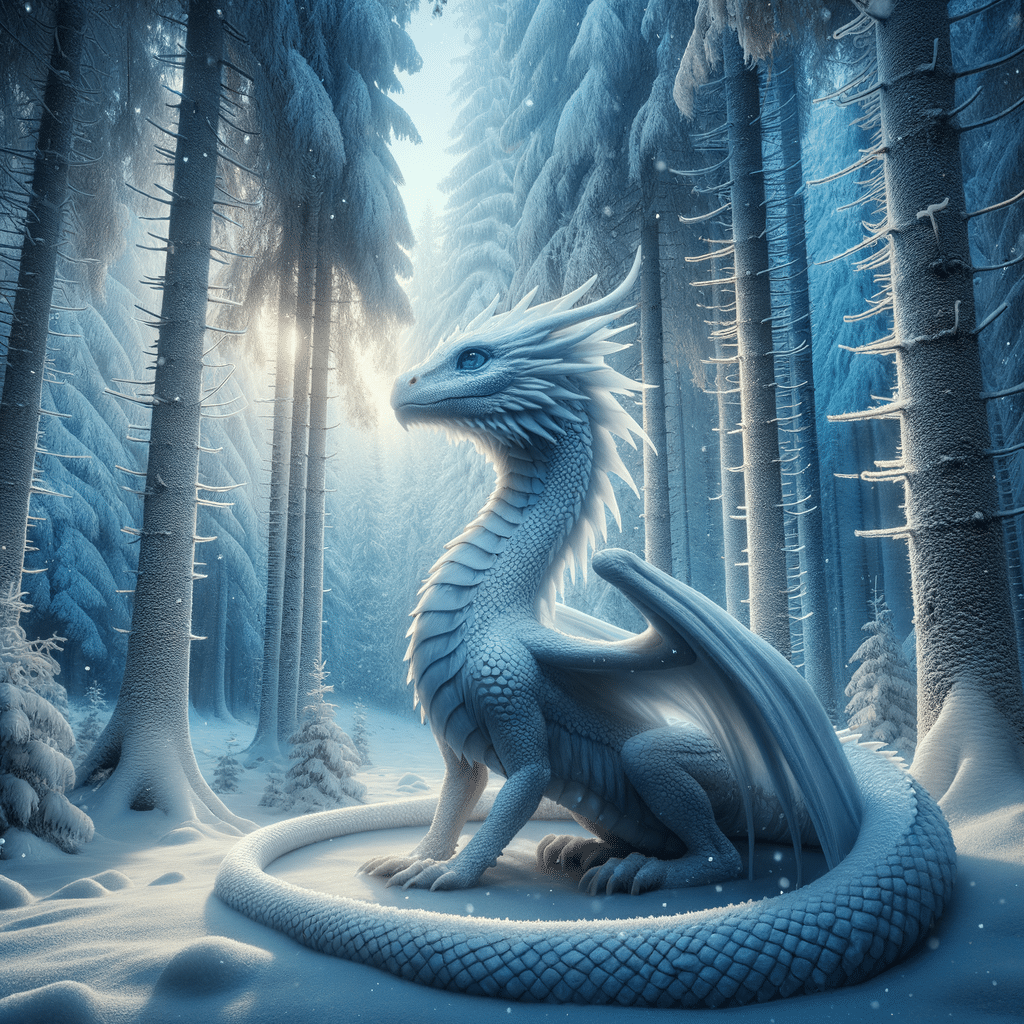
White dragons are the wildest and most vicious of all the evil dragons. They are mostly motivated by basic needs like hunger and a need to protect their territory, not by complex plans like their smarter relatives. These animals live in the frozen wastelands of the world, among glaciers and snow-covered hills. Their ice-blue or snow-white scales help them blend in with the endless winter scenery. White dragons breathe out blasts of freezing cold that can instantly freeze living things into statues. They do these activities to keep their food frozen so they can eat it whenever they want. White dragons are the least intelligent of all the true dragons, but that doesn’t mean they are dumb. They are very smart and enjoy hunting intelligent prey across the tundra. In addition to more standard treasures, their hoards often contain the frozen bodies of their victims. This creates macabre galleries inside their icy dens that show how predatory they are.
Blue Dragons
Blue dragons are adept at planning and manipulating others. They would rather get what they want through lies, political maneuvering, and well-planned shows of power than through direct force. These dragons have azure-colored scales that shine brightly, and they claim the deserts and dry badlands as their own. There, they rule over networks of slaves and thralls with iron claws. Blue dragons use lightning as a breath weapon, calling down powerful electrical storms that can fry enemies where they’re standing or destroy defenses. They are very vain creatures who take immense joy in how they look and how they are known. They carefully make the lesser races fear and respect them while using middlemen to spread their power far beyond their territories. Most of the time, blue dragons become the hidden leaders of mortal countries and criminal groups. They do these tasks from their lairs in the desert, where they also gain wealth and political power.

Black Dragons
Black dragons are probably the meanest and most cruel of all the evil dragons. They enjoy making their victims suffer and seeing them fight in hopeless situations before killing them. These snakes live in stinky swamps, poisonous marshes, and other messed-up wetland areas. Their midnight-black scales let them hide in dark water and rotting plants. Black dragons breathe out streams of corrosive acid that can eat through the toughest armor and dissolve skin from bone. They love using this weapon to hurt their prey as much as possible. They are slow hunters who like to play with their prey. They utilize the natural features of their swampland habitats to deceive, divide, and frighten groups of travelers or explorers prior to launching their attack. Additionally, black dragons are known for being very angry and will hold grudges against people who have hurt them for decades or even centuries, going to great lengths to get even, no matter how small the crime was.
Green Dragons
Green dragons are the most dangerous and deceitful because they are physically strong and skilled at lying, manipulating, and attacking others mentally. These emerald-scaled predators like to hide in old woods, where they can blend in with the trees without being seen because of the color of their scales. Green dragons breathe out clouds of poisonous gas that suffocate and eat away at anyone who breathes it. The gas turns the air itself into a weapon that kills slowly and terribly. They lie all the time and love nothing more than to do awful things to innocent people, turn friends against each other, and plan complicated schemes that bring down countries and heroes alike. Green dragons love to collect not only valuable things but also secrets, favors, and power over strong people. They do this by creating networks of blackmail and duty that give them more power than their physical strength alone could give them. Conversation and bargaining don’t seem like alternatives to violence for them. Instead, they see them as extra tools they can use to find weaknesses and sow seeds of doubt and betrayal.
Evil Dragon Interactions
Different types of evil dragons dislike and compete with each other, and they are aware that they have more things in common than they do differently, even though they have different territories and personalities. Red dragons think that all other chromatic dragons are weaker and should not be respected. They especially dislike white dragons, which they see as not much better than wild animals, and they think that blue dragons are arrogant newcomers whose intelligence can’t make up for their lack of raw power. Blue dragons, on the other hand, think red dragons are rough and lack polish. They also believe that green dragons manipulate others in a similar way, although they view them as potential competitors and do not pay any attention to white dragons. Green dragons stay away from red dragons because their fiery tempers make them unreliable allies. They find blue dragons useful, but eventually, they are too direct in their goals, and they sometimes use black dragons for their skill at making people suffer, even though they don’t like how crude their sadism is. Black dragons hate all other dragons with the same level of venom, but they will sometimes form brief alliances with green dragons when their goals of causing pain are the same. They avoid red dragons due to their potential for violent outbursts, and they turn to blue dragons when their organizational abilities prove beneficial. White dragons don’t care much about their smarter cousins’ complicated politics. They just try to avoid territorial disputes with stronger dragons when they can and attack weaker ones when they’re hungry. They don’t care about the complex rivalries and hierarchies that consume the other chromatic species. Even though they have tense relationships with each other, all evil dragons know that metallic dragons and the civilizations of lesser races are their common enemy. When faced with existential threats, they have been known to put aside their differences long enough to plan devastating attacks, but they always betray each other once the threat is gone.
Undead Dragons
Undead dragons are the worst kind of dragons because they take creatures that were already evil in life and turn them into abominations that live against nature itself. Dracoliches are probably the scariest of these zombie monsters. They are made when evil dragons willingly go through a necromantic ritual that turns them into immortal skeletal zombies while keeping all of their magic and intelligence. In exchange for eternal life and freedom from the weaknesses that plague living dragons, these creatures give up their bodies and their connection to life itself. Phylacteries hold them together, making them nearly unstoppable weapons of destruction, even if their bones break. Zombie dragons, on the other hand, are usually made by strong necromancers who have somehow bonded the body of a dead dragon to their will. This creates shambling, rotting monsters that have all of a dragon’s physical strength and breath weapons but not its smarts, which made it so dangerous in real life. Both types of undead dragons bring corruption and decay with them wherever they go, making plants die and people get sick just by being around them. They are often the leaders of armies of liches and death gods, leading legions of lesser undead in campaigns to take over the living world.
Dragon Evil
Draconic evil is more than just being selfish or cruel; it opposes the forces of civilization, cooperation, and kindness that allow human societies to thrive. Evil dragons believe that absolute might makes right. They see their greater strength and magical power as permission to treat all lesser beings as property, prey, or toys to be used for their entertainment. This evil isn’t caused by stress or corruption; it’s a part of their very nature that starts when they hatch and gets stronger as they age and gain power. Evil dragons have no moral authority other than desires. They only see power when it threatens them personally and only show mercy when it is in their best interest to do so in the long run. Because they live forever, they can carry out plans and grudges for hundreds of years, making them patient and unforgiving enemies who can wait for the right time to attack. Dragons are intelligent and strong, which makes them even more evil. They cause immense pain beyond the capacity of less evil individuals, making them exceptionally dangerous.
Conclusion
As creatures with terrible strength and destructive abilities, evil dragons represent destruction, greed, and evil. Each type of dragon brings its own special kind of evil to a world that doesn’t know it yet. From the fiery wrath of red dragons to the poisonous betrayal of green dragons, from the cruel and evil black dragons to the unholy persistence of undead dracoliches, these creatures are existential threats that can destroy countries and end entire bloodlines. Their evil extends beyond mere misbehavior; it is an inherent force that instigates chaos and destruction. Heroes must be ready to risk everything to protect innocent people from the anger of the dragons. The stories of evil dragons serve as a reminder that there is real evil in the world and that it has terrible power and an unbreakable will. Only through bravery, sacrifice, and unity can normal people hope to stand up to such ancient threats and protect the light of civilization against the darkness that dragons represent.
References
Ammann, K. (2019). The Monsters Know what They’re Doing: Combat Tactics for Dungeon Masters (Vol. 1). Simon and Schuster.
Collins, A., Williams, S., & Wyatt, J. (2003). Draconomicon. Renton, WA: Wizards of the Coast.
Cruz, R. A. L. (2017). Here be dragons: using dragons as models for phylogenetic analysis. The American Biology Teacher, 79(7), 544-551.
Gilmour, N. P. (2024). A Chaotic-Historical Reflection on Alignment in Dungeons & Dragons. Theology, Religion, and Dungeons & Dragons: Explorations of the Sacred through Fantasy Worlds, 245.
Irwin, W. (2014). Dungeons and dragons and philosophy: Read and gain advantage on all wisdom checks. John Wiley & Sons.
Konstantopoulos, G. (2024). Monstrous mothers and metal bands: Enuma Elish today. Enuma Elish: The Babylonian Epic of Creation, 1, 166.
Sarwark, R. M. (2024). The dragon in world mythology and culture. McFarland.

Leave a Reply