The Big Grey Man of Scotland: Key Points
-
The Big Grey Man of Ben Macdui, known as Am Fear Liath Mòr in Gaelic, is a mysterious cryptid entity reported on Scotland’s second-highest mountain for over a century by credible witnesses.
-
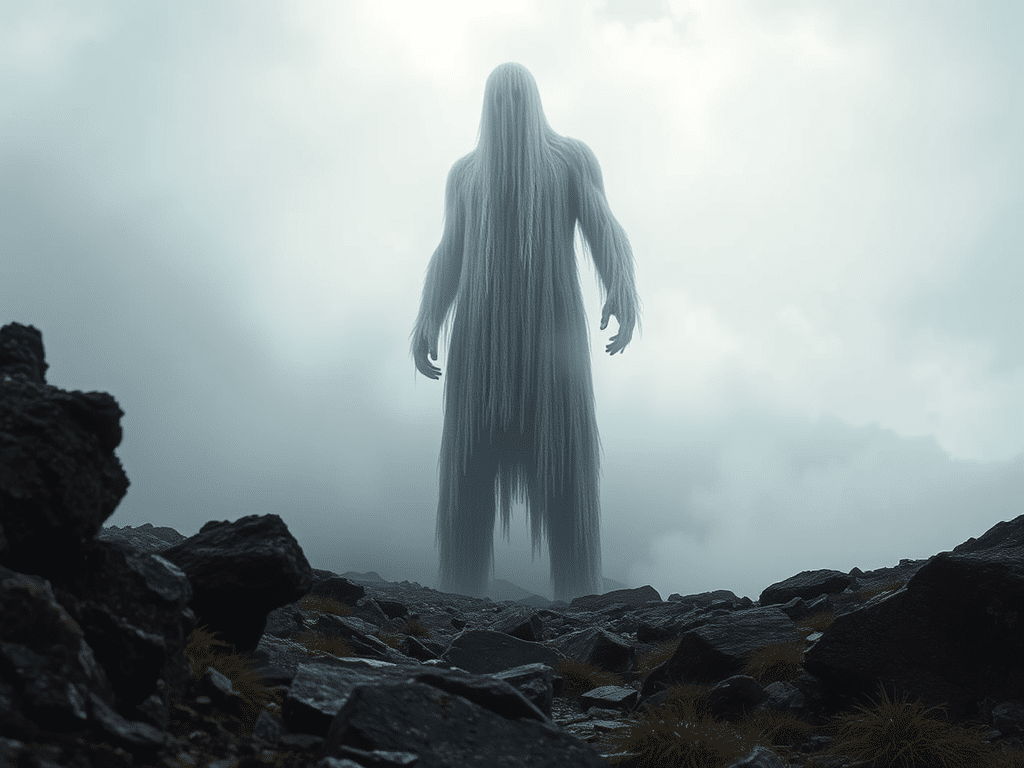
Witnesses describe a towering humanoid figure between ten and twenty feet tall, covered in grey or brown hair, accompanied by an overwhelming sense of dread.
-
The entity is characterized by heavy footsteps following climbers and driving them from the mountain through psychological terror rather than direct aggression.
-
The phenomenon gained credibility in 1925 when Professor Norman Collie publicly described his 1891 encounter, followed by numerous consistent reports from experienced climbers.
-
Scientific theories include the Brocken spectre effect, acoustic anomalies, and infrasound-triggered anxiety, though these struggle to fully explain the consistent reports.
-
The Big Grey Man remains unexplained despite investigation, reminding us that remote wilderness areas can still produce experiences that challenge human understanding.

Introduction
In Gaelic, the Big Grey Man of Ben Macdui is called Am Fear Liath Mòr. He is one of Scotland’s most famous and scary secrets. For more than one hundred years, this mysterious being has been seen on the highest peaks of the Cairngorm Mountains, scaring expert climbers and confusing scientists. Many cryptids are forgotten when they are studied in modern times, but the Big Grey Man keeps getting reliable reports from experienced climbers and outdoor enthusiasts who can’t explain the scary things that have happened to them on Scotland’s second-highest mountain. Folklore, psychology, and odd experiences all come together in this strange way that makes us think about what might be hiding in remote wilderness areas.
Physical Descriptions and Behavioral Patterns
The Big Grey Man story has been around for more than one hundred years, with many reports of ghostly sightings and strange sounds resonating through the rough terrain of the Cairngorm mountains. Witnessing the Big Grey Man on the Scottish Peaks, by Tita, is an important book that talks about this event. It looks at how mountaineers who have seen this being have interpreted it. Tita uses old records, ethnographic research, and interviews to look into how the harsh environment of the Cairngorms affects these strange experiences. The author suggests that the landscape is a major factor in shaping the stories about encounters with the Big Grey Man (Tita, 2021). A lot of hikers and climbers have said that their experiences were worse because of the extreme weather, which can make people feel alone and scared, which can make them more aware of what they don’t know.
People who say they have seen the Big Grey Man say that it looks like a tall figure suddenly appearing out of nowhere on the top plateau of Ben Macdui. People usually say that the thing is between ten and twenty feet tall and has a humanoid shape with short gray or brown hair. Most stories focus on the overwhelming sense of danger and dread that comes with seeing something, which is often scarier than seeing it. The figure is rarely seen clearly; most of the time, it shows up as a huge shadowy shape moving through fog or as a dark outline against rock and snow. Some witnesses say they saw bright eyes or a face that they couldn’t make out. Others say they only saw a big, scary-looking figure.
The behavior of the Big Grey Man makes it different from other cryptids people have seen, which adds to its scary image. Most of the time, climbers say they can hear heavy, crunching footsteps following them across the mountain. Each footfall happens three or four times, which suggests that the thing is taking very long steps. These ghostly footsteps can last for a long time, and they have been known to send expert mountain climbers flying down the mountain in a panic, even when it’s dangerous. Witnesses said they felt like they were being watched by something they couldn’t see, that they were going through sudden waves of unimaginable fear, and that they could sense an evil or malicious intelligence watching them. In contrast to other stories about aggressive cryptids, the Big Grey Man rarely attacks witnesses who are running away. Instead, he seems happy to torture them into leaving the mountain.
Cultural Origins and Historical Documentation
It is thought that the Grey Man tale came from a mix of different cultures, especially the rich tapestry of Scottish folklore and historical events. Researchers say that this figure is part of a larger story of supernatural beings that live in Scotland. Meiirbekov & KURBAN (2023) say that in Scotland, toponymic tales often involve characters like the Grey Man and show themes of bravery and remembering that are essential to the people who live there. In traditional Scottish beliefs, places are given spiritual meaning and are often personified through mythical figures. This idea of a place-centered identity is similar.
In Scottish mythology, the Grey Man is often shown as a ghostly figure that warns people of approaching danger. This aligns with the notion that ghosts and other supernatural entities serve as symbols of misfortune. For instance, the Brahan Seer, a very important figure in Scottish folklore, is known for making predictions about the future that are very similar to the Grey Man’s role as a sign of big things to come. In Scottish folklore, there is a common story thread that links the supernatural to personal and communal identities. There is a connection between these individuals.
The legend of the Big Grey Man got a lot of attention in 1925, when noted scientist and experienced mountaineer Professor Norman Collie told the Cairngorm Club about his meeting with the creature in 1891. Collie said he heard footsteps following him through the fog and was so scared that he ran for miles down the mountain without seeing anything. His statement gave truth to rumors that had been going around among Highland climbers and guides. Local legends have long talked about ghosts in the Cairngorms. For instance, Gaelic stories depict ghosts observing mountain peaks and punishing those who disrespected nature. The Am Fear Liath Mòr seemed to fit into this older tradition of mountain spirits, but it also had physical traits that set it apart from other magical beings.
Throughout the 20th century, many reliable witnesses added their stories to the rising list of Big Grey Man sightings. Alexander Tewnion, a naturalist, saw the figure and shot at it with a pistol in 1943. He saw it disappear into the fog after the shots. In the 1940s, climber Wendy Wood talked about a strong presence and the sound of big footsteps. In 1945, experienced mountaineer Richard Frere wrote about a meeting with a huge brown creature that came down a slope toward him. A 1965 story recounts Peter Densham, an experienced outdoorsman, hearing footsteps and feeling so terrified that he had to flee for his life. These stories are very similar, even though they come from unrelated people. This suggests either a real phenomenon or a shared psychological response to being in the mountains. Ironside and Reid (2024) say that the psychological effects of meeting this kind of person point to a shared cultural archetype that comes from community fears and legends. This archetype is similar to larger themes found in Celtic mythology.

Scientific and Alternative Explanations
Theories based on science and reason have tried to point out the Big Grey Man phenomenon without using magical or cryptozoological explanations. One possible reason for reports is the Brocken spectre effect, in which a person’s shadow is cast onto clouds or mist and looks huge and distorted. Acoustic effects in mountainous areas can make sounds reverberate and get louder in strange ways, which could explain why people have seen ghostly footsteps. Some experts say that low-frequency sound waves called infrasound can make people feel anxious, scared, and like someone is there even if they aren’t aware of the sound itself. When paired with the effects of high altitude, being tired, and extreme weather, sensory deprivation could lead to hallucinations or false perceptions. These logical explanations make sense for certain parts of the encounters, but they don’t really illustrate why reports have been the same for decades or why the experiences reported are so specific.
Other ideas, some of which involve cryptozoology and paranormal speculation, try to explain the Big Grey Man phenomenon in more unusual ways. Some researchers think the thing might be a remnant group of an unknown primate species, possibly linked to Neanderthals or another line of hominins that lived in remote mountain spots. Others make links to similar creatures seen around the world, like the Yeti in the Himalayas and Bigfoot in North America. This suggests that mysterious mountain-dwelling primates are a worldwide phenomenon. Some paranormal theories say that the Big Grey Man could be a mental projection, a thought form that came from people’s fears and expectations as a whole and now has a somewhat independent life. Most scientists disagree with the idea that aliens or interdimensional beings are present, but some evidence suggests they are. Most zoologists think it’s unlikely that a big unknown primate could survive in the relatively small and well-explored Scottish Highlands; however, the consistency of reports continues to puzzle doubters.
Analysis and Cultural Significance
When the Big Grey Man phenomenon is looked at closely, trends emerge that shed light on both the nature of the reports and possible reasons for the experiences. There isn’t much visibility during most encounters; mist, snow, or darkness makes it hard to see clearly and creates an environment where perception isn’t accurate. Almost all witnesses say that the psychological effects aren’t related to the real sounds or sights they saw. This suggests that environmental factors may be causing severe anxiety responses that change how people think and remember. Ben Macdui is in the mountains, which have their own unique geological and meteorological features. For example, the wind blows in strange ways, and there are granite forms that might make certain sounds and weather conditions. It’s interesting that reports have gone down a bit in the last few decades, even though more tourists are coming to the mountain. The decrease could mean that the phenomenon needs to happen alone, or that social norms and communication patterns have changed how people understand strange events.
For many people, the Grey Man represents the conflict between the supernatural and the moral fabric of society. Several stories about the Grey Man stress this duality, with the character acting as both a warning and a guardian against evil. Scholars like Young, who studies traditional stories in the Scottish context, often find that these stories are inspired by moral lessons about being brave and helpful in hard times (Young, 2022).
Also, the Grey Man’s stories often take place in places that are only found in Scotland, which suggests that there is a strong connection between people and places. People tell stories about the Grey Man using the landscape as a backdrop, which strengthens the community’s identity and traditional heritage (Meiirbekov & KURBAN, 2023; Mathúna, 2021). Local tales hold even greater significance due to their deep connection to the history and culture of the Scottish Highlands.
When you look at the Grey Man in the bigger picture of folklore, especially when you compare it to other regional tales around the world, you can see that mythical beings often have the same functions in different cultures. The study of maritime legends and the stories about storm ghosts that Fomin and Mathúna brought up show how the environment shapes folklore in both Irish and Scottish traditions, creating stories that help people understand their heritage (Fomin, 2011; Mathúna, 2021).
Spracklen (Spracklen, 2023) talks about the Wicker Man as a figure that represents the clash between old customs and modernity. The Grey Man’s story structure is similar to that of The Wicker Man. Though the Wicker Man tale has a different take on some themes, it shares fears and respect for nature and the supernatural, which is a lot like the Grey Man’s personality.
Conclusion
Many years of research and guesswork have not led to an easy explanation for the Big Grey Man of Ben Macdui, making it one of Scotland’s most interesting mysteries. The encounters reported by reliable witnesses need to be taken very seriously, whether they are the result of environmental effects on human psychology, misidentification of natural phenomena, or something truly strange. The event is a warning that even in the most remote wilderness areas, things can still happen that make us question what we know and make even the most experienced outdoor enthusiasts feel primal fear. As long as hikers go to the misty plateau of Ben Macdui, the story of Am Fear Liath Mòr will live on in the Scottish Highlands, tempting people to both logically and imaginatively look into what might be out there in the world’s lonely places.
References
Fomin, M. (2011). Maritime Memorates and Contemporary Legends of Storm Apparitions and Storm Making in Folklore Traditions of Ireland and Scotland*. Armenian Folia Anglistika, 7(2 (9)), 154-162. https://doi.org/10.46991/afa/2011.7.2.154
Ironside, R. and Reid, P. (2024). Reimagining the Rural Hinterland: an investigation of participatory digital placemaking in rural communities. Culture Unbound Journal of Current Cultural Research, 16(1), 60-85. https://doi.org/10.3384/cu.4287
Mathúna, S. (2021). Fishing, Fishing Boats and Traditional Lore Based on Maritime Memorates Collected in the 19th and 20th Centuries in Ireland and Scotland. Studia Celto-Slavica, 12, 105-120. https://doi.org/10.54586/gwhf2143
Meiirbekov, A. and KURBAN, A. (2023). COMPARATIVE STUDY OF SCOTTISH AND KAZAKH TOPONYMIC LEGENDS. Turkology. https://doi.org/10.59358/ayt.1287507
Spracklen, K. (2023). ‘Come: It is time to keep your appointment with the Wicker Man’: The re-enchantment of Scotland through Wicker Man tourism. Journal of European Popular Culture, 14(1), 51-70. https://doi.org/10.1386/jepc_00054_1
Sutherland, A. (2025). Second sight: The making of the Brahan Seer legend. Peter Lang. https://doi.org/10.3726/b22652
Tita, M. (2025). Witnessing the Big Grey Man on the Scottish Peaks: Interpretations and Engagement with the Environment of the Mountain Summits. Journal of Ethnology and Folkloristics, 19(2), 163-179. https://doi.org/10.2478/jef-2025-0023
Young, S. (2022). Downie’s slaughter. In The nail in the skull and other Victorian urban legends. University Press of Mississippi. https://doi.org/10.14325/mississippi/9781496839473.003.0014



Leave a Reply