Storm Hag of Lake Erie: Key Points
-
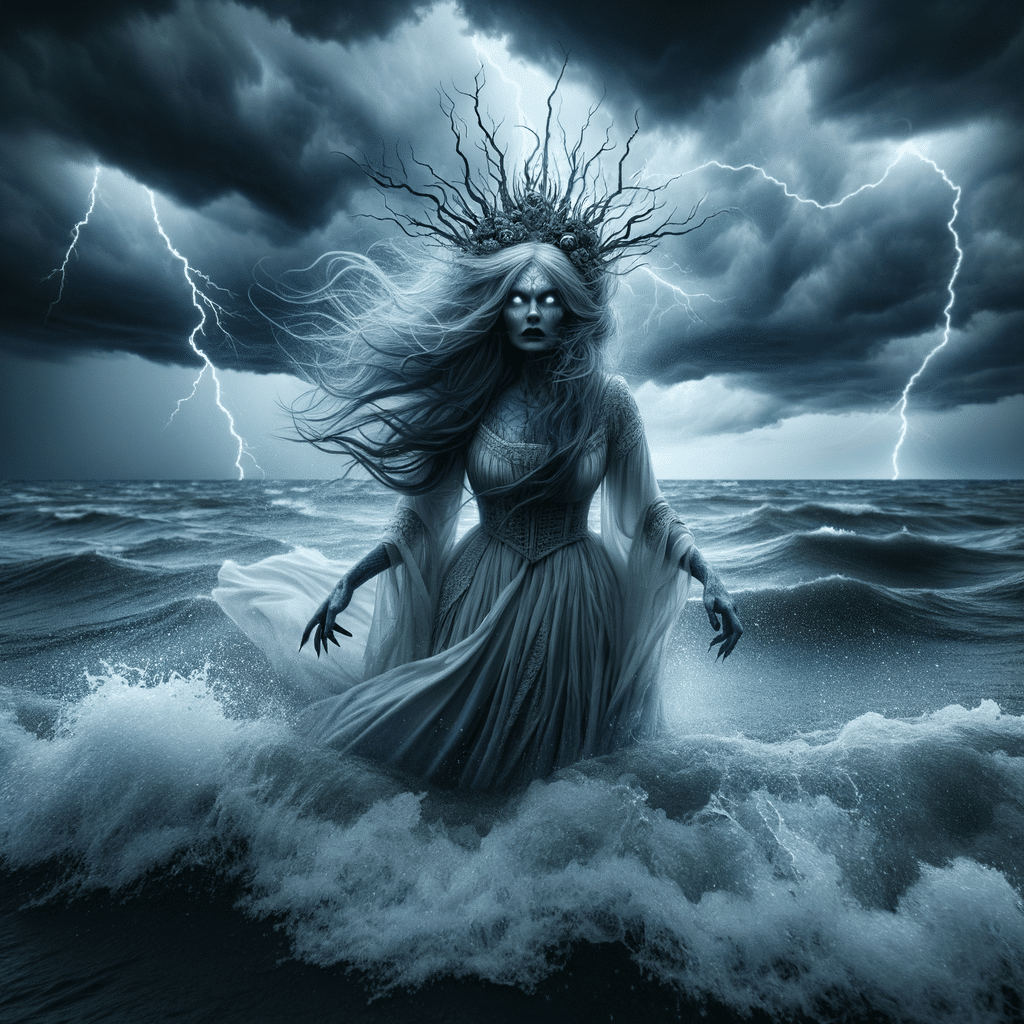
The Storm Hag of Lake Erie is a malevolent sea witch with green skin, yellow eyes, sharp teeth, and poisonous fingernails who summons storms and sinks ships to feast on sailors.
-
The Storm Hag attacks during or after storms when sailors’ guards are down, dragging victims to the lake bottom where they are never recovered.
-
The legend is associated with the British folklore figure Jenny Greenteeth and was likely brought to America by European immigrants who adapted the river hag tradition to fit the Great Lakes environment.
-
The Storm Hag legend explains the sudden, mysterious disappearances of ships in Lake Erie, giving communities a narrative framework for otherwise random tragedies.
-
The legend has influenced maritime culture along Lake Erie and has been incorporated into local art, literature, and tourism as part of the region’s cultural identity.
-
The Storm Hag’s persistence demonstrates how folklore evolves and continues to resonate as both a practical warning and a shared narrative that binds communities together.

Introduction
For generations, the dark waters of Lake Erie have been a source of fear and wonder for the people who live near it. Stories of supernatural encounters have been passed down from generation to generation. One of the scariest of these stories is about the Storm Hag of Lake Erie, a wicked sea witch who was said to cause wild storms and drag sailors to their deaths in the water below. This folklore is an intriguing mix of local history, traditions brought by European immigrants, and the human desire to give supernatural beings dangerous natural world things and human traits.
Lake Erie is the shallowest and fourth-largest of the Great Lakes in terms of surface area. It looks calm, but it is actually very dangerous. Quick, violent storms can turn calm water into churning chaos in minutes due to the lake’s shallow depth. These conditions have destroyed many ships and killed many people throughout history. Its murky waters, which are often cloudy with algae and sediment, make people feel unsafe and unsure because they can’t see what’s below the surface. Because of its dangerous currents, unpredictable weather, and low visibility, Lake Erie is one of the most dangerous of the Great Lakes. This attribute has given it a reputation for being associated with the supernatural.
There are many myths, legends, and historical stories about Lake Erie’s islands and water that give the Storm Hag custom its background (Ryall, 1913). According to Ryall, these regional stories often talked about storms and bad weather, which made it easy for stories about evil beings that could call storms to life. First Nations stories about the Great Lakes also depict other terrifying creatures, such as snakes with enraged eyes and horns, capable of causing waves as turbulent as Lake Erie’s most severe gales (Butts, 2011). These different supernatural reasons for the dangers of the lakes all served the same cultural purpose: they helped people make sense of tragedies and maritime disasters.
Origins and Characteristics of the Storm Hag
Folklore about the Storm Hag of Lake Erie is a unique form of European water spirit folklore that spread to the Great Lakes area in the 1800s. People thought that this evil being, which was also called the “storm-hag carcagne,” was to blame for ships going missing on both Lake Erie and Lake Ontario (Wyld, 1962). The story personified the dangerous and unpredictable Great Lakes, transforming natural tragedies into the actions of a vengeful supernatural being.
Neulander (2024) says that the Storm Hag is the Lake Erie version of the Jenny Greenteeth story. The Jenny Greenteeth was a wicked spirit that people thought caused violent storms that sank ships in the 1800s. According to Neulander (2024), the creature lived near Presque Isle and would sing to her prey right before attacking, drawing sailors to their deaths. This notion that natural forces possess personalities aligns with a broader trend in Great Lakes folklore. In this area, European and American settlers sometimes took on Native American beliefs that nature’s power had personalities and turned storms into the actions of mythical creatures (Brehm, 1991).
Reports from sailors who say they saw the hag just before disaster struck their ships describe her as scary and evil. People say that the creature has magical control over the weather and can make dangerous whirlpools that pull ships below the surface and call on violent storms even when the sky is clear. The scariest story is that she drags sailors to the bottom of the lake to eat them, and the families of the dead sailors never find their bodies again.
The Storm Hag is a strong representation of Lake Erie’s typically rough, dangerous, and unpredictable waters. She gives shape and purpose to the forces that have scared sailors for hundreds of years. People claim that she attacks during or immediately after storms, surprising sailors when they believe the worst of the danger has passed. In real life, sailors often get lost not during the worst parts of a storm but afterward, when they are worn out and less alert. This aspect of the story is grounded in this reality. So, the Storm Hag represents both the immediate danger of the lake’s weather and the constant, looming risk that remains even when things look like they are getting better. The real navigational dangers in Lake Erie’s waters, where strange currents and underwater formations can make things dangerous even for experienced sailors, are shown by her famous ability to make whirlpools.

At an Ohio history festival, the 19th-century style brig warship Niagara passes the Lorain lighthouse.
Cultural Connections and Historical Context
The Storm Hag of Lake Erie and the British folklore character Jenny Greenteeth have a lot in common, which makes me think that European settlers brought these two cultures together. Jenny Greenteeth, sometimes called Ginny Greenteeth or Wicked Jenny, is a river hag from English folklore. She visits still lakes, rivers, and marshes, especially in Lancashire and Cheshire, and drags people into the water, where they drown. Jenny Greenteeth, like the Storm Hag, is said to have green skin and long arms that can grab victims and pull them under the water. She is a warning figure that people, especially children, should stay away from dangerous bodies of water. It seems that when British people moved to the area around Lake Erie in the 1800s, they brought this folklore tradition with them. They changed the river hag character to fit the more dramatic and maritime setting of the Great Lakes. The change from a river hag that hides in still water to a storm witch that controls the weather and sinks ships is a natural development of the mythology to match the size and type of risks found in the Great Lakes.
Numerous theories attempt to elucidate the persistence of the Storm Hag legend and its practical applications in towns surrounding the Great Lakes. In a practical sense, the story helps to explain why ships in the area suddenly, mysteriously, and often fatally disappear during bad weather. It gives disasters a storyline that might otherwise seem random and pointless. Communities could make sense of disasters that happened without notice or a clear cause by saying they were caused by a supernatural being. This practice transformed inexplicable tragedies into something comprehensible within the framework of local folklore. From a psychological perspective, the Storm Hag may represent how people need to externalize and personify natural dangers. They turn the vague threat of bad weather and drowning into a real person or thing that can be talked about, feared, and maybe even placated through certain actions or rituals. Researchers think the story may have been made up after sailors saw monsters in the water during storms, when it was hard to see and they were scared and stressed.
There is a strong historical link between the Storm Hag legend and the real risks that sailors faced when they crossed Lake Erie in the 1800s. Storms could swiftly transform Lake Erie into a “ferocious monster,” escalating the water’s danger to the point where many boats and lives perished (Butts, 2011). From the middle to the end of the 1800s, many ships sank, and these tragedies became recurring themes of storm, death, and damage in Great Lakes literature (Brehm, 1991). Even the famous author Herman Melville wrote about a terrifying storm on Lake Erie in Moby-Dick. One of the passages he wrote is now one of the most commonly used examples of how dangerous lakes can be (Brehm, 1991). In the area’s past, terrible weather events stand out. For example, the severe lake storm of 1844 destroyed the whole area known as Bealesville, showing how dangerous storms really were for communities on lakes (Wyld, 1962).
Legacy and Cultural Impact
The story of Lake Erie’s Storm Hag has had a lasting effect on the towns that surround the lake, changing maritime culture, behavior, and ways of telling tales. In the past, sailors told this story as both a warning and an explanation. They did this to make their crews more careful and to try to figure out why so many people were going missing in Lake Erie’s trade lanes. Local artists, writers, and historians have been moved by the story and have written about it and reimagined it, weaving it into the larger fabric of Great Lakes mythology and regional identity. Some companies and tourist attractions have used the story to make money. For example, haunted tours, maritime museums, and Halloween events have all used the Storm Hag as part of the area’s supernatural history. Aside from being fun, the legend is also very important for society because it gives people in maritime communities a common story to tell each other that connects them to their past, geography, and the constant dangers of their job.
Notably, stories about the Storm Hag or Jenny Greenteeth only lasted until the 1800s, but not into the 1900s (Neulander, 2024)—which is an intriguing fact. This decline in belief may be attributed to advancements in maritime technology, improved weather forecasting, and a broader shift away from supernatural explanations for natural phenomena in the modern era. Still, the Storm Hag is a big part of Lake Erie’s cultural history. She reminds people of a time when the line between natural danger and supernatural evil didn’t seem to be as clear to people who lived and worked on the dangerous Great Lakes.
Conclusion
Folklore changes and grows to meet the needs of different groups of people in different places and times. The Storm Hag of Lake Erie is a wonderful example of this. No matter if it’s considered a practical reason for maritime disasters, a psychological projection of natural fears, or a real supernatural presence, the story continues to captivate people and change how they act along the lake’s shores. The fact that these kinds of stories are still told in a time when science and weather predicting are very advanced shows how powerful stories are and how people need to find meaning and story in the natural world around them. The Storm Hag will probably keep appearing in folklore around Lake Erie as long as the water is scary and unpredictable and people gather to talk about the ships and sailors who went missing in the water. She will serve as both a warning and an attraction for those who dare to enter her domain.
References
Brehm, V. (Ed.). (1991). Sweetwater, storms, and spirits: Stories of the Great Lakes. University of Michigan Press.
Butts, E. (2011). Shipwrecks, monsters, and mysteries of the Great Lakes. Tundra Books.
Neulander, J. S. (2024). Folklore of Lake Erie. Indiana University Press.
Ryall, L. J. (1913). Sketches and stories of the Lake Erie island. American Publishers Company.
Wyld, L. D. (1962). Low bridge!: Folklore and the Erie Canal. Syracuse University Press.

Leave a Reply