Haunted Malvern Hills: Key Points
-
The Malvern Hills are a nine-mile range of 600-million-year-old peaks along the Worcestershire-Herefordshire border, featuring iron age hill forts, sacred springs, and atmospheric terrain that has inspired supernatural legends for centuries.
-
Ancient and medieval ghosts frequently reported include a Celtic warrior at British Camp hill fort, a hooded monk near St. Ann’s Well, and a spectral army marching with sounds of battle across the ridges.
-
Phantom fogs appear suddenly without meteorological explanation, causing disorientation and time distortion, with witnesses finding themselves transported to different locations with no memory of the journey.
-
Phantom hounds described as large black dogs with glowing eyes stalk ancient pathways as omens of death, with legend holding that three sightings predict the witness’s death within a year.
-
Fairy folklore includes dancing lights, ethereal music, and diminutive figures in fairy rings, with tales warning that accepting fairy food can trap travelers in a timeless realm.
-
Theories range from psychological suggestion and electromagnetic effects to the stone tape theory and genuine spiritual phenomena at a sacred site where dimensional boundaries are naturally thin.

Introduction
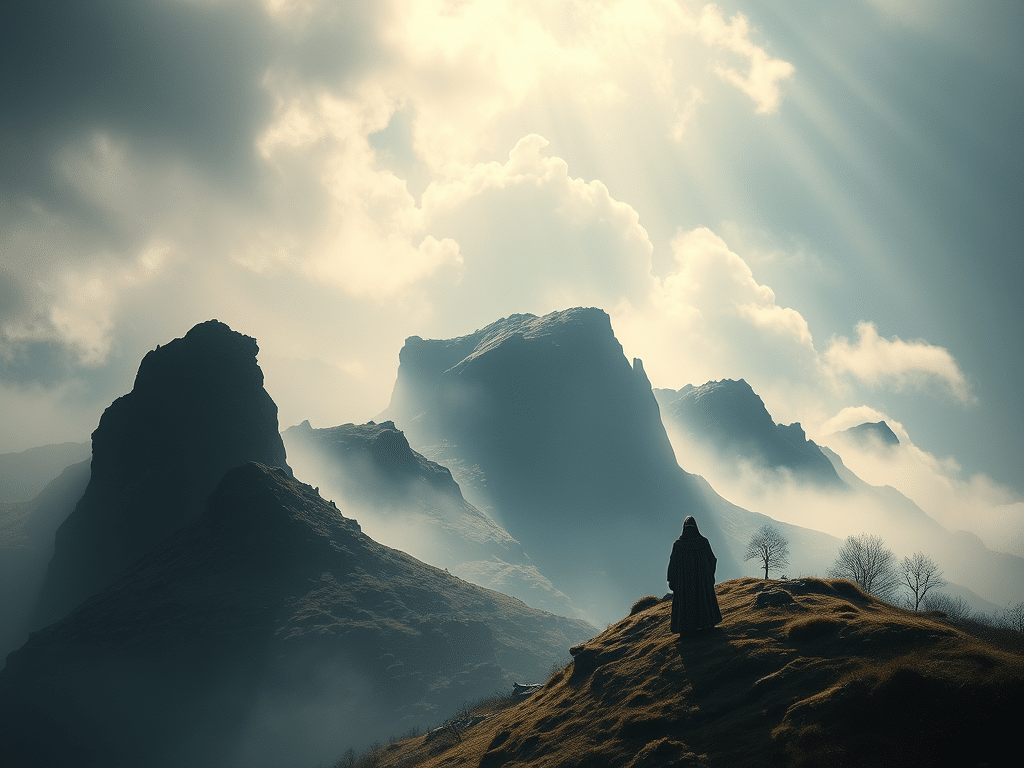
The Malvern Hills are a dramatic range of old peaks that run along the border between England’s Worcestershire and Herefordshire. People have long associated the hills with magic and scary stories. Some of the oldest hills in England, these pre-Cambrian granite and gneiss rocks are over 600 million years old. They run about nine miles from north to south, with Worcestershire Beacon, which is 425 meters above sea level, being the highest point. The Malvern Hills are one of Britain’s most haunted natural sites. They are also important geologically and have stunning views of thirteen counties. For hundreds of years, locals and tourists have been fascinated by the hills’ many ghost stories.
The Malvern Hills have scenery that looks like it was made to be the setting for scary stories. There are many old earthworks spread out on their open ridges and steep slopes. One of the most notable is the Iron Age hill fort of British Camp, which is also known as Herefordshire Beacon and sits atop one of the highest points. There are many springs and wells in the hills. Many of them have been holy since Celtic times, and the pure Malvern water is famous for being thought to have healing powers. The landscape changes quickly from windswept peaks to densely forested slopes (Holl, 1865). This creates an air of solitude and otherworldliness that draws people looking for spiritual experiences. People have been living in this old landscape since the Neolithic era. It is the perfect setting for the many ghost sightings and other supernatural events that have been reported over the years.
Ancient and Medieval Ghosts in the Hills
In the Malvern Hills, ghost stories are part of a longer history of frightening stories that goes back thousands of years. Many times, these stories are based on wars, tragedies, and other important events that have happened in the area in the past. One important thing about ghost stories is that they are cultural objects that show what people fear, what they value, and what they remember. As Donahue pointed out, people have always been interested in ghosts and other supernatural beings, like the “white witch” in other settings. This shows how stories change and adapt over time to appeal to modern audiences (Donahue, 2014).
Sightings of ancient and medieval ghosts that are said to visit different places in the hills are some of the most interesting paranormal stories (Cottle, 1829). The British Camp hill fort stands as a marker of the past (Price, 1881). People say that the British Camp hill fort is haunted by the ghost of a Celtic fighter who can be seen walking along the old ramparts at dusk, still watching over his long-lost fortress against invisible attackers. People have said they saw the ghost of a cavilier, a headless horsemen, and other historical people (Haunted Places, n.d.). The hooded figure of the monk is seen blessing the water before disappearing into the mist. The most well-known story is about the “spectral army” that people say they saw marching across the ridge near Midsummer Hill. They thought it was the ghosts of troops who had died in nearby battles in the past. People who have seen these things often hear the sounds of swords clashing, shouts, and a lot of feet walking, even when no actual source can be found. There is even a white lady ghost known as the Lady of the Mist (Malvern Paranormal, n.d.). Some paranormal experts think that these apparitions could be residual hauntings, where traumatic or important events have left their mark on the landscape and play back like recordings for people who are sensitive enough to see them.
Folklore experts stress how important place is for making ghost stories more mysterious. With their old hill forts and natural beauty, the Malvern Hills make a powerful setting for these kinds of stories, giving the reader a strong sense of place that is an important part of the scary experience. In some stories, the scenery itself becomes a character and adds to the spooky atmosphere where ghosts appear (Li, 2022).

Phantom Fogs and Disorientation
Another unique thing about the Malvern Hills’ reputation for being haunted is the appearance of ghost fogs (Lees, 1856). People have seen sudden, mysterious mists that don’t make sense based on weather patterns. The mists tend to stay in one place or move in ways that aren’t consistent with how fog normally moves. People say that these phantom fogs make them feel disoriented, like time is warping, and like they are filled with overwhelming fear. Some people say they have gone into a fog and then come out hours later without remembering the time that passed. In one very well-researched story, a couple hiking in the hills in clear weather were suddenly surrounded by a thick, cold fog that blocked out all sounds and made it impossible for them to find their way, even though they were on a well-known path. After a few minutes, the fog lifted, and they were in a totally different spot on the hills, with no memory of how they got there. According to local legend, these fogs are not natural occurrences; instead, they are doors to other worlds or times. Some people even think they represent places where the veil between our world and the spirit world is thin and can be broken. Phantom fogs are so well-known that experienced hikers warn newbies not to go to certain parts of the hills where these strange mists are most often seen (Splodz, 2025).
Phantom Hounds as Omens of Death
Phantom hounds, ghostly dogs that show up out of the blue and are often signs of death or bad luck, are some of the scariest paranormal events that people have seen in the Malvern Hills. People say that these ghostly dogs look like very big black dogs with glowing red or yellow eyes. They are said to show up along old paths and ridges of the hills, especially at dusk or on windy nights. Witnesses say they can hear heavy panting and low growls, along with the sound of huge paws walking behind them on lonely trails. When the people turn around, they can’t see anything, but the sounds keep going and the feeling of being followed gets stronger. Some stories say that the phantom dog would suddenly appear in the way and block the way with its huge shape. When the witness tried to get closer or move away, the shape would fade into shadow or just disappear. There are old trails and graves in the hills that are linked to the creature. This has led some people to think it protects sacred ground or helps souls get to the afterlife. According to local legend, seeing the phantom hound three times means that you will die within a year. Several historical stories say that people who saw the beast more than once did die within a year. The hound has been connected to many mythical creatures, such as the Black Dog from British legend and the Wild Hunt, a group of ghostly hunters who are said to ride across the sky during storms, baying their dogs as they chase the souls of the dead across the hilltops (Witcutt, 1942).
Fairy Folk and Celtic Traditions
The fairy stories that are linked to the Malvern Hills add to their magical allure. These stories come from Celtic and pre-Christian times. People have long thought that the hills were home to fairies because many people have seen small lights dancing across the slopes at dusk. These lights were thought to be fairy lanterns or will-o’-the-wisps leading visitors astray (Windle, 1901). People in the area say that fairy rings can be found in the fields and clearings. People have said that they have heard ethereal music and seen small figures dancing in circles, but when they got close, the vision went away. People have heard beautiful singing coming from the Gullet, a deep cleft in the hills, but when they go to explore, they don’t find any singers. This is thought to be because of fairies. Some stories say that people have seen fairy-like beings that look like beautiful women and offer gifts or help. When the shocked witness looks away or tries to thank them, they disappear. Travelers who accepted food or drink from these beings have also been stuck in the fae world for what seemed like minutes but turned out to be days or even years. There are a lot of connections between these fairy tales and the phantom fog phenomenon. Some people think that the mysterious mists are made by the fairies to hide their activities or keep humans out of their world.
Theories
There have been many ideas put forward to explain the persistent paranormal behavior in the Malvern Hills. These ideas range from psychological to geological to truly supernatural. Skeptics say that people who go to a place that has a reputation for being haunted are more likely to think that normal things are supernatural. This is especially true in atmospheric landscapes where weather can change quickly and where being high up and alone can change how you perceive things. Some researchers have come up with the stone tape theory because the hills are made up of a lot of quartz and other crystalline minerals. This theory says that these materials might store and play back energetic imprints of past events, especially ones that involved strong emotions or trauma. Others have looked into the idea that the ancient rock formations’ unique electromagnetic properties might have an effect on brain function, leading to hallucinations or altered states of awareness that show up as supernatural experiences.
Many spiritual people think that the Malvern Hills are a real holy place where the lines between worlds are naturally less clear. They think that the old power of the land can still be felt by people who are sensitive to those kinds of energies. People often use the fact that ley lines, underground water sources, and old sacred sites all come together in the hills as proof of this interpretation. This suggests that our ancestors knew and marked these spots because of their unique qualities. People have seen phantom hounds in many different ways. Some think they are psychological projections of ancestors’ fears of wolves and wild dogs that used to roam Britain. Others think they are real encounters with beings from other dimensions that look like dogs. Still others think they are the spirits of ancient guardian animals that served Celtic chieftains and were buried with their masters in the many barrows that dot the landscape.
People in places like the Malvern Hills are very interested in ghost stories, which is a reflection of larger social trends. As Waters says about witchcraft and society fears, ghosts are a way for people to deal with the worries that come with personal and social change and uncertainty (Waters, 2013). The ghost stories from the Malvern Hills may reflect local issues and serve as warning tales or moral lessons that are relevant to the present situation in the community.
In the Malvern Hills, ghost stories are part of a longer history of scary stories that goes back hundreds of years. Many of the time, these stories are based on wars, tragedies, and other important events that have happened in the area in the past. One important thing about ghost stories is that they are cultural objects that show what people fear, what they value, and what they remember. As Donahue pointed out, people have always been interested in ghosts and other supernatural beings, like the “white witch,” in other settings. This shows how stories change and adapt over time to appeal to modern audiences (Donahue, 2014).
Folklore experts stress how important place is for making ghost stories more mysterious. With their old hill forts and natural beauty, the Malvern Hills make a powerful setting for these kinds of stories, giving the reader a strong sense of place that is an important part of the scary experience. In some stories, the scenery itself becomes a character and adds to the spooky atmosphere where ghosts appear (Li, 2022). Also, the business side of ghost tourism has grown a lot, using stories about ghosts to bring in tourists and help local budgets (Searle, 2021). This mix of folklore and capitalism makes it interesting to look at how past traumas and legends are sold in the modern world, which makes the connection between memory and commodification even more complicated.
Conclusion
The Malvern Hills are a place where natural beauty and magical stories come together, showing how people have always been interested in the strange and the unknown. Whether you think the paranormal reports are real encounters with ghosts, fairies, phantom hounds, and otherworldly forces, or whether you think they are just the psychological effects of suggestion, atmosphere, and environmental factors, the reports have been around for hundreds of years and haven’t stopped. There are many stories about the supernatural that people still tell today. These include ghosts patrolling Iron Age ramparts, phantom fogs that confuse and transport, spectral hounds that follow lonely paths as messengers of fate, and fairy folk who are said to live in the hills’ hidden places. These stories continue to draw seekers, skeptics, and people who are just interested in exploring these ancient peaks. No matter what the real nature of the things that people say happened at Malvern Hills is, they remind us that even though we live in a rational world, there are still places in the world that are hard to explain and continue to make people wonder, fear, and speculate about the mysteries that may be just beyond our normal perception.
References
Cottle, J. (1829). Malvern Hills: With minor poems and essays (Vol. 1). T. Cadell.
Donahue, J. (2014). The ghost of Annie Palmer: Giving voice to Jamaica’s “white witch of Rose Hall”. The Journal of Commonwealth Literature, 49(2), 243-256. https://doi.org/10.1177/0021989414529784
Haunted Places. (n.d.). Haunted places in Malvern, Worcestershire, United Kingdom. https://www.hauntedplaces.org/malvern-uk-q/
Holl, H. B. (1865). On the geological structure of the Malvern Hills and adjacent districts. Quarterly Journal of the Geological Society, 21(1-2), 72-102.
Lees, E. (1856). Pictures of Nature in the Silurian Region Around the Malvern Hills and Vale of Severn: Including Incidental Excursions with the Malvern and Worcestershire Naturalists’ Clubs; and Notices of the Natural History, Pictorial Scenery, Botany, Geology, Customs and Superstitions of Many Interesting Localities in Worcestershire and Herefordshire. HW Lamb.
Li, S. (2022). Folklore studies of traditional Chinese house-building. Springer. https://doi.org/10.1007/978-981-16-5477-0
Malvern Paranormal. (n.d.). Famous local hauntings. https://sites.google.com/view/malvernparanormal/famous-local-hauntings
Price, F. H. (1881). Camps on the Malvern Hills. Journal of the Anthropological Institute of Great Britain and Ireland, 319-331.
Searle, A. (2021). Hunting ghosts: on spectacles of spectrality and the trophy animal. Cultural Geographies, 28(3), 513-530. https://doi.org/10.1177/1474474020987250
Splodz. (2025, February 11). Hiking | The southern Malvern Hills in the fog. Splodz Blogz. https://splodzblogz.co.uk/2025/02/11/hiking-the-malvern-hills/
Waters, T. (2013). ‘They seem to have all died out’: witches and witchcraft in Lark Rise to Candleford and the English countryside, c.1830-1930. Historical Research, 87(235), 134-153. https://doi.org/10.1111/1468-2281.12023
Windle, B. C. A. (1901). The Malvern country. Methuen & Company.
Witcutt, W. P. (1942). The Black Dog. Folklore, 53(3), 167-168.

Leave a Reply