Nessie and UFOs: Key Points
-
The Scottish Highlands and Loch Ness serve as a nexus where ancient mythology and modern mysteries converge in a remote, atmospheric landscape.
-
The Loch Ness Monster legend began in 1933, with hundreds of sightings reported since, yet no conclusive physical evidence has ever been found.
-
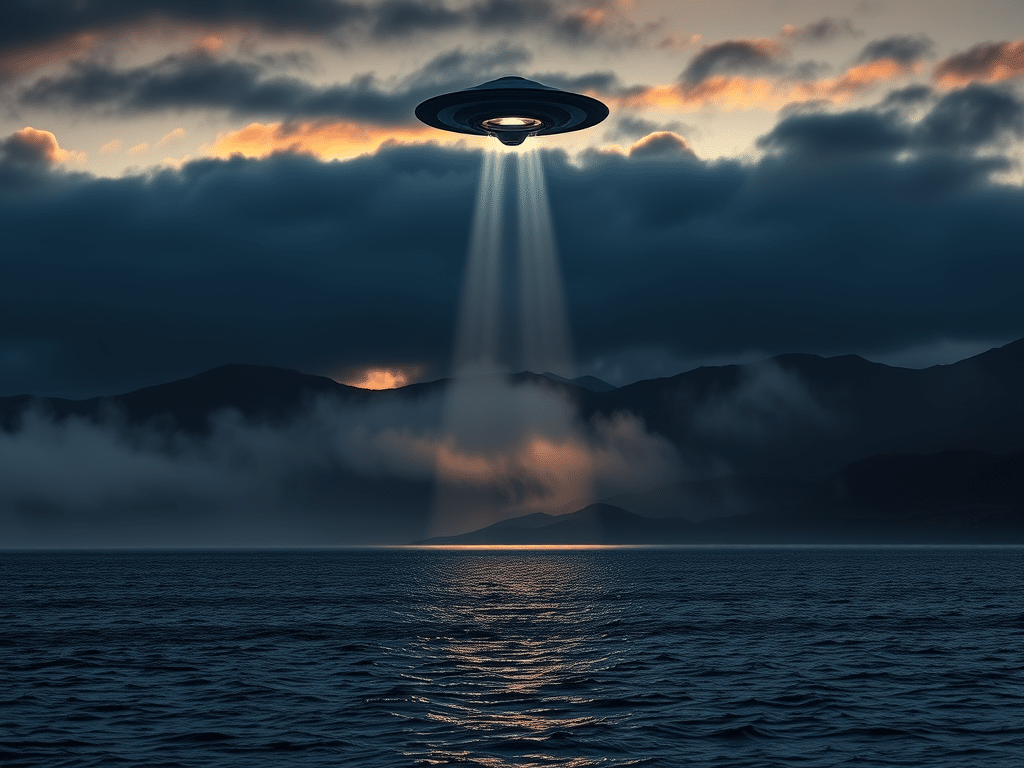
Loch Ness has also been the site of numerous UFO sightings, with witnesses reporting strange lights and craft interacting with the water.
-
Some theories suggest a connection between Nessie and UFOs, either as manifestations of the same unknown phenomenon or due to extraterrestrial interest in cryptids.
-
Skeptics attribute most sightings to misidentifications and psychological factors, though some reports remain genuinely unexplained.
-
The linked mysteries have significantly impacted tourism and popular culture, reflecting humanity’s enduring desire to believe in the unknown.

Introduction
There have always been myths and truths mixed together in the Scottish Highlands, where old stories and new secrets still live on. The Loch Ness Monster and UFOs are two of the most famous ghost stories in the world. They live in the misty lochs and rugged highlands. At first glance, these riddles may not seem to be related, yet scholars and fans have been interested in these connections for decades. The Highlands’ secluded and dark scenery makes strange things constantly happen, such as sightings of mythical creatures and unexplained phenomena that fuel local legends and attract both researchers and enthusiasts. This place is a bizarre area where cryptozoology and ufology come together, creating a unique cultural context that intertwines local folklore with the study of unknown creatures and unidentified flying objects.
Cultural Context and Folkloric Significance
The Loch Ness Monster is a well-known folkloric and popular-symbol figure that is sometimes utilized with other modern legends, including UFO stories, to highlight how people make “mysterious” creatures within the cultural frameworks they know (myth, science, and media representations). Several sources deal with the Loch Ness Monster in terms of supernatural beliefs and the way unusual claims affect people’s social lives. They talk about how these stories are shared in today’s culture and how they relate to other stories concerning things that are thought to be supernatural, including UFOs (Lilienfeld et al., 2001; McEnaney, 2020). This style of thinking resonates with the idea that stories about the Loch Ness Monster are part of a bigger group of current stories and folklore themes that the media and institutions are always coming up with (Bullard, 1989; Dodd, 1999).
In the world of paranormal stories, the Scottish Highlands are a unique site because they are where Celtic myths, folklore, and modern mysteries all come together. People have been telling stories of weird things happening in the area’s secluded glens, deep lochs, and old standing stones for hundreds of years. These stories vary from fairies and kelpies to more contemporary accounts of unusual lights in the sky. Loch Ness is almost 23 miles long and runs through the Great Glen. It possesses more fresh water than all of England and Wales’ lakes put together, and in some spots, its black, peat-stained depths go down more than 750 feet. Because the loch is so big and the water is so murky, it looks like anything could happen there. It’s a place where odd things could happen and old animals could be hiding. There aren’t many people living nearby, and the weather is weird, which makes it feel even more like the area is a location where conventional norms don’t apply.

The Nessie Phenomenon and UFO Sightings
People love to talk about the Loch Ness Monster, or “Nessie,” which is one of the most famous cryptozoology instances ever. In 1933, people became very interested in the monster again. A road was built along the loch’s northern edge, making it easier to travel to and view the water. George Spicer and his wife stated they observed a huge animal cross the road in front of their car the same year. It had a long neck and a huge body, they said. Over the next few decades, there were hundreds of reports of sightings, images of varied quality, and many expeditions utilizing more and more powerful technology to search the depths of the loch. People commonly say that Nessie is a long-necked animal that looks like a plesiosaur. Witnesses have also seen bumps on the surface, large wakes that don’t make sense, and black things moving under the sea, though. There is no definitive confirmation of a giant unknown monster in the loch’s water, even though underwater photographs, sonar studies, and DNA samples have all been taken. But people still see it today.
People have been fascinated by UFOs for a long time. The Cold War, the space race, and alterations in government communication with the public are all responsible for this. A lot of research reveals that official initiatives for monitoring, declassification, and public reporting (such as the CIA and Air Force investigations in the middle of the 20th century) affected the way people thought about UFOs. Some individuals believed in alien visits because of these programs, but they also made scientists more doubtful and critical (Eghigian, 2024), leading to a polarized public perception of UFOs and UAPs that continues to influence contemporary discussions about extraterrestrial life. “UAP” (unidentified anomalous phenomena) is taking the role of “UFO.” This trend suggests that the way we define and know things is changing, particularly in relation to how we perceive and categorize phenomena like UFOs and UAPs in light of ongoing debates about extraterrestrial life (Pasulka, 2024).
Several people don’t realize this, but Loch Ness has also been the site of several UFO sightings, which makes it even more fascinating. For decades, people have seen weird lights and flying objects that they can’t identify surrounding the lake. They’ve seen everything from bright balls floating over the ocean to structural crafts that can do inconceivable things. In the 1970s, several trustworthy witnesses, both locals and visitors, stated they saw brilliant things flowing down from or going up into the lake itself. In August 1971, Jan-Ove Sundberg, a Swedish researcher, was studying Nessie when he saw what he thought was a UFO flying over the loch. People thought that there might be a connection between the two things because of this. Some experts are wondering if the Highlands might be a “window area,” which is a site where different types of supernatural activity tend to be concentrated. This is because UFOs have been sighted there so regularly.
Theoretical Explanations and Connections
People who study unusual notions have concluded that there seems to be a connection between sighting Nessie and witnessing UFOs in Loch Ness. Some scientists believe that the Loch Ness Monster may not be a genuine animal at all but a symbol of the same unseen forces or intelligence that make UFOs show up. This theory says Nessie and UFOs could be projections, beings from other realms, or things made with unknown tech. People who agree with this idea point to the fact that, even after a lot of searching, no physical proof of Nessie, such as a body or bones, has ever been found. They think this conclusion fits with an explanation that isn’t biological. People also note unusual things happening, such as when they say they saw both Nessie and strange things happening in the sky at the same time while visiting the loch, or when UFOs seem to be interested in the water.
Other theories try to make more sense of the connection, although they are still quite speculative. Some scientists suggest that if aliens are here, they could wish to study the strangest animals on Earth, like Nessie. In this situation, there could be more UFO sightings at the same time as Nessie sightings, as the monster and the craft are both in the same place at the same time. Researchers also suggest that UFO activity might make people see Nessie by changing their minds or how they see things, or that the presence of unknown craft might annoy or entice the creature in some way. Some think Nessie is an alien trapped in the loch or a being that can shift between planes.
Skeptics, on the other hand, give more useful justifications for both things. A lot of the claims of seeing Nessie are actually seals, enormous fish, birds, or other animals that people thought were her. Other claims are produced by the loch’s unusual properties, which can make waves look funny, logs float, or things look like they are there when they aren’t. People who write about UFOs, which are often merely planes, satellites, planets, or phenomena happening in the atmosphere that are mistaken for UFOs, utilize the same critical eye. People sometimes think they detect connections between things that aren’t truly there because they prefer to hunt for patterns and solve puzzles. Even after comprehensive examinations, several tales of Nessie sightings and UFOs are still unresolved. This gives us more room to study and guess.
Sociological and Cultural Implications
People talk about the Loch Ness Monster in a lot of other kinds of conversations that are more generic and look at supernatural beliefs and the social variables that shape them. Some research shows that people who believe in cryptids also believe in other strange ideas. These studies show that people may be more likely to believe in these things because of their culture or the way they think about them. People still disagree on the exact causes, but they probably entail more than one thing (Tranguch, n.d.; Lilienfeld et al., 2001; Burke et al., 2013). This group of papers reveals how people’s religious and cultural origins, New Age interests, and exposure to the media can make them more or less accessible to odd claims like LNM and UFOs (Tranguch, n.d.; Burke et al., 2013).
Putting these two secrets together has changed a lot about society, from tourism to pop culture. People that are interested in cryptozoology, UFOs, and other unusual occurrences that can’t be explained all go to Loch Ness. They think it might be a hub for all kinds of strange things. Local businesses have become involved in both sides of the mystery, and the area has become renowned as a site where the impossible might happen. There have been many TV series, books, and documentaries regarding Nessie and the UFO connection that have kept these ancient questions alive for new generations. This blending of diverse paranormal groups is part of a bigger trend: people are starting to look into phenomena that can’t be explained with a more open-ended approach instead of putting them into strict categories.
People’s beliefs about aliens and UFOs are complicated and depend on a lot of things, like how much they know about science, how much they trust the news, and what’s going on in their lives. Surveys and evaluations suggest that many people think there is intelligent life beyond Earth and that we can communicate with it. However, perspectives on this vary by culture and place. Movies, TV shows, legends, and official myths about space exploration and national security don’t only passively transmit these notions; they also actively shape them (Impey, 2024; Bauer, 2021). The politics of visibility, concealment, and disclosure regarding UFOs is another aspect of the sociology of belief. Some topics, like government secrecy, declassified investigations, and disclosure advocacy, show how institutional transparency, or the lack of it, can affect how much people trust scientific explanations. Sometimes this makes people believe in conspiracy theories or aliens more (Dodd, 1999; Shiloh, 2007; McEnaney, 2020). This aspect has an impact on Loch Ness Monster stories since they both deal with the difficulties between facts, credibility, and old stories.
Conclusion
There is more to the connection between the Loch Ness Monster and UFOs than just a weird coincidence or people thinking too much. No matter what you believe—common sense, weird notions, or something in between—the fact that both mysteries are still going on here makes you think about what you do and don’t know about the world. People will undoubtedly keep talking about unusual creatures and strange occurrences happening in the skies for years to come since the Scottish Highlands are so beautiful and feel so timeless. People are still interested in Nessie and UFOs at Loch Ness because they need to believe that there are still mysteries in a world that is getting more and more mapped out and observed. Scotland’s gloomy rivers and misty skies nevertheless hold secrets that have not yet been found.
References
Bauer, H. (2021). Has physics theory become vacuous? Journal of Scientific Exploration, 35(2), 405–414. https://doi.org/10.31275/20212015
Bullard, T. (1989). UFO abduction reports: The supernatural kidnap narrative returns in technological guise. Journal of American Folklore, 102(404), 147. https://doi.org/10.2307/540677
Burke, B., Sears, S., Kraus, S., & Roberts‐Cady, S. (2013). Critical analysis. Teaching of Psychology, 41(1), 28–36. https://doi.org/10.1177/0098628313514175
Dodd, A. (1999). Making it unpopular: The CIA and UFOs in popular culture. M/C Journal, 2(4). https://doi.org/10.5204/mcj.1767
Eghigian, G. (2024). After the flying saucers came. Oxford University Press. https://doi.org/10.1093/oso/9780190869878.001.0001
Impey, C. (2024). Extraterrestrial intelligent life: What the public believes. Proceedings of the International Astronomical Union, 20(S387), 329–337. https://doi.org/10.1017/s1743921324001959
Lilienfeld, S., Lohr, J., & Morier, D. (2001). The teaching of courses in the science and pseudoscience of psychology: Useful resources. Teaching of Psychology, 28(3), 182–191. https://doi.org/10.1207/s15328023top2803_03
McEnaney, L. (2020). Indigenous futurisms: Transcending past/present/future. Visual Anthropology Review, 36(2), 417–424. https://doi.org/10.1111/var.12212
Not of this earth: UFO studies. (2019). Philosophical Literary Journal Logos, 29(5), 229–254. https://doi.org/10.22394/0869-5377-2019-5-229-252
Pasulka, D. (2024). UFOs, UAPs, aliens, and extraterrestrials. Oxford Research Encyclopedia of Religion. https://doi.org/10.1093/acrefore/9780190201098.013.1348
Petrescu, R., Aversa, R., Akash, B., Corchado, J., Berto, F., Mirsayar, M., Apicella, A., & Petrescu, F. (2017). What is a UFO? Journal of Aircraft and Spacecraft Technology, 1(2), 80–90. https://doi.org/10.3844/jastsp.2017.80.90
Petrinovich, L. (2021). What behavioral scientists are unwilling to accept. Journal of Methods and Measurement in the Social Sciences, 12(1). https://doi.org/10.2458/jmmss.3061
Shiloh, I. (2007). A vision of complex symmetry. M/C Journal, 10(3). https://doi.org/10.5204/mcj.2674
Tranguch, J. (n.d.). From Bigfoot in the backyard to ghosts in the attic: Predictors of paranormal belief. https://doi.org/10.33915/etd.855


Leave a Reply