
Dark Nixies: Key Points
-
Dark nixies are sinister water spirits from Germanic and Northern European folklore that represent the most malevolent aspects of aquatic mythology, differing from traditional nixies through their unambiguous evil nature.
-
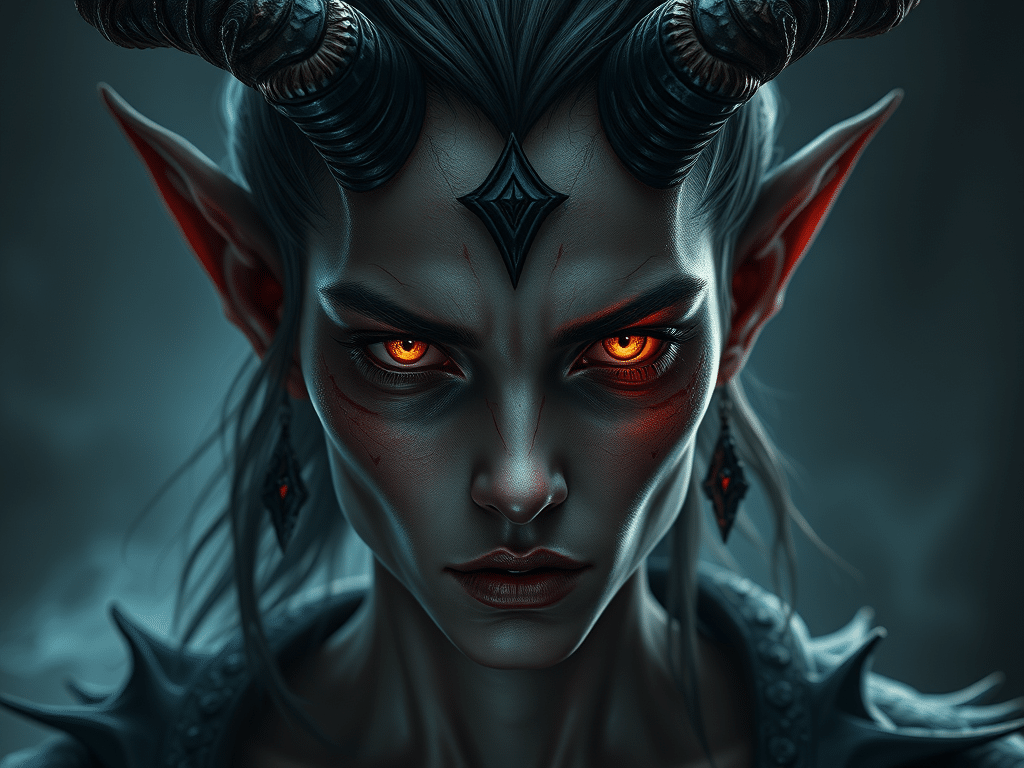
Physically, dark nixies have corpse-like pallid skin, completely black eyes, dark hair resembling waterlogged vegetation, elongated webbed fingers with sharp claws, and sometimes rows of pointed teeth.
-
Dark nixies are active predators that lurk in deep waters, use deceptive tactics like mimicking drowning cries to lure victims, and ultimately drown their targets in underwater lairs.
-
Unlike traditional nixies who can be appeased or befriended, dark nixies reject all positive interaction with humans and embody only death and drowning rather than water’s life-giving aspects.
-
Examples appear throughout Germanic and Scandinavian literature, including darker variants of the Näcken that shapeshift into horses to drown children and malevolent spirits in tales collected by the Brothers Grimm.
-
Theories range from practical cautionary tales encoding water safety to psychological projections of human fears, demonized pre-Christian deities, or ways communities processed grief from drowning deaths.

Introduction
Germanic and Northern European folklore often features dark nixies, an intriguing and often overlooked type of water spirit. Dark nixies are a much darker portion of aquatic mythology than their more friendly cousins, the common nixies. Common nixies are usually shown as lovely but unpredictable beings that live in rivers, lakes, and streams. For thousands of years, storytellers have been fascinated by these mysterious beings, which serve as warnings about the horrors that lie beneath calm waters. To understand dark nixies, you need to look at not just their unique physical traits and behavior patterns but also how they differ from classic nixie stories and show up in other cultural stories.
Dark nixies seem very different from light nixies, and these differences make it clear that they are evil. People generally say that these creatures have pale, corpse-like skin that looks almost glowing in the dark waters. The skin has a sickly greenish or grayish hue that makes it look like it’s decaying and dying. Their eyes are often shown as entirely black or having a strange reflective appearance, like those of deep-sea predators that can see perfectly in the dark caverns and deepest regions of lakes. People usually say that dark nixies’ hair is dark green or black and looks like strands of waterlogged plants or kelp. Even above water, the creature’s hair seems to move on its own, as if in an invisible current. People say that their fingers are lengthy and webbed and that their nails are sharp and claw-like, which lets them grab victims with superhuman strength. Some stories say that their teeth are sharp and numerous, arrayed in rows like the teeth of a pike or other predatory fish. Their overall shape may be thinner and more skeletal than the voluptuous shapes that are usually associated with nixies.
Dark nixies have spectral or gloomy colors that are commonly associated with black, night, or shadows. These colors fit into larger symbolic systems that connect light and darkness in cosmological philosophy. Various studies examining color symbolism in mythologies demonstrate that black or dark tones signify death, danger, or the underworld, while also occasionally embodying protective or transformative meanings contingent upon context (Zheng, 2024; Oinotkinova, 2021; Krupenina, 2026; Ford, 2024). In stories about nixies, these color-symbolic registers strengthen their status as beings that exist between realms and their propensity to be dangerous.
Predatory Behavior and Liminal Waters
People often consider nixies to be water-dwelling creatures that may change shape and have mixed or deadly personalities. In some legends, their nearness to water makes them dangerous for people who come across them at night or near dangerous bodies of water. This tendency is evident in various contexts that examine aquatic mythological figures and their connections to darkness and peril (Davies & Vercruysse, 2008; Toporkov, 2024), as well as in related studies on water spirits and underworld beings in folklore (Abelian, 2010; Krupenina, 2026). The literature consistently emphasizes nocturnal or twilight settings as the milieu in which nixie-like entities operate, aligning with predominant “dark” mythologies that incorporate water, depth, and the underworld into their iconography (Davies & Vercruysse, 2008).
Dark nixies are different from regular water spirits in that they are always predatory and nasty. Dark nixies, on the other hand, actively try to hurt people, drown them, and kill them. Common nixies might help people or just play harmless tricks, such as leading travelers to safety or providing guidance in navigating waterways. They are known to hide in the deepest, darkest portions of bodies of water, especially where the bottom is hidden and where people have drowned before. Dark nixies use planned hunting tactics, including imitating the cries of drowning kids or animals in distress to get kind people to go into the sea. Once a victim reaches their territory, these monsters use their superior swimming skills to confuse, tire, and eventually drown their target. They may even drag carcasses to underwater lairs where they are claimed to feast on the life force or actual flesh of the dead. They are most active at night, in winter, or during storms when visibility is low. Some stories say that dark nixies only go for those who have done bad things or broken their promises, functioning as agents of supernatural justice. Other stories say that they are random killers who are always hungry.
Dark nixies are different from regular nixies in more than just how they seem and act. They also have a different interaction with people and the natural world. People commonly consider common nixies to be violent and unpredictable creatures, yet they may also love, make music, and even marry people in specific situations. Gifts, polite conversation, and friendship can make them happy. Dark nixies, on the other hand, don’t want to have any positive interactions with people and seem to exist only to cause fear and damage. A dark nixie doesn’t need a reason to attack; they just do it out of pure evil. A typical nixie might ask for a tribute or get retribution for a specific wrong. Traditional nixies are typically linked to the life-giving and sustaining qualities of water, such as fertility, abundance, and the way the seasons change. Dark nixies, on the other hand, represent water’s ability to kill, drown, and keep bodies cold. Nixies are known for their musical talents, especially their beautiful songs and fiddle playing. However, black nixies turn these talents into discordant sounds that scare people or mesmerizing melodies that lead people to their destiny instead of just captivating them, often luring unsuspecting individuals to watery graves or enchanting them into a trance-like state.

Literary and Folkloric Parallels
Dark nixie-like beings can be found in Germanic and Scandinavian literature and mythology, but they aren’t necessarily called that. In Scandinavian folklore, the Näcken or Nøkken is occasionally depicted in darker ways. For example, in stories where the monster is said to be able to change shape into a lovely white horse to attract youngsters onto its back before plunging into the ocean and drowning them. In German folklore, some stories about the Nixe talk about very evil people who don’t want to obtain a soul by marrying a human. Instead, they embrace their demonic nature and hunt anybody who gets too close to their waters. The medieval German epic Der Nibelungen has water spirits whose warnings and prophecies are quite serious. Some people think that these spirits are a darker side of Nixie mythology. In more recent literature, the idea of dark nixies has been looked at in stories that use traditional mythology but focus on the scary parts. For example, in some Scandinavian dark fantasy, water spirits are shown as old, evil beings that existed before humans. The Brothers Grimm gathered numerous stories about water spirits that were clearly terrible, such as ones in which these beings kill children or pull unsuspecting visitors to watery graves for no other reason than their awful nature.
Numerous ideas have been posited to elucidate the existence and importance of dark nixies within the overarching framework of folklore and human psychology. Some folklorists believe that dark nixies are the personification of real hazards that come with bodies of water. They are meant to be cautionary tales to warn kids and other people who aren’t careful away from deep or dangerous waters where drowning was a real and common threat. This pragmatic approach regards dark Nixie narratives as a medium for the transmission of cultural knowledge, embedding safety information inside memorable storytelling. Some people say that black nixies are like the psychological idea of the “shadow self,” which is the part of the mind that we don’t want to see that is projected onto supernatural beings. The water is a metaphor for the unconscious mind, where these dark impulses are. Some scholars contend that dark nixies symbolize the demonization of pre-Christian water deities, positing that early Christian missionaries reinterpreted neutral or ambiguous pagan spirits as entirely malevolent beings to deter their veneration and the perpetuation of pagan traditions. Environmental psychologists propose that black nixies embody humanity’s old and instinctual fear of deep water and the unknown creatures that may reside under the surface, a fear that historically functioned to ensure our predecessors remained suitably vigilant. Some researchers have also found that stories about dark nixies are more common in places and times when many people are drowning, which suggests that communities may have made up or emphasized these darker spirits as a way to deal with grief and make sense of tragedies that seem random.
Cross-Cultural Symbolism and Enduring Fear
Dark nixies often represent the line between the known human world and the scary, unknown otherworld. This boundary function is a prevalent characteristic in mythologies that depict nocturnal water spirits and entities adjacent to the underworld, as examined in cross-cultural analyses of binary oppositions (light/dark; upper world/otherworld) that elucidate how such beings represent the tensions inherent in transgressing boundaries between realms (Muradova, 2009). The Breton and Celtic data regarding light–dark opposition in mythology provide a framework to interpret nixie-like entities as either mediators or breakers of the human–otherworld barrier.
The referenced sources consistently highlight aquatic entities associated with night and gloom in Northern and Eastern Europe. The dark-water spirit theme is present in Breton-Celtic and Slavic traditions, depicting water spirits that reside in liminal regions and express dualistic cosmologies (light/dark; life/death) (Muradova, 2009; Abelian, 2010; Krupenina, 2026). Cross-cultural comparisons show both common archetypal structures and differences in looks, behavior, and ritual associations in different cultures.
In Slavic, French, Russian, and Chinese folk traditions, black and dark colors are often used to represent death, peril, and the underworld. This color coding helps explain why people often see nixie-like beings as dark and why their presence is considered a disturbance of the life-affirming order that light represents (Zheng, 2024; Oinotkinova, 2021; Krupenina, 2026). The aquatic environment is perpetually crucial to nixie mythology, with water serving as a liminal space where existence, demise, and the underworld converge. This notion is substantiated in examinations of mythic water symbols and their textual representation in folklore (Abelian, 2010; Krupenina, 2026), alongside more extensive discourses on water-related and underworld-associated creatures within mythic frameworks.
Conclusion
Dark nixies are a unique and scary type of European water spirit. They are known for their clear evilness and for being the scariest parts of water. These animals are strong emblems of danger and death because of how horrible their bodies seem, how they act like predators and killers, and how different they are from the more nuanced traditional nixies. The presence of black nixie-like beings in many Germanic and Scandinavian writings shows that people still want these kinds of creatures, whether they be practical warnings, psychological projections, or religious constructs. Theories about where dark nixies come from and what they mean differ, from practical safety measures to deep psychological symbols that reflect societal fears and cultural beliefs about the unknown. However, they continue to fascinate people because they tap into basic human fears about death, drowning, and the unknowable depths that lie beneath the surface of seemingly peaceful waters. These dark water monsters serve as a reminder that stories serve not only as a source of entertainment, but also as a means of sharing our deepest fears and imparting the hard-earned knowledge of generations who have learned to appreciate the dangerous power of nature.
References
Abelian, N. (2010). The Stone Novel of Éire. Studia Celto-Slavica, 5, 181–192. https://doi.org/10.54586/pwwb9182
Davies, K., & Vercruysse, E. (2008). Prosthetic mythologies. Architectural Design, 78(4), 56–61. https://doi.org/10.1002/ad.706
Ford, D. (2024). Approaching FromSoftware’s Souls games as myth. Transactions of the Digital Games Research Association, 6(3), 31–66. https://doi.org/10.26503/todigra.v6i3.2175
Krupenina, M. (2026). Mythopoetic model of death in S. Yesenin’s The Black Man. Problemy istoricheskoy poetiki, 24(1), 197–213. https://doi.org/10.15393/j9.art.2026.15702
Muradova, A. (2009). Binary oppositions in Celtic cosmology: Modern Breton folklore data. Studia Celto-Slavica, 2, 147–153. https://doi.org/10.54586/lmyj3678
Oinotkinova, N. (2021). Color identifications of the Altays mythological discourse. Tomsk Journal of Linguistics and Anthropology, 1(31), 47–63. https://doi.org/10.23951/2307-6119-2021-1-47-63
The Nibelungenlied. (2004). (A. T. Hatto, Trans.). Penguin Classics. (Original work published ca. 1200)
Toporkov, A. (2024). Afanas’ev’s Poetic Views of the Slavs on Nature and its role in understanding paganism and mythology. Religions, 15(2), 206. https://doi.org/10.3390/rel15020206
Zheng, W. (2024). The role of black color in the history of Russian, French and Chinese mythology and folklore. Genesis: Historical Research, 5, 46–55. https://doi.org/10.25136/2409-868x.2024.5.70659

Leave a Reply