Harpies in Greek Mythology: Key Points
-
Harpies are winged creatures from Greek mythology whose name means “snatcher,” originally personifying storm winds before becoming symbols of divine punishment.
-
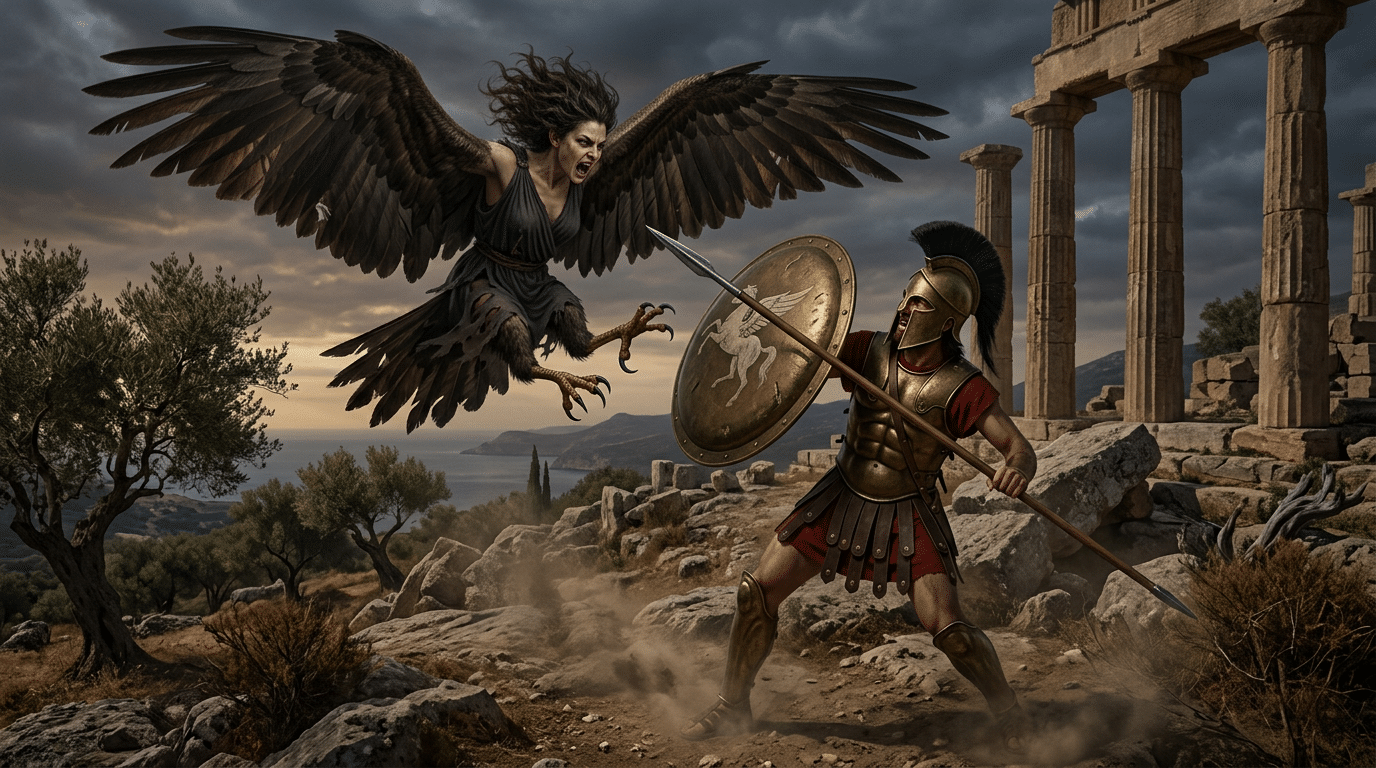
Physically, harpies transformed from beautiful, winged women to monstrous creatures with bird bodies, human faces, sharp claws, and foul odors.
-
Behaviorally, harpies were relentless agents of divine retribution who snatched away food and people, characterized by terrible cries and immunity to mercy.
-
The most famous myth involves harpies tormenting King Phineus by stealing his food until the winged Boreads chased them away.
-
Scholarly theories suggest harpies represent storm winds, anxieties about female power, personifications of death, or the “devouring mother” archetype.
-
Harpies influenced Western culture through medieval symbolism, Dante’s Inferno, and modern fantasy and became a misogynistic term for cruel women.

Introduction
Harpies are one of the most lasting and complicated beings in Greek mythology. They have fascinated people for thousands of years and still impact art, literature, and popular culture today. The name of these winged creatures comes from the Greek word harpyia, which means “snatcher” or “swift robber.” In ancient Greek religious thought, they were a fascinating mix of the divine and the monstrous. Harpies started out as representations of storm winds, but throughout time they became symbols of divine wrath, natural forces, and the darker sides of feminine power in different cultures. Mythology is not just a way to tell stories; it also shows us how the ancient Greeks were worried about disorder, pollution, and the line between civilization and the wild.
In Greek mythology, harpies are winged women who are strongly linked to wind, gusts, and punishment. They are generally characterized as agents of divine retribution who take or steal food or people (and, in other stories, cause violence or torture) (Blackie, 1872; Miller, 1984). This basic description comes up in many different talks, including ones about harpy imagery in Lycian contexts (Blackie, 1872) and in more general studies of sirens and harpies in classical myth (Hodkinson, 2016; Tso, 2012).
In Greek mythology, the harpies are winged creatures with feminine faces that attack humanity. The harpies took the children of Pandareus and gave them to the Erinyes. Classical texts contain this story, which later became a common theme in mythological and literary works (Birch, 1844; Selover, 2021). The archetypal picture is a female head on a body that looks like a vulture, sometimes with wings and talons. They are tightly linked to signs, punishment, and the ritualized memory of wrongdoing and transgression in mythological storytelling (Miller, 1984), often serving as symbols of retribution for those who commit moral or ethical violations.
In Greek art and literature, the way harpies looked changed a lot over time. This shows how people’s feelings about these creatures changed. Initially, Greek art depicted harpies as beautiful women with bird wings, akin to other winged gods and spirits. But by the time of the classical period, they looked more and more like monsters and freaks. Artists showed them as having avian bodies with only women’s faces, and they often looked thin and famished. People discussed how sharp and dangerous their claws were, and later stories said they smelled foul and had dark, matted feathers. In art, harpies’ bodies got worse, much like their morals did in myth. They ceased to serve as the impartial agents of the wind, and instead, they evolved into emblems of corruption and impurity.
Behavior and Mythological Roles
Harpies were known for their behavior as divine agents of punishment and torture, punishing mortals who had done wrong with the gods’ anger. They were shown as quick, relentless hunters that couldn’t be escaped once they set their sights on a target. The most well-known thing about harpies was that they liked to steal food and humans, leaving behind only unpleasant smells and messes. They were not shown to be smart conversationalists or complicated characters. Instead, they were shown as almost mechanical forces of divine punishment, focused on one thing and unable to be persuaded to show pity. People stated that their shrieking cries were horrible to hear, and they couldn’t reason or negotiate, which made them scary enemies for mortal heroes.
Harpies might be considered agents of divine justice or as representations of natural forces that can’t be controlled. Their deeds are often linked to the abrupt death or bad luck of people, which makes them seem more like punishers and troublemakers in mortal affairs (Mavrogenis et al., 2018; Oldfield, n.d.). Harpies are known for taking people, especially the daughters of Pandareus in Hesiodic or kindred sources, and compelling them to do things they want or punishing them while they are eating or at other times when they are weak. They are shown as carnivorous and unyielding, which fits with their position as wind spirits and agents of divine or fated punishment (Mavrogenis et al., 2018; Birch, 1844).
The story of King Phineus is the most important one that shows harpies in Greek mythology. It shows how they were used as tools of divine wrath. Phineus, a monarch and prophet who angered the gods in many ways, was cursed with the harpies. The monsters would swoop down and either take the food or make it inedible. This occurrence meant that the king was steadily starving even though he had plenty of food. This torture went on until the Argonauts showed up. The Boreads, Zetes, and Calais were among them. They were the sons of the North Wind and could fly. The heroes chased the harpies across the sky in a dramatic chase that ended when the goddess Iris showed up and told the Boreads to leave the creatures alone, promising that they would never bother Phineus again.
The harpies also show up in various myths, but usually in smaller roles that nonetheless show how they are snatchers and tormentors. In other tales, they kidnapped King Pandareus’s daughters and forced them to work for the Furies. They were like divine kidnappers who took people out of the mortal realm. Hesiod’s Theogony says that harpies are the children of Thaumas and the ocean nymph Electra. This myth gives them a divine family tree that puts them among the children of the first powers. Some stories name specific harpies, with Aello, Ocypete, and Celaeno being the most common. However, other sources provide different numbers and names. Later stories continued to associate them with winds and storms. This suggests that ancient Greeks saw these beings as connected to the unpredictable and dangerous parts of nature that they dreaded and tried to explain by giving them human traits.

Symbolic Interpretations and Cultural Meanings
As researchers have used different analytical frameworks to study Greek mythology, ideas regarding where harpies came from and what they symbolize have changed a lot. One common interpretation says that harpies are the personification of storm winds, especially the unexpected, devastating gusts that might devastate fields and take things away. This understanding would explain both their name and their conduct in mythology. Another idea says that harpies represent cultural fears about women’s power and independence because their change from lovely winged maidens to ugly monsters is akin to how other powerful female figures in Greek mythology have been treated.
The literature agrees that harpies are not all evil beings; instead, they can be considered personifications of natural phenomena, which can change their moral value depending on the mythic context or the symbolic program of a work of art (Mavrogenis et al., 2018; Blackie, 1872). Some experts say that harpies are symbols of death because they take people away, which is similar to how the Greeks saw death as an abduction from life. Psychoanalytic interpretations have said that harpies are like the “devouring mother” archetype, which means they eat instead of caring for others. This interpretation goes against what women were expected to do in ancient Greek society.
The harpy and other similar creatures show up in Greek myth as well as in nineteenth-century and modern histories of Lycian art. Rannou (2021) focuses on historiography and reception history: how European art-historical traditions shaped the names and meanings of the Harpy tomb and other monuments, and how this historical framing changes the way we see Lycian sculpture today. This writing shows that the Harpy figure has been more of a flexible way to understand things than a clear, unambiguous symbol.
Harpies are typically considered transitional entities that connect the mortal world and the underworld. They are often associated with retribution, death, and the afterlife. Their appearance on grave markers may serve to ward off evil, lament, or underscore moral order in the context of memorial ritual. The way harpies are shown in death-related situations fits with their mythic position as chthonic and punishing beings and with funerary art that focuses on grief, change, and divine punishment (Christides, 2017).
Cultural Legacy and Modern Influence
Harpies have had a profound effect on Western culture that goes far beyond their initial mythological setting. This shows how powerful these animals are in people’s minds. Many works of art and moral stories in medieval Europe used harpies as symbols of greed, avarice, and spiritual corruption. In his book Inferno, Dante put harpies in the seventh circle of Hell, where they afflict the souls of suicides by eating the trees into which these souls have turned. This act made a vivid and terrifying picture that secured their place in the European literary tradition. The word “harpy” became a derogatory term for women perceived as cruel, self-centered, or shrewish. This use of the word shows how patriarchal ideas turn complex legendary figures into simple stereotypes. Harpies are still monsters and villains in modern fantasy books, movies, and games. However, modern versions sometimes try to redeem them or look at things from their perspective, which shows how cultural attitudes toward female power and the nature of monstrosity have changed over time.
Conclusion
Harpies are still captivating characters because they are full of contradictions and complexity that people from all times and cultures can relate to. They are both godlike and hideous, feminine and predatory, and they act as agents of justice, employing methods that may seem unfair. The fact that they changed from wind spirits to monsters shows how people prefer to put their concerns and worries onto mythological creatures, making stories that explain natural events and reinforce societal norms. Harpies are still a part of modern culture, which shows that these old symbols still speak to something deep in human psychology. These motifs could be our fear of uncontrolled feminine power, our anxiety about things we can’t control, or our interest in creatures that are both human and animal, beautiful and horrible. To really understand harpies, you need to look at how they were portrayed in ancient myths and how each generation has changed them to fit their worries, fears, and values. This transformation makes them genuinely eternal figures in the ongoing tale of human cultural expression.
References
Birch, S. (1844). XVIII. Observations on the Xanthian Marbles recently deposited in the British Museum. By Samuel Birch, Esq.. Archaeologia, 30, 176–204. https://doi.org/10.1017/s0261340900016635
Blackie [Anonymous]. (1872). 2. On the Principles of Scientific Interpretation in Myths, with Special Reference to Greek Mythology. Proceedings of the Royal Society of Edinburgh, 7, 44–51. https://doi.org/10.1017/s0370164600041687
Christides, V. (2017). The sources of Cosmas Indicopleustes’ miniatures of animals: The case of the “unicorn.” Journal for Semitics, 23(2), 531–546. https://doi.org/10.25159/1013-8471/3504
Colas-Rannou, F. (2021). An Anatolian perspective for Lycian art? Remarks on the historiography of Lycian art studies (19th–21st centuries AD). Actual Problems of Theory and History of Art, 11, 99–106. https://doi.org/10.18688/aa2111-01-09
Dante Alighieri. (2007). Inferno (R. Hollander, Trans.). Anchor Books.
Hodkinson, O. (2016). ‘His Greek materials’: Philip Pullman’s use of classical mythology. In Philip Pullman (pp. 267–290). Brill. https://doi.org/10.1163/9789004335370_020
Karademir, H., & Özdemir, B. (2013). Sirens as soul bearers on Lycian grave reliefs in the Classical Period. Cedrus, 1(1), 89–105. https://doi.org/10.13113/cedrus/20131678
Mavrogenis, A., Markatos, K., Nikolaou, V., Gartziou-Tatti, A., & Soucacos, P. (2018). Congenital anomalies of the limbs in mythology and antiquity. International Orthopaedics, 42(4), 957–965. https://doi.org/10.1007/s00264-018-3776-3
Miller, C. H. (1984). Hercules and his labors as allegories of Christ and his victory over sin in Dante’s Inferno. Quaderni d’Italianistica, 5(1), 1–17. https://doi.org/10.33137/q.i..v5i1.10937
Oldfield, A. (n.d.). The sound of sirens: Siren stelae in classical Attic cemeteries. https://doi.org/10.26686/wgtn.17008102
Selover, S. (2021). Of winged women and stone tombs: Identity and agency through Iron Age Lycian mortuary architecture. Religions, 12(8), 643. https://doi.org/10.3390/rel12080643
Tso, A. W. B. (2012). Representations of the monstrous-feminine in selected works of C. S. Lewis, Roald Dahl and Philip Pullman. Libri & Liberi, 1(2), 215–234. https://doi.org/10.21066/carcl.libri.2012-01(02).0041
Vermeule, E. (1979). Aspects of death in early Greek art and poetry. University of California Press. https://doi.org/10.1525/9780520310827-001
Yevzlin, M. (2015). Sireny, ili stranstvie po strane smerti [Sirens, or journey through the land of death]. Studia Mythologica Slavica, 4, 189–206. https://doi.org/10.3986/sms.v4i0.1817


Leave a Reply