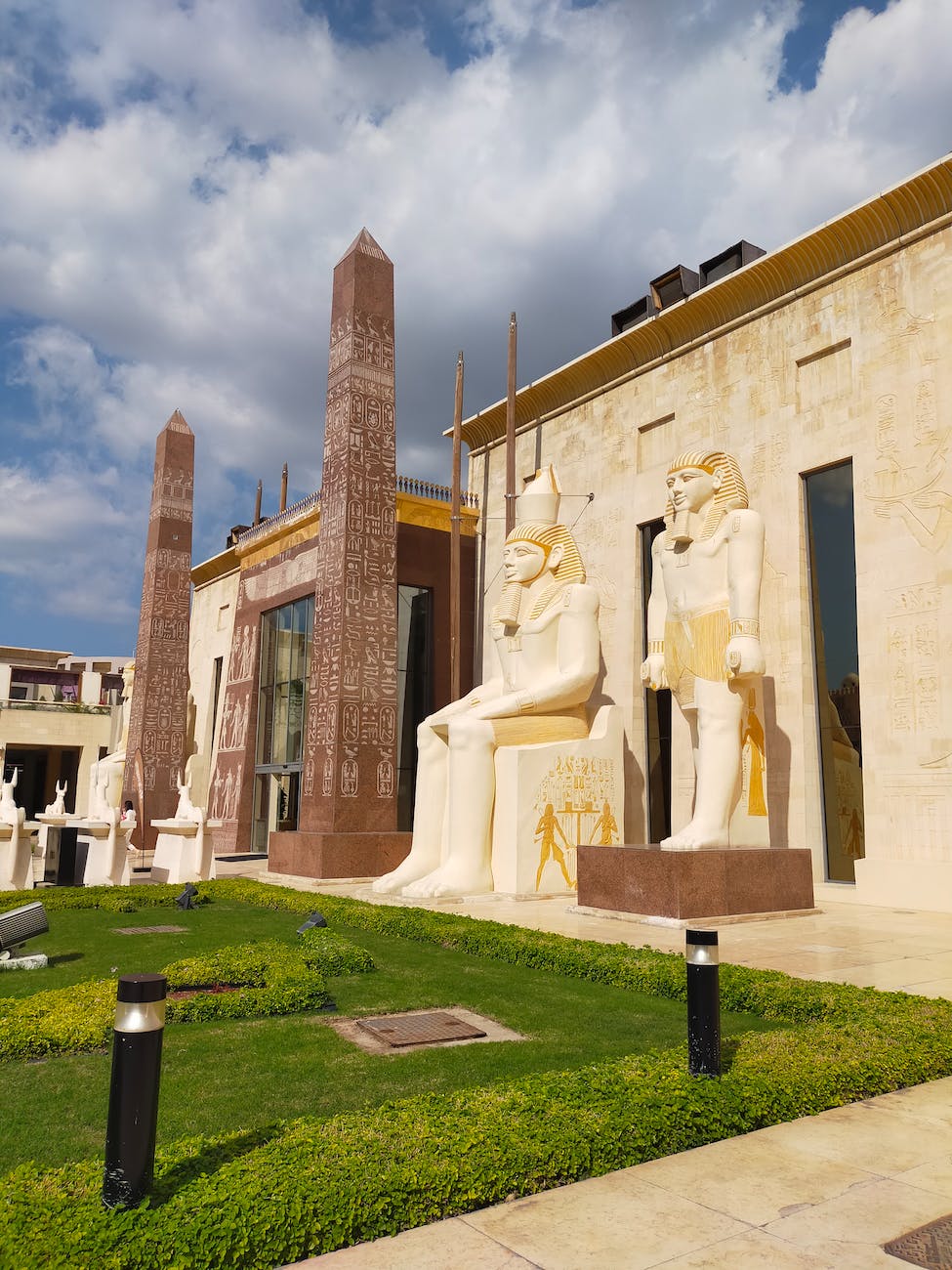
People frequently ask why there are obelisks resembling Egyptian monuments all over the world.
Throughout history, Obelisks have stood silent witnesses to the passing of time, reaching aloft in a fusion of human artistry and celestial desire. These ancient stone pillars have transcended time and space to become recognizable landmarks in the skylines of contemporary cities all around the world. The mysteries and historical tales that obelisks hold within their magnificent architecture are what make them so alluring.
Obelisks
An obelisk is a tall, slender monument with four sides that taper to a summit that resembles a pyramid. Usually composed of a single block of stone, or a monolith, these structures typically have a square cross-section. Historically, they functioned as memorials and were often associated with the sun god.
Ancient Egyptians built the first obelisks and frequently placed them at temple entrances. They are believed to represent light and warmth, like a petrified ray of the sun god Ra. Various nations acquired or gifted them over the ages, transforming their religious value into symbols of political might, conquest, and intellectual accomplishment. Authorities also desired the exotic obelisks to symbolize their worldwide influence. Subsequent societies constructed obelisks to honor events or figures of authority.
Later civilizations like the Greeks and Romans were fascinated by Egyptian obelisks, and they brought many of them to other countries. Today, obelisks are still present in public areas all over the world.
Karnak Temple
Located in the beautiful city of Luxor, Egypt, the Karnak Temple Complex is home to an incredible collection of historic obelisks that have weathered the test of time. The great pharaohs who formerly governed this amazing civilization had these magnificent buildings painstakingly built during their reigns by highly trained artisans. With their elaborate hieroglyphic writings, all of the obelisks are stunning monuments to their gods and adored emperors.
These imposing monuments, rich in symbolism and history, provide a remarkable window into the opulence and strength of ancient Egypt’s New Kingdom period. The fact that these imposing obelisks are still standing is proof of the rulers’ architectural skill as well as their unwavering legacy in this legendary land.
Cleopatra’s Needles
Three obelisks located in New York City, London, and Paris are known as Cleopatra’s Needles. Despite their name, Pharaoh Thutmose III, not Cleopatra, actually commissioned them. The 19th century saw their transportation to various cities, demonstrating the technological prowess needed to accomplish such a task and cementing the cultural interaction between nations.
An ancient Egyptian obelisk known as Cleopatra’s Needle is located on London’s Victoria Embankment. Cleopatra’s reign relocated it from Heliopolis, the Egyptian metropolis, to Alexandria in 12 BC. The obelisk is approximately 21 meters tall and weighs 224 tons. It is constructed of red granite. In 1819, the Sultan of Egypt and Sudan sent it to the United Kingdom as a gift. They built Cleopatra’s Needle on the Victoria Embankment, next to the Thames River, after arriving in London in 1878. The obelisk’s hieroglyphs honor Ramses II and Thutmose III for their military prowess. Cleopatra’s needle has deteriorated over time due to exposure to British weather and pollutants, necessitating conservation efforts.
Similar to its London cousin, Cleopatra’s Needle in Paris has an enthralling and complex past that captures the mind. Proudly positioned in the Place de la Concorde, this ancient Egyptian obelisk bears witness to the enduring appeal of Egyptian culture and its impact on other civilizations.
Another fascinating historical relic in Central Park, New York City, is Cleopatra’s Needle. This intriguing building occupies a prominent position in the city’s surroundings and acts as a continual reminder of Egyptian culture. Its mysterious presence mesmerizes tourists, as it stands tall and imposing.

Flaminio Obelisk
Rome’s Piazza del Popolo is home to the Flaminio Obelisk, also known as the Obelisco Flaminio, an ancient Egyptian obelisk. Pharaoh Rameses II first built it in Heliopolis. Augustus ordered the obelisk to be brought to Rome in 10 BC, and it was first erected in the Circus Maximus, one of the old Roman arenas used for chariot races. The Flaminio Obelisk is Rome’s second-oldest and one of the tallest obelisks, rising to around 24 meters (78 feet). The obelisk displays ancient Egyptian culture and religion with its hieroglyphic inscription honoring Ramses II. As part of his major urban planning initiative, Pope Sixtus V ordered the obelisk transferred to its current place in the Piazza del Popolo in 1589. Presently, the Flaminio Obelisk functions as a historical site, offering guests an insight into antiquity and Rome’s connection to Egyptian civilization.
Obelisk of Theodosius
The Karnak Temple complex in Egypt originally housed an ancient Egyptian obelisk known as the Obelisk of Theodosius. Pharaoh Thutmose I commissioned the construction of the obelisk for the sun deity Ra in the fifteenth century BC. Theodosius I, the Eastern Roman Emperor, ordered the obelisk’s relocation to Constantinople, or Istanbul, Turkey, in 390 AD. The Ottoman Sultan ordered its relocation to Sultanahmet Square in Istanbul in 1620, following its construction in Constantinople’s Hippodrome. It is one of the tallest surviving obelisks from Ancient Egypt, standing at nearly 24 meters. Hieroglyphs honoring pharaohs from the New Kingdom era, including Ramses II and Amenhotep III, decorate its walls. Despite its advanced age, the Obelisk of Theodosius is a well-known historical site in Istanbul that has withstood the test of time.
Vatican Obelisk
The magnificent Vatican Obelisk, a silent witness to centuries of history and religious change, sits boldly in the center of St. Peter’s Square. An unidentified pharaoh originally created this ancient monument in Heliopolis. In 37 AD, an unidentified pharaoh carefully carried it to Rome, embarking on an incredible odyssey that would forever link its fate with that of the Eternal City. They relocated it to its present site in 1586. The obelisk praises pharaohs in hieroglyphics.
This imposing obelisk, perched above the Vatican walls, has witnessed innumerable episodes in the colorful history of Roman Catholicism. It has endured turbulent times and great victories equally, remaining a constant symbol of faith amid changing winds.

Washington Monument
The Washington Monument, located in the heart of Washington, D.C., is arguably the most famous modern obelisk in the world. Completed in 1884, this imposing building serves as a permanent memorial to George Washington, a revered founding father and the nation’s first president.
The Washington Monument stands apart from its historical equivalents that had adorned Egypt’s landscape with its distinctive composition and avant-garde design. Unlike conventional obelisks made of a single kind of stone, the painstaking construction of this enormous monument used a variety of stones from different parts of the United States.
Its indoor observation deck is what really distinguishes this famous monument, despite its beautiful exterior. Tucked away in the center of the monument, climbers can reach amazing viewpoints, providing a bird’s-eye perspective of the country’s capital. This contrast between historical symbolism and current usefulness captures the spirit of both historical devotion and tourist convenience.
Obelisco de Buenos Aires
Built in 1936 primarily to mark the city’s quadricentennial anniversary of founding, the Obelisco de Buenos Aires, located in Argentina, is a notable and impressive modern obelisk. This imposing building, which stands tall and proud, is extremely significant historically for both residents and tourists. The Egyptian obelisk in Luxor serves as its model. The crimson top of the obelisk illuminates to aid philanthropic causes.
The Obelisco de Buenos Aires, a national historic monument, has come to symbolize the rich cultural legacy of this dynamic city. Its commanding presence acts as a continual reminder of the city’s past successes and resilient nature. In addition to being a physical landmark, the obelisk serves as a hub that links successive generations to their shared cultural heritage.
Conclusion
Over the ages, obelisks have represented the legacies of empires and ideologies and functioned as potent symbols. Their grandeur and simplicity, as well as their capacity to demand a presence in any setting, are the reasons behind their popularity. The mysteries they hold, from the hieroglyphs to the long-lost buildings and transportation methods, captivate both academics and visitors.
It is obvious that obelisks held immense significance for the ancient Egyptians, symbolizing ruler might, religious devotion, and cultural accomplishments. Obelisks from all over the world today are a reflection of our interest in Egyptian culture and our desire to imitate their colossal buildings.
Beyond the sacred contexts of its original Egypt, obelisks have become iconic symbols of architecture and history throughout the world. They serve as a constant reminder of the human impulse to aspire for the stars and preserve our traditions, whether we are in the center of contemporary cities or the ancient stone quarries of ancient Egypt. They continue to link the past with the present and the ground with the heavens, even though their riddles may never entirely resolve.
References
Cooper, W. R. (1877). A short history of the Egyptian obelisks. S. Bagster and Sons.
Hassan, F. A. (2012). Imperialist appropriations of Egyptian obelisks. In Views of Ancient Egypt since Napoleon Bonaparte (pp. 19-68). UCL Press.
Sorek, S. (2022). The emperors’ needles: Egyptian obelisks and Rome. Liverpool University Press.
Swetnam-Burland, M. (2010). Aegyptus Redacta: The Egyptian Obelisk in the Augustan Campus Martius. The Art Bulletin, 92(3), 135-153.
Wilson, W. J. E. (1878). Cleopatra’s Needle, with Brief Notes on Egypt and Egyptian Obelisks.[With Illustrations.]. Brain.




Leave a Reply