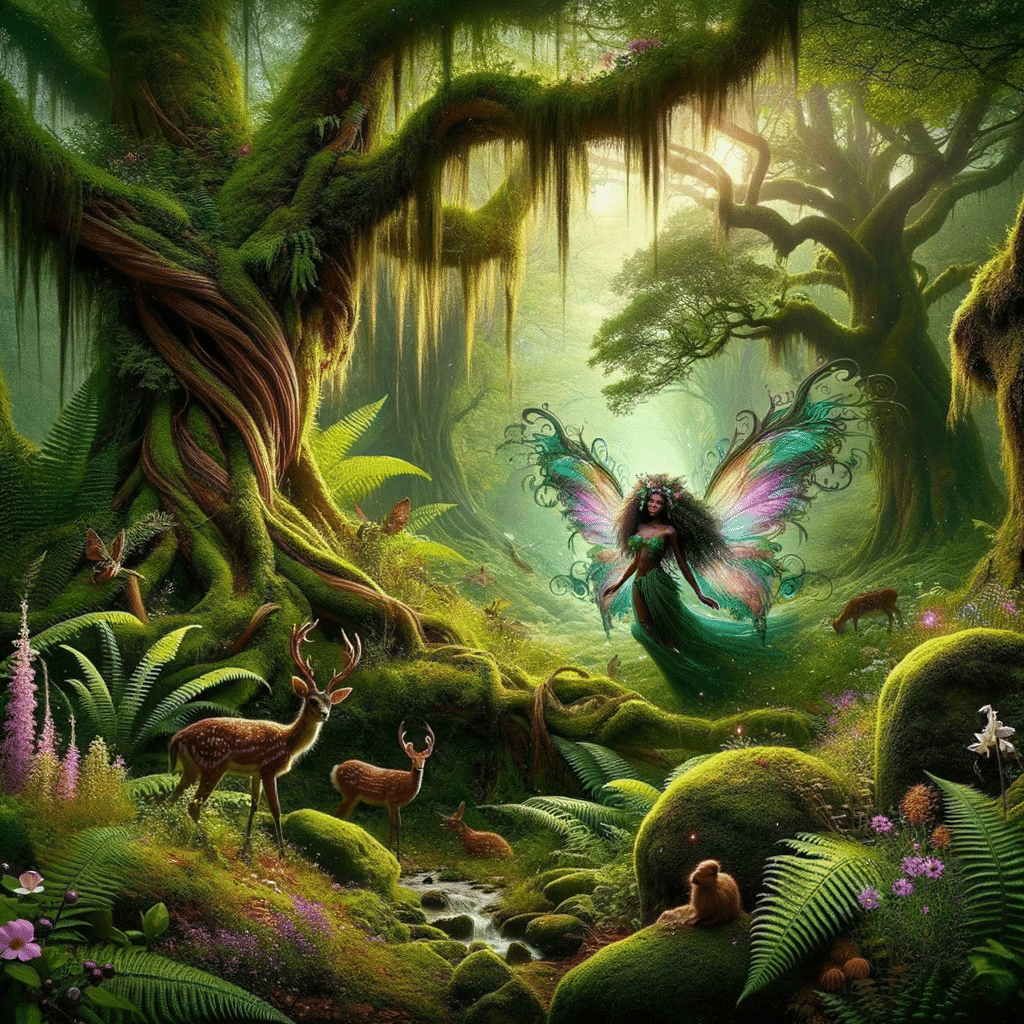
Enchanted forests have captured the human imagination across cultures and centuries. These magical, mystical forests filled with supernatural wonder persist throughout world folklore, mythology, literature, art, films, and games. Enchanted forests kindle our sense of awe, terror, and longing for adventure. They reveal nature’s hidden mysteries, dangers, and beauty. Though not physically real in the scientific sense, the idea of the enchanted forest endures as a powerful symbol of nature’s secrets, the thin veil between magical and mundane, and the promise of wonder in the unknown.
Definition
An enchanted forest refers to a grove, wood, or collection of trees imbued with supernatural qualities and magic. More than just an ordinary forest or wooded landscape, an enchanted forest brims with wonder, danger, and mystery. These forests go by many names – haunted woods, fairy forests, magical groves, among others. But they share the common thread of existing as magical realms shaped by unearthly forces. Enchanted forests often serve as thresholds or portals between the real, physical world and the world of magic or fantasy. A traveler may pass unaware from the ordinary world straight into the heart of a living, breathing enchanted forest. These landscapes overflow with otherworldly plants, animals, weather, seasons, and inhabitants like fairies, elves, dwarves, and mythical beasts. The very trees, rocks, and landforms of the enchanted forest possess supernatural qualities. The forces of magic are alive in every rustling leaf, twisted root, and cool stream. These liminal spaces form a bridge between mortal realms and the realm of the eternal, magical, and unknown.
Enchanted forests share certain common properties that give them their magical atmosphere. They often appear wild, overgrown, and maze-like, with tangled paths that seem to move and shift on their own. Travelers often report getting turned around and lost for days in the disorientingarrays of ancient trees and massive foliage. The forests burst with strange and exotic plants like crimson lotuses, silver ferns, and towering woods of amber, quartz, and gleaming crystal. Luxurious fruit bearing trees dot the forest – cinnabar pears, emerald apples, sapphire plums, golden oranges. These fruits often possess magical properties themselves. Clear streams may run warm or cold, their waters imbued with blessing, memory, or oblivion. Ruins of coliseums, castles, monoliths, and statues peek through vines and canopy, remnants of fallen civilizations. The ruins give the forest a primeval, eternal feel. Creatures like centaurs, gryphons, unicorns, dragons, and fairies dwell within the enchanted woods. Talking animals, shape-shifters, and forest spirits guide visitors to their destiny or doom. Magic saturates the very air and earth, making anything possible.

Examples
Many famous enchanted forests dot the pages of myth, folklore, and modern fantasy. In Norse myth, the legendary Myrkwood forest sat shrouded in perpetual gloom and night – its paths led unwary travelers to trolls, witches, and death. Germany’s Black Forest swirls with legends of magicians, ghosts, demons, and sorcery. The Arthurian legends tell of Brocéliande, an ancient magical forest tied to Merlin, Viviane, and the Holy Grail. The Oregon forest of Ryhope Wood in John Crowley’s Little, Big novel pulses with otherworldly powers. J.R.R Tolkien created the folkloric Mirkwood and Lothlorien forests filled with magic, elves, and danger. Robin Hood and his Merry Men inhabited the greenwood sanctuary of Sherwood Forest. Shakespeare’s enchanted forests in A Midsummer Night’s Dream and As You Like It mix romance, magic, and mischief. The animated films of Hayao Miyazaki bring enchanted forests to life through stunning natural imagery and magical creatures. Even Winnie the Pooh’s charming Hundred Acre Wood maintains subtle fairy tale charms. Modern works like myths, movies, and games draw from these ancient enchanted forests to craft realms of wonder, surprise, and imagination.
Enchanted forests remain ubiquitous in modern pop culture for their sense of adventure and escapism. They tap into timeless coming-of-age motifs by throwing characters into dangerous but magical places, letting them discover courage and destiny. In books like Harry Potter, movies like Princess Mononoke, and games like Myst, enchanted forests let imaginations run wild. They provide portals to secret worlds where nature’s magic spills over. Forest scenes in CGI films transport viewers into fantastical realms powered by digital effects. The archetype of the enchanted forest continues to influence fantasy works seeking to capture mystery and child-like awe. These stories let us explore the unknown without leaving our world behind. Enchanted forests shine light on nature’s wonder and humanity’s longing for magic in the mundane. Most importantly, they return us to that primal place in imagination that still believes anything is possible.
Conclusion
The enchanted forest’s appeal persists after thousands of years because it represents our connection to nature’s mysticism. It reminds us to retain our child-like wonder at the world. Forests grow in our myths as magical places because forests were humanity’s first cathedrals, the first architecture that inspired reverence and fear. The darkness, interwoven paths, and secrets of the primeval woods brought forth religious sentiment. Enchanted forests endure as the link between civilization and the untamed; they beckon us to leave safety and enter the unknown. Their beauty hides dangers that test the body and spirit. In literature and art, enchanted forests continue to enchant us; they serve as landscapes of growth, discovery, and imagination. More than a mere setting, they shape stories by bringing characters through transformative trials. As long as humanity seeks magic in the mundane, the archetype of the enchanted forest will persist – reminding us life is an adventure into the unknown.
References
Buch, D. J. (2009). Magic Flutes and Enchanted Forests: The Supernatural in Eighteenth-Century Musical Theater. University of Chicago Press.
Maritz, P. (2007). The enchanted forest as a place of knowing. Alternation, 14(2), 137-157.
Muller, F. A. (2009). The insidiously enchanted forest. Studies in History and Philosophy of Modern Physics, 2009, 268-272.
Sax, B. (2023). Enchanted Forests: The Poetic Construction of a World Before Time. Reaktion Books.
Zipes, J. (1987). The enchanted forest of the Brothers Grimm: New modes of approaching the Grimms’ fairy tales. The Germanic Review: Literature, Culture, Theory, 62(2), 66-74.


Leave a Reply