
Mermaids of the Great Lakes: Key Points
-
The Great Lakes have generated centuries of mermaid folklore, with consistent reports of aquatic humanoids appearing since before European contact.
-
The region possesses rich paranormal folklore including water spirits and ghost ships. Great Lakes mermaids are described as pale, large-eyed, and curious rather than threatening.
-
The 1782 Lake Superior Merman incident involved multiple witnesses observing an intelligent creature with a human upper body and fish tail over several days.
-
Explanations range from misidentified animals to unknown species surviving in the deep, unexplored portions of the lakes.
-
Great Lakes mermaid folklore impacts regional culture through tourism and art while fostering environmental awareness and respect for these ecosystems.
-
These legends remind us that much of the Great Lakes’ depths remain unexplored and potentially capable of harboring unknown life forms.

Introduction
The Great Lakes have always been mysterious and fascinating to the people who live near them. With storms that can happen at any time and depths that are comparable to ocean trenches, these huge inland seas have inspired sailors, native peoples, and settlers for thousands of years with stories and tales. There have been stories of mermaids and aquatic humans in these waters since before Europeans came. These stories are some of the most interesting of these legends because they make us think about what might be below the top of North America’s most famous bodies of water.
Mermaid Folklore Across Cultures and Time
People have been telling stories about mermaids for a very long time. Stories about them can be found in cultures on every land where people live. For thousands of years, these creatures have been shown in Assyrian art, Greek mythology, African folklore, and Asian legends. They are usually described as having the upper body of a person and the lower body of a fish. In European mythology, mermaids were usually seen as dangerous creatures whose enticing songs led sailors to their deaths. However, some stories also showed them as kind creatures who could grant wishes or warn of impending storms. The fact that these stories have been passed down from one culture to another shows that people have always been interested in the line between land and water. This may have come from our ancestors trying to explain strange things that happened in the ocean or seeing real aquatic mammals like seals and manatees in strange places.
The Great Lakes as a Source of Mystery and Legend
To understand why the Great Lakes have been a source of mermaid myths and water legends, you need to understand how big and complicated they are as a natural area. Lakes Superior, Michigan, Huron, Erie, and Ontario make up the Laurentian Great Lakes. They are the biggest connected group of freshwater lakes in the world by surface area (Zhou et al., 2016). People who lived near or went on them in the past were amazed and scared by their size, depth, and often unpredictable conditions (Egerton, 2018). The Great Lakes hold about 21% of the world’s surface freshwater, making them the biggest freshwater system in the world (Zhou et al., 2016). People who lived near or went on them in the past were amazed and scared by their size, depth, and often unpredictable conditions (Egerton, 2018).
The lakes are very different in how they look and feel. The water clarity is best in Lake Superior, which is the biggest and deepest of the upper lakes. The Secchi depth has been rising rapidly and linearly over the record period (Dove & Chapra, 2015). On the other hand, Lakes Erie and Ontario are deeper, have more fish, and have less clear water. The lakes have different levels of clarity, depth, and ecological character. This creates a range of environments, from the almost otherworldly depths of Lake Superior that are crystal clear to the cloudy, biologically rich waters of Lake Erie that can inspire different types of aquatic folklore and legend (Egerton, 2018).
The lakes also go through big changes with the seasons. For example, there is a lot of ice in the winter (Assel et al., 2003), strong lake-effect weather systems in the summer (Laird et al., 2016), and a lot of different layers of heat in the winter (Scofield et al., 2020). Assel et al. (2003) say that Lake Erie has the highest median yearly maximum ice concentration (94%), followed by Lakes Superior (80%), Huron (63%), Michigan (33%), and Ontario (21%). For people who depended on the lakes, seeing such big changes from open, navigable water to frozen expanses during the winter would have made them feel like the lakes were alive, strong, and unpredictable.
There is a lot of supernatural myth in the Great Lakes area. It’s not just about aquatic humans; it includes a lot of strange things that don’t make sense. Native American groups like the Ojibwe, Potawatomi, and Iroquois have long said that the lakes are home to strong water spirits and other supernatural beings, some good and some bad. People say that the lakes are home to huge snake-like creatures, ghost ships that show up and then leave without a trace, and strange lights that dance above the water at night when there is no moon. Strange things have been seen and heard by sailors and fishers, such as compasses that spin wildly, ships and crews going missing for no apparent reason, and haunting sounds coming from the depths when the weather is calm. Mysticism in the Great Lakes has produced a culture where stories about strange water creatures, like mermaids, are taken seriously by locals and are passed down from generation to generation as part of the area’s oral history.
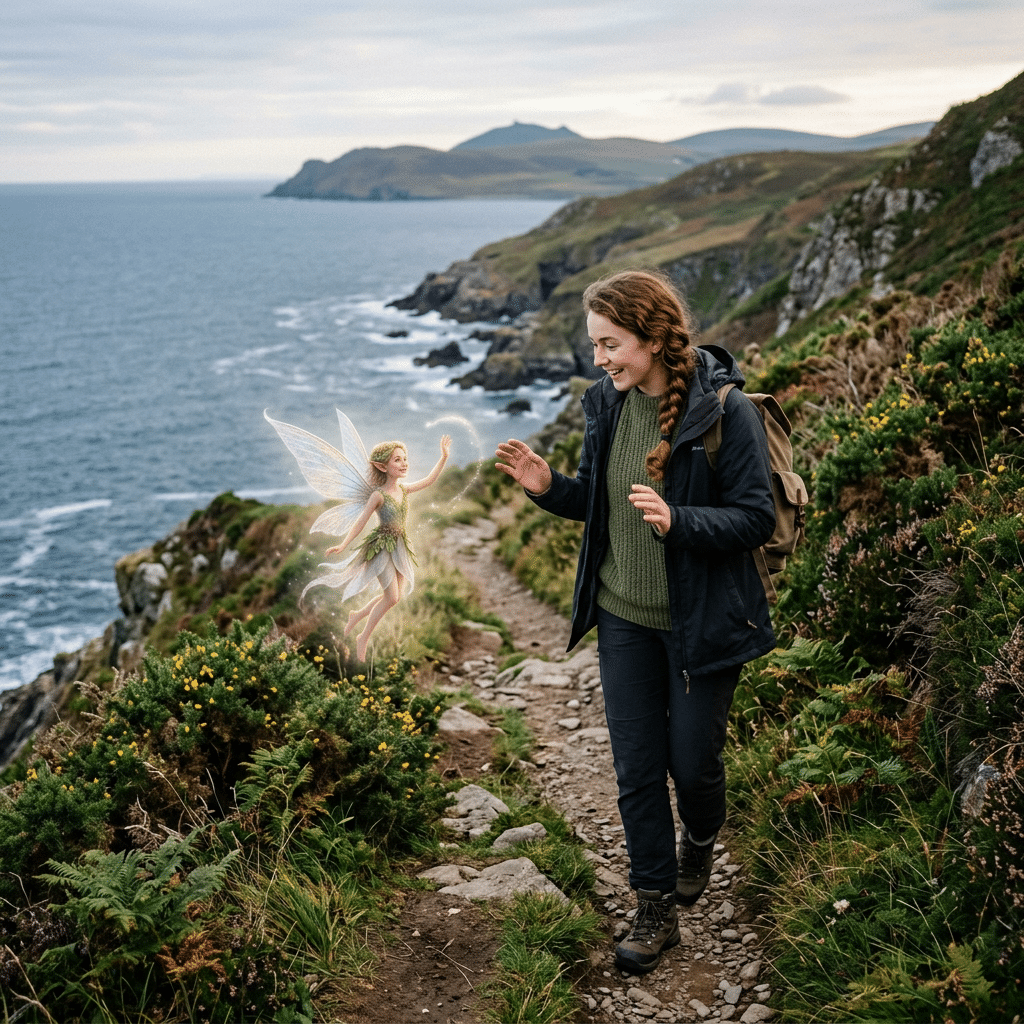
The fish groups in the Great Lakes have changed a lot since the 1800s because of habitat loss, overfishing, and invasive species (Campbell & Mandrak, 2019). They used to be much more diverse and plentiful. This diversity of life in the environment would have given rise to a lot of different aquatic myths, such as those about strong water spirits and humanoid aquatic beings. They could be fairies too.
The larger early modern discussion of mermaids and other aquatic humanoid creatures is important for understanding how these beliefs may have connected with the Great Lakes area. In early modern European and American thinking, mermaids, tritons, sirens, and other aquatic beings that looked like people played a big role in natural philosophy, cosmology, and travel writing (Brito, 2023). Several early modern authors wrote a lot about mermaids and tritons, which they called “anthropomorphic fishes.” They wrote about seeing creatures that looked like people rising from the water near different places in the Americas, as well as mermaids or sirens off the coast of Virginia, which they described as a type of sea monster with blue hair falling down its back (Brito, 2023) as well. Not only were these stories written off as fiction, but they were also incorporated into larger ideas about natural history and the universe. The logic of early modern natural philosophy held that if tritons or marine men existed, then mermaids must also exist in the water (Brito, 2023). This line of thinking was used not only in saltwater environments but also in the Great Lakes, which were the largest and most mysterious inland seas in North America. They were easily put into the same mental framework as the ocean because of their size and mystery.

Documented Sightings and The Lake Superior Merman of 1782
There have been specific stories of mermaids in the Great Lakes since at least the 18th century, and reports still come in from time to time today. Somewhat different from their saltwater cousins, these freshwater mermaids are pictured as smaller and better able to survive in the colder, darker inland seas. Reports have been made of creatures with pale, almost see-through skin, big eyes that are suited for low light, and behavior that suggests they are smart and interested in what people are doing. Some stories say that mermaids have skin that is slightly green, which helps them fit in with the algae-covered rocks and plants that grow in the Great Lakes. Ocean legends talk about sirens that sing, but Great Lakes mermaids are said to be more quiet observers. Some stories say that their haunting calls can be heard across the water at dawn or dusk.
As of 2023, the Lake Superior Merman event of 1782, which was seen by many people near the Canadian shore, is the most famous and well-documented story of a humanoid creature that lived in the Great Lakes (Sowden, 2023). History says that a group of fur traders and local Ojibwe people saw what they called a male watery creature with human features above the waist and a strong fish tail below. The animal was seen coming up to the surface several times over the course of several days near their camp. It seemed interested in what they were doing and wasn’t scared of the people looking from shore. People who saw the being said it had long, dark hair, a strong upper body with skin that looked like the skin of a seal, and expressive eyes that showed intelligence and awareness. People saw the creature catch and eat fish, and at one point it looked like it offered a fish to the people watching before diving back under the water. This story is especially important because it was written down by both European traders and native peoples on their own time. This gives it a level of credibility that isn’t common for accounts from a single witness.
Theories, Analysis, and Impact of Great Lakes Mermaid Legends
Theories about the Lake Superior Merman sighting and related reports range from the skeptical to the speculative, and they all offer different views on what witnesses may have seen. The most conservative theory is that known animals were mistakenly identified. This is especially true for seals that sometimes enter the Great Lakes through the St. Lawrence Seaway. However, this waterway did not exist in 1782, and seals were not native to the area at that time. Some researchers think that witnesses might have seen a person swimming or a floating log that created an optical illusion in certain lighting conditions. However, this explanation doesn’t seem to fit with the repeated close-up observations by many experienced outdoorsmen and native people who knew the area well. Some more speculative ideas say that there might be an unknown species that has adapted to living in freshwater. This could be a relic population of an aquatic mammal that changed over time by living alone, or it could be that some prehistoric creature has survived in the deep, unexplored parts of the lakes. Cryptozoologists say that Lake Superior is over 1,300 feet deep and that a lot of its bottom hasn’t been studied yet, which could mean that it’s home to species that we don’t know about.
By looking at the 1782 story and other reports of mermaids in the Great Lakes, we can see some interesting patterns that set these sightings apart from common monster stories. The descriptions are very similar across different time periods and places around the lakes, which suggests either a shared culture story or multiple observations of the same thing. Witnesses usually say the creatures are interesting rather than scary, which is different from European mermaid stories that stress how dangerous they are to people. Most of the sightings have happened in parts of the Great Lakes that are known for their unusual depth, complicated underwater geology, and strong currents that could be home to secret populations of aquatic animals. Psychological research suggests that some reports may be due to pareidolia, which is the human tendency to see faces and patterns in random things. However, the specificity and regularity of many reports make them hard to write off as just imagination. Native Americans talked about similar beings long before Europeans brought mermaid stories to the Americas. Such evidence makes it harder to say that these stories are just cultural contamination or imported mythology.
Mermaid stories have a lot to do with the biological complexity of the Great Lakes, with their many kinds of fish, big changes in the seasons, and complicated food webs. There have been many kinds of fish in the Great Lakes in the past, like lake trout (Salvelinus namaycush), lake whitefish (Coregonus clupeaformis), and Atlantic salmon (Salmo salar) (Madenjian et al., 2008), as well as many others that have gone extinct or been introduced over time (Campbell & Mandrak, 2019). Since the 1800s, there have been big changes in the fish communities of the Great Lakes. For example, 21 native fish species have disappeared from one or more lakes, and 30 non-native species have moved in (Campbell & Mandrak, 2019). These changes show how dynamic and often random the lakes’ ecosystem is. Because the ecosystem was always changing and the lakes were very big and deep, they seemed alive and strong in ways that were easy to explain in terms of myths.
Mermaid myths in the Great Lakes have effects that go beyond just being interesting. They have real effects on the culture, tourism, and even environmental understanding of the area. Many of the towns that are near the Great Lakes have made festivals, monuments, and museums out of their aquatic tales. This brings in tourists and helps the local economy. There are a lot of works of art, literature, and music that celebrate the mystery and beauty of the Great Lakes that are based on these stories. They help give the area its own unique character. More than that, these stories make people respect and be amazed by the lakes themselves. They make people see these bodies of water as complicated ecosystems that should be protected instead of just as resources that should be used. Groups that work to protect the environment have found that myths and legends can be very effective ways to get people interested in saving the places where mythical creatures might live. Even though we have a lot of modern technology, these stories are still told. This study shows that people like mysteries and that, despite our scientific progress, nature may still have secrets that we don’t fully understand.
Conclusion
The mermaids of the Great Lakes are more than just a fun myth or story to tell around the campfire. They show how complicated our relationship with nature is and how we are always trying to figure out the secrets around us. It doesn’t matter if these stories come from mistaken identities, imagination, cultural custom, or real encounters with creatures no one has seen before. They are important to the people who live near these great inland seas on a cultural and psychological level. The Lake Superior Merman of 1782 and other stories like it tell us that a lot of our world, including the deepest parts of our own Great Lakes, is still unexplored and could surprise us. We may one day be able to solve the mystery of the Great Lakes mermaids as we continue to use more advanced technology to map the underwater landscapes of these lakes and study their ecosystems. Until then, though, these stories will continue to inspire people to think about the power and mystery of nature.
References
Assel, R., Cronk, K., & Norton, D. (2003). Recent trends in Laurentian Great Lakes ice cover. Climatic Change, 57(1-2), 185-204. https://doi.org/10.1023/a:1022140604052
Brito, C. (2023). Humans and aquatic animals in early modern America and Africa. https://doi.org/10.1515/9789048544851
Campbell, S., & Mandrak, N. (2019). Temporal dynamics of taxonomic homogenization in the fish communities of the Laurentian Great Lakes. Diversity and Distributions, 25(12), 1870-1878. https://doi.org/10.1111/ddi.12986
Dove, A., & Chapra, S. (2015). Long-term trends of nutrients and trophic response variables for the Great Lakes. Limnology and Oceanography, 60(2), 696-721. https://doi.org/10.1002/lno.10055
Egerton, F. (2018). History of ecological sciences, Part 60: American Great Lakes before 2000. Bulletin of the Ecological Society of America, 99(1), 77-136. https://doi.org/10.1002/bes2.1372
Laird, N., Metz, N., Gaudet, L., Grasmick, C., Higgins, L., Loeser, C., Schlaubaugh, L., & Zelinsky, D. (2016). Climatology of cold season lake‐effect cloud bands for the North American Great Lakes. International Journal of Climatology, 37(4), 2111-2121. https://doi.org/10.1002/joc.4838
Madenjian, C., O’Gorman, R., Bunnell, D., Argyle, R., Roseman, E., Warner, D., Stockwell, J., & Stapanian, M. (2008). Adverse effects of alewives on Laurentian Great Lakes fish communities. North American Journal of Fisheries Management, 28(1), 263-282. https://doi.org/10.1577/m07-012.1
Scofield, A., Watkins, J., Osantowski, E., & Rudstam, L. (2020). Deep chlorophyll maxima across a trophic state gradient: A case study in the Laurentian Great Lakes. Limnology and Oceanography, 65(10), 2460-2484. https://doi.org/10.1002/lno.11464
Sowden, C. (2023, February 13). Mermaids: A monster in Lake Superior, 1782 – Fall 1971. National Museum of the Great Lakes. https://nmgl.org/mermaids-a-monster-in-lake-superior-1782-fall-1971/
Zhou, Z., Guo, L., & Minor, E. (2016). Characterization of bulk and chromophoric dissolved organic matter in the Laurentian Great Lakes during summer 2013. Journal of Great Lakes Research, 42(4), 789-801. https://doi.org/10.1016/j.jglr.2016.04.006

Leave a Reply