Vrykolakas in Greek and Balkans Folklore: Key Points
-
The vrykolakas is a creature from Greek and Balkan folklore representing ancient fears about death and the restless dead and is far more gruesome than the refined Western vampire.
-
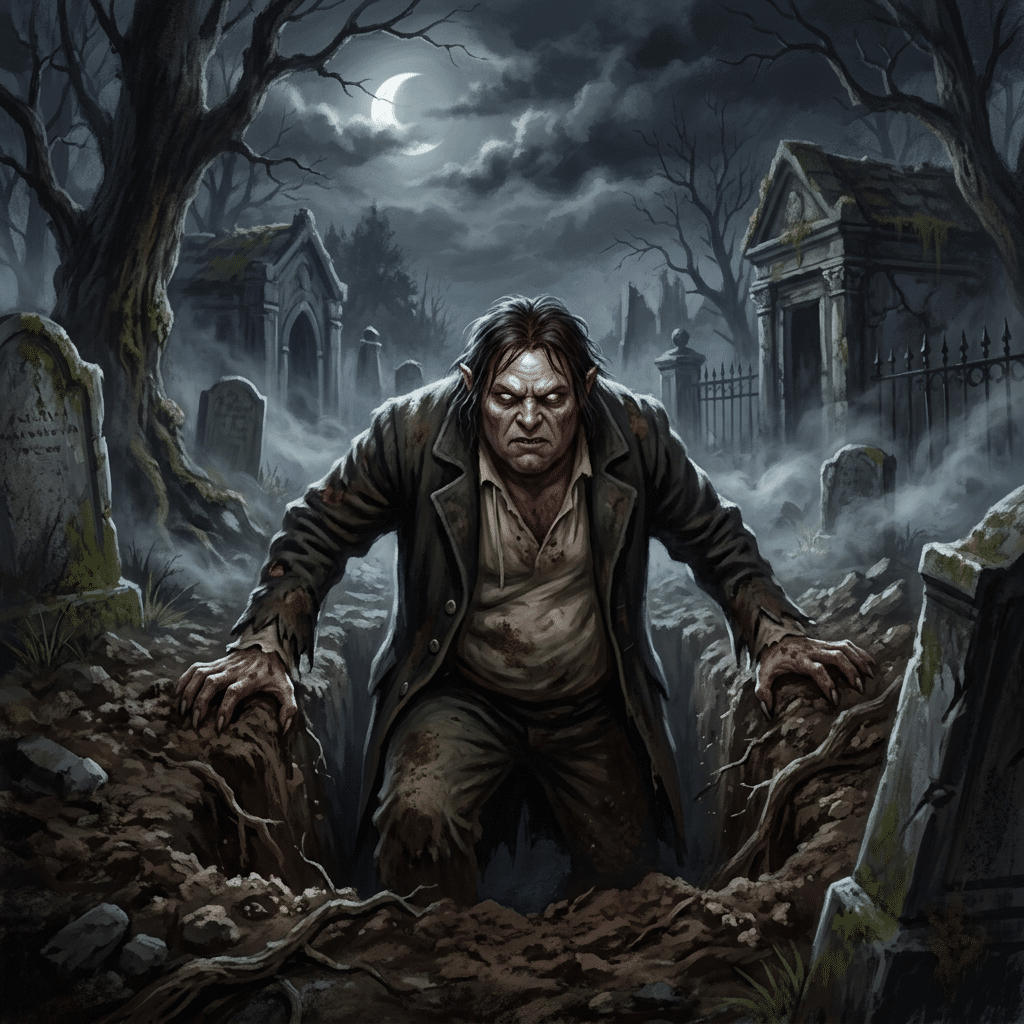
Physically, it appears as a bloated, ruddy, swollen corpse with dark purplish-red skin, glowing eyes, and long nails, though it can sometimes pass for a living person.
-
Its behavior centers on tormenting the living, particularly family members, by knocking on doors at night, spreading plague, spoiling food, and suffocating sleeping victims.
-
A person could become a vrykolakas through excommunication, sinful living, improper burial, being cursed, or even being born with a caul or bitten by another vrykolakas.
-
Destruction methods included staking, decapitation, priestly exorcism, and most effectively, burning the exhumed corpse completely to ash.
-
Scholars theorize the legend grew from misunderstood decomposition, attempts to explain the spread of infectious disease, and a religious tool to enforce moral and community standards.

Introduction
The vrykolakas, one of the most persistent and frightening creatures in Greek and Balkan folklore, has haunted the minds of Mediterranean peoples for thousands of years. The vrykolakas is a more primal and terrifying figure than the elegant, aristocratic vampire of Western literature, emerging from deep-seated worries about death, corruption, and the restless dead. It is a monument to how much human civilizations have always struggled with the barrier between the living and the dead and the horror of what might happen when that boundary is crossed.
The vrykolakas is, in all sources, considered a being that comes from the dead, typically linked with blood-sucking and terrible revenant behavior, and is ultimately entwined with the wider vampire traditions of Eastern Europe and the Mediterranean. The Greek vrykolakas is part of the longue durée of vampire belief, and scholarly focus has been placed on its status as a revenant whose form has evolved from early spirits to a more recognized undead that appears serially in family tales and local history. This undead creature is well-documented in folklore (McFadden, 2021; Zochios, 2018; Braccini, 2022; Velissariou, 2022; Schneider, 2019).
Physical Appearance and Behavioral Characteristics
The vrykolakas is most typically depicted as a bloated, ruddy-faced corpse that has not decomposed in the anticipated way in terms of physical appearance. Its skin is described as being stretched tight and colored a dark purple-red, making it look grotesquely inflated and engorged. Some descriptions have it with coarse hair, long fingernails, and eyes that shine with an eerie crimson light, while others insist that it may look practically indistinguishable from a living human at first sight, which makes it all the more dangerous and misleading.
In early Greek lore the vrykolakas appears in a form typically described as more “spirit-like” than fully corporeal, moving progressively towards the more known picture of the reanimated dead rising from the grave to prey on the living. Forensic and folkloric studies cross-reference a range where early revenants—spirits or ephemeral undead—are subsequently refigured as corporeal, blood-sucking, or blood-tasting entities in later folk stories. Greek traditions connect the vrykolakas to a larger pantheon of revenants and vampire-like creatures (Efialtae, Striges, Lamiae, Empousai, etc.) in Byzantine and ancient Greek lore, as well as more recognizable vampiric undead archetypes linked to hauntings and blood drinking. The Greek vrykolakas is regularly depicted as a revenant that may attack kin and others, depending on the revenant theme as a basic structural aspect of the religion (Velissariou, 2022).
The vrykolakas is not so much motivated by the blood-sucking impulse of Western vampires as by an obsessive urge to afflict and murder the living, especially members of his family. It was said that the vrykolakas traveled at night, knocking on the doors of houses and shouting the names of individuals it had once loved; anyone who opened the door at the first knock would soon sicken and die. The creature could also spread sickness, destroy food, make cattle sick, and sit on sleeping victims to suffocate them, a phenomenon akin to the nightmare-daemon traditions in many cultures.

Etymology and Linguistic Origins
The Greek “vrykolakas” is a vocabulary borrowing from the Slavic language family, where the cognates refer to revenants or werewolf-like beings. Zochios notes that the Greek vrykolakas is based on a slave/Balkan linguistic substrate and that the Greek form is a high-level imposition of Slavic roots into Hellenic folklore, with the connotation of “revenant” remaining through the adaptation (Zochios, 2018). Braccini traces the etymology of the Greek name vrykolakas, which is derived from a Slavic root meaning “werewolf,” showing a linguistic and semantic link between Slavic werewolf legends and the Greek revenant figure (Braccini, 2022). Velissariou’s Greek folktale study, further confirming the Greek vampire as vrykolakas, situates it inside the Greek mythological imagination, highlighting the term’s native use of a Slavic concept while retaining distinct Greek folkloric contours (Velissariou, 2022). Collectively, these sources indicate that vrykolakas is not an original pure Greek coinage but a Greek adaptation of a broader Slavic revenant/werewolf lexicon, reinterpreted in the context of Greek folklore (Zochios, 2018; Braccini, 2022; Velissariou, 2022).
Religious and Folkloric Origins
The roots of the vrykolakas in folklore are profoundly embedded in Greek Orthodox religious beliefs and in pre-modern fears about inappropriate burial methods. Traditionally, a person became a vrykolakas if he died in a condition of excommunication, was buried on unconsecrated ground, was a sinner, or was cursed by another. It is also interesting that those who were born with a caul, those who ate the meat of a sheep slaughtered by a wolf, or those bitten by another vrykolakas were also thought to be at risk of being transformed after death, hinting at a complicated web of moral and supernatural causes.
Methods of Destruction and Cultural Interpretations
There were several ways to destroy a vrykolakas, and they differed from location to region, but there were a few behaviors that occurred consistently across Greek and Balkan narratives. A frequent first step was exhuming the suspected corpse and checking it for evidence of exceptional preservation, and if the body was discovered to be bloated and undecayed, it was taken as confirmation of its monster character. The surest means of destroying it forever were to drive a stake through the body, to behead the corpse, to burn the remains to ashes, or to have a priest perform rites of exorcism and rebaptism over the grave, with fire being considered the most thorough and final of all remedies.
Some sources mention the burning of the vrykolakas as a definitive way to eliminate the creature, which is more generally in keeping with the classic vampire lore. In some traditions, as Bane (encyclopedic vampire tradition) relates, burning is a surefire way to eliminate vrykolakas, a claim that arises in discussions of Greek revenants and Eastern European vampire legend (McFadden, 2021, summarizing vampire folklore). The dependability and universality of this technique of destruction vary depending on local traditions, but the connection between ruin by fire and the undead is a constant motif in vampire folklore, including vrykolakas descriptions (McFadden, 2021). Additional forensic-cultural context connects the undead to ritual actions and symbolic burial practices—evidence that plague-period burials and other funerary rites are sometimes enmeshed with belief in vampire revenants in historical contexts (Venice case study) (Nuzzolese & Borrini, 2010).
There are a number of explanations advanced by researchers and historians to illustrate why the vrykolakas mythology became so powerful in Greek and Balkan culture. A common theory is that this idea arose from a misinterpretation of decomposition, as bodies in certain soils or cold climates can be preserved for a long time, shocking those who exhumed them. Another theory connects the vrykolakas tradition with the spread of disease, proposing that when a person died of an infectious disease and family members later became sick, communities attributed the tragic cycle to supernatural visitation rather than germ transmission. Thirdly, there is a social and religious perspective of these beliefs, where the fear of becoming a vrykolakas is a way of maintaining social standards, religious observance, and proper funeral rites. The fear of monstrousness after death was a very motivating factor for virtue.
Conclusion
Ultimately, the vrykolakas is an emblem of something deeper in our experience and our relationship with death, society, and the mysterious. It was born of genuine sadness, of dread, of the very human urge to understand why the living should continue suffering after a loved one has died. Whether as a supernatural reality for those who believed most firmly in it or as a cultural and psychological method for coping with loss and disease, the vrykolakas continue to be a fascinating window into the inner lives of the communities that produced them. It reminds us that over the whole span of human history, the dead have never simply vanished but have continued to exist in the anxieties, stories, and rituals of those left behind.
References
Braccini, T. (2022). Ogden, Daniel (2021). The Werewolf in the Ancient World. Oxford: Oxford University Press. Arys Antigüedad Religiones Y Sociedades, (20), 561-570. https://doi.org/10.20318/arys.2022.6797
McFadden, M. (2021). A History of Vampires and Their Transformation From Solely Monsters to Monstrous, Tragic, and Romantic Figures. Curiosity Interdisciplinary Journal of Research and Innovation, 2. https://doi.org/10.36898/001c.22205
Nuzzolese, E. and Borrini, M. (2010). Forensic Approach to an Archaeological Casework of “Vampire” Skeletal Remains in Venice: Odontological and Anthropological Prospectus*. Journal of Forensic Sciences, 55(6), 1634-1637. https://doi.org/10.1111/j.1556-4029.2010.01525.x
Schneider, K. (2019). What’s at Stake: Is it a Vampire or a Virus?. International Journal of Undergraduate Research and Creative Activities, 11(0), 4. https://doi.org/10.7710/2168-0620.1131
Velissariou, A. (2022). Two folktales (Vampire beings in Greek folktales). Bulletin of the Transilvania University of Brașov Series Iv Philology Cultural Studies, 14 (63)(Special Issue), 215-236. https://doi.org/10.31926/but.pcs.2021.63.14.3.15
Zochios, S. (2018). Interprétation ethnolinguistique de termes mythologiques néohelléniques d’origine slave désignant des morts malfaisants. Revue Des Études Slaves, 89(3), 303-317. https://doi.org/10.4000/res.1787
Leave a Reply