Dragons have fascinated people for thousands of years. Many cultures and narrative traditions have used them as symbols of power, knowledge, chaos, and mystery. The Connect Paranormal Blog goes into great detail on these wonderful animals, looking at everything from old stories to new video games, from ghostly appearances to crystal psionics. This essay looks at the wonderful variety of dragon stories on Connect Paranormal. This essay demonstrates how these fabled creatures continue to evolve, yet remain captivating as natural forces that frighten, challenge, and inspire us.
Dragons in Ancient Mythology and Cultural Tradition
The dragon’s mythological roots run deep across human civilization. As explored in Exploring the Roots of Dragon Myths and Their Impact on Culture, dragons appear in the earliest written records and oral traditions, representing fundamental forces that ancient peoples sought to understand and control. The Sumerian Dragons: Chaos and Wisdom Combined article reveals how Mesopotamian civilizations portrayed dragons as primordial beings embodying both destructive chaos and sacred knowledge, establishing patterns that would echo through later dragon mythology.
Different cultural traditions developed strikingly distinct dragon archetypes. The article Dragon Realms: The Surprising Contrasts of European and Chinese Dragon Mythology highlights how European dragons typically represented evil forces to be conquered, while Chinese dragons symbolized benevolent power, wisdom, and imperial authority. This fundamental divide reflects broader cultural values and cosmological perspectives. Similarly, Dragons in the Viking Age: Understanding Norse Beliefs and Legends examines how Norse peoples viewed dragons as guardians of treasure and embodiments of greed, creating narratives where dragon-slaying represented not just physical courage but moral triumph over avarice.
Even religious texts incorporated dragon imagery, as detailed in Bible Mythology: Unicorns, Dragons, and Sea Serpents in Scripture, where dragons appear as symbols of chaos, evil, and opposition to divine order. The persistence of dragon imagery across such diverse cultural and religious contexts demonstrates their fundamental role in human symbolic thinking.
Regional folklore developed unique dragon traditions that remain culturally significant today. The Wawel Dragon: Polish Folklore and Identity explores how the legendary dragon of Kraków became intertwined with Polish national identity, with the creature’s defeat symbolizing the triumph of cleverness over brute force. The physical location associated with this legend, as discussed in The Legends and Ghosts of Wawel Castle, continues to draw visitors and reinforces the dragon’s role in Polish cultural memory. Similarly, The Zmeu: A Dragon of Desire and Chaos in Balkan Culture examines the multifaceted zmeu of Romanian and Balkan mythology, a shape-shifting dragon that represents both physical threat and forbidden temptation, embodying cultural anxieties about desire and transgression.
Celtic traditions contributed their own unique dragon variants, as explored in The Beithir: A Symbol of Nature and Chaos, where the Scottish beithir represents untamed natural forces dwelling in mountainous wilderness, reminding communities of nature’s power and unpredictability.

The Evolution of Dragon Mythology
Dragon mythology has not remained static but has evolved significantly over time. The Evolution of the Dragon Myth: From Fear to Fascination traces how dragons transformed from terrifying embodiments of chaos in ancient narratives to more complex, even sympathetic characters in contemporary storytelling. This shift reflects changing human relationships with nature, power, and the unknown. Similarly, The Evolution of Ancient Creatures: Myths to Modern Monsters examines how dragons and other legendary beings have been reinterpreted through successive cultural lenses, from medieval bestiaries to modern cinema and gaming.
The article 9 Legendary Creatures Proven Real: From Myth to Science provides fascinating context by exploring how some legendary creatures had basis in misunderstood natural phenomena, raising intriguing questions about whether dragon legends might have originated from discoveries of dinosaur fossils or encounters with large reptiles.
A particularly interesting dimension of dragon evolution involves their association with specific elements. Elemental Dragons in Mythology: History and Significance explores how different cultures associated dragons with fundamental forces like fire, water, earth, and air, creating specialized dragon types whose powers reflected their elemental nature. This framework would become particularly influential in modern fantasy gaming.
Dragons and Treasure
One of the most persistent dragon tropes involves their legendary hoards. Dragons and Treasure: A Mythological Connection examines the deep symbolic relationship between dragons and wealth accumulation, exploring how this association reflects human anxieties about greed, power, and the corrupting influence of wealth. The dragon’s hoard represents not merely physical riches but knowledge, power, and status guarded jealously against all who would claim it.
Chromatic Dragons: The Evil Wyrms
The concept of chromatic dragons as inherently evil creatures became standardized through tabletop gaming, particularly Dungeons & Dragons. Evil Dragons: Bad Wyrms of the World provides a comprehensive overview of these malevolent creatures, examining what makes them fundamentally antagonistic and how different color types express their evil in distinct ways.
Red Dragons: Symbols of Chaos and Power in Mythology and Popular Culture explores the most powerful and arrogant of chromatic dragons, creatures of volcanic fury whose overwhelming pride and destructive power make them archetypal villains. These crimson wyrms represent the ultimate draconic threat, combining physical might with keen intelligence and an unshakeable belief in their own superiority.
Blue Dragons: The Masters of Lightning and Territory examines azure dragons who rule desert territories through lightning breath and political manipulation. Unlike red dragons’ direct approach, blue dragons prefer calculated schemes and complex power structures, making them sophisticated antagonists who challenge heroes intellectually as well as physically.
Green Dragon Habitat and Behavior: A Study in Cunning Mastery delves into the most deceptive chromatic dragons, forest-dwelling manipulators who employ poison gas and psychological warfare. Green dragons exemplify how draconic intelligence can be as dangerous as physical strength, creating webs of lies and betrayal that destroy communities from within.
White Dragons in Fantasy Literature and Role-Playing Games explores the most bestial chromatic dragons, arctic predators driven primarily by hunger and territorial instinct. Though less intellectually sophisticated than their colorful kin, white dragons represent primal draconic ferocity untempered by civilization’s constraints.
Metallic Dragons: Noble Protectors
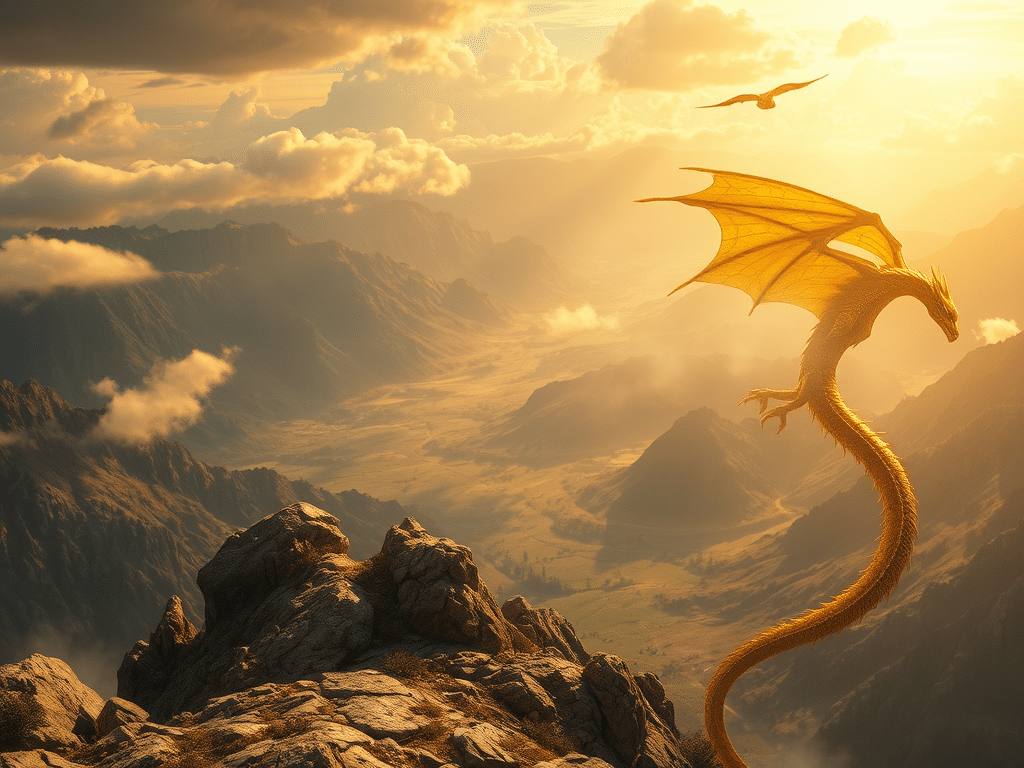
In contrast to their chromatic counterparts, metallic dragons typically represent benevolent power and wisdom. Gold Dragons: Symbol of Wisdom and Power in Mythology and Fantasy examines the most powerful and noble metallic dragons, creatures who actively protect mortal civilizations and champion justice. Gold dragons embody the ideal of power used responsibly, combining overwhelming strength with deep wisdom and genuine compassion.
The Enigmatic Silver Dragons: Myths and Powers Unveiled explores dragons who share gold dragons’ benevolence but express it differently, often adopting humanoid forms to walk among mortals and experience their lives directly. Silver dragons represent accessible nobility, dragons who bridge the gap between draconic majesty and mortal experience.
Brass Dragons: Guardians of Knowledge and Adventure examines the most talkative and sociable metallic dragons, desert dwellers who value conversation and storytelling. Brass dragons demonstrate that draconic goodness need not be solemn or distant, offering instead a model of benevolent curiosity and genuine interest in mortal affairs.

Gem Dragons: Psionic Neutrality
Beyond chromatic and metallic dragons lies a third category: gem dragons, characterized by crystalline scales and powerful psionic abilities. These neutral dragons pursue their own agendas, neither championing good nor embracing evil.
Emerald Dragons: The Psyche and Power of D&D’s Gem Dragons examines crystalline dragons with glittering green scales who obsess over historical knowledge. Unlike chromatic dragons who hoard treasure or metallic dragons who champion causes, emerald dragons collect information about the past, building vast libraries in historically significant locations. Their formidable psionic abilities make them dangerous when threatened, capable of attacking minds directly rather than relying solely on physical might.
Exploring the Mystique of Amethyst Dragons explores purple-scaled dragons who make their homes primarily on the Astral Plane, where time flows differently and thought becomes tangible. Amethyst dragons embody philosophical contemplation, spending subjective eternities in meditation while pursuing understanding rather than power or wealth. Their connection to the Astral Plane grants them unique perspectives and abilities unavailable to material-bound dragons.
Sapphire dragons, with their brilliant blue crystalline scales, dwell in underground caverns and possess powerful territorial instincts combined with psionic abilities that let them manipulate earth and stone. Topaz dragons, shimmering in golden-orange hues, make their lairs along coastlines and possess abilities related to both water and psionics, representing the meeting point of physical and mental elements. Crystal dragons, the most benevolent of gem dragons, have translucent white scales and inhabit frigid mountain peaks, using their cold-based abilities alongside psionics and displaying surprising friendliness toward other creatures despite their neutral alignment.
Deep Dragons: Psionics and Their Role in D&D examines dragons adapted to the Underdark’s eternal darkness, creatures with iridescent purple-blue-gray scales who have evolved beyond traditional draconic concerns. Deep dragons hoard knowledge and psychic essences rather than treasure, spending years in meditation within lair-libraries filled with crystalline memory storage devices. Their mastery of psionics allows them to compete with mind flayers for psychic dominance in the subterranean realms.
Specialized Dragon Types
Beyond the traditional color-based categories, dragon mythology includes numerous specialized variants. Smoke Dragons: Myths and Evolution explores dragons whose bodies consist partially or entirely of smoke and ash, creatures that exist at the boundary between physical and insubstantial. These dragons represent transformation and impermanence, challenging traditional assumptions about draconic physicality.
Shadow Dragons: Symbols of Darkness in Culture examines dragons corrupted or transformed by shadow magic, creatures who dwell in darkness and drain life energy. Shadow dragons represent the corruption of draconic power, showing how even mighty dragons can be twisted into something alien and terrible.
Undead Dragons: Defying Death
Perhaps no dragon variant proves more terrifying than those who transcend death itself. Undead Dragons: Myths and Modern Interpretations provides a broad overview of various undead dragon types, examining how different cultures and gaming systems have imagined dragons who refuse to accept mortality’s finality.
What Is a Dracolich and How Do Dragons Become Undead? offers detailed examination of the most powerful undead dragons. Dracoliches achieve immortality through necromantic transformation, willingly binding their souls to phylacteries in exchange for eternal existence as skeletal horrors. These creatures combine a dragon’s devastating abilities with an undead creature’s relentless nature and immunity to many mortal weaknesses, creating nearly unstoppable antagonists that embody the corruption of draconic pride taken to its ultimate extreme.
Bone Dragons: Ancient Terrors examines skeletal dragons reanimated through necromancy, creatures lacking the intelligence and autonomy of dracoliches but retaining much of their physical power. Bone dragons serve as shambling engines of destruction, their exposed skeletal forms creating visceral horror while their draconic abilities remain devastatingly effective.
Dragon Ghosts: Ethereal Spirits of the Draconic Realm explores spectral dragons who persist after death not through necromantic binding but as genuine spirits. These ghostly wyrms combine draconic majesty with spectral properties like intangibility and sudden manifestation, creating encounters that challenge assumptions about both dragons and ghosts. Dragon ghosts might serve as guardians of ancient knowledge, vengeful spirits haunting those who wronged them, or wise ancestral presences offering guidance to worthy supplicants.
Conclusion
The dragon content featured on Connect Paranormal Blog demonstrates the remarkable versatility and enduring appeal of these legendary creatures. From ancient Sumerian chaos serpents to crystalline psionic wyrms inhabiting the Astral Plane, from Polish folklore heroes to undead horrors defying natural law, dragons continue to evolve while maintaining their essential nature as beings of power that challenge, inspire, and terrify us.
Whether exploring chromatic evil through Evil Dragons: Bad Wyrms of the World, metallic nobility in Gold Dragons: Symbol of Wisdom and Power in Mythology and Fantasy, or gem dragon neutrality via Emerald Dragons: The Psyche and Power of D&D’s Gem Dragons, these articles reveal how dragons serve as mirrors reflecting our deepest fears, highest aspirations, and most complex moral questions. From cultural identity markers like the Wawel Dragon: Polish Folklore and Identity to gaming mechanics explored in Blue Dragons: The Masters of Lightning and Territory, from elemental embodiments discussed in Elemental Dragons in Mythology: History and Significance to undead abominations detailed in What Is a Dracolich and How Do Dragons Become Undead?, dragons remain endlessly adaptable symbols whose meanings shift with cultural context while maintaining their fundamental appeal.
The comprehensive dragon coverage on Connect Paranormal illustrates that these creatures transcend simple categorization. They are simultaneously ancient and ever-new, terrifying and inspiring, physical and metaphysical. Whether dwelling in Scottish mountains as described in The Beithir: A Symbol of Nature and Chaos, Underdark caverns as explored in Deep Dragons: Psionics and Their Role in D&D, desert wastelands covered in Blue Dragons: The Masters of Lightning and Territory, or the Astral Plane itself as detailed in Exploring the Mystique of Amethyst Dragons, dragons continue to captivate our imagination and challenge our heroes, ensuring that these magnificent creatures will remain central to mythology, folklore, and fantasy storytelling for generations to come.