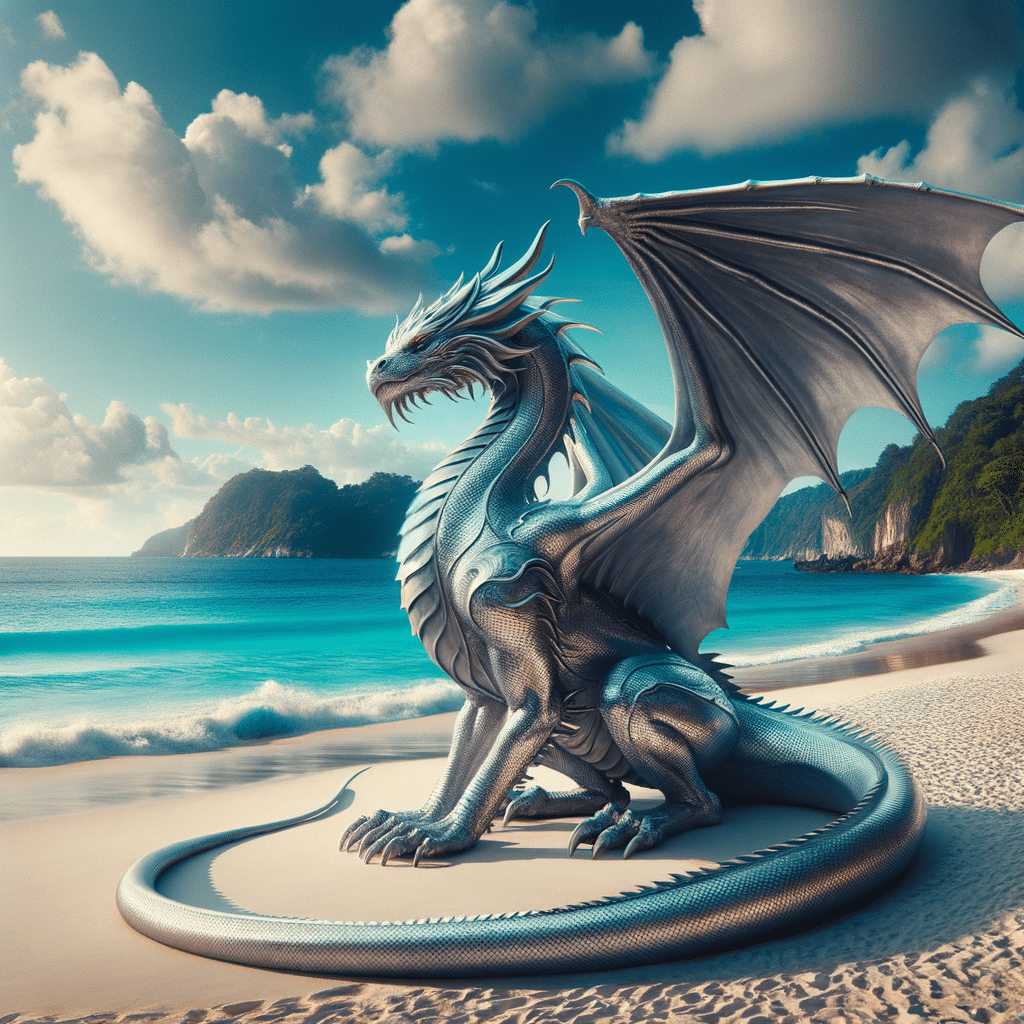
Silver dragons hold a special place in dragon mythology due to their reputation as some of the nicest and most beautiful dragons. Their sparkling scales, which look like polished silver, shine in both sunlight and moonlight, making them easy to spot among dragons. Most pictures of these creatures show them with noble and beautiful features, such as long, beautifully curved necks, sharp but royal faces, and big wings that allow them to fly through the air easily. Books and video games, such as Dungeons & Dragons, highlight their good qualities, strong abilities, and complex relationships with other creatures, making them famous in the fantasy genre.

Description
Silver dragons possess numerous terrifying abilities. Silver dragons possess the ability to breathe a cone of freezing cold, which can either halt the movement of their enemies or render them completely immobile. With this breath weapon, silver dragons can not only kill threats, but also control them without having to kill them first. Silver dragons are known for both their cold breath and their strong magic. They are very powerful in battle and helping friends because they can cast spells that change the weather, control the elements, and even heal wounds. Their magic is often in line with their natural desire to protect and do what’s right, which shows that they like to use their powers for the greater good (Knaak, 2008).
People and elves, in particular, love how well silver dragons get along with other animals. Silver dragons are usually interested in what’s going on with other races, unlike some of their more shy or hostile relatives. They are known to change into human or elf forms and walk among humans to learn about their cultures and give advice. The silver dragons, drawn to humanoid forms, have a strong desire to promote peace and justice. They often help communities, keep them safe from harm, and act as wise and mysterious guides to leaders and rulers (McCaffrey, 1968).
Silver dragons have complex relationships with other dragon types. Colored dragons, especially those that represent evil and chaos, like red or black dragons, often fight silver dragons. The conflicts happen because the two types of dragons have very different values and goals. Silver dragons want to protect the innocent and support justice, while chromatic dragons want to rule and be powerful. On the contrary, silver dragons get along better with other metallic dragons, such as gold and bronze dragons, who value kindness and order. These partnerships aren’t just for survival; they’re also based on mutual respect and shared values, which often lead to working together to fight bigger problems or settle disagreements (Weis & Hickman, 1984).
Even though silver dragons are usually calm, they are fierce protectors of their territory and friends. When they are angry, they fight with a mix of physical strength and magical skill, using their quickness in the air and cold breath to do a lot of damage. Because they don’t like violence that isn’t necessary, their fighting tactics often focus on defense and subduing instead of outright destruction. They are also known for being patient and wise. They usually try to fix problems through understanding and diplomacy before they fight (Greenwood, 2001).
Silver dragons have captured the imaginations of both writers and players, becoming well-known characters in both books and tabletop role-playing games, especially Dungeons & Dragons (D&D). Usually, these forms highlight their good qualities, strong skills, and complex relationships with other beings.
Fiction frequently portrays silver dragons as wise and kind entities that guide or protect people. They appear in many fantasy books and TV shows, and the sparkle and majesty of their scales make the stories more magical. For example, dragons are crucial in Anne McCaffrey’s Dragonriders of Pern series. While the dragons in Anne McCaffrey’s Dragonriders of Pern series aren’t silver, their portrayal of cooperation between humans and the virtues of dragons mirrors the portrayal of silver dragons in other literary works. Additionally, the Dragonlance series by Margaret Weis and Tracy Hickman portrays metallic dragons, similar to silver dragons, as benevolent allies of the good guys, frequently engaging in epic battles against their chromatic cousins (Weis & Hickman, 1984).

Dungeons & Dragons
There are a lot of silver dragons in Dungeons & Dragons. Different editions of the game carefully describe their traits and powers. D&D refers to silver dragons as metallic dragons, signifying their alignment with good. People often say that they are perfect examples of virtue because of how kind, smart, and fair they are. It’s possible for these dragons in D&D to change into humanoid forms. This lets them associate with other species more freely and quietly. This ability plays a significant part in their lore, as they often integrate into human society to better understand and aid it (Cook, 1998).
During gameplay, silver dragons can be both allies and enemies, based on how the Dungeon Master (DM) writes the story. As allies, they could give player characters tasks, advice, or safety, making them very useful sources of information and help. They often hide their lairs in high mountain ranges or snowy landscapes. These can be safe havens full of magical objects and old knowledge. People say that silver dragons’ homes are big and beautiful, and they often fill them with treasures and other things that show how powerful they are and how long they live.
When silver dragons appear as adversaries, it is usually under complex circumstances. For instance, a silver dragon might oppose the players if they threaten the dragon’s allies or territory, or if the dragon’s sense of justice conflicts with the players’ actions. They prefer to settle disagreements through understanding and communication, so these fights are rarely simple. But when they have to fight, they use their powerful skills, like their icy breath weapon and strong magic, to protect themselves and stand up for what they believe in.
In D&D, silver dragons have a lot of different stories. Each new version of the game adds to these stories. People often depict them as ancient entities with enduring memories and deep connections to the world’s history. They have ancient wisdom, so they can teach us a lot about lost cultures, lost eras, and hidden secrets. It also goes into detail about how they engage with other dragons. For example, silver dragons often join forces with other metallic dragons to fight bigger, wicked guys. The fact that these partnerships are based on mutual respect and common goals shows how cooperative they are (Greenwood, 2001).
In addition, silver dragons in D&D are known for caring about right and wrong. They often struggle with the complicated issues of justice and safety, trying to find a balance between their immense power and their duty to use it carefully. This moral aspect gives their characters more depth, turning them into more than just powerful monsters. It transforms them into beings with deep philosophical and moral concerns.
Silver dragons are unique in the dragon order because they are a mix of strength, wisdom, and kindness. The way they treat other species and dragons demonstrates how much they care about doing what’s right and are willing to use their powerful skills for the greater good. In the complex tapestry of dragon myth, they are still a sign of hope and protection, whether they are flying through the sky or walking among humans in disguise. Fans and players alike look up to and respect silver dragons due to their portrayal in books and games like Dungeons & Dragons, which further enhances their fame. Silver dragons continue to enchant and improve the fantasy genre, serving as sources of ideas, wisdom, and moral advice.
References
Cook, D. (1998). Monstrous Compendium: Monsters of Faerun. Wizards of the Coast.
Greenwood, E. (2001). Silver Marches. Wizards of the Coast.
Knaak, R. A. (2008). The Fire Rose. Wizards of the Coast.
McCaffrey, A. (1968). Dragonflight. Ballantine Books.
Weis, M., & Hickman, T. (1984). Dragons of Autumn Twilight. TSR.




Leave a Reply