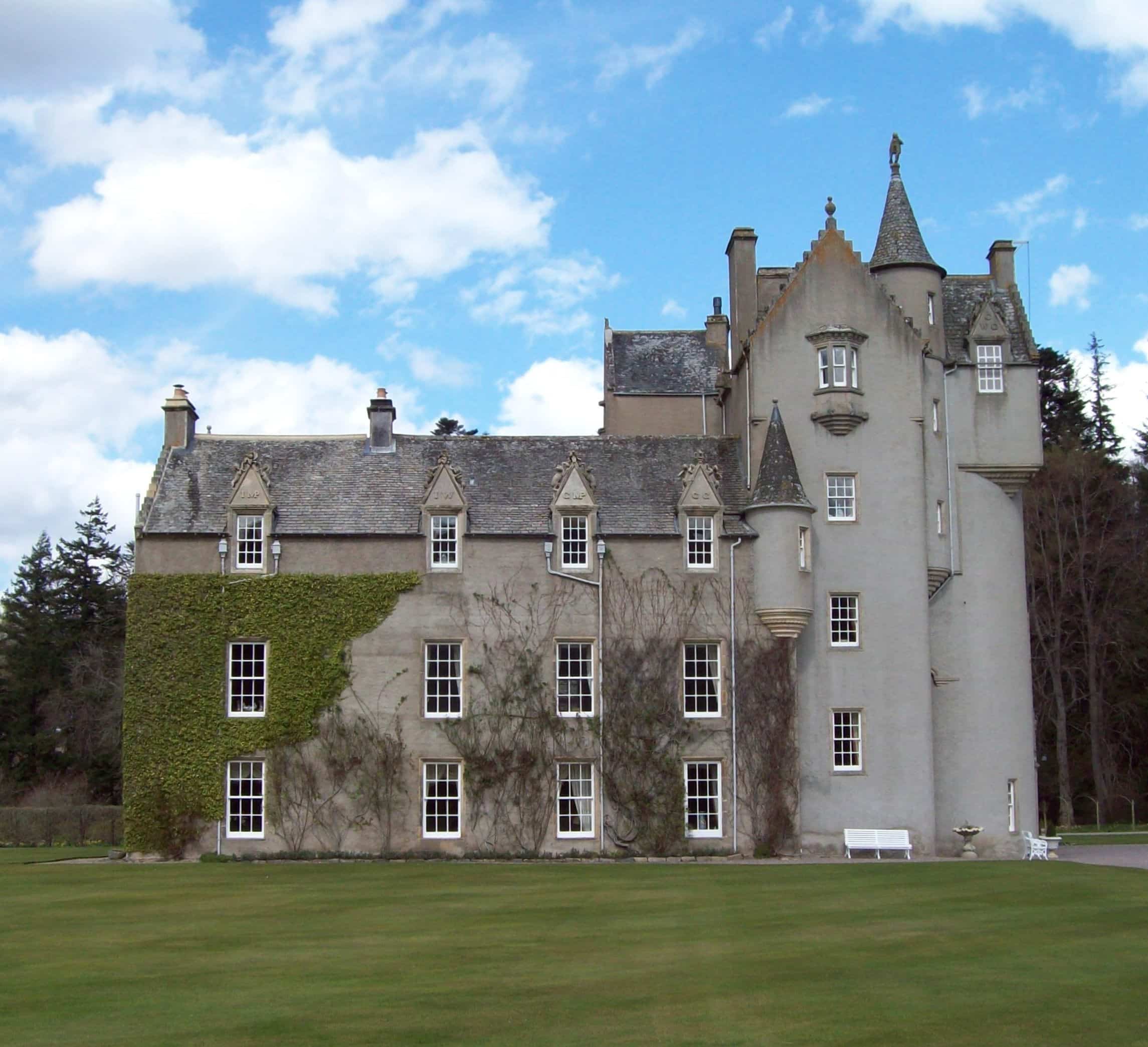
The Green Lady of Ballindalloch Castle: Key Points
- Ballindalloch Castle is a stunning Scottish baronial fortress in Speyside, set at the confluence of the Rivers Avon and Spey, and has been continuously inhabited by the same family, the Macpherson-Grants, since its founding around 1546.
- The castle‘s long unbroken history spans nearly five centuries, surviving Jacobite turbulence and the decline of the clan system, and today it remains a lived-in family home that opens its doors to visitors.
- The Green Lady is believed to be the spirit of a young Grant family daughter who died as a result of a forbidden or failed love affair, and she is most often seen drifting silently near the River Avon or glimpsed briefly inside the castle.
- Her legend is part of a much wider Scottish tradition, with Green Ladies haunting castles such as Crathes, Stirling, and Dalhousie, and the color green itself carries deep folkloric associations with the Otherworld and supernatural beings in Gaelic culture.
- One leading theory suggests these ghost stories are a way for communities to process shameful or painful grief that could not be spoken about openly, transforming personal tragedy into enduring myth passed down through generations.
- Another theory connects the Green Lady to far older beliefs, suggesting she may be a faded memory of a Celtic water spirit or river goddess, given a human story by later generations who had lost the original mythological understanding.

Introduction
Scotland, a country steeped in history, is best exemplified by the ghost stories that linger around its ancient stones. Ballindalloch Castle is one of the most famous of the Highland Scottish fortresses, and within its walls is preserved one of the most persistent of such legends: the ghostly figure of the Green Lady. She has haunted the castle for centuries, wandering through the hallways and emerging near the brink of the river with a sorrow not lessened by time. Her story is a blend of personal sorrow, the folk legend of an entire nation, and the profound human urge to work through loss by giving it a form that will survive the living.
Location and Physical Character of Ballindalloch Castle
Ballindalloch Castle lies in Speyside, Banffshire, some 15 miles northwest of Aberdeen, Scotland, on a lovely haugh amid wide-spreading trees on the bank of the River Aven where it joins the Spey (Barclay, 1922; Hutson, 2003; Winn, 2007). It is a good example of Scots baronial architecture and is widely considered one of the most flawless existing architectural specimens of its sort. The same family has occupied it continuously since the sixteenth century (Barclay, 1922; Love, 2009; Winn, 2007).
The environment is beautiful. Close to the structure are rolling green hills and ancient woodland, and the air is filled with the steady, low murmur of the sounds of two rivers meeting. The castle itself is a fine example of the Scottish baronial style, with its rounded turrets, corbelled battlements, and harled stone walls glowing a soft grey-pink in the Highland sunshine. It has been termed the Pearl of the North, a title well deserved for its grace and proportion. The gardens are formal and well-kept, giving way to wilder expanses of riverbank terrain where the environment seems truly antique. There is something about the place that makes the divide between the past and the present feel strangely narrow.

Historical Origins and Architecture
Local mythology tells of mysterious origins for the fortress. Lauder (1837) gives the account of a Laird of Ballindalloch, who intended to build a castle or peel tower as a defense against the many private feuds of the time. His attempts were frequently hampered by the strange collapse of the structure overnight until he was recommended to move the building site altogether. Gomme (1883) records a similar tale. An unknown force continually threw down the daylight construction of the ancient castle until a voice told the workmen to build in the “cowhaugh.” This Ballindalloch tradition is, says Gomme, a degenerate type of foundation sacrifice legend, a common folkloric idea that the spirit of a place demands some kind of sacrifice or ritual before a structure can be effectively finished or occupied. The existing Castle of Ballindalloch was at last built on a haugh between the Rivers Avon and Spey, as had been ordered by the legend (Lauder, 1837).
Ballindalloch Castle’s main tower is dated to circa 1546 and the castle has been home to the Grants and Macpherson-Grants since as early as 1499 (Love, 2009). The edifice, erected as a square building with three circular towers, is described by Murdoch (1852) as a fine example of an ancient Scottish fortress. The gate is in the center tower crowned by the square watch-house, called the Cape House, which was completed in 1602. In the early eighteenth century, the house was provided with two large wings, and later repairs and renovations were made, including the building of the approach gate at the bridge of Avon (Murdoch, 1852).
The Grants, subsequently Macpherson-Grants, have lived within these walls without interruption for nearly five centuries, a record of continuity almost unrivaled among Scotland’s private castles. This lengthy unbroken occupation provides the structure a totally different vibe from the various strongholds that have passed through multiple owners or became institutional. The castle has a lived-in look. The history feels domestic and immediate, rather than controlled and distant. It survived the turmoil of the Jacobite Rising, the vast social changes of the agricultural revolution and the slow decline of the old Highland clan structure over the years. The family ran their land well and adapted to change. Today Ballindalloch is also home to one of the world’s oldest Aberdeen-Angus herds, created in 1860. The castle is open to the public, allowing a unique chance to explore rooms that have been occupied by the same family line since the time of Mary Queen of Scots.
The castle has been home to the Macpherson-Grant family since 1546 and is considered one of the ancestral residences of the Clan Grant (Rogers, 1976; Skerratt et al., 2016). Its history was hardly free of violence. Murdoch (1852) mentions a murderous quarrel that broke out between the Grants of Carron and Ballindalloch in 1628 on the death of John Grant of Ballindalloch, illustrating the tumultuous nature of Highland clan relations at the time. The estate’s lengthy agricultural history is evidenced by the fact that it was owned by Sir Ewan Macpherson-Grant by the twentieth century and that the world’s most famous collection of native Aberdeen-Angus cattle was owned by Sir George Macpherson Grant, Bart., as identified by Barclay (1922).
The Legend of the Green Lady
Over the centuries, Ballindalloch Castle has also gained a reputation for ghosts. Love (2009) tells of a green woman ghost supposed to haunt the Bridge of Avon, the daughter of the house who was rebuffed in her approaches by a lover, adding a gloomy mythology to the already rich legendary past of the castle. This other-worldly aspect complements the origin legends recorded by Lauder (1837) and Gomme (1883) and suggests that Ballindalloch has long grabbed the imagination of those who lived near or wrote about it.
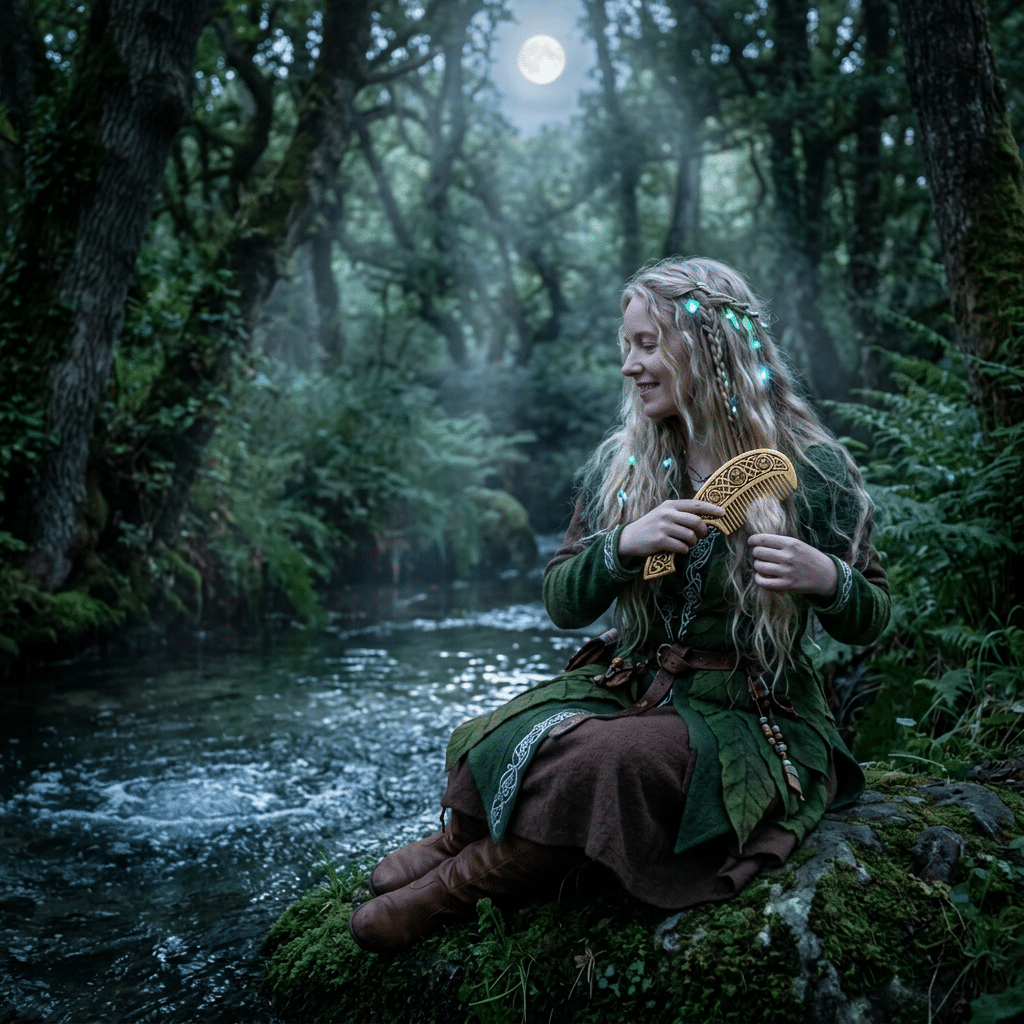
The Green Lady herself is thought to be the soul of a young woman who, according to most tales, was a daughter of the Grant family who died following a failed or forbidden love affair. Details differ according to who is telling the story. In some tales she fell in love with a man who was thought undesirable by her family, and when the romance was terminated by the demand of her parents, she hurled herself into the River Avon in grief. In others she just died of a shattered heart, her grief too big for her body to hold. The character of her appearance is what is constant in all of the tellings. She is reported to roam the grounds around the river, particularly near the water’s edge, where she is thought to have ended her life or said her final goodbye. She is silent. She wears green. Those who have met her say they feel an intense sadness descend on them like frigid air. She has been seen in the castle itself, in corridors and staircases, always fleeting and disappearing before anyone can reach her. Over the decades, the household staff has regarded her presence with a sort of guarded respect, and the family has long accepted her as part of the identity of the castle rather than dismissing her as superstition.
The Green Lady of Ballindalloch is just one example of a far more widespread history of Scottish ghost stories. The Green Ladies appear in castles around the country with such stunning frequency that the figure seems to represent something profoundly rooted in the Scottish cultural psyche. Crathes Castle in Aberdeenshire has its Green Lady, thought to be a young woman with a baby who appears near the fireplace in the upper apartments. For many years it was said that Stirling Castle was haunted by a Green Lady, who was thought to have been a handmaiden to Mary Queen of Scots. Dalhousie Castle in Midlothian boasts a Green Lady whose tale dates back generations. The consistent presence of the hue in these stories is intentional. In the Scottish and Irish Gaelic tradition, green is a color inextricably linked with the fairy folk, with the Otherworld, and with the liminal areas between the living and the dead. In regions of Scotland the color green was once regarded as unfortunate, as being the favorite color of supernatural entities, and to wear it was to invite their attention. It draws on this older layer of belief, combining the Christian tradition of restless spirits with something far older, based on a pre-Christian conception of the environment as populated by presences who did not always want humans well.
There are several theories regarding the specific legend of Ballindalloch’s Green Lady and the broader phenomenon that she symbolizes. One explanation places these stories in a psychological context, suggesting that ghost legends develop as groups process trauma or grief that cannot be expressed explicitly. In former times, particularly in a noted family, a young woman’s suicide or death by despair would have been a cause of severe shame. The ghost story gives a way of making sense of what happened and mythologizing it, making personal tragedy something greater and more acceptable. The story lives because grief lives, passed down through generations along with the furnishings and portraits of the castle. Another explanation is based on the Green Lady as a tutelary spirit, a guardian spirit associated with a particular land or family. Here she is not merely a sad ghost but a guardian spirit; her ongoing haunting is a sign that she remains tied to the people and land she loved in life. This reading is more at home in the older folklore tradition than in the purely sorrowful. A third approach focuses on the role of the landscape. The River Avon at Ballindalloch is a rapid, cold, rushing body of water, the sort of river that commands respect and inspires awe. In Celtic tradition rivers were revered and were personified as female deities. The Green Lady may be a partial remembrance of an older water spirit or genius loci, a personification of the river itself, given a human face and human tale to make her more comprehensible to later generations who had lost the original mythical setting.
Historical Records and Modern Legacy
Apart from its architectural and clan history, Ballindalloch Castle achieved wider scholarly prominence as the repository of a magnificent collection of Grant manuscripts (Rogers, 1976). The castle was found to hold the documents of General James Grant, the first British ruler of East Florida, which shed substantial information on the Revolutionary War era and early American history (Hutson, 2003). The Library of Congress representatives visited the records, which they subsequently microfilmed (Hutson, 2003). Rogers (1976) himself studied these materials, having received permission from Sir Ewan Macpherson-Grant, and found that the papers contained important evidence relating to the history of both South Carolina and East Florida.
The Macpherson-Grant family has been involved in several commercial ventures over the last few decades to secure the financial viability of the estate. Skerratt et al. (2016) describe how the family diversified the business and supported the local economy through the creation of a microdistillery at Ballindalloch, amongst other enterprises. This is especially fitting given the castle’s location in Speyside, an area commonly recognized as the spiritual home of Scotch whisky (Winn, 2007). Thus, the estate continues to evolve but nevertheless retains the uninterrupted family occupation that has distinguished Ballindalloch for almost five centuries.
Conclusion
The Green Lady of Ballindalloch Castle endures because she resonates with a timeless concept: the notion that love and loss can be so profound that they can transcend the physical body. She is a personal narrative and a national one, an individual grief nested inside centuries of tradition. The castle which environs her legend is one of the fairest in Scotland, and its long unbroken history adds to her story a weight which a ruin or an inhabited home could never yield. She haunts a place that is alive. So her haunting is alive too. Whether you believe in ghosts physically or as cultural metaphors, the Green Lady poses the same unpleasant issue that many great ghost stories do: how much of the past are we ever really free of, and how much of it walks alongside us, in green, by the river’s edge?
References
Barclay, W. (1922). Banffshire. The University Press.
Gomme, G. L. (1883). Folk-lore relics of early village life. E. Stock.
Hutson, J. (2003, April). Adventures in British America: Papers found in Scottish castle shed light on revolutionary war era. Library of Congress Information Bulletin, 62(4), 71–74.
Lauder, T. D. (1837). Highland rambles: And long legends to shorten the way (Vol. 2). A. and C. Black.
Love, D. (2009). Scottish ghosts. Amberley Publishing Limited.
Murdoch, J. (1852). A guide to the Highlands of Speyside.
Rogers, G. C. (1976). The papers of James Grant of Ballindalloch Castle, Scotland. The South Carolina Historical Magazine, 77(3), 145–160.
Skerratt, S., Atterton, J., Mccracken, D. I., McMorran, R., & Thomson, S. G. (2016). Rural Scotland in focus 2016. Scotland’s Rural College. https://pure.sruc.ac.uk
Winn, C. (2007). I never knew that about Scotland. Random House.
Leave a Reply