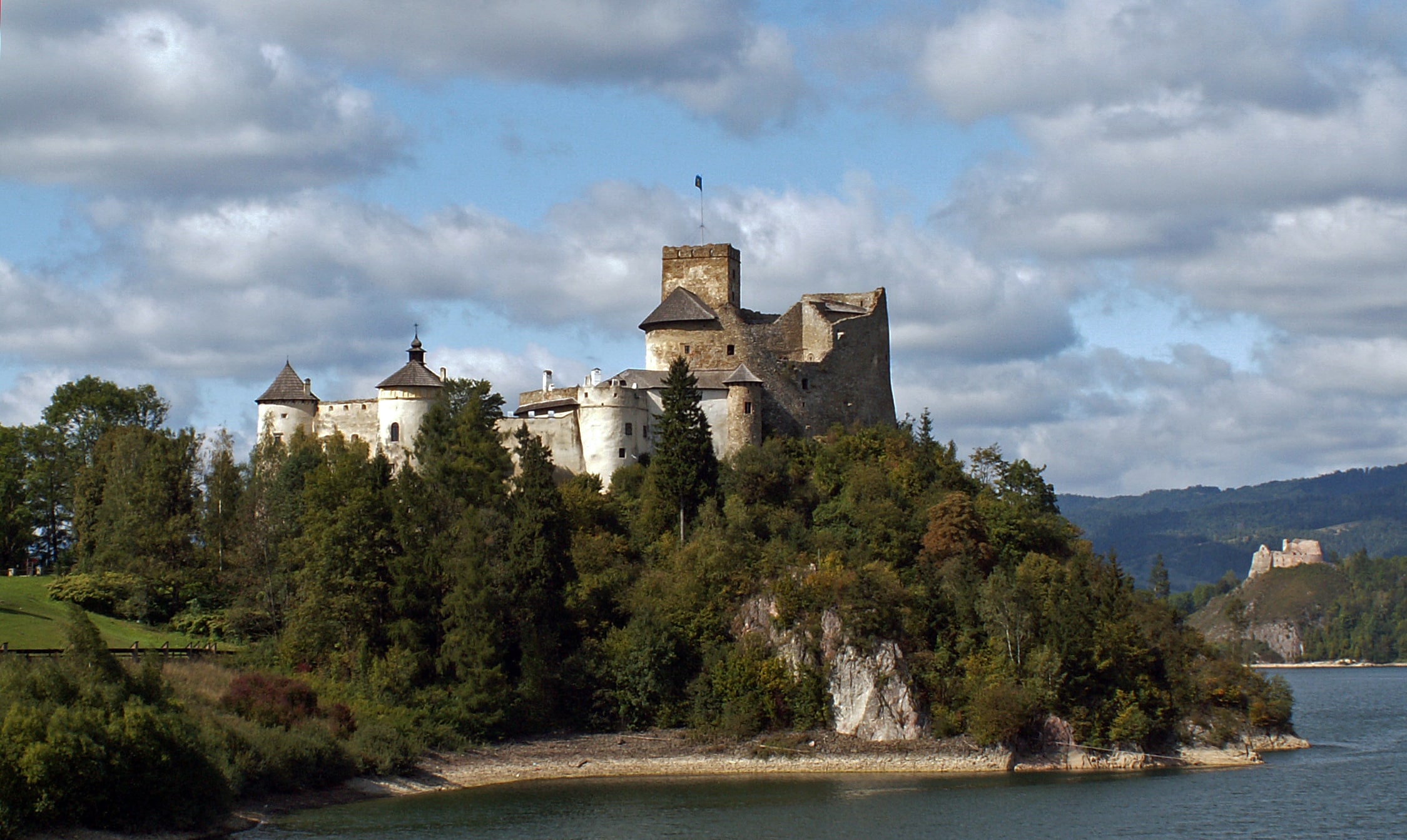
Niedzica Castle, dramatically perched on a limestone cliff that overlooks the calm waters of Lake Czorsztyłnskie in southern Poland, stands as a mute witness to centuries of history, intrigue, and, apparently, strange events. Visitors have been captivated by this medieval stronghold, sometimes called Dunajec Castle, not just for its historical relevance and architectural beauty but also for the many stories of paranormal activity recorded inside its ancient walls. The castle’s reputation for ghostly residents and unexplainable incidents has turned it from a simple historical monument into a place of mystery and conjecture, attracting both ghost hunters and skeptics to investigate its dark halls and murky chambers.

History
Built in the early 14th century by the Hungarian Berzeviczy family, Niedzica Castle was a frontier castle meant to guard a key trade route running through the Dunajec River valley. The castle’s strategic location provided excellent views of the surrounding terrain, hence making it a perfect defensive building during stormy medieval times. Its construction shows a mix of Gothic and Renaissance influences with striking stone walls, a central courtyard, defensive towers, and ornate internal rooms that formerly housed aristocracy. The castle changed hands several times over the years, passing through Polish and Hungarian noble families who each contributed their unique architectural features and left their stamp on the history and look of the stronghold (Orłowicz, 1927).
Maybe the most well-known historical story connected to Niedzica Castle concerns the last private owners, the Salamons, and especially Countess Julia, whose narrative has interacted with many of the castle’s paranormal traditions. Local legend has it that Sebastian Berzeviczy, a descendant of the original proprietors, journeyed to Peru in the late 18th century and married an Incan princess called Umina. With a significant treasure and an antique Incan document describing the whereabouts of buried Incan gold, the pair came back to Niedzica. Sebastian’s daughter Julia got the castle and the secret document upon his passing; however, her life was cut short when treasure hunters for the Incan riches murdered her. This gripping historical story, which mixes European aristocracy with South American treasure, has created rich ground for the ghostly stories that would later follow (Kulpiński et al, 2022).

Haunted Castle
Among the many and diverse paranormal events recorded at Niedzica Castle, the ghost of the White Lady is most often cited. Thought to be the ghost of Countess Julia, the White Lady is reported to roam the castle grounds at night, still guarding the secret of the Incan wealth. Staff members and visitors have seen a female figure clad in white who seems to come abruptly in corridors or rooms and then disappears through walls. Other stories describe illogical cold spots throughout the castle—areas where temperatures drop significantly without any clear explanation, causing discomfort even on warm summer days. Paranormal researchers who have worked overnight inside the castle have also recorded electronic device failures, unexpected battery depletion, and mysterious picture anomalies (Belanger, 2009).
The echoes of Niedzica Castle have greatly enhanced its reputation for paranormal activity. When no one is around, night watchmen and overnight guests have claimed to hear disembodied footsteps on stone staircases, distant whispers in empty rooms, and occasionally, the heart-stopping sound of a woman’s scream thought to be Countess Julia’s last moments. Some guests say that while touring the castle, they have felt the impression of being watched or followed, particularly in the basement regions and in the chamber that allegedly held the Incan treasure document. Particularly during night hours when the castle is closed to the public, staff members have recounted tales of items moving without human involvement, doors opening and closing on their own, and lights turning on and off mysteriously.
Analysis
Skeptics attribute many of the alleged events to the castle‘s structural features and environmental concerns; therefore, they rationally explain these claims. The ancient stone walls and uneven flooring can produce strange acoustics, amplifying and distorting noises in ways that would appear otherworldly to the uninformed visitor. Sudden temperature variations and the impression of being touched by invisible forces could be caused by drafts running through the various hallways and chambers of the castle. Perceived paranormal events are also greatly influenced by psychological elements; the power of suggestion, the castle’s strong environment, and prior knowledge of ghost stories may all prime guests to read routine events as supernatural. Critics also highlight the financial motivation to keep these legends alive, as paranormal tourism has grown to be a major draw for historical locations like Niedzica (Eliasová & Stankiewicz, 2011).
Historical and archaeological points of view provide several explanations about the beginnings of the castle’s eerie reputation. Some historians believe that stories of hauntings might have started as a way to deter treasure hunters or trespassers during times the castle was empty. Some suggest that tales of supernatural guardians safeguarding concealed riches were a handy justification for the castle’s many hidden corridors and rooms, which most likely had practical defensive goals or acted as escape routes during sieges. Excavations have shown that some sections of the castle were used as prisons or torture chambers; the anguish felt in these areas has been hypothesized to leave psychological marks that sensitive people could see as ghostly events, a notion sometimes known as residual haunting.
Beyond mere ghost stories, the cultural relevance of Niedzica Castle’s paranormal reputation reflects deeper elements of Polish and Hungarian tradition and collective memory. Across Eastern Europe, castles frequently served as stores not just of historical items but also of cultural stories mixing reality with fiction, history, and legend. The ongoing supernatural beliefs connected to Niedzica can be considered a continuation of a larger custom of utilizing ghost stories to handle historical traumas, safeguard cultural memories, and keep ties with the past. These stories create a dynamic interaction between the actual castle and its incorporeal legends as they transform cold stone and historical facts into living traditions that keep evolving with every recounting (Bajgier-Kowalska & Rettinger, 2014).
Scientific researchers who have worked at Niedzica Castle have tried to record paranormal events using several pieces of technical gear, including electromagnetic field detectors, infrared cameras, and audio recording devices. Although some studies have produced ambiguous findings, others have found abnormalities that challenge instant interpretation, including strange energy measurements in some castle sites and mysterious aural events. These scientific methods of ghost hunting seek to close the gap between belief and doubt by applying empirical techniques to experiences that have historically belonged to the domain of folklore and subjective testimony. These studies’ ambiguous results have only increased the castle’s mystery by neither verifying nor disproving the existence of supernatural beings.
Conclusion
In the end, Niedzica Castle serves as a captivating intersection of history, architecture, legend, and the supernatural, creating a timeless enigma that continues to captivate individuals worldwide. Whether one approaches the castle’s ghostly reputation with belief, doubt, or just curiosity, the tales of the White Lady and other strange events have become inextricably linked to its character and cultural relevance. These legends’ survival reflects people’s ongoing interest in the unknown and their need to find meaning and story in the shadows of the past. Standing vigil above Lake Czorsztyłnskie, Niedzica Castle commemorates medieval workmanship and noble legacy and reminds us of the thin veil separating the world we can touch and measure from the mysteries lying just beyond our knowledge.
References
Bajgier-Kowalska, M., & Rettinger, R. (2014). Considerations for tourism and recreation expansion in the vicinity of the czorsztyn-niedzica and sromowce wyżne water resevoir complex, located on the dunajec river. Geography and Tourism, 2.
Belanger, J. (Ed.). (2009). Encyclopedia of haunted places: Ghostly locales from around the world. Red Wheel/Weiser.
Eliasová, D., & Stankiewicz, B. (2011). The Recreational Function of the Dunajec River and the Pieniny Mountains in Transformation Dynamics of Natural and Social Environment. Studia Commercialia Bratislavensia, 4(15), 353.
Kulpiński, J., Prukop, B., Rut, P., Rejman, A., Świder, P., & Cynarski, W. J. (2022). Defensive Strongholds and Fortified Castles in Poland—From the Art of Fortifications to Tourist Attractions. Sustainability, 14(6), 3209.
Orłowicz, M. (1927). Southwestern Poland: Illustrated Guide. Ministry of communication.
Leave a Reply