Stone Tape Theory: Key Points
- The stone tape theory proposes that materials like stone and crystal can absorb and replay residual emotional or psychic energy from intense past events, producing what witnesses experience as ghostly apparitions or sounds that repeat without any conscious awareness of observers.
- The theory has roots in late nineteenth-century psychical research, but gained its name and widest cultural recognition through Nigel Kneale’s influential 1972 BBC television play, which dramatized the concept of a haunting as a physical recording stored in ancient walls.
- Researchers like Thomas Charles Lethbridge further developed the idea, suggesting that water-bearing rocks and certain geological formations were particularly effective at storing psychic impressions, and some investigators began actively looking for correlations between geology and reported hauntings.
- Classic cases often cited as examples include the Roman soldiers witnessed in York’s Treasurer’s House and the 1901 Versailles experience reported by Moberly and Jourdain, both involving repetitive, non-interactive apparitions in locations with deep and emotionally charged histories.
- Proposed physical mechanisms include the piezoelectric properties of quartz-bearing rocks, as well as the effects of infrasound and electromagnetic fields, which research has shown can reliably produce feelings of dread and hallucination in human observers without any supernatural cause.
- Critics argue that no known physical mechanism exists for stone to selectively record human events, but proponents value the theory because it naturalizes haunting phenomena and invites genuine scientific inquiry rather than simple dismissal.

Introduction
One of the more intriguing and enduring conceptions in paranormal inquiry is the theory of the stone tape. Unlike traditional ghost theories that suggest the continuous existence of a conscious spirit or soul, the stone tape theory offers a more materialist explanation for hauntings, anchoring supernatural events in the physical qualities of the environment itself. For decades, it has held academics, scientists, and enthusiasts alike in its thrall, in ways few other ideas manage to bridge the gap between the scientific and the supernatural.
The Stone Tape Theory: Overview and Theoretical Basis
The Stone Tape theory states that haunting phenomena are caused by electromagnetic or energetic impressions being inscribed upon environmental substrates (especially in man-made surroundings like stone or walls) and then later experienced by sensitive witnesses. The current synthesis of the theory is that hauntings are energetic impressions perceived by sensitive individuals and do not always involve discarnate intelligent agents (Weiler, 2023). It’s commonly thought of as a material trace, memory-like impressions inside the physical stuff of locations, which can be reawakened under the right conditions (Holloway & Kneale, 2008). This model places hauntings at the crossroads of materiality, perception, and environment and has sparked significant debate concerning the role of memory, place, and ambiance in anomalous experiences (Weiler, 2023; Holloway & Kneale, 2008).
The stone tape idea suggests that some materials, particularly stone, brick, and minerals containing crystals, have the ability to record and hold onto emotional or energetic impressions from past occurrences. Like the magnetic tape of an old audio or video cassette, these materials are believed to collect residual mental or emotional energy created during times of intense human experience—loss, anger, fear, or great joy. They say that, given the appropriate conditions, the energy replays itself and what witnesses see are ghostly apparitions, sounds, or sensations. Importantly, these replay occurrences are not thought to be interactive or conscious beings, but simply passive recordings, which explains why so many reported hauntings seem to repeat the same acts or sounds over and over again with no apparent awareness of the living observers present.
The Stone Tape theory posits that hauntings are due to energy impressions absorbed in materials and replayed by observers psychophysically attuned to the environment. The theory is expressly characterized as hauntings being energetic perceptions that sensitive people catch up on (Weiler, 2023). The same set of literature locates the idea within broader arguments concerning the nature of what makes events paranormal, stressing a material basis for experiential haunting rather than a simple projection of spectral entities.
The notions of “stone tapes” and of recording occurrences on physical substrates have had a history of significance in the literature of the paranormal and in critical overviews. Holloway and Kneale approach the issue of hauntings’ siting with the Stone Tape idea, linking it to the persistent motif of memory-like imprints inscribed in stone or other enduring materials and the methodological implications for field researchers (Holloway & Kneale, 2008). This relationship provides a basis for Stone Tape thinking both in cultural representation (The Stone Tape as a story-based origin) and interpretive approaches to hauntings of real places.

Historical Origins and Cultural Representation
The history of the stone tape idea is complex and depends on a variety of intellectual traditions. The idea owes much to the work of Eleanor Sidgwick and Edmund Gurney of the Society for Psychical Research in the late nineteenth century, who began to record and classify hauntings in ways that suggested some apparitions were more like recordings than conscious beings. When investigators started to realize that particular places appeared to generate identical apparitional figures time and again, no matter who was watching them, the term “place memory” began to circulate among psychic researchers. These concepts were elaborated on in the early twentieth century by such luminaries as the philosopher H.H. Price, who pondered the potential of psychic traces being left in physical contexts.
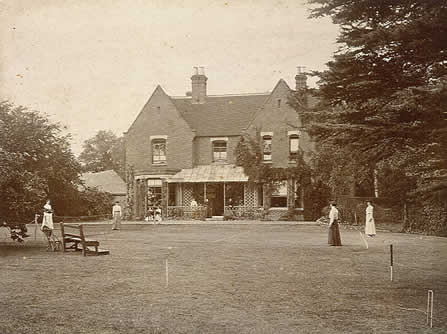
The most renowned cultural representation of the notion was a 1972 BBC television production, simply called The Stone Tape, by Nigel Kneale, dramatizing the concept with vivid and terrifying effect. In the novel, a group of scientists in a Victorian mansion attempt to study what they assume is a recording kept in the ancient stone walls of the structure, viewing the haunting as a technological conundrum to be solved, not a supernatural mystery to be feared. The performance was hugely important, both in popularizing the phrase “stone tape theory” among the public and in directing the path of later paranormal study. Kneale’s play provided a clear and engaging narrative framework for concepts that had been floating around vaguely in psychological study for years and that would be referred to by academics and writers for centuries to come.
In the decades after the transmission, the notion was taken up seriously by experts such as Thomas Charles Lethbridge, a Cambridge archaeologist who thought that water-bearing rocks and some geological formations were especially adept at preserving psychic impressions. Lethbridge experimented with a pendulum, which he claimed could detect this stored energy. He wrote extensively about his beliefs in works such as Ghost and Ghoul. Parapsychological researchers, in the meantime, began to look for correlations between alleged haunting activity and geological characteristics such as the existence of limestone, granite, or running underground water. The theory gradually ceased to be just a loose metaphor and became a hypothesis that some investigators actually tried to investigate.
Notable Cases and Alleged Evidence
One of the most often cited examples used to corroborate the stone tape idea is that of the famous case of the Roman troops witnessed by a plumber called Harry Martindale in the cellars of the Treasurer’s House in York, England, in 1953. Martindale said he heard a horn blow, then a column of Roman troops marching through the wall, across the room, and into the other wall, apparently marching below what is now the floor level, which researchers later confirmed was the level of an ancient Roman road. The soldiers were tired and dirty and didn’t know he was there, behaving much like you’d expect a passive recording to behave instead of an interactive spirit. This case is particularly attractive to supporters of the stone tape theory, as York has a wealth of ancient stonework and the apparition is repetitive and non-responsive.
Another often cited case is that of Versailles in France, when in 1901 two English academics, Charlotte Anne Moberly and Eleanor Jourdain, asserted that as they strolled through the gardens of the palace they experienced what appeared to be a complete time displacement into eighteenth-century France. They talked about people in medieval costumes, things in the landscape that were gone, and a great sense of sadness and unreality. Later, the case was published in a book named An Adventure. Some scholars interpret the case as an occurrence of collective playback, influenced by the emotionally charged past of the place. Whether or not the narrative holds up to inspection, it is the kind of experiential phenomenon that the stone tape hypothesis aims to explain.
Scientific Mechanisms and Critical Perspectives
The Stone Tape idea is part of wider discourses about paranormal experience in the media, tourism, and culture. While not all sources regard it as a prima facie explanation, some analyses (such as those of place-based memory, dark tourism, and the media production of the paranormal) emphasize the ways in which material substrates, technologies, and ritualized interactions with spaces can influence experiences and memory. These contexts are relevant for the assessment of claims related to the Stone Tape and for developing investigations attempting to separate material traces from perceptual or social phenomena (Santo & Barceló, 2021; Houran et al., 2020; Allman, n.d.). Theoretical models have been developed to describe the real mechanism by which stones or other substances could record and repeat experiences. One method relies on the qualities of piezoelectric materials. These are quartz and other crystals that are widespread in granite and sandstone. Piezoelectric materials produce an electrical charge in response to mechanical stress, and some researchers have proposed that this property could be used to store and convey information in ways that are not yet fully comprehended by conventional science. The theory is that seismic stress coupled with high levels of emotional or electromagnetic activity from people could enable these materials to encode an impression, which could later be discharged under similar stress conditions, creating a sensory experience for individuals close.
Another theoretical approach is the function of infrasound, electromagnetic fields, and geomagnetic abnormalities in causing hallucinatory experiences in human viewers. In England, Vic Tandy was investigating a laboratory in Coventry that was said to be haunted. He found that a stationary wave of infrasound at about 18 to 19 hertz might make those exposed to it experience dread, hallucinate peripherally, and feel uncomfortable. This does not directly corroborate the recording mechanism of the stone tape theory, but it does show that contextual influences based on the physical features of buildings and landscapes can reliably bring about experiences indistinguishable from what individuals report as hauntings. Some theorists propose a hybrid model: the stone records an electromagnetic or vibrational pattern, not a real visual or audio event, which the human nervous system interprets as a perception when conditions line up.
There are those who criticize the theory and their criticisms deserve careful consideration. Mainstream physicists say there is no known physical process by which inorganic stone could selectively collect and store complex sensory information from human emotional events, especially with no apparent medium to encode such data at the molecular level. The selection of the claimed records is also problematic: if Stone really captured all occurrences, one would expect hauntings to be far more prevalent and much more congested with overlapping pictures from different times. Skeptics further point out that many of the most famous cases supported by the idea are based on the testimony of a single witness, a subjective interpretation, and details that were added or modified long after the original encounter.
Despite these criticisms, the stone tape idea is attractive because it seeks to naturalize the paranormal rather than deny it. This implies that hauntings are caused by the physical environment rather than by supernatural forces and so invites a form of scientific inquiry that strictly supernatural explanations do not. Modern investigators have new instruments to test these linkages as researchers continue to search for similarities between geological characteristics, building materials, and alleged paranormal activity with the development of more sensitive electromagnetic and acoustic measurement equipment. Regardless of whether the hypothesis is eventually proven or disproven, it has radically transformed the way that investigators approach haunted locales by turning the focus away from the supposed ghost and onto the environment in which it appears.
Conclusion
Ultimately, the Stone Tape theory is a fascinating attempt to explain one of humanity’s oldest and most enduring sensations. It lies on the border of science and the unknown, using true physical properties of materials yet probing areas that existing science cannot affirm or completely disprove. With more research into awareness, electromagnetism, and the delicate qualities of geological materials, it’s feasible some form of the hypothesis may be backed by evidence. For now, it remains an intriguing and thought-provoking framework, a reminder that the line between the known and unknown is often unclear.
References
Allman, H. R. (n.d.). Motivations and intentions of tourists to visit dark tourism locations. https://doi.org/10.31274/etd-180810-4871
Holloway, J., & Kneale, J. (2008). Locating haunting: a ghost-hunter’s guide. Cultural Geographies, 15(3), 297–312. https://doi.org/10.1177/1474474008091329
Houran, J., Hill, S. A., Haynes, E. D., & Bielski, U. A. (2020). Paranormal Tourism: Market Study of a Novel and Interactive Approach to Space Activation and Monetization. Cornell Hospitality Quarterly, 61(3), 287–311. https://doi.org/10.1177/1938965520909094
Kneale, N. (Writer). (1972). The stone tape [Television film]. BBC.
Lethbridge, T. C. (1961). Ghost and ghoul. Routledge & Kegan Paul.
Moberly, C. A. E., & Jourdain, E. F. (1911). An adventure. Macmillan.
Santo, D. E., & Barceló, G. (2021). New media and the digitized paranormal: instrumentation, affective atmospheres, and the production of history in Chile. Journal of the Royal Anthropological Institute, 27(2), 321–339. https://doi.org/10.1111/1467-9655.13492
Weiler, C. (2023). Book Review: The Science of Ghost Hunting. Journal of Parapsychology, 87(1), 87–89. https://doi.org/10.30891/jopar.2023.01.06


Leave a Reply