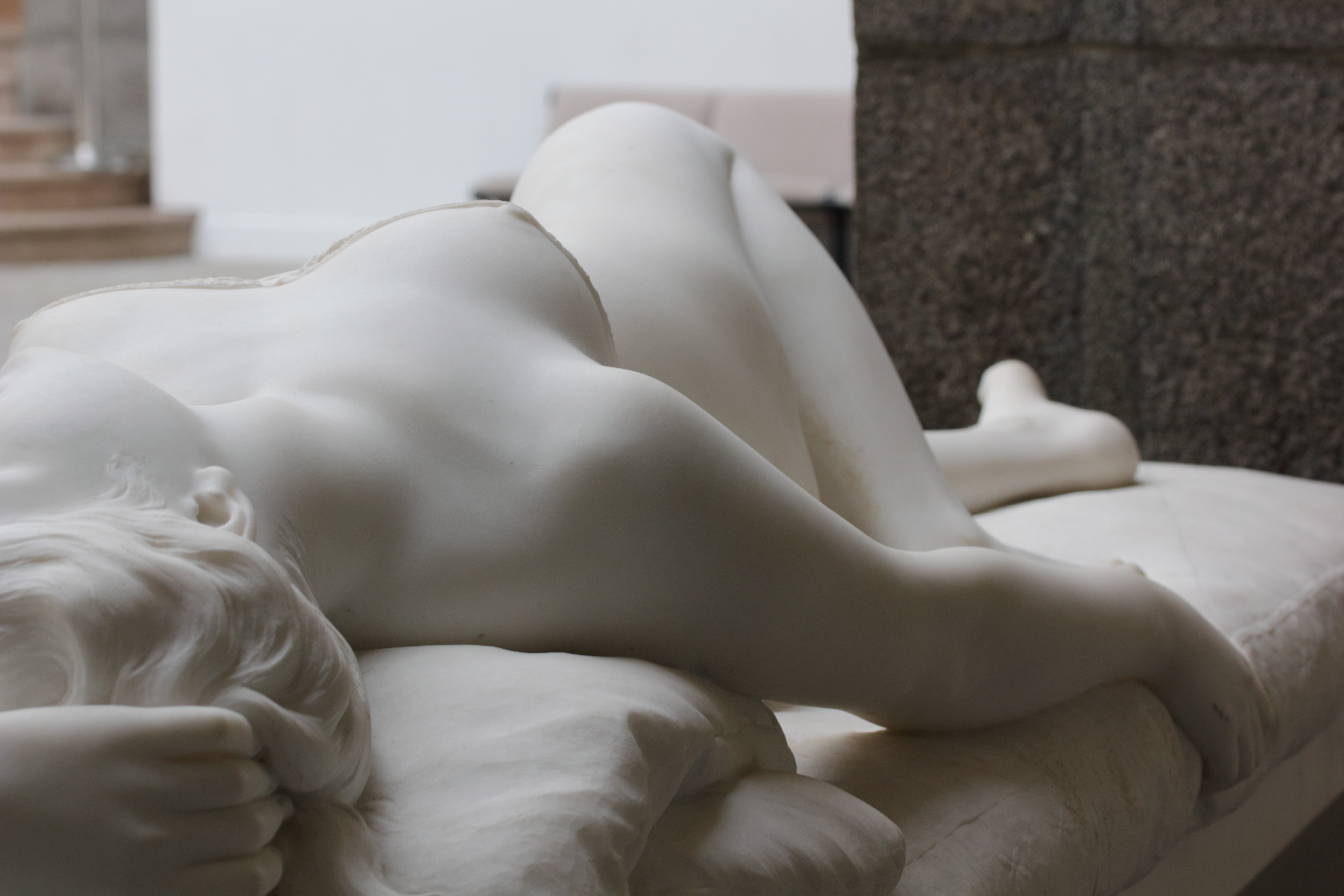
The Ghost of Messalina: Key Points
- Valeria Messalina was a young Roman empress of remarkable beauty and political cunning who wielded enormous power during the reign of her husband, Emperor Claudius, in the first century AD.
- Her downfall came in 48 AD when she publicly married another man while Claudius was away, an act interpreted as treason, leading to her violent and botched execution in the Gardens of Lucullus on the Pincian Hill.
- Roman religious belief held that those who died violently, young, and without proper burial rites were condemned to restless spiritual existence, and Messalina qualified on every count, especially after the Senate erased her from public memory through damnatio memoriae.
- Her ghost is most famously associated with the area of the Colle Oppio in Rome, where she has reportedly been sensed and seen across many centuries, and she is uniquely said to pinch men’s backsides, distinguishing her legend from comparable haunting traditions like that of Anne Boleyn (Awan, 2016).
- Several theories attempt to explain her persistent ghostly reputation, including the psychological paradox of damnatio memoriae, Jungian archetypes of feared female power, and the Stone Tape Theory, which suggests traumatic events leave energetic impressions in ancient stone (Awan, 2016).
- Despite the richness of her ghost tradition, most of the stories surrounding her are likely legend and cultural myth, yet her spectral reputation has proven more enduring than those of many Roman emperors, suggesting her story taps into anxieties that have never fully been resolved.

Introduction
Valeria Messalina is one of the most infamous women of the ancient world, a woman whose reputation for excess, cunning, and ruthlessness has outlived the Roman Empire itself. She lived and died amid a blaze of scandal that ancient writers could scarcely confine within the pages of their histories, and her end was so sudden and violent that it left a mark not only on the historical record but, according to various traditions, on the very fabric of Roman consciousness. That the ghost of Messalina might still walk around the ruins of ancient Rome is not just a modern conceit but goes back to old Roman beliefs about violent death, unfinished business, and the power of the restless dead to stay long after the body has perished. Indeed, S. Messalina is “the most famous ghost mythology concerning a known historic Roman character” (Awan, 2016, p. 4). This is an extraordinary statement considering the numerous spectacular and horrific deaths the Roman civilization created.
Messalina at the Imperial Court: Life, Power, and Ancient Sources
Messalina was born sometime between 17 and 20 AD, a great-grandniece of the Emperor Augustus through many lines of lineage, into one of Rome’s most illustrious aristocratic families. She was married off to Claudius when she was an adolescent—Claudius was almost 30 years older than her—and became empress when Claudius suddenly became emperor in 41 AD after the assassination of Caligula. She had two children with Claudius, a son, Britannicus, and a daughter, Octavia, and as mother of possible heirs, she held immense influence at court. Tacitus and Suetonius, among other ancient writers, describe her as surpassingly beautiful and very clever, and she seems to have used these qualities with deadly effectiveness in obtaining power and removing rivals.
Messalina is presented as a major figure at the court of Claudius in both ancient and later textual traditions, sometimes characterized by her close closeness to power and at other times by scandal and moral hazard (Foubert, 2016; Foubert, 2011). One of the most important moments in the story is the putative union with Silius, which Tacitus and later readers describe as a publicly celebrated “marriage” inside the social environment of the capital. The phrase “Messalina has married Silius” occurs in the narrative preserved in ancient sources and discussed in modern syntheses, a dramatic turn in which personal ambition and political maneuvering become entangled with marital life and state affairs (Murray, 1915). That episode is treated as a catalyst for a wider crisis in Claudius’s court that ultimately provoked decisive intervention by his advisers and led to Messalina’s death and the reconfiguration of the imperial succession (Murray, 1915). The episode sits within a wider pattern described by scholars who emphasize Messalina’s capacity to convert her position at court into practical advantages, including the governance of access and patronage (as discussed in the literature on Messalina’s domus frequenta and her lobbying style) (Foubert, 2016; Foubert, 2011).
The surviving descriptions of her actions from antiquity speak of almost legendary excess; however, later historians have warned that these texts were produced by men who had a vested interest in vilifying powerful women. Tacitus described her as having insatiable sexual and political cravings and Juvenal’s eleventh satire immortalized her in the most dramatic terms possible. She was reported to have had many lovers from all ranks of Roman society. She was claimed to have used her power over Claudius to destroy her adversaries, to seize their assets and to enrich herself and her supporters. There is scholarly controversy as to whether these claims are historically accurate or a product of ancient misogyny, but there is almost any doubt that Messalina exercised genuine and substantial authority in the early years of Claudius’s reign, in a court where brutality was a matter of survival. Messalina’s reputation for sexual audacity is essential to the transmission of her image and to subsequent arguments about Roman sexuality and gender standards. Satirical and literary traditions, most famously in Juvenal’s Satire 6, turned Messalina into an emblematic example of an errant empress, using vivid invective to label her as an “empress whore” and link her to sexual license that went beyond the usual standards of female virtue (a label that is often used in modern commentary on her reputation) (Sá, 2022; Gellérfi, 2022).

The Death of Messalina
In 48 AD she died in circumstances so strange that even her contemporaries found it difficult to understand them. Messalina appears to have gone through the complete marriage ritual with a man called Gaius Silius, a dashing and ambitious Roman nobleman, while Claudius was away from Rome to attend rites at the port of Ostia. The ancient accounts differ on her motives, some implying that she had actually fallen in love with Silius, others that Silius and Messalina were planning to usurp the throne by overthrowing Claudius, and others still implying that some type of lunacy or divine retribution had taken her. Whatever her motives, the act of a sitting empress publicly marrying another man while her husband was alive was an act of treason, and the freedman Narcissus, one of Claudius’s most powerful advisors, acted quickly to inform the emperor and organize a response before Messalina could rally her supporters.
The end came with terrible speed at the Gardens of Lucullus on the Pincian Hill, a property that Messalina herself had taken from its previous owner by tactics that were, by any measure, far from innocent. Claudius, who had been vacillating and repeatedly wondering whether he was still emperor, was dissuaded from seeing Messalina in person for fear she may talk him out of what had to be done. Messalina was found in the gardens with her mother and soldiers were ordered to make sure that she killed herself. “She was given a dagger and told to kill herself in front of the soldiers who were sent to ensure that she did so” (Awan, 2016). She tried to make herself do it but was not able to finish it effectively. A tribune finished it for her in the end. Messalina’s death, which occurred in her twenties to thirties, was marked by the same sudden violence she had inflicted on others during her years of power. This dramatic scene was portrayed with considerable force in the famous BBC television production of I, Claudius, as well as in numerous works of art and literature in the following centuries (Awan, 2016).
Roman Ghost Beliefs and the Haunting Tradition
To understand how the ghost of Messalina has remained so strong, one must first realize how superstitious Roman society was on every level. As well as communicating with their gods through offerings, rituals, and supplications, the Romans also engaged in a significant form of ancestor worship. Noble Roman families would display funeral masks or wax busts of the deceased in their homes, objects believed to preserve a tangible connection between the spirits of the dead and the lives of the living (Awan, 2016). The Romans delineated the boundary between the shadows of the dead who had died peacefully and been properly mourned and a class of spirits called lemures or larvae, the restless, possibly dangerous ghosts of individuals who had died violently, prematurely, or with important unfinished tasks. Nor was this idea exclusive to Rome. Awan notes that the Assyrians thought that if someone was not buried properly, they would come back as a ghost and haunt the living, a motif that “recurred in multiple cultures and through virtually every era” (Awan, 2016). Messalina fulfilled supernatural restlessness on a number of counts: she died violently, she died young, she received no official burial or public grieving, and the Senate soon resolved to erase her name from all public monuments and documents in the punishment known as damnatio memoriae.
In Roman and later mythology, the most specific place linked with her ghost is the area around the Colle Oppio, the Oppian Hill, right in the middle of old Rome. Over many centuries, people have felt and occasionally seen her presence at the site. Awan writes that “the legend has continued all the way to the modern day that her ghost still walks around the area of the Colle Oppio,” a striking connection with the equally persistent stories of Anne Boleyn’s headless ghost in England (Awan, 2016). This analogy does raise a very fascinating cultural question concerning the existence of a cross-culture archetype of the wronged or spiteful lady who cannot attain peace because of the pain of her death. The analogy between Messalina and Boleyn is not precise but both were strong consorts executed at the behest of the husbands they served, and both have inspired ghost legends that have been very persistent in public imagination. However, what distinguishes Messalina’s ghostly reputation from Anne Boleyn’s is one particularly colorful detail: Messalina’s ghost is said to pinch men’s bottoms, a piece of spectral mischief that Awan dryly notes Anne Boleyn’s ghost does not. “The idea of a headless Anne Boleyn pinching people’s bottoms is just slightly too much,” Awan observes (2016).
Messalina died in the Gardens of Lucullus, on the Pincian Hill, eventually included in the city of Rome, with its own special atmosphere. In the medieval period, there were odd disturbances in the area, including a feeling of oppressive unease, a heaviness in the air and the sound of weeping from an unseen source, especially on nights when the calendar fell around the approximate dates of Messalina’s death in late autumn. The medieval chroniclers recording these legends tended to tentatively link them to one of the old empresses, and the later Renaissance antiquarians made the more precise association with Messalina, based on geographic and historical connections. In the eighteenth and nineteenth centuries, when Romantic sensibilities made ancient ruins fertile ground for supernatural imagination, visitors to the ruins of the Palatine Hill often recorded impressions of the place as haunted in a particular, feminine, and somehow mournful way. Some nineteenth-century accounts described the outline of a young woman seen among the broken columns at dusk, disappearing when approached.
Also, it is necessary to bear in mind the wider context of Roman ghost legends in which the story of Messalina is situated, for it helps to explain why her tradition in particular has been so long-lived. Awan notes that among the fifty-three emperors of the Western Roman Empire, the only one with a truly famous ghost legend was the insane emperor Nero, which in itself is astonishing considering how violently and dramatically so many emperors met their ends (Awan, 2016). Nero was reported to have been spotted in the Via Nomentana, where he met his death. He was also said to haunt the Piazza del Popolo, where his tomb formerly stood. A cursed tree grew from his grave, nursed by black crows and his ghost was said to dwell there with witches and demons. That Messalina, a woman who never herself held the title of emperor, generated a ghost tradition at least as famous as Nero’s, and arguably more enduring at the popular level, speaks to something powerful in her story that resisted erasure even as official memory tried to suppress it completely.
Theories of Haunting and Modern Scholarly Perspectives
There are several hypotheses trying to explain why it is Messalina in particular who has created such a strong haunting tradition. One line of argument concerns the psychological burden of her erasure from official memory: the damnatio memoriae was designed to erase her; ironically, it ensured that future generations would question her, fill the void she created in the record with imagination, and experience the void she created in the record. In this understanding, her ghost is a cultural symptom and a sign of the discomfort that accompanies any violent act of historical concealment. The continuous folklore of her presence in Rome is a type of posthumous awareness that the official record has always sought to deny her. Another theory employs Jungian ideas of the shadow and the archetype to propose that Messalina became a repository for all that Roman and subsequent Western patriarchal society feared about female power and female desire and that archetypal figures like her inherently take on supernatural dimensions in cultural memory. Here, the ghost of Messalina is not the ghost of a specific historical woman but the ghost of a concept. Her continuous presence as a ghost would be a reflection of the persistence of cultural worries that have never been entirely resolved.
A third line of interpretation is tied to one of Awan’s most intriguing theories in early twentieth-century speculative science: the Stone Tape Theory. In 1961, British archaeologist and parapsychologist Thomas Charles Lethbridge first proposed this theory, followed by a similar notion by philosopher H.H. The Stone Tape Theory suggests that electrical or mental impressions left behind from traumatic occurrences are somehow retained within moist rocks and certain climatic circumstances (Awan, 2016). According to this notion, the place where Messalina met her tragic death would preserve some energetic impression of what happened there, an impression that could be sensed or perceived by sensitive persons without their necessarily understanding what they were experiencing. The Colosseum has been similarly reported, with workers and visitors reporting cold spots, whispers, and screams (Awan, 2016). Parapsychologists have proposed that places where powerful, emotional, or traumatic events have taken place over long periods of time may record strong impressions, which are picked up for reasons not yet fully understood (Awan, 2016). Whether the Colle Oppio and the Pincian Hill are worked on the same principle, it is impossible to say with any certainty, but at least the uniformity of reporting from these places over so great a stretch of time is intriguing.
In modern studies Messalina is a focal point for bigger questions about women’s public positions in Rome, imperial ideology, and the politics of memory. Some scholars highlight her as a symbol of female political power and the paradoxes of women wielding power within a patriarchal structure—a perspective supported by research that views Julio-Claudian women as possessing significant but limited public visibility, frequently channeled through the imperial domus and its social settings (Foubert, 2011; Klenke, 2017). Other scholars highlight the perils of reading the imperial-gossip narratives at face value, focusing on the manner in which male authors employed gendered stereotypes to shape public perceptions of the imperial family and to influence debates around legitimate succession and the role of the empress in state affairs (Blanshard, 2010; Foubert, 2011; Shannon, 2015). The scholarship also addresses Messalina as a cultural icon that is repeated in later representations of Roman imperial excess, including literary retellings and wide-ranging discussions of Roman sexuality and morality in reception studies (Blanshard, 2010; Perris & Góráin, 2019).
What is equally important to mention is what Awan himself openly states: that the ghost stories surrounding Messalina are “almost certainly not true anyway, just old wives’ tales,” and that in the broad range of paranormal claims in every age, the vast majority are likely to be untrue, opportunistic, or simply wrong (Awan, 2016). The same honesty applies to the famous ghost of Julius Caesar purportedly seen in the Colosseum, a claim Awan dismisses on the straightforward grounds that the Colosseum was not built until decades after Caesar’s lifetime and he would have had no connection to that space, suggesting that people tend to see what they expect to see even when the historical facts do not support the identification (Awan, 2016). The same critical scrutiny must be applied to the ghost traditions of Messalina, and when they are, most of what is left is a mixture of culturally transmitted legend, Romantic-era embellishment, and the potent human tendency to animate ruins and violent histories with spectral presences.
Conclusion
Whether we understand the ghost of Messalina as an actual phenomenon, cultural metaphor, or historical curiosity, her story has much to teach us about the living’s relation to the violent and unresolved dead. She was a lady who mourned nothing, who remembered nothing, who had been denied the tranquil passage into the other world that Roman religion deemed necessary, and every ghost story that has sprung up around her name might be seen as a type of posthumous recognition. The marble and stone of Rome may be crumbling, and the gardens where she died may be buried under layers of later history, but the story of Messalina continues to bubble up, continues to unsettle, and continues to demand attention in ways that simpler, quieter lives do not. As the Burning Blogger article makes clear, she occupies a unique place in the landscape of Roman ghost lore, her legend lasting longer than those of emperors who ruled for decades, and the question of what exactly it is about her particular story that refuses to be silenced remains, perhaps fittingly, unanswered.
References
Awan, S. (2016, October 31). Ghosts and hauntings in Rome & the ancient world: From Pliny to Nero. Burning Blogger. https://burningblogger.com/2016/10/31/ghosts-and-hauntings-in-rome-the-ancient-world-from-pliny-to-nero/
Blanshard, A. J. L. (2010). Notes and Further Reading. 166–189. https://doi.org/10.1002/9781444323566.notes
Foubert, L. (2011). Women Going Public. Ideals and Conflicts in the Representation of Julio-Claudian Women. Mnemosyne, 64(4), 714. https://doi.org/10.1163/156852511×548531
Foubert, L. (2016). Crowded and emptied houses as status markers of aristocratic women in Rome: the literary commonplace of the domus frequentata. Eugesta, (6). https://doi.org/10.54563/eugesta.679
Gellérfi, G. (2022). Misogynistic musings : the Roman wives in Juvenal’s Satire 6. Graeco-Latina Brunensia, (1), 57–67. https://doi.org/10.5817/GLB2022-1-5
Juvenal. Satires. (P. Green, Trans.). Penguin Classics.
Klenke, K. (2017). Women in Leadership 2nd Edition. https://doi.org/10.1108/9781787430631
Murray, M. A. (1915). Royal Marriages and Matrilineal Descent. The Journal of the Royal Anthropological Institute of Great Britain and Ireland, 45, 307. https://doi.org/10.2307/2843479
Perris, S., & Góráin, F. M. (2019). The ancient reception of Euripides’ Bacchae from Athens to Byzantium. 39–84. https://doi.org/10.1515/9783110672237-002
Sá, M. E. B. de. (2022). CONTRA UXORES – A PERSPECTIVE ON THE EXEMPLA IN JUVENAL’S SATIRE 6. Arts Linguistics Literature and Language Research Journal, 2(4), 2–10. https://doi.org/10.22533/at.ed.9292422120610
Shannon, K. E. (2015). S. J. V. Malloch, The Annals of Tacitus, Book 11 (ed., comm.). Cambridge classical texts and commentaries, 51. Cambridge / New York: CUP, 2013. xxi + 538 pp. ISBN 978-1-107-01110-6. Exemplaria Classica, 19. https://doi.org/10.33776/ec.v19i0.2677
Wise, H. (Director). (1976). I, Claudius [TV series]. BBC.



Leave a Reply