Roman Legion Ghosts in York, England: Key Points
-
York was a major Roman settlement with substantial remains still visible today.
-
In 1953, plumber Harry Martindale witnessed Roman soldiers in the Treasurer’s House cellar.
-
Multiple Roman ghost sightings occur throughout York at various historical sites.
-
York’s ghost folklore portrays legionaries as everyday soldiers, preserving historical knowledge.
-
Theories range from psychological processing to environmental factors to tourism economics.
-
These traditions support preservation efforts and humanize Roman history for modern audiences.

Introduction
The ancient city of York is a living example of Britain’s complicated history. Roman soldiers used to march through its streets, which still show the marks of their sandals. This northern outpost was established as Eboracum in 71 AD and grew to be one of the most important Roman settlements in Britannia. It was the empire’s northernmost administrative center and military headquarters. It shouldn’t be a surprise, then, that the ghostly traces of Rome’s rule are still seen in modern York, making it one of Britain’s most lasting supernatural legacies. These ghostly legionaries, who can be found in basements, streets, and old walls, are more than just ghost stories. They show how complicated the relationship is between modern Britons and their Roman past, which is both interesting and confusing.
Overview
The Ninth Legion built a wooden fortress on the banks of the River Ouse, which turned Roman York into a fortress town. Over time, Eboracum became more important, especially after Emperor Septimius Severus made it his imperial capital while fighting the Caledonians in the early third century. The city was at its most important to the Romans when Emperor Constantine the Great was named emperor there after his father’s death in 306 AD. Archaeological evidence shows that there was a complex settlement with bathhouses, temples, amphitheaters, and large defensive walls, some of which can still be seen today. Artifacts from different religions and cultures from all over the empire, from Jupiter worship to the mysterious eastern cult of Mithras, show that Roman York was a multicultural place. This cosmopolitan legacy would stay in the city for thousands of years (Leach et al, 2009).
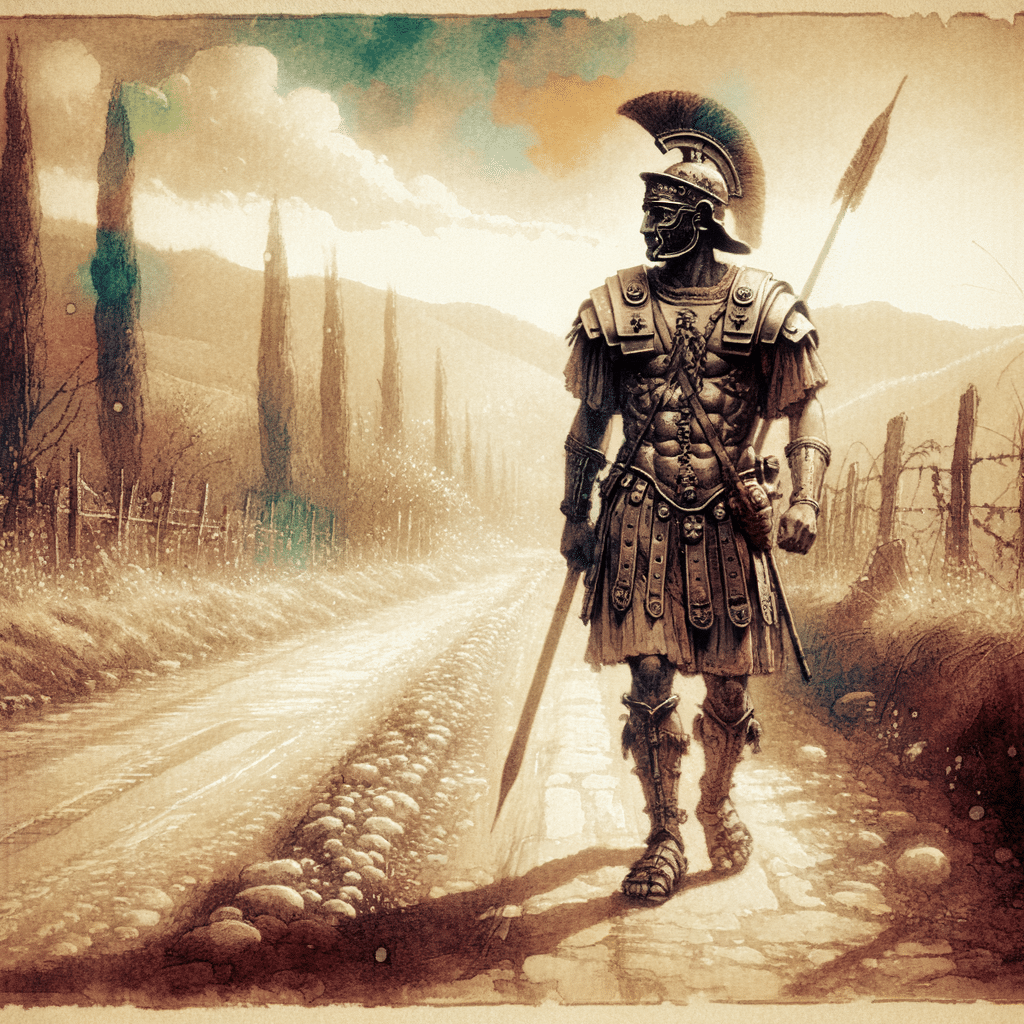
The most well-known meeting with York’s Roman ghosts may have happened in February 1953, when plumber Harry Martindale was putting in a heating system in the Treasurer’s House cellar. Martindale was alone on his ladder when he heard a trumpet and then saw a Roman soldier come through the wall. The soldier was wearing a green tunic, a plumed helmet, and carrying a short sword. To Martindale’s horror, the soldier was followed by several more legionaries, who were walking in formation but were only visible from the knees up. Their lower legs and feet were hidden below the modern floor level. Martindale is said to have fallen off his ladder in fear and run upstairs, where he met the curator. Instead of being surprised, the curator just asked, “You’ve seen the Romans, haven’t you?” Martindale was so affected by the encounter that he stopped working as a plumber for a while and was questioned extensively by historians. He gave details about the soldiers’ clothing that matched archaeological discoveries that were not well known at the time (Carter, 2021).
What makes Martindale’s story so interesting is that he accurately described the soldiers’ uniforms, which were not the more common legionaries but Roman auxiliary troops. He said they had short swords, green tunics, and round shields. At the time, these details weren’t well-known in popular culture, which made his story more believable. Also, later archaeological digs showed that a Roman road did go through that exact spot, about 18 inches below the current floor level. This explains why the ghostly soldiers seemed to be walking partly below the floor. Martindale stuck to his story until he died in 2014. He never tried to get attention or money from it, and it has since become part of York’s ghostly canon.
There have been many other sightings of Roman ghosts in York over the years. A young woman in the 1920s said she saw a full Roman legion marching through the Multangular Tower, which is one of the most impressive Roman buildings still standing in the city. Several independent witnesses said in the 1970s that they saw a lonely centurion patrolling the remains of the Roman wall near Bootham Bar. He would often disappear into solid stone mid-stride. Many people have reported hearing ghostly marching sounds and the distinct metallic clanking of Roman military equipment in the area around Micklegate Bar, especially in the early hours before dawn. These manifestations usually have some things in common: the soldiers look like they’re on a mission instead of threatening, they’re often doing everyday things instead of dramatic scenes, and they often show the “stone tape” phenomenon of repeating the same movements in the same places (Wood & Kolek, 2010).

Analysis
The stories about York’s Roman ghosts have become an important part of the city’s identity. York’s Roman ghosts are different from many ghost stories that focus on violence or tragedy. Instead, they are usually shown as normal parts of everyday military life. Local tour guides often say that these ghosts are not individual spirits but time slips, which are times when the lines between the past and the present blur for a short time. Because so many people tell these stories, some places, like the Treasurer’s House cellar, have become pilgrimage sites for people who are interested in the paranormal. The ghost stories have also been used to keep historical knowledge alive. For example, tour guides and storytellers have included accurate information about Roman military structure, daily life, and the layout of ancient Eboracum in their supernatural stories, which is an unusual mix of history and folklore.
Theories that try to explain the Roman ghost sightings in York range from the psychological to the parapsychological. Some historians say that these encounters show how Britain has dealt with its complicated relationship with its Roman past. They show that Britain accepts the sophistication of Roman civilization while also recognizing the trauma of conquest and colonization. Psychologists have observed that numerous sightings transpire in areas characterized by particular environmental conditions: limestone substrates, proximate flowing water, and variable electromagnetic fields, all elements linked to parapsychological phenomena. Some people are more skeptical and say that York has a financial reason to keep its reputation as “Europe’s most haunted city.” They say that ghost tourism has helped keep these stories alive and even made them more detailed. However, the consistency of reports across generations, often from witnesses who are not aware of previous sightings, suggests that something deeper than just tourism marketing is going on in the old streets (Hanks, 2016).
York’s Roman ghost traditions have an effect that goes beyond local folklore and into the realms of culture and academia. These ghostly soldiers have been in many books, TV documentaries, and paranormal investigations, which has helped keep people’s interest in Roman Britain in general. Academic archaeologists usually don’t believe in ghosts, but they do say that ghost stories have helped preservation efforts by making people more interested in protecting Roman sites and showing how important they are to history. Researchers looking into theories of “residual haunting” and environmental triggers for paranormal experiences often use the Martindale sighting as an example in their work. These ghost stories have made the Roman occupation more real for modern Britons, turning abstract historical ideas into emotional ties to the people who lived, worked, and died in Eboracum.
Conclusion
As York changes in the twenty-first century, its Roman ghosts are a strong reminder that history is never really over. When modern visitors walk along the ancient city walls or go down into medieval cellars, they are moving through layers of time where the lines between the present and the past become less clear. The phantom legionaries of York are more than just strange ghost stories; they are a sign of the empire that still shapes British identity and imagination. These phenomena can be seen as psychological projections, tourist attractions, or real paranormal events, but they all serve the same purpose: to connect people today with the lives of people who lived before them on the same streets and under the same skies, in an unbroken chain of experience that goes beyond the linear flow of time. We hear not only echoes of sandals on stone in the ghostly footsteps of Rome’s soldiers, but also the lasting echo of our shared human story.
References
Braschler, V. (2021). Time Shifts: Experiences of Slipping Into the Past and Future. Simon and Schuster.
Carter, J. (2021, March 12). Harry Martindale and the Roman ghosts of York. Anomalien. https://anomalien.com/harry-martindale-and-the-roman-ghosts-of-york/
Hanks, M. (2016). Haunted heritage: The cultural politics of ghost tourism, populism, and the past. Routledge.
Leach, S., Lewis, M., Chenery, C., Müldner, G., & Eckardt, H. (2009). Migration and diversity in Roman Britain: a multidisciplinary approach to the identification of immigrants in Roman York, England. American Journal of Physical Anthropology: The Official Publication of the American Association of Physical Anthropologists, 140(3), 546-561.
Wood, M., & Kolek, R. (2010). A Ghost a Day: 365 True Tales of the Spectral, Supernatural, and… Just Plain Scary!. Simon and Schuster.

Leave a Reply