Were Unicorns Real? Key Points
- Unicorns aren’t real, so the better question is what ancient travelers saw. The legend began around 400 BCE with Ctesias, a Greek physician who relied on secondhand reports from India.
- The Indian rhinoceros, with its single prized horn, is the strongest candidate. Marco Polo saw rhinos in Sumatra and called them ugly unicorns.
- Ctesias’s “unicorn” may have combined the Tibetan wild ass and the chiru antelope. The Arabian oryx can look one-horned when seen from the side.
- A Greek Bible translation turned the Hebrew re’em, probably the aurochs, into “monokeros,” which put unicorns in scripture. The one-horned “Siberian unicorn” lived until about 39,000 years ago, but it’s more likely a coincidence than a direct source.
- Medieval Christians made the unicorn a symbol of Christ, as in the Unicorn Tapestries. In 1638, Ole Worm showed that prized “unicorn horns” were really narwhal tusks.
- The unicorn most likely came from misidentified animals, mixed-up reports, translation errors, and profit-seeking merchants. It’s an imperfect record of real animals.

Introduction
For well over two thousand years, people in Europe and Asia spoke of the unicorn as though it were a genuine animal and resided somewhere far away, just beyond the border of the known world. Greek doctors wrote about the unicorn, Roman naturalists catalogued it, medieval monks made it a symbol of Christ, and Renaissance nobles paid large sums for its supposed horn. “Are unicorns real?” is a dead-end question, because the answer is obviously “no.” A better inquiry may be, what did ancient explorers and writers actually see or hear about that became the unicorn? Read closely, the legend is not so much a pure fiction as a mixture of misread animals, confused second-hand reports, translation errors, and exchanged goods whose true origins are obscured. The rhinoceros and oryx, the wild ass, many antelopes, the narwhal, and maybe even an Ice Age giant all helped to create the creature we now see without thinking.
Classical and Biblical Origins of the Unicorn
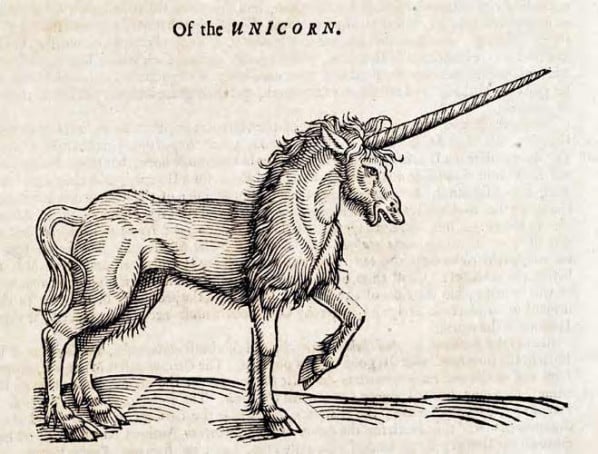
The unicorn of popular imagination is a simple thing to describe. It was a white horse, elegant, with a goat’s beard, a lion’s tail, cloven hooves, and a single long spiralling horn sprouting from the center of its forehead. It was quick, proud, and almost tough to catch. Its horn was thought to purify poisoned water and cure sickness. But the photo was overdue. The earliest Greek version is far more bizarre. Nichols (2011) reports that around 400 BCE, Ctesias of Cnidus, a Greek physician at the Persian court of Artaxerxes II, described wild asses in India “as large as horses” with white bodies, dark red heads, blue eyes, and a horn about a cubit and a half long that was white at the base, black in the middle, and crimson at the tip. Those who drank from cups made of this horn were protected from poison, convulsions, and stomach illness, he claimed (Encyclopaedia Britannica, n.d.). Ctesias never visited India. He gathered stories from merchants and visitors in Persia. His book mixes accurate elements, such as elephants and talking parrots, with clear delusions (Lavers, 2009).
Later classical writers did not kill the animal. Aristotle, while generally distrusting Ctesias, did admit that some animals were single-horned. He gave as examples “the oryx and the so-called Indian ass,” and he remarked that the Indian ass was single-hoofed (Aristotle, 1984). The most detailed Roman account is that of Pliny the Elder, writing in the first century CE. His monoceros had the body of a horse, the head of a stag, the feet of an elephant, and the tail of a pig. He possessed a powerful bellow and a single black horn two cubits long. He added that it could not be taken alive” (Pliny the Elder, 1855). This composite description already seems more like a rhino than a pony and delivers the first clue to the mystery.
The unicorn’s biblical and patristic origins in mediaeval Europe are fundamental to its legitimacy as a real creature in Christian cosmology. Humphreys argues that mediaeval Christians believed in the existence of unicorns, not through the backing of contemporary consensus, but through biblical translations. The unicorn appears in the Bible through Septuagint translations that render the term “monocerōs,” which helped mediate the medieval assent to its existence (Humphreys, 1953). The anchoring point for many later mediaeval images is the nexus of scriptural authority and iconographic tradition. The mediaeval conception of the unicorn has its roots in scriptural and patristic traditions that place the unicorn within the framework of Christian cosmology. These are confirmed by the bestiaries and hagiographies that depict the unicorn as a noble Christian symbol and occasionally as a test of purity and chastity. Scholars consistently invoke this basic authority across various religious and textual traditions, which shapes both the depiction and interpretation of the unicorn (Humphreys, 1953; Cohen, 2024).
Real Animals Behind the Legend
The rhinoceros would be the obvious choice. The Indian rhinoceros has just one horn on its snout and resides in the region that Ctesias calls India and is difficult to catch. The horn has long been valued in Asian medicine, which fits the stories of cups that defend against poison. Many researchers, including the editors of Britannica, consider the Indian rhinoceros to be the likely basis for Ctesias’ narrative (Encyclopaedia Britannica, n.d.). Marco Polo. He is the best proof. In the late thirteenth century, he met real “unicorns” in Sumatra and described them honestly. They had hair like a buffalo, feet like an elephant, and a large black horn, and they preferred to swim in the muck. Polo said they were ‘quite hideous brutes to look at,’ nothing like the monster purportedly caught in the lap of a virgin (Polo, 1903). That bit is important. When a traveller, expecting unicorns, saw a rhinoceros, he put it under the label he had brought with him. The animal did not match the description, so he claimed that the folklore was inaccurate regarding its appearance.
But the rhinoceros cannot explain everything. Ctesias depicted a quick, horse-sized animal with a pale body and a colorful head, not a mud-caked, armored grazer. Enter the wild ass. The Asiatic wild asses, the onager, and the Tibetan kiang are fast and alert and very difficult to trap, as the ancients were so insistent on the impossibility of catching mature unicorns. (2009) Ecologist Chris Lavers says the Ctesias “unicorn” was a composite. In his reading he took from the kiang the body and color, from the Tibetan antelope (or chiru) the horn, and from the yak the aggressiveness. They all have the Tibetan Plateau. The two thin, upright horns of a male chiru could look like a single spike from a distance. The chiru is a shy animal, and most people probably only saw it from a distance.
The oryx provides a distinct form of proof. The Arabian oryx is a glossy white antelope with long, straight, ringed horns. In profile, the two horns almost completely overlap and may appear as one (Fauna & Flora, n.d.). The oryx itself was mentioned by Aristotle as one-horned (Aristotle, 1984), which implies that the profile view was not merely a recent conjecture but something that Greek informants reported. Loss of the horn may also have been a factor. Oryx horns don’t regrow, so if an animal loses one, it will have only one for life. The art of the ancient Egyptians and the Near East often depicted animals in precise profile, and these depictions may have helped disseminate the one-horned image even more widely, since a side view of a two-horned beast shows just one horn.

Language, Narwhals, and Medieval Symbolism
Language generated another sort of unicorn. When Jewish academics translated the Hebrew Bible into Greek for the Septuagint, they transcribed the Hebrew word re’em as monokeros, meaning “one-horned.” The reem was a formidable wild horned animal, perhaps the aurochs, the enormous wild bull of the ancient Near East, with two horns. It was a mistranslation that made its way through Latin and the King James Version of 1611, and English readers came across passages like “Will the unicorn be willing to serve thee? (Job 39:9, KJV). By then there was no particular animal at all. The text had given life to a previously meaningless word, leading believers of the Bible to have valid reason to think that unicorns were real.
Narwhal tusks and narwhal-derived horn artifacts feed into a long-standing mediaeval logic: unusual naturalia are understood through familiar, example forms (that is to say, the unicorn). Stein stresses the re-identification of narwhal tusks as unicorn horns in Western Europe, a process that connected material culture to symbolic meanings and moralizing stories in late mediaeval Europe (the re-identification of naturalia and their iconography) (Stein, 2021). Pluskowski’s work highlights the material culture dimension, suggesting that non-indigenous animal body parts—including horn-like features—circulated as exotic items with connotations connected to unicorn lore and the wider repertory of “imaginary beings” (Pluskowski, 2004).
Bestiaries and hagiographies further canonize the unicorn as a creature whose capture requires virginity, a myth that symbolizes the virgin birth of Christ and the purity of Mary in Christian iconography. As Stein (Mediaeval Naturalia) states, the re-identification of narwhal horns as unicorn horns in late mediaeval naturalia and the repeated motif of unicorn imagery in bestiaries further cemented the moralizing and iconographic aspects of the unicorn within clerical culture (Stein, 2021). For example, Cohen’s study of Hebrew bestiary images in mediaeval manuscripts demonstrates how the symbolic readings of the unicorn traverse religious communities; however, the major mediaeval depiction remains within the context of Christian moral instruction (Cohen, 2024).
Fossils, Folklore, Commerce, and Competing Theories
The most spectacular candidate is also the most speculative one. The “Siberian unicorn,” Elasmotherium sibiricum, was a massive rhinoceros, weighing up to around 3.5 tonnes, that roamed the steppes from southern Russia to Kazakhstan. No horn has ever been recovered, although a large bony dome on its cranium likely housed a single enormous horn (Davis, 2018). Scientists used to think it went extinct some 200,000 years ago. But radiocarbon dating of 23 specimens revealed it survived until at least 39,000 years ago (Kosintsev et al., 2019), meaning it existed with early modern humans. It is a tantalizing finding, but caution is advised. There is relatively little direct evidence for interaction with Elasmotherium, and tens of thousands of years separate it from Ctesias. It is better, perhaps, as a remarkable coincidence, or possibly as a source of fossil skulls that people later found and puzzled about, than as a living memory.
Folklore transformed these various animal sightings into symbols. The Physiologus, an early Christian compendium of animal mythology possibly assembled in Alexandria, believed that only a virgin could capture a unicorn. The terrible beast would come to her, put its head in her lap and sleep, and then the hunters would take it (Curley 1979). Mediaeval writers saw the unicorn as an allegory of the Incarnation of Christ in the Virgin Mary. The idea propagated through bestiaries throughout Europe and reached its climax in works like the Unicorn Tapestries, woven ca. 1495 to 1505 and now in the collection of The Cloisters, New York. They depict the hunt, the slaughter, and the unicorn at rest, alive again, in a walled garden (Freeman, 1976). Other cultures have their own one-horned or marvellous monsters. The image appeared well outside of Europe, in the various “unicorn” seals of the Indus Valley culture and the Chinese qilin. In the early fifteenth century, Chinese Admiral Zheng He’s ships brought a giraffe to the Yongle Emperor’s court, and authorities called it a qilin. Thus, once again, a real, unknown animal was inserted into mythology to be created.
The mythology has commercial, medical, and scientific ramifications. During the Middle Ages and Renaissance, the “unicorn horn,” or alicorn, was one of the most expensive items in Europe. Rulers drank from allicorn cups, crushed them into medicine, and preserved complete horns in their treasuries as shields against poison. Most of these horns were narwhal tusks—the long, spiraling teeth of an Arctic whale—brought south by Norse and later Danish and Dutch traders, who kept the origins of the tusks secret (Shepard, 1930). This area is where the unicorn’s most famous characteristic, the twisted horn, comes from. Ctesias’s horn was stripped of color. Pliny’s was black. The famous ivory spiral came from the sea. In 1638, the Danish physician and naturalist Ole Worm publicly demonstrated that the valued horns were narwhal teeth (Shepard, 1930). As the tusks flooded the market, and naturalists grew more suspicious, the trade collapsed. The unicorn nevertheless lived on in heraldry. It was long the royal beast of Scotland, and following the union of the kingdoms in 1603, it took its place opposite the English lion on the royal coat of arms where it is now.
The strongest theory combines them; however, several are available. The first is the theory of misidentification. There were real animals with one horn, or presumably one-horned animals, particularly the rhinoceros and the oryx seen in profile—faithfully represented but badly characterized. The second is the composite hypothesis. Lavers (2009) argues that secondhand stories along trade routes have combined animals such as the kiang, chiru, and yak into one. Third, the theory of the text. Translation choices like monokeros for re’em resulted in unicorns in the text, and religious authority then shielded them from doubt. Fourth is the commerce theory. Merchants had every incentive to dress up unusual commodities, and an ordinary narwhal tusk was valued far less than a miracle horn; thus, the mythology paid for itself (Shepard, 1930). A final and more speculative possibility is that fossils, perhaps even the skulls of extinct single-horned rhinos, provided some societies with physical evidence that appeared to support the myths. All of these hypotheses are true, making the unicorn’s believability and elusiveness likely. As Lavers (2009) points out, adventurer Nikolai Przhevalsky eventually concluded that unicorns “existed wherever he happened not to be.”
Conclusion
The unicorn was a myth, so it was unlikely to be found. It came from genuine experiences with real animals; it passed through many hands and many languages, and each time it was changed by what people expected to see. Ancient travelers did see something. They witnessed an armored rhinoceros in an Indian swamp, a white oryx standing sideways on a desert ridge, a herd of wild asses vanishing across a high plateau, and a peculiar twisted tooth from a frozen sea that no European had yet traced to its owner. Collectors, translators, priests, and traders transformed those sightings into a creature that was quick, pure, and elusive. Thus, to see the legend is not to lessen its fascination but to heighten it. It indicates that a myth might be an incomplete record of the natural world, preserved by individuals who were paying attention but who did not yet have the means to sort what they saw. The unicorn is a creature of myth, but the creatures that inspired it are real, and many of them, such as the rhinoceros, the oryx, and the chiru, now need human protection to survive.
References
Aristotle. (1984). History of animals (D. W. Thompson, Trans.). In J. Barnes (Ed.), The complete works of Aristotle: The revised Oxford translation (Vol. 1). Princeton University Press.
Cohen, A. S. (2024). Bestiary imagery in Hebrew manuscripts of the thirteenth century. Religions, 15(1), Article 133. https://doi.org/10.3390/rel15010133
Curley, M. J. (Trans.). (1979). Physiologus. University of Texas Press.
Davis, J. (2018, November 26). The Siberian unicorn lived at the same time as modern humans. Natural History Museum. https://www.nhm.ac.uk/discover/news/2018/november/the-siberian-unicorn-lived-at-the-same-time-as-modern-humans.html
Encyclopaedia Britannica. (n.d.). Unicorn. In Encyclopaedia Britannica. https://www.britannica.com/topic/unicorn
Fauna & Flora. (n.d.). Arabian oryx. https://www.fauna-flora.org/species/arabian-oryx/
Freeman, M. B. (1976). The unicorn tapestries. The Metropolitan Museum of Art.
Humphreys, H. (1953). The horn of the unicorn. Antiquity, 27(105), 15–19. https://doi.org/10.1017/S0003598X00024339
King James Bible. (2017). King James Bible online. https://www.kingjamesbibleonline.org/ (Original work published 1611)
Kosintsev, P., Mitchell, K. J., Devièse, T., van der Plicht, J., Kuitems, M., Petrova, E., Tikhonov, A., Higham, T., Comeskey, D., Turney, C., Cooper, A., van Kolfschoten, T., Stuart, A. J., & Lister, A. M. (2019). Evolution and extinction of the giant rhinoceros Elasmotherium sibiricum sheds light on late Quaternary megafaunal extinctions. Nature Ecology & Evolution, 3(1), 31–38. https://doi.org/10.1038/s41559-018-0722-0
Lavers, C. (2009). The natural history of unicorns. William Morrow.
Nichols, A. (Trans.). (2011). Ctesias: On India. Bristol Classical Press.
Pliny the Elder. (1855). The natural history (J. Bostock & H. T. Riley, Trans.). Henry G. Bohn.
Pluskowski, A. (2004). Narwhals or unicorns? Exotic animals as material culture in medieval Europe. European Journal of Archaeology, 7(3), 291–313. https://doi.org/10.1177/1461957104056505
Polo, M. (1903). The book of Ser Marco Polo (H. Yule, Trans.; H. Cordier, Rev.; 3rd ed.). John Murray.
Shepard, O. (1930). The lore of the unicorn. Houghton Mifflin.
South Netherlandish. (1495–1505). The unicorn tapestries [Tapestries]. The Cloisters, The Metropolitan Museum of Art, New York, NY, United States.
Stein, C. (2021). Medieval naturalia. Medievalista Online, 29, 211–241. https://doi.org/10.4000/medievalista.3902



Leave a Reply