Kobolds in Folklore: Key Points
- Kobolds originated in German folklore as small supernatural fairies associated with homes, farms, mines, and workplaces.
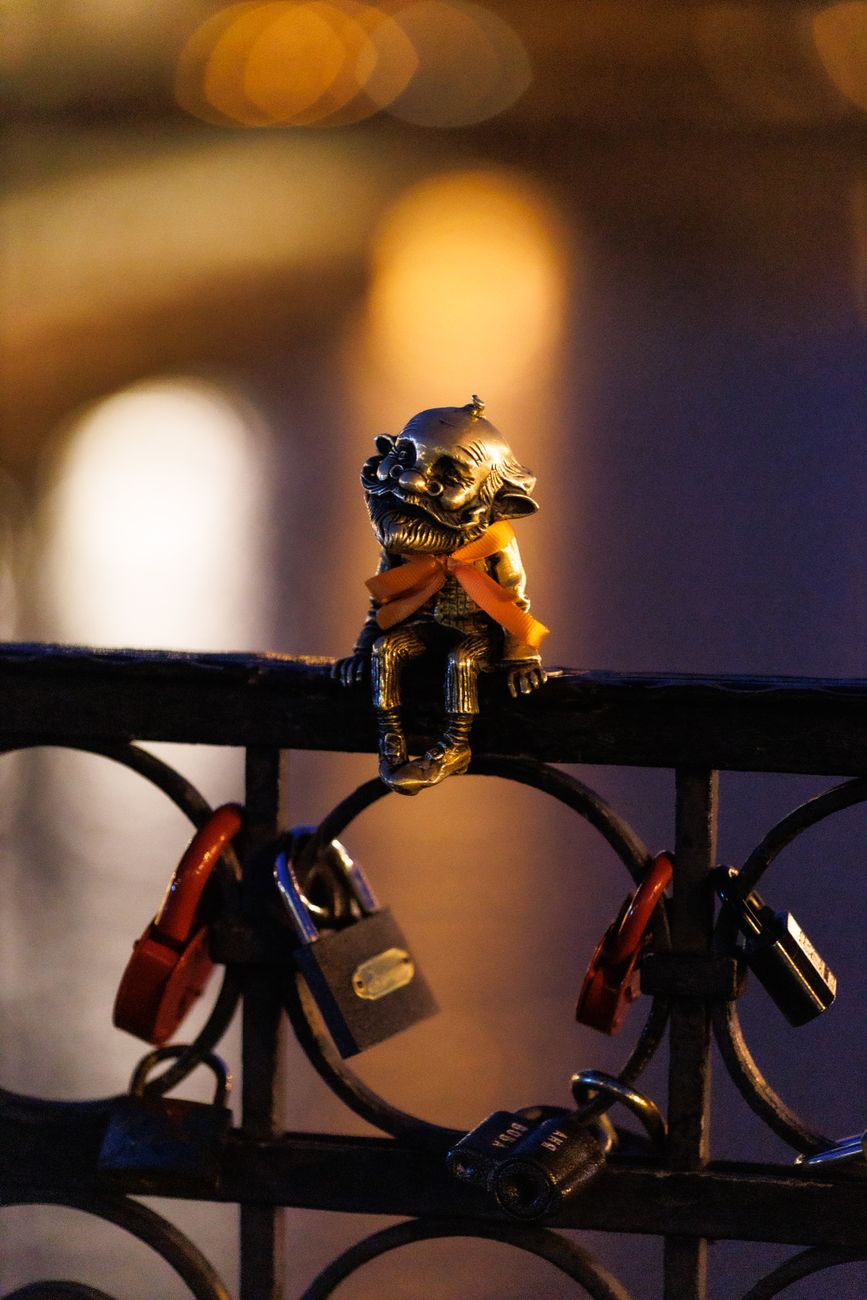
- Folkloric kobolds were often invisible or appeared as small humanlike figures, dwarfs, or old men wearing simple clothing and pointed caps.
- Traditional kobolds could help with chores, protect families, warn people of danger, or become dangerous and vengeful when insulted or mistreated.
- Role-playing games transformed kobolds into small reptilian or dragon-like humanoids with scales, claws, tails, and other draconic features.
- RPG kobolds usually live in groups underground and compensate for their physical weakness through traps, ambushes, teamwork, and knowledge of their territory.
- Folklore and RPG kobolds share traits such as cleverness and underground associations, but modern fantasy changed them from unpredictable supernatural spirits into recognizable draconic creatures.

Introduction
Kobolds have a special place in the history of otherworldly creatures. Before they were little reptile monsters lurking in fantasy dungeons, kobolds were a part of German tradition, spirits tied to houses, farms, mines, and other locations where people toiled. They may do housework, protect people, play tricks, or turn dangerous if insulted. The modern role-playing game version preserves a few vestiges of this previous personality: intelligence, underground connections, and a propensity for mischief. But the kobold of Dungeons & Dragons and other games is entirely unique physically from the conventional depiction. The transformation of a supernatural household spirit into one of fantasy gaming’s most recognizable little creatures can be understood by examining the two historical traces.
Folkloric Origins and Etymology
The name “Kobold” has also been employed in broader cultural and technical lexicons, where it may be used to refer to small, impish creatures or figuratively to venturesome, mischievous, or small creatures. Historical arguments follow the expansion of the word’s use beyond strict folklore into other spheres (e.g., the semantic travel of the word and possible links to words for “house spirit” or “kobold” in various Germanic and kindred languages) (WED‐WOOD, 1856; Bahder, 1897). Some authors trace the etymological paths and caution against overgeneralizing the meaning of “kobold” throughout periods, mentioning ongoing discussions in philology concerning its precise pedigree and sense (Bahder, 1897).
Thomas Keightley identified the German kobold with the Danish and Norwegian nisse, the Scottish brownie, and the English hobgoblin (Keightley, 1850). They lived alongside humans and could develop a connection to a particular household or family. A kobold was not necessarily always a monster of the wilderness. In several legends, their otherworldly existence was interspersed with everyday home life.
Traditional Appearance and Behavior
No single physical appearance was ascribed to all folklore kobolds. Supernatural entities were often invisible, but descriptions and associated lore tended to liken them to dwarfs, little old men, or small humanlike spirits rather than to reptiles. Keightley compared the Scandinavian nisse to the German kobold, which was said to be the size of a one-year-old but with an old man’s face. He was often dressed in gray clothes and a pointed red cap (Keightley, 1850). One famous German house ghost, Hödeken, derived his name from the little felt hat he wore pulled down over his face (Keightley, 1850). Other tales linked the underworld spirits with the arrival of little gray-bearded miners (Leland, 1891). Combined, these descriptions suggest something more like small human, dwarf, brownie, or gnome rather than the scaled creature known to modern gamers.
Folkloric kobolds were more defined by their actions than by a standardized body. Household kobolds might do beneficial magic on the sly. They might clean, conduct tasks, tend to animals, or otherwise help the people whose home they had taken. Keightley’s report describes a kobold that would test a household before deciding to move in. Once in, the kobold may stay with a family for generations (Keightley, 1850). There was a lot of respect in the connection. Humans who treated these spirits right might receive their labor and protection in return. Those who teased or abused or angered them would realize that the benevolent tiny spirit had a cruel side.
This uncertainty is one of the most intriguing features of kobold folklore. Kobolds were not inherently nice or wicked. An example of this duality is the description of Hödeken as helpful and able to warn people about future occurrences, but legends also showed him enacting horrific revenge when mistreated (Keightley, 1850). Such tales are typical of European fairy lore. Supernatural beings, as a rule, have their standards of reciprocity and respect. He could live quietly beside them; he was the kind of person who’d meet those expectations. If you broke them, you were risking penalties significantly greater than the magnitude of the original offense.
Another aspect of kobold tradition became associated with underground practices. In mining folklore, people connected kobold-like creatures to mines, mineral resources, unusual noises, warnings, and mishaps. Underground ghosts helped miners or showed them where to find valuable resources. Others disrupted work, turned off lights, made false noises, or penalized miners they did not like (Leland, 1891). Walter Scott also describes kobolds as creatures that inhabit mines and can thwart the miners but can also defend favored humans (Scott, 1830). This relationship with the netherworld would, in time, make the kobold particularly simple to transplant into fantasy worlds replete with tunnels, mines, ruins, and underground dungeons.
Kobolds in Fantasy Role-Playing Games
Kobolds are well known creatures in fantasy literature and gaming. They are little, typically mischievous creatures that appear in role-playing games and fantasy settings. The word is used in game narratives and in spatially organized quest content (for example, kobold vermin in a dungeon or forest setting within online role-playing game frameworks), illustrating how kobolds function as recognizable enemies or task-oriented entities in gaming literature and content created by users. Several references replicate the adventuring-stage imagery of kobolds (e.g., kobolds as taunting adversaries within virtual game environments) and demonstrate how the kobold archetype is utilized to structure gameplay, quest design, and narrative motivation in digital spaces (Ballou, 2009; Wang, 2009). Such depictions go some way toward explaining the larger cultural legacy of kobold beyond simply mythological contexts.
The creature turned dramatically different in role-playing games. The most contemporary version is probably the one in Dungeons and Dragons, when kobolds evolved from strange household ghosts into tangible humanoid beings. In the fifth-edition rules, the classic kobold is a small humanoid (underground-dwelling). It has darkvision and usually suffers a penalty in strong sunlight (Wizards of the Coast, 2014). Later gaming materials further reinforce this relationship between kobolds and dragons, characterizing them as little draconic animals with ancestry evident in their scales (Wizards of the Coast, 2022).
Thus, the kobold of the RPG is quite different from its folklore parent. The modern kobold is more likely to be shown as a short, upright reptile or draconic humanoid than as a small old man, dwarf, or domestic ghost. It possesses scales, clawed claws and feet, a lengthy tail, and a head that resembles a miniature dragon or lizard. Its body is modest compared with larger humanoids. That visual association with dragons has become so strong that someone witnessing a kobold in modern fantasy may reasonably think that kobolds were derived from diminutive dragon people. That is an assumption that is erroneous in historic terms.
Even the behaviors of kobolds changed almost as significantly as their physical forms. Traditional kobolds often interacted with individual houses and workers, whereas RPG kobolds usually live communally in underground lairs. They rely on numbers, preparedness, and understanding of their terrain. The fifth-edition Dungeons & Dragons kobold is weak physically but makes up for it with collaboration and trap-making. In the past, its game mechanics included the Pack Tactics, which rewarded kobolds for attacking opponents with their friends (Wizards of the Coast, 2014). This makes a creature that might seem unimpressive on its own but can pose a very deadly threat when faced as part of a well-organized group.
Traps are especially a core part of the RPG identity of kobolds. They can tunnel into defensive systems, creating plenty of ambush locations and risks. This depiction makes sense from a game design perspective, as kobolds offer difficulties not solely based on physical power. Players battling them may have to spot traps, learn the environment, and avoid getting surrounded. Their reputation for brilliance also offers game masters a lot of latitude. Several kobolds can be comedic nuisances in one quest and effective underground defenders in another.

Continuities and Differences Between Folklore and Gaming
The RPG version, however, has not fully discarded mythology. Both variations are closely associated with specific regions. The domestic kobold belonged to a home or family. The mining kobold lived in an underground workplace. The RPG kobold frequently aggressively protects his cave. Both can be unpleasant creatures; their apparent fragility tempts humans to underestimate them. Most importantly, both traditions include a concern for intelligence and indirect action. A folkloric kobold would take revenge with supernatural pranks and subversion; an RPG kobold would do the same thing using traps and ambushes.
The differences are still more than the similarities. Folkloric kobolds are spirits whose physical appearance may be ambiguous or changeable. RPG kobolds are biological fantasy creatures that have recognizable bodies, communities, weapons, languages, and game statistics. The mythological kobold might reside quietly in a human home and do tasks. The RPG kobold is far more likely to live in a dungeon and assault any adventurers who enter it. Kobolds also seem to have a lot of moral ambiguity in the traditional sense. Depending on circumstances, they can help, punish, warn, frighten, or defend humans. Early RPG portrayals more readily cast kobolds in the position of low-level enemies; however, later fantasy gaming has increasingly permitted kobolds to appear as player characters and individuals rather than interchangeable monsters (Wizards of the Coast, 2022).
Perhaps the most significant change is the kobold’s relationship with dragons. Kobolds in German legend were always defined as something other than little dragon people. That identity is mainly modern fantasy. Once kobolds gained scales, reptilian appearances, underground societies, and affiliations with dragons, the current image was culturally potent enough to eclipse the earlier one. The name endured, but the creature that went with it altered.
Conclusion
The kobold is thus a good example of how folklore may be changed by popular culture. The traditional German kobold was a little and unpredictable spirit of the household, working mines, helping, doing mischief, and occasionally doing scary revenge. Usually it looked human or dwarf-like if it looked like anything at all. In role-playing games, the kobold became a small reptile or draconic humanoid, relying on traps, teamwork, and cunning. But there is a tenuous link. Both creatures live on the edges of human spaces. Both can be lethal if underestimated. Both prefer ingenuity over brute strength. The RPG kobold is not an exact copy of the folklore creature. It is historically something more intriguing: a new monster manufactured out of an old supernatural name.
References
Bahder, K. von. (1897). Wortgeschichtliche Beiträge. Beiträge zur Geschichte der deutschen Sprache und Literatur (PBB), 1897(22). https://doi.org/10.1515/bgsl.1897.1897.22.520
Ballou, K. (2009). Language-learner experiences in an online virtual world. The JALT CALL Journal, 5(2), 61–70. https://doi.org/10.29140/jaltcall.v5n2.80
Keightley, T. (1850). The fairy mythology: Illustrative of the romance and superstition of various countries. H. G. Bohn.
Leland, C. G. (1891). Gypsy sorcery and fortune telling. T. Fisher Unwin.
Scott, W. (1830). Letters on demonology and witchcraft. John Murray.
Wang, H. (2009). Weblog-mediated peer editing and some pedagogical recommendations: A case study. The JALT CALL Journal, 5(2), 29–44. https://doi.org/10.29140/jaltcall.v5n2.232
Wed‐wood, H. (1856). Miscellaneous English etymologies. Transactions of the Philological Society, 3(1), 32–39. https://doi.org/10.1111/j.1467-968x.1856.tb00962.x
Wizards of the Coast. (n.d.). Dungeons & Dragons [Tabletop role-playing game].
Wizards of the Coast. (2014). Dungeons & Dragons basic rules (5th ed.).
Wizards of the Coast. (2022). Mordenkainen presents: Monsters of the multiverse.


Leave a Reply