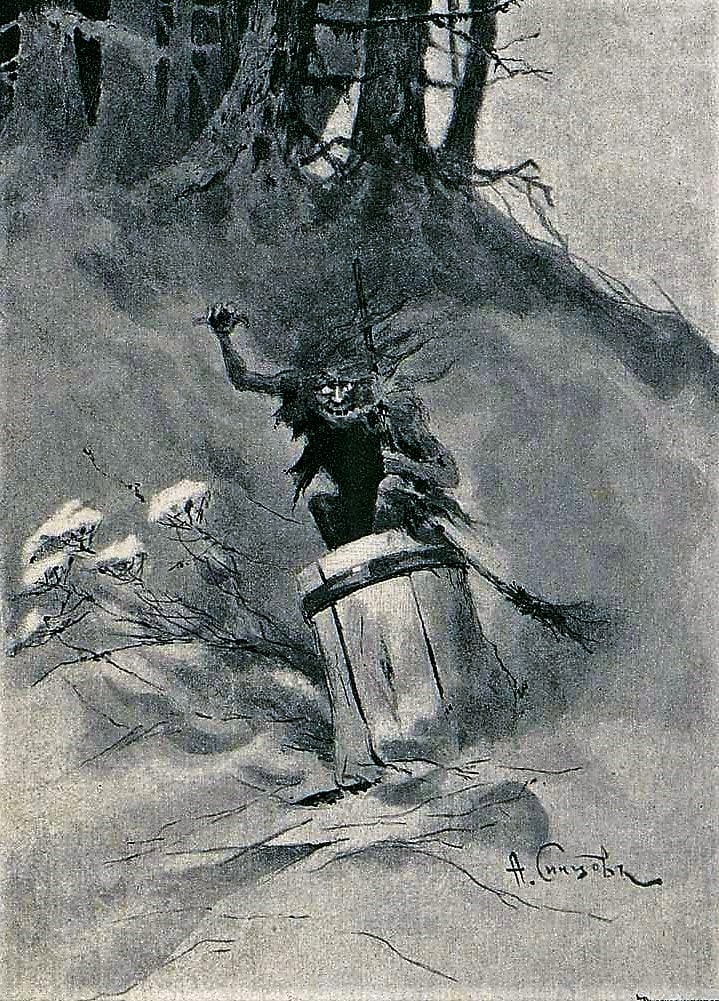
Baba Yaga and the European Witch Trials: Key Points
- Baba Yaga is an old witch in Slavic folklore who lives deep in the forest in a hut on chicken legs. Some stories give her a bony leg and a long nose, and she often travels in a mortar propelled by a pestle.
- She threatens to eat some visitors and gives others magical aid. In Vasilisa the Beautiful, she makes Vasilisa complete difficult chores before sending her home with a glowing skull.
- Folklorists have interpreted Baba Yaga as a mother figure who can nurture or threaten, and as a guardian who tests young people on their way to adulthood. Her forest home gives her the freedom to set her own rules.
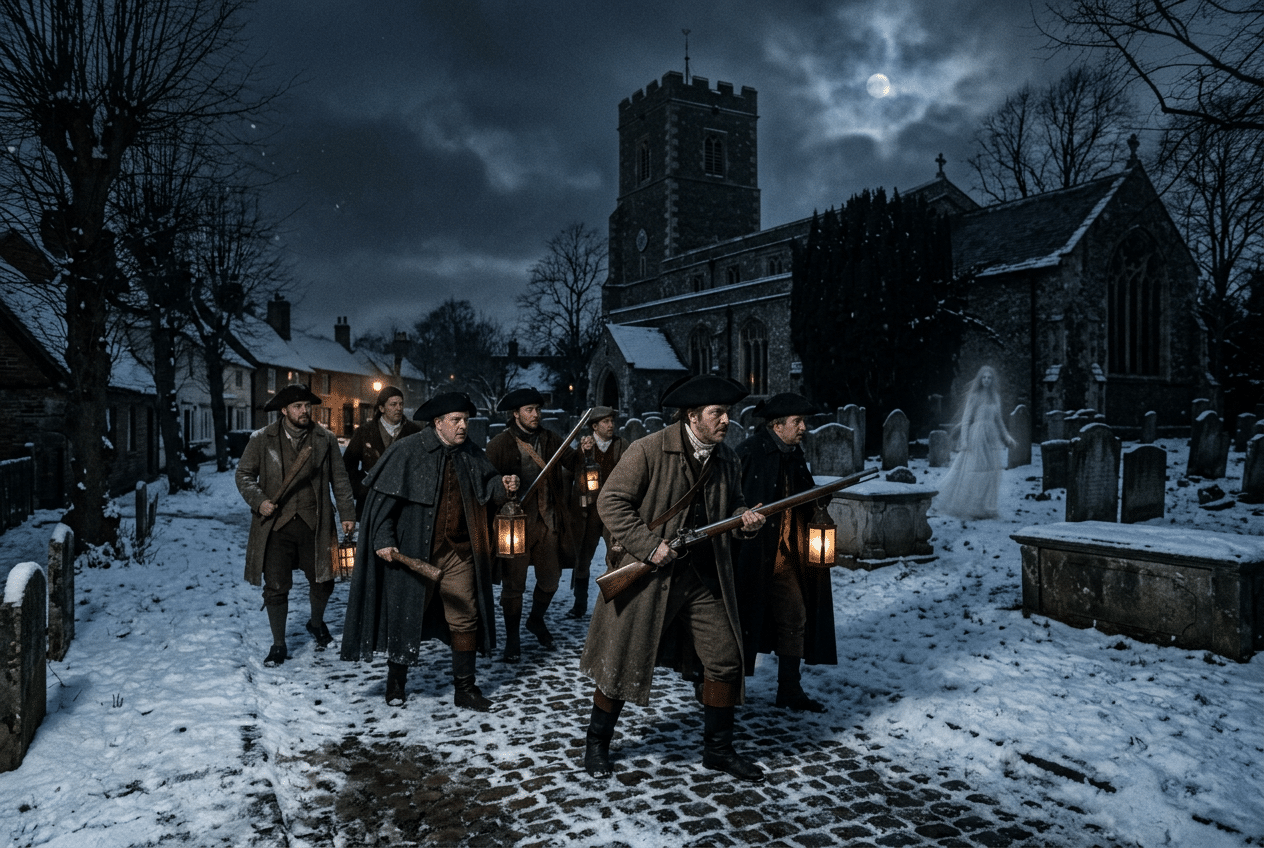
- The European witch trials show how suspicion could gather around older women. In parts of southern Germany, fears about childbirth and infant death helped drive accusations, and in Scotland, a quarrel followed by misfortune could turn a neighbor into a suspect.
- Witch trials varied by region. Most accused Scottish women whose marital status was recorded were married, and most people accused in seventeenth-century Russia were men, so Baba Yaga’s exile works best as a comparison with social exclusion.
- Baba Yaga keeps the stereotype of the frightening old woman alive, yet her stories also give her knowledge and authority. The young people who enter her forest sometimes owe their survival to the very woman they were taught to fear.

Introduction
Baba Yaga dwells deep in the wilderness in a home that stands on chicken legs. Children and young travelers who stumble to her door may discover a supper, a task, or a witch who intends to consume them. In Russian, Ukrainian, and Belarusian folktales she can be both a predator and a donor of magical aid, even both in the same story (Johns, 2004). Even when a story does not explain who sent her away, her life outside the town can be seen as a type of exile. That division draws comparison to the treatment of older women during the European witch trials. The connection is particularly telling because the woman who seems most terrifying in a folktale occasionally turns out to be the person the hero most needs.
Baba Yaga in Slavic Folklore
Baba Yaga is a prominent character in Slavic folklore, generally depicted as an old woman living in a magical house, and she is a liminal, morally ambiguous figure in fairy tales and mythic contexts. Her characteristic home, shown as a cottage on chicken legs, is one of the most identifiable elements linked with the character across cultures and media (Naumovska et al., 2021; Sulaiman, 2019; Zochios, 2016; Spasova, 2015). In traditional Russian and East Slavic tales, she is commonly portrayed as a powerful, shape-shifting witch who can be a threat or an assistance depending on the tale and the protagonist’s conduct (Spasova, 2015; Francis, 2016; de Vos, 2001). The ability to injure and help is part of a broader pattern in folklore, with Baba Yaga having a bony leg and a nose so long that she serves as a tester or gatekeeper in initiatory scenes, assessing characters to determine their worthiness for help or punishment (Spasova, 2015; Francis, 2016).
Before Baba Yaga speaks, Baba Yaga, having a bony leg and a nose so long that her body will often warn of danger. Some versions of the story describe her as having a bony leg and a nose so long that a bony leg and a nose so long it touches the ceiling when she rests in her hut. She rides in a mortar and with a pestle and with a broom sweeps away her traces. In Vasilisa the Beautiful the fence encircling her home is topped with skulls. Details vary from story to story, but the old woman’s link with bones, hunger, and death is a constant concern. There’s also something disturbing about her instruments. The common household work is done with a mortar, pestle, and broom. They take her across the jungle in her hands and allow her to erase the evidence of where she has been (Forrester, 2013; Johns, 2004).
Vasilisa’s Trial and Baba Yaga’s Authority
In Vasilisa the Beautiful, the daughters are within the household. Vasilisa’s stepfamily sends her to the wilderness for fire from Baba Yaga. The witch assigns her tasks, threatening to consume her if she fails to clean and sort the grain. The doll given to Vasilisa by her deceased mother helps her in her chores. Baba Yaga eventually sends her home with a glowing skull, the fire of which kills her stepmother and stepsisters (Forrester, 2013). The plot takes its most significant turn when Vasilisa is sent to the fire. Vasilisa’s family sends her there, expecting her to die, and the old woman delivers her what she came for. The skull brings the woodland threat back into the house where the plan against her began.
Folklorist Andreas Johns (2004) looks at Baba Yaga as an ambivalent maternal figure. She can feed or scare a young kid. She can demand labor. She can supply the means of survival. Another idea associated with this one is that she is a gatekeeper to adulthood. The traveler leaves home, undergoes a test of her power, and returns with knowledge or an object that changes what is possible. The skull fence also allows for a reading of the woodland as a border between the living and the dead. The social reading is most convincing to me when it remains close to what happens at her door. The old woman in the hut asks the questions, assesses what is beneficial work, and decides what the guest takes away. Her solitude allows her to exert authority on her own terms.
Baba Yaga’s physical imagery is striking and enduring: an ancient crone who travels in a mortar (with a pestle as an additional means of mobility) and resides in a hut that stands on chicken-legs. The same motifs are present in traditional narratives and emphasized in contemporary scholarly discourse as an indication of her magic abilities and transitional place in the universe (Spasova, 2015; de Vos, 2001). Editors and reviewers of visual and literary adaptations note that these aspects endure even when Baba Yaga’s role or tone switches to more modern or domesticated representations, marking both continuity with folklore and adaptability to new media landscapes (Dehgan, 2019; Spasova, 2015).

Witch Trials and the Making of Outsiders
Stories of dangerous women in early modern Europe could have repercussions well beyond the telling. Historian Lyndal Roper (2004) reveals through trial records from southern Germany how worries of fertility, childbirth, and infant death contributed to the making of older women as targets. An accusation can provide a family with a reason for the death of a kid or the unexpected illness of an animal. In Scotland, a dispute followed by a misfortune was sometimes taken by neighbors as proof that the quarrel had been avenged through witchcraft. A lady could earn that reputation years before anyone filed a formal allegation. The Survey of Scottish Witchcraft has shown that 84% of those accused were women. Of those whose ages were documented, several were above 40, but the ages of the majority of those accused are unknown. The survey also documents sentences of banishment, a literal kind of exclusion, with a parallel in Baba Yaga’s life beyond the village (Goodare et al., 2003; Roper, 2004).
The classic image of the single widow is simply one part of that history. The majority of women (in Scotland) whose marital status was documented were married; however, the missing records make it difficult to generalize. Valerie Kivelson (2013) found that in the examples she examined of seventeenth-century Russia, the vast majority of the accused were men. Baba Yaga’s woodland exile makes the most sense, then, as a contrast, spanning folklore and history, rather than an explanation for the character’s origins. It helps to illustrate how a community may make someone an outsider, even if she lived among neighbors. If a woman had spoken in anger or had fallen out with another member of the household, her words could be given a new construction when illness occurred. A disagreement that was part of regular life could be part of the case against her (Goodare et al., 2003; Kivelson, 2013).
Folklore Interpretations and Modern Adaptations
Baba Yaga has been the subject of scholarly attention as a multifaceted figure, regulating space and time, working at the border of human and supernatural worlds, and serving as a catalyst for initiation rituals in the tale. This donor/helper dimension is there alongside her capacity to intimidate, cannibalize, or menace children in some stories, demonstrating a variable moral function rather than a singular moral alignment (Spasova, 2015; de Vos, 2001). In some analyses she is an archetypical witch linked to the wider themes of death, metamorphosis, and the paradox of life and death that run through Slavic folklore (Naumovska et al., 2021; Obertová, 2022; Sedakova, 2012). Her recurrent presence in discourses of myth, folklore, and adaptations, where she is considered a national symbol and a trans-cultural theme (Dehgan, 2019; Zochios, 2016; Spasova, 2015), reinforces the character’s enduring symbolic value.
Baba Yaga is a regular figure in modern media discourse and pop culture, and researchers discuss the ways in which the signifiers of the classic Baba Yaga (hut, mortar, pestle, hen-on-chicken-legs) are employed, repurposed, and reinterpreted. This includes studies of Monster-of-the-Week formats, fairy-tale retellings, and cross-media adaptations that index traditional knowledge while exploring themes of wonder, fear, and moral testing (Rudy & McDonald, 2016; “The Fairy Tale and Its Uses in Contemporary New Media and Popular Culture,” 2016; Lehtonen, 2010; Spasova, 2015). Some scholars go as far as to explicitly position Baba Yaga as a mutable figure, whose role can shift between threat and mentorship depending on narrative context and audience expectation, demonstrating the continued life of the character in global folklore and media (Rudy & McDonald, 2016; “The Fairy Tale and Its Uses in Contemporary New Media and Popular Culture,” 2016; Spasova, 2015).
The survival of Baba Yaga in collections and illustrated retellings has made the fearsome old witch known to new readers (Forrester, 2013). The picture can carry with it an ancient prejudice: a woman’s aging body can make her look menacing before she has done anything at all. Yet the stories also provide this woman with a range of actions that are unusual for a caricature. She maintains a household with no husband or village to answer to, she bargains with visitors, and she has information that young people have to seek. A version that retains only the cannibal aspect loses the old woman who has the ability to judge, teach, and provide assistance. Portraying her as entirely benevolent diminishes the significance of engaging with someone whose assistance is conditional.
Conclusion
Baba Yaga’s home makes manifest a border that witch-trial records indicate communities may establish around real individuals. A lady can be deemed untrustworthy by her neighbors long before her case even made it to a court. The folktales provide the lady on the other side of that border with what the accused often battled to maintain: the power to choose what happens when other people arrive at her door. Vasilisa learns how to confront the woman in the woods and therefore is able to survive. The people who sent her there already knew what the old woman would do. This conviction is part of what makes the story worth telling, together with the history of witch-hunting.
References
de Vos, G. (2001). Storytelling, folktales and the comic book format. Language and Literacy, 3(1). https://doi.org/10.20360/g2j30g
Dehgan, L. (2019). Baba Yaga, construction et évolution d’un mythe animé en Russie. Slovo, À l’Est de Pixar : le film… https://doi.org/10.46298/slovo.2019.5238
Forrester, S. (Trans.). (2013). Baba Yaga: The wild witch of the East in Russian fairy tales. University Press of Mississippi.
Francis, Y. P. (2016). [Review of the book Russian magic tales from Pushkin to Platonov, translated by R. Chandler et al.]. Folklorica, 19(1). https://doi.org/10.17161/folklorica.v19i1.5724
Goodare, J., Martin, L., Miller, J., & Yeoman, L. (2003). The survey of Scottish witchcraft, 1563–1736. University of Edinburgh. https://witches.hca.ed.ac.uk/faq/
Johns, A. (2004). Baba Yaga: The ambiguous mother and witch of the Russian folktale. Peter Lang.
Kivelson, V. A. (2013). Desperate magic: The moral economy of witchcraft in seventeenth-century Russia. Cornell University Press. https://doi.org/10.7591/cornell/9780801451461.001.0001
Lehtonen, S. (2010). “If you thought this story sour, sweeten it with your own telling” – Cross-cultural intertextuality and a feminist poetics of rewriting in Susan Price’s Ghost dance. Barnboken, 33(1). https://doi.org/10.14811/clr.v33i1.9
Naumovska, O., Rudakova, N., & Naumovska, N. (2021). “Life/death” binary opposition in folk prose narratives. Linguistics and Culture Review, 5(S4), 540–558. https://doi.org/10.21744/lingcure.v5ns4.1589
Obertová, Z. (2022). Slavic mythology lost in fantasy. Narodna Umjetnost, 59(2), 119–132. https://doi.org/10.15176/vol59no206
Roper, L. (2004). Witch craze: Terror and fantasy in Baroque Germany. Yale University Press.
Rudy, J. T., & McDonald, J. (2016). Baba Yaga, monsters of the week, and pop culture’s formation of wonder and families through monstrosity. Humanities, 5(2), Article 40. https://doi.org/10.3390/h5020040
Schwabe, C. (Ed.). (2016). The fairy tale and its uses in contemporary new media and popular culture. MDPI. https://doi.org/10.3390/books978-3-03842-301-0
Sedakova, I. (2012). The Russian ritual year and folklore through tourist advertising. Traditiones, 41(1), 119–136. https://doi.org/10.3986/traditio2012410111
Spasova, S. (2015). [Review of the book Baba Yaga: The wild witch of the East in Russian fairy tales]. Folklorica, 18. https://doi.org/10.17161/folklorica.v18i0.4892
Sulaiman, N. F. (2019). Mythological interpretations of Slavic dramatic and narrative folk-tale motifs. International Journal of Language Academy, 29(29), 272–284. https://doi.org/10.29228/ijla.38215
Vasilisa the beautiful. (2013). In S. Forrester (Trans.), Baba Yaga: The wild witch of the East in Russian fairy tales (pp. 170–184). University Press of Mississippi. https://www.jstor.org/stable/j.ctt24hv8d.35
Zochios, S. (2016). Baba Yaga, les sorcières et les démons ambigus de l’Europe orientale. Revue Sciences/Lettres, (4). https://doi.org/10.4000/rsl.973

Leave a Reply