
For a long time, historical accounts and myths about unicorns have blended together, making it difficult to distinguish between fact and fiction. Ctesias, a Greek historian and doctor, is a great example of this mix. His works have both fascinated and confused scholars. While Ctesias is known for writing about Persia and India, his descriptions of mythical animals like the unicorn have caused both interest and doubt. This essay goes into detail about Ctesias’s life and writings, looks at how his stories affected later writers, and looks at the unicorn myth’s lasting impact through different historical lenses.

Ctesias
With roots in Cnidus, Ctesias was a complex person who lived in the 5th century BCE. He is best known as a scholar, but in 416 BCE, he was also the doctor to King Darius II of Persia. As a priest within the Asclepiadai caste, a tradition that passed down medicine from generation to generation, Ctesias possessed a unique perspective due to his extensive knowledge of both history and medicine. His two most important works, a History of Persia and the Indika (or Indica), which described the people and animals of India, show how ambitiously he tried to write about everything that was known about the world.
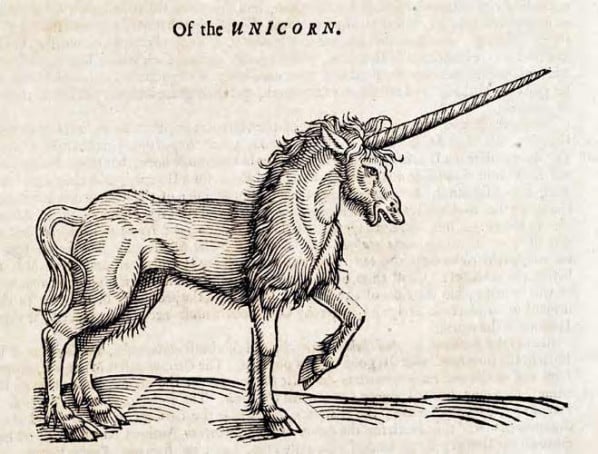
In his work called the Indika, Ctesias wrote in great detail about a creature that would later be known as the unicorn. He drew these “wild asses” from India that were bigger than horses and had a big horn on their foreheads, based on stories from travelers, Persian officials, and dealers on the Silk Road. Later students often dismissed Ctesias’s work as a mixture of myths and fantastic stories, despite his insistence on the authenticity of his sources.
He wrote:
Their huckle-bone is the most beautiful that I have seen, like that of the ox in size and appearance; it is as heavy as lead and of the colour of cinnabar all through. These animals are very strong and swift; neither the horse nor any other animal can overtake them. At first, they run slowly, but the longer they run their pace increases wonderfully, and becomes faster and faster.
He also noted:
There is only one way of catching them. When they take their young to feed, if they are surrounded by a large number of horsemen, being unwilling to abandon their foals, they show fight, but with their horns, kick, bite, and kill many men and horses. They are at last taken, after they have been pierced with arrows and spears; for it is impossible to capture them alive. Their flesh is too bitter to eat, and they are only hunted for the sake of the horns and huckle-bones.
Lucian, a Syrian comedian who lived in the second century, famously wished Ctesias to a special part of hell for telling what he thought were lies. Ctesias also wrote about a race of one-legged people called the Monosceli, and another race whose feet were so big they could be used to block the rain and sun. Even though these stories were interesting, they made people doubt Ctesias’s reports and made a lot of people wonder where the unicorn myth came from.

Later Unicorn Narratives in Antiquity
Even though some people didn’t believe him, Ctesias’s descriptions of unicorns influenced later writers and helped to make the myth of the unicorn last. Aelian, a Roman author from the second century, quoted Ctesias in his own work, On the Nature of Animals. In it, he confirmed that unicorns existed and talked about their unique features and the claimed healing powers of their horns. Even though Aelian’s stories were based on other sources, they added to the unicorn myth by describing two kinds of unicorns: one that looked like an ass and the other like a horse.
Aelian wrote:
There are in India certain wild asses which are as large as horses, and larger. Their bodies are white, their heads dark red, and their eyes dark blue. They have a horn on the forehead which is about a foot and a half in length. The dust filed from this horn is administered in a potion as a protection against deadly drugs. The base of this horn, for some two hands’-breadth above the brow, is pure white; the upper part is sharp and of a vivid crimson; and the remainder, or middle portion, is black. Those who drink out of these horns, made into drinking vessels, are not subject, they say, to convulsions or to the holy disease [epilepsy]. Indeed, they are immune even to poisons if, either before or after swallowing such, they drink wine, water, or anything else from these beakers.
He continued:
Other asses, both the tame and the wild, and in fact all animals with solid hoofs, are without the ankle-bone and have no gall in the liver, but these have both the ankle-bone and the gall. This ankle-bone, the most beautiful I have ever seen, is like that of an ox in general appearance and in size, but it is as heavy as lead and its colour is that of cinnabar through and through. The animal is exceedingly swift and powerful, so that no creature, neither the horse nor any other, can overtake it.
A well-known Roman scientist named Pliny the Elder also talked about the unicorn. His short but important comment said that the unicorn had the head of a stag, the feet of an elephant, and the tail of a pig. This further cemented the unicorn’s place in the history of mythical animals. Pliny had a huge impact; his writings shaped European thinking for almost a thousand years, which helped spread the unicorn myth.
In his writings about the Hercynian Forest, Julius Caesar added to the unicorn myth by drawing a beautiful animal with a single, straight horn. Even though it was short, this story helped the idea spread across Europe. Similarly, Cosmas Indicopleustes, a trader and astronomer who lived in the sixth century, added another layer to the unicorn story. Based on brass figures in the palace of the Ethiopian king, he described the unicorn in a way that made it sound even more dangerous and impossible to catch, adding to its mythical status.
Conclusion
Even though some people didn’t like Ctesias’s writings, they were very important in creating the myth of the unicorn. His accounts, which were based on both direct observation and other people’s stories, helped other writers build on them. Over the years, the unicorn has changed from a fantastical creature in Ctesias’s Indika to a sign of magic and purity in medieval Europe. People have always been interested in unicorns, which shows how people like to mix truth and fantasy to make myths that individuals find interesting and remember for a long time.
References
Bozia, E. (2014). Lucian and his Roman Voices: cultural exchanges and conflicts in the Late Roman Empire. Routledge.
Caesar, J. (1966). The Gallic Wars. Harvard University Press.
Murphy, T. (2004). Pliny the Elder’s Natural history: the Empire in the encyclopedia. OUP Oxford.
Scholfield, A. F. (Ed.). (1958). On the Characteristics of Animals (No. 446). Harvard University Press.
Shephard, O. (1988). The Lore of the Unicorn. Random House.


Leave a Reply