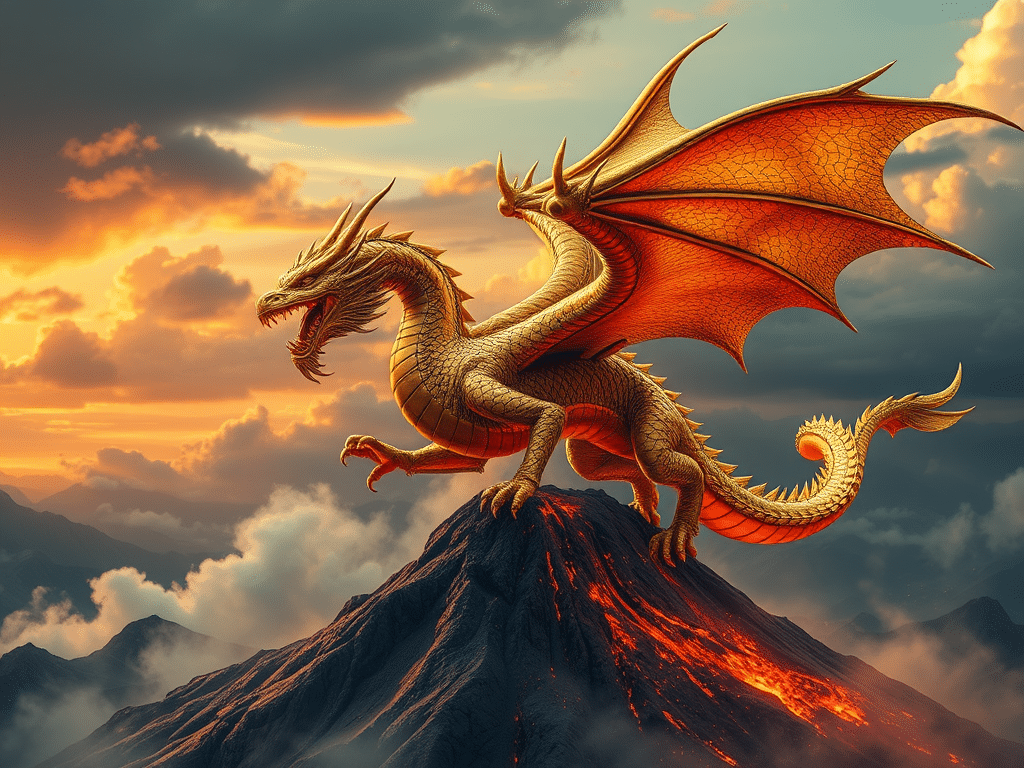
Combining intellect, fun, and power in equal measure, the brass dragon is one of the most intriguing beings in the pantheon of fabled animals. Evolving from old legends into complex characters inside contemporary role-playing games, these great entities have fascinated fantasy lovers, game creators, and writers for years. Although not as well known as their red or gold relatives, brass dragons have certain qualities that have won over fantasy genre lovers all across, especially by means of their unique presence in Dungeons & Dragons.

Description
Physically, brass dragons are striking animals with smooth, metallic scales that shine with the warm glitter of polished brass, thereby defining their name. Though their enormous size can reach over sixty feet when completely mature, their bodies have a serpentine quality with long necks and tails that offer balance and grace. Their skull adorns the brass dragon’s head with two noticeable backward-sweeping horns, while facial ridges accentuate it, giving it an expressive, almost royal look. As they age, their scales thicken and have a deeper, richer tone, while the membranes of their wings take on a sandy tint that suits their desert habitat, providing them excellent camouflage despite their enormous size.
Brass dragons’ behavioral characteristics stand out from those of many of their draconic relatives by an unquenchable curiosity and sociability. They have an exceptional passion for talk, often holding tourists for hours with inquiries about faraway places, cultures, and current events, and occasionally using small illusions or telepathy to enhance their conversations. Brass dragons value wisdom as much as any jewel or gold piece they might add to their hoard; hence, they gather not just tangible riches but also tales and knowledge. Unlike many dragons that prefer solitude, brass dragons actively seek company and intellectual stimulation, often even donning disguises to mingle among humanoid people and quench their desire for social interaction (Ikhwanudin, Asiyah & SS, 2020).
Often characterized by their natural sociability and moral orientation, brass dragons have intricate and diverse connections with other draconic species. Unlike many of their more territorial relatives, brass dragons often favor diplomatic remedies to possible disputes, valuing dialogue over war when they come into contact with other dragons in their desert territories. Though brass dragons keep a mild wariness in these encounters, knowing well the usually wicked character of their chromatic rivals, this inclination for conversation reaches even to chromatic dragons like blues and reds. Especially around blue dragons, whose desert areas frequently overlap with their own, causing tense talks over hunting grounds and water sources that sometimes explode into territorial conflicts despite the brass dragons’ best diplomatic attempts, they are cautious (Van Os, 2021).
Brass dragons often travel considerable miles to speak with copper, bronze, silver, and gold dragons, creating their most lasting and significant partnerships with these other metallic dragons. These meetings between metallics are celebrated occasions marked by days or even weeks of storytelling, philosophical debate, and the sharing of arcane knowledge, with brass dragons particularly enjoying the wit and humor of copper dragons, whose pranks and jokes align well with their own playful nature. Being the most powerful and royal of the metallics, gold dragons compel respect from brass dragons, who appreciate their wisdom and protection, while brass dragons occasionally find gold dragons’ strict moral code and grave attitude somewhat suffocating to their more free-spirited approach to life. Particularly in coastal areas where their territories may overlap, the relationship between brass and bronze dragons is one of mutual respect and regular cooperation; bronze dragons value the brass dragons’ great knowledge of inland matters, while brass dragons value the bronze dragons’ oceanic viewpoints.
Interestingly, brass dragons show a specific interest in dragon hybrids, half-dragons, and draconic creatures of mixed ancestry, seeing them as living representations of the various narratives they so enjoy gathering. They often seek such odd draconic beings, offering protection and mentorship to individuals with brass dragon pedigree while exhibiting curious curiosity in those descended from other draconic bloodlines. While brass dragons typically remain unfazed in their protection of these exceptional individuals, their inclusive approach can occasionally clash with purist dragon tribes that view hybrids with mistrust or disdain. Brass dragons show their usual intellectual curiosity when interacting with draconic creatures from other planes of existence or those altered by strong magic, sometimes forming surprising alliances that span worlds and dimensions in their unrelenting quest for new conversation partners and fresh stories.
The mythology surrounding brass dragons has changed greatly over time from their early appearances in tradition, which frequently depicted them as desert guardians or custodians of hidden oases. Ancient desert civilizations spun tales of kind serpentine beings with metal scales who would lead lost travelers to water in return for stories and information from faraway countries. Early stories depicted brass dragons as intelligent, albeit rather naughty, guardians of desert areas rather than as terrifying beasts. These tales mixed with conventional dragon legends from several civilizations throughout centuries, including aspects of Mesopotamian, Egyptian, and Arabian folklore, to form the basis of what would eventually become the contemporary brass dragon stereotype.

Dungeons & Dragons
The influential roleplaying game Dungeons & Dragons, which established the brass dragon as a particular kind of metallic dragon in its complex creature hierarchy, primarily sealed the move from mythology to modern fantasy. Developing their game in the 1970s, D&D founders Gary Gygax and Dave Arneson pulled from several mythical sources to produce a thorough taxonomy of dragons, with brass dragons defined as chaotic good beings with certain powers and characteristics. This systematization gave brass dragons a permanent home in fantasy fiction and gaming, complete with precise descriptions of their skills, habitat preferences, and social behaviors that had never before been so clearly delineated in prior mythical heritage (Ewalt, 2024).
Brass dragons in the Dungeons & Dragons cosmos are included among the metallic dragons, which are usually good and aligned with good energies; they stand in contrast to the malicious chromatic dragons. These versatile foes prefer to subdue their opponents rather than kill them, and their supernatural powers include a breath weapon that can manifest as either a line of fire or a cloud of sleep-inducing gas. The game portrays brass dragons as denizens of arid locations, establishing their lairs in desert caves or old ruins, typically with sophisticated tunnel systems that safeguard their priceless hoards from the harsh desert environment and prospective robbers. Players who value brass dragons’ mix of outstanding power and kind attitude have come to admire this thorough portrayal.
Brass dragons have developed more subtly throughout subsequent editions of Dungeons & Dragons as game creators have added cultural elements, psychological profiles, and even offered example personalities for dungeon masters to use in their campaigns. Modern versions stress their function as custodians of oral histories, with some brass dragons holding large mental libraries of stories spanning generations. Modern game materials also highlight their peculiar inclination to construct intricate traps and puzzles around their lairs, not solely for defense, but also to test the intelligence of potential conversation partners and provide intellectual stimulation for themselves, thereby reflecting their playful yet intelligent nature (Cruz, 2017).
D&D‘s brass dragons have influenced many different kinds of fantasy material, from tabletop gaming to other fantasy media—including novels, video games, and art—where they are often depicted as charismatic, chatty beings with an unquenchable need for conversation. At times, fantasy writers have utilized and modified the brass dragon archetype, maintaining its connection to the desert; at other times, they have reinterpreted them in diverse settings, emphasizing their social character and adaptable intellect. This extensive acceptance across several media forms has solidified brass dragons as unique characters within the larger fantasy genre, identifiable by their specific mix of metallic beauty, intellectual curiosity, and kind demeanor (Thompson & Cook, 2012).
Conclusion
Ultimately, brass dragons are an intriguing case of how modern fantasy interpretations give specificity and evolution to mythical ideas. Brass dragons have undergone a wonderful transformation from vague desert spirits in ancient folklore to the precisely defined creatures of modern roleplaying games, yet they have preserved their fundamental character as intelligent, social beings with a love for both conversation and desert settings. Their lasting appeal reflects the human interest in beings that mix strength with intelligence, risk with approachability, and the strange with the familiar. Brass dragons will surely remain cherished as fantasy literature and games change; their shining scales and curious minds will keep fascinating new generations of fantasy lovers.
References
Cruz, R. A. L. (2017). Here be dragons: using dragons as models for phylogenetic analysis. The American Biology Teacher, 79(7), 544-551.
Ewalt, D. M. (2024). Of dice and men: The story of Dungeons & Dragons and the people who play it. Simon and Schuster.
Ikhwanudin, I., Asiyah, N., & SS, M. (2020). Symbolic meanings of dragon characters as reflected in How to Train Your Dragon trilogy movies (semiotic approach) [Doctoral dissertation, IAIN Surakarta].
Thompson, P. B., & Cook, T. C. (2012). Darkness & Light: A Preludes Novel (Vol. 1). Wizards of the Coast.
Van Os, G. L. (2021). Diversity and audience interaction in critical role and the adventure zone. Watch us roll: Essays on actual play and performance in tabletop role-playing games, 88-117.


Leave a Reply