Cloud Giants: Key Points
-
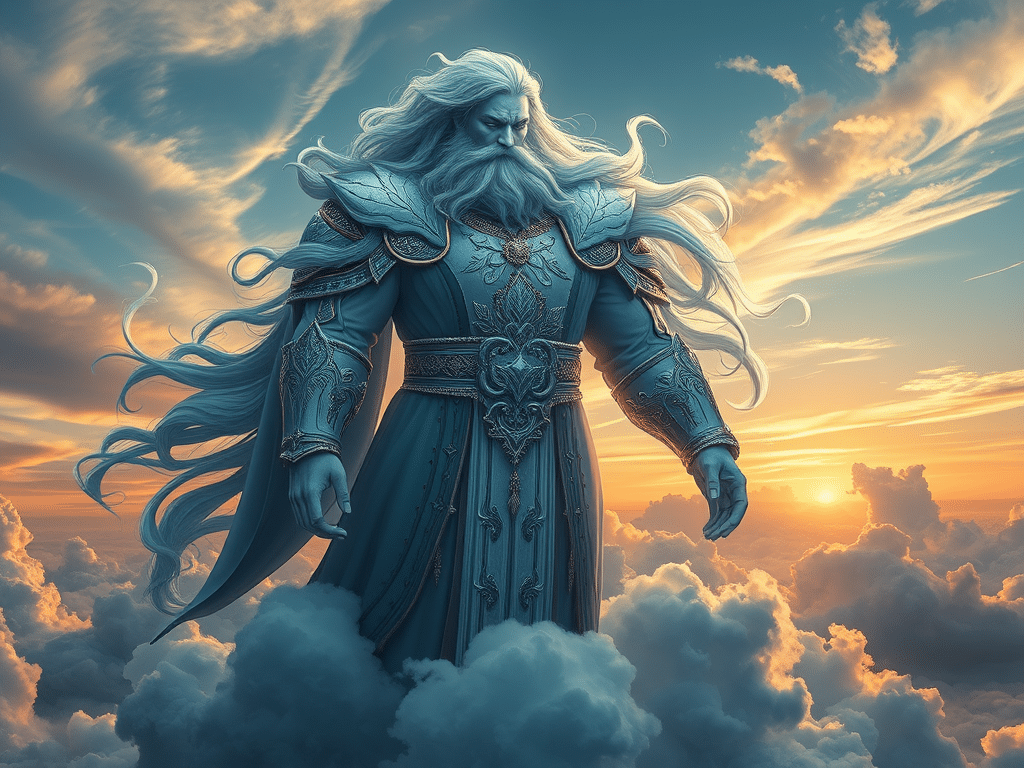
Cloud giants are enormous beings, typically eighteen to twenty-four feet tall, with pale luminescent skin, silver or blue hair, and graceful yet powerful builds.
-
Cloud giants possess refined intelligence and strategic thinking, living in magnificent castles while displaying arrogance and preferring tactics and magic alongside physical might.
-
In giant society’s hierarchy, cloud giants rank near the top, second only to storm giants, while viewing hill giants with contempt and maintaining complex relationships with other giant types.
-
Mythological traditions across cultures feature sky-dwelling giants like Norse Jötnar and Greek Gigantes, representing raw natural power and atmospheric phenomena.
-
In Dungeons & Dragons, cloud giants are formidable creatures with exceptional strength, intelligence, and special abilities, portrayed as sophisticated aristocrats and warriors.
-
Cloud giants represent humanity’s relationship with uncontrollable forces and distant authority, continuing to fascinate audiences as complex characters in mythology and modern fantasy.

Introduction
In mythology and fantasy literature, cloud giants are some of the most beautiful and powerful beings. They actually and figuratively tower over the landscape. People have been fascinated by these huge creatures for thousands of years. They can be found in old myths, medieval stories, and modern fantasy worlds. Because they are connected to the sky and weather, they are considered symbols of divine power, wild nature forces, and the mysterious worlds that humans can’t reach. To understand cloud giants, you have to look at their physical traits, how they act, how they interact with other giants, where they came from in mythology, and how they have been used in current video games.
On a physical level, cloud giants are usually described as being very tall, somewhere between 18 and 24 feet tall, though some stories say they are even bigger. People say that their skin is pale and almost glows and that it looks pearlescent or milky white, which is thought to represent their flying world. They are often shown with hair that ranges from silver-white to pale blue and flows like wisps of cloud. Their eyes are often shown with an otherworldly sheen and can be pale blue or steel gray. Their bodies are powerful, but they also have a surprising grace. Beings that are used to walking on solid cloudbanks must move with a lightness that makes them look huge. A lot of the time, cloud giants wear fancy clothes and armor that show how important they are among giants. They might wear flowing robes, shiny plate armor, or clothes made from cloud stuff.
Behavioral Patterns and Social Hierarchy
When it comes to behavior, cloud giants are very different from their more violent cousins. People often portray them as highly intelligent, adept at planning, and possessing a strong sense of honor. Cloud giants are often shown to have complicated social structures with strict hierarchies based on wealth, martial prowess, and cunning. This breed is different from the wild hill giants or the dangerous frost giants. They are known to love treasure and material wealth, and they often live in beautiful houses on top of the tallest mountains or in magical clouds high above the world. When their pride is properly recognized, they can be honorable and even generous, but their personality leans toward arrogance and pride. They think they are better than both smaller humanoids and lesser giant-kind. Cloud giants are strategic thinkers who like to use their brains and magical powers along with their strength. Instead of just using brute force, they often use tactics, alliances, and careful planning.
In cloud giants’ culture and society, showing off their money is considered a sign of wealth. Their place in the ordning, which is giant society’s social order, is mostly based on how much money they show off rather than what they really have (Dungeon Mister, 2021). This focus on showing off wealth fits with the mythology of the Forgotten Realms, which talks about how they give expensive gifts to trick people into thinking they are worth more than they really are (Forgotten Realms Wiki, n.d.). Role-playing encounters can utilize the performative aspect of wealth as a story feature. This phenomenon gives dungeon masters reasons for tribute demands, political rivalries, and family feuds. In this way, story character development and gameplay are linked, since wealth drives both plot hooks and technical stakes.
Cloud giants are typically near the top of the complex giant society structure, usually right behind storm giants. Their connection with other giants is a mix of superiority, practicality, and working together sometimes when it’s beneficial for both sides. The cloud giants think that hill giants and ogres are stupid and backward and that they should only be respected as possible servants or cannon fodder. They have a more complicated connection with frost giants and fire giants. They know these beings are strong, but they think they are less advanced and civilized than they are, often viewing them as primitive despite their capabilities and potential for cooperation. People sometimes admire stone giants for how well they work and how quiet they are, but cloud giants still think they are better. Many people agree that storm giants are the smartest and strongest giants, and cloud giants usually respect them. However, ambitious cloud giants may want to change the rules behind closed doors to gain more power and influence over the other types of giants, believing that their superiority should be recognized and rewarded.

Mythological Origins and Cultural Significance
Many different cultures have stories about giants that are connected to the sky and clouds. These stories show how people are both amazed and scared of the sky and clouds. In Norse folklore, the Jötnar were the first giants. They included beings connected to the sky and storms, but they were more often considered forces of chaos than as the well-organized, castle-dwelling nobility that would appear in later fantasy traditions. Greek mythology featured giants known as Gigantes, who engaged in combat with the Olympian gods and other Titans associated with celestial events. They stood for the raw power of nature before humans brought order to it. In many cultures, giants or godlike beings live in the sky or on top of mountains. For example, in some Asian beliefs, gods live in clouds, and in Native American mythology, sky spirits live in the sky. These mythical beings set the standard for the flying giant as a being with great power who was often erratic and controlled the weather and storms. When they got angry, they could destroy everything below.
Cloud giants have become more common in modern games, especially in Dungeons & Dragons. This has made many of their traits stronger while also giving them new dimensions, such as enhanced abilities and unique characteristics that challenge players in innovative ways. In D&D, adventurers typically encounter cloud giants as formidable creatures with varying levels of difficulty. They usually show up in adventures made for experienced players. In a mechanical sense, they are very strong and tough, very smart, and have a lot of special skills, such as the natural ability to cast spells, throw huge boulders with deadly accuracy, and sometimes control the weather or clouds. The game emphasizes that they are both sophisticated aristocrats and fearsome fighters, and their floating cloud castles are often shown as places full of riches, servants of different races, and complicated political intrigue. Different editions of D&D have improved how they are presented. For example, more recent editions have put more emphasis on the ordning, which is the giant social hierarchy, and how individual cloud giants might fall from grace or try to rise above their station. Such an approach gives these beings more moral depth than they had in earlier editions, which sometimes just saw them as bad guys.
Adaptation in Dungeons & Dragons and Game Mechanics
William Duffy says that Dungeons & Dragons (D&D) changes the shapes of famous monsters so that they work well in a role-playing game. He says that the game balance and playability often take precedence over mythical ambiguity (Duffy, n.d.). Before talking about giants, Duffy says that cyclopes are considered less powerful giants in the game, while more powerful giants often come from non-classical sources, showing the influence of Tolkien-style high fantasy rather than strictly Greco-Roman myth (Duffy, n.d.). This design method is shown even more by how the Hundred Handed Ones are added to Mythic Odysseys of Theros’ established giant taxonomy. They are given clear powers and abilities that are in line with D&D’s rules (Duffy, n.d.). These examples show that giants in D&D are not so much straight mythological ancestors as they are more systematized beings that have been shaped by the need to give them difficulty ratings, combat statistics, and spell-like abilities.
When it comes to cloud giants, this need to describe monsters in mechanical terms stands out even more. As shown in modern D&D materials, cloud giants are not only very big, even by giant standards, but they are also part of a clear ecosystem and social order (Dungeon Mister, 2021). Others live on high mountaintops above the cloud line, but few still live in the clouds themselves (Dungeon Mister, 2021). There are stories of lost cloud castles and the magic knowledge needed to build them. As Duffy pointed out, these features place them in a high-fantasy world that values magical infrastructure and vertical geography. This supports his claim that D&D giants are a mix of myth and modern fantasy (Duffy, n.d.). The adaptability of giant lore goes beyond monsters and includes choices for human characters. In Unearthed Arcana, different rules are added for bloodlines that can be traced back to powerful beings like giants. This technique turns mythical history into character mechanics (Collins et al., 2004). In particular, cloud giant bloodlines are presented as the result of old relationships with noble or powerful people, which suggests a high social status (Collins et al., 2004). Minor bloodlines from cloud giants give mechanical benefits, like social checks being easier when dealing with cloud giants, which can enhance a character’s interactions and influence within the game world. This method turns mythical lineage directly into a measurable advantage (Collins et al., 2004). This move shows Duffy’s main point that monsters in D&D have clear skills and levels of power that make them useful (Duffy, n.d.). Even ancestry, which used to be the subject of epic poems and heroic sagas, is now based on dice rolls.
Many ideas and explanations have been put forward about what cloud giants mean in stories and in psychology. Some researchers think that giants, especially aerial giants, show how humans interact with forces we can’t control. For example, cloud giants are thought to represent how powerful and uncertain the sky and weather are. Others see them as symbols for distant authority figures, like kings or queens who live in castles on mountains or in the clouds, above the ordinary people. They control resources and power while being physically and socially distant from the people they rule. On a psychological level, cloud giants could represent the way people tend to think that bigger means stronger and taller means more important. Such an interpretation would explain why these beings are both physically huge and socially high. The connection between clouds and castles in the sky may be based on universal human desires for transcendence, escape from everyday worries, and easy wealth and power. Such an explanation is why cloud giant lairs are often shown as palaces full of treasures that float peacefully above everyday problems.
Conclusion
People are still interested in cloud giants because they display many interesting contradictions: they are both beautiful and horrible, smart and violent, and good-hearted and cocky. The size and power of their bodies and the fact that they can fly make them amazing creatures. However, their complicated behavior keeps them from being simple monsters or villains. Mythology says that they were people’s attempts to understand and personify the sky and storms’ great power. In modern fantasy games, they represent encounters that can be solved through fighting, negotiating, trickery, or any mix of these. Cloud giants have always been a part of fantasy stories, whether they are bad guys protecting legendary treasures, possible allies in fights against bigger threats, or complicated characters with their own goals and problems. They remind us of our ancient fascination with beings who live in realms beyond our reach and have powers we can’t understand.
References
Collins, A., Decker, J., Noonan, D., & Redman, R. (2004). Unearthed Arcana. Wizards of the Coast.
Duffy, W. (n.d.). Twenty-sided monsters: The reception of classical monsters in Dungeons & Dragons. https://fass.open.ac.uk/sites/fass.open.ac.uk/files/files/new-voices-journal/issue14/Duffy-Twenty-sided-Monsters.pdf
Dungeon Mister. (2025, January 16). Cloud giants: DnD 5e monster guide. https://dungeonmister.com/lore/monsters/giants/cloud-giants/
Forgotten Realms Wiki. (n.d.). Cloud giant. https://forgottenrealms.fandom.com/wiki/Cloud_giant

Leave a Reply