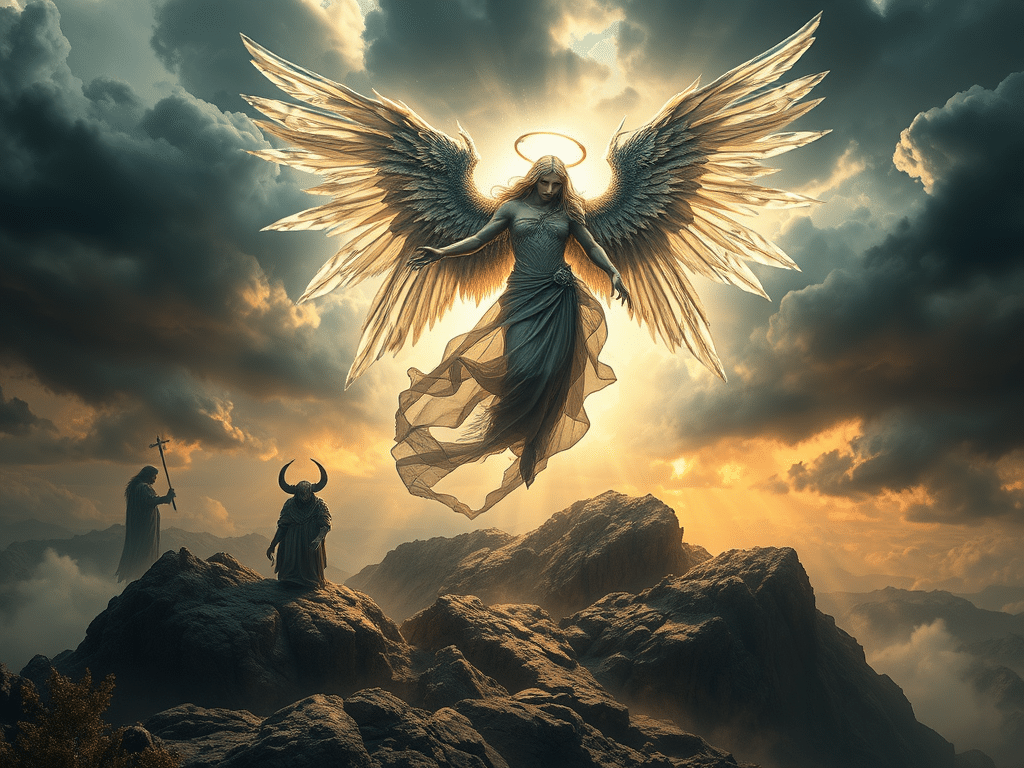
When fallen angels married mortal women, what became of the women? There’s an answer in the ancient Book of Enoch.
Many nations and civilizations have overlapping themes and motifs in their myths, religious writings, and folklore. Among these, giants, enchanted creatures, and fallen angels are frequently included as topics. The Book of Enoch, an old Jewish holy text, provides fascinating insights on these topics in the Judeo-Christian tradition. This essay will discuss the relationships between fallen angels, the Nephilim, and sirens as described in the Book of Enoch.
Fallen Angels
Within the framework of Judeo-Christian faiths, fallen angels are supernatural creatures expelled from heaven for defying God. Because they symbolize rebellion against heavenly rule, they are frequently associated with wickedness. Lucifer, an archangel who led an unsuccessful revolt against God and ultimately faced expulsion from Heaven, is the most well-known connection between fallen angels and Christianity..
Usually portrayed as corruptors of humanity, these fallen angels deceive people with their divine abilities and wisdom. People frequently hold them accountable for introducing evil, pain, and other vices into the human race.
According to the Hebrew Bible and other ancient Jewish writings, the Nephilim are the descendants of God’s sons and human daughters. Although there are many other interpretations of these expressions, one popular one is that the daughters of mankind refer to human women, while the sons of God refer to fallen angels.
People frequently portray the Nephilim as ancient giants and heroes with incredible strength and power. But because their existence obscures the distinction between the divine and the human, they also represent a transgression of the divine order. Violence and depravity, often associated with their presence on earth, led to the Great Flood, a symbol of divine retribution.

Sirens
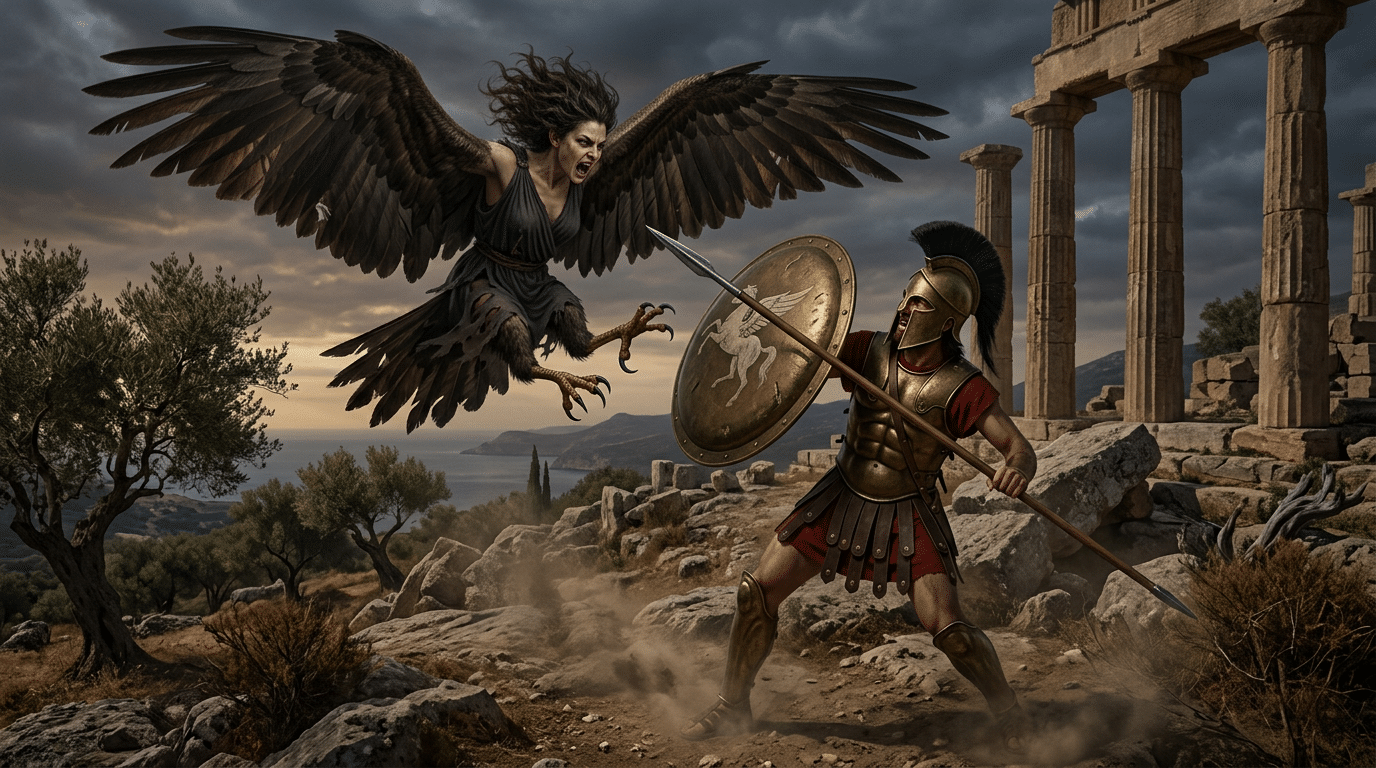
Greek mythology is the source of the legend of the sirens, who are described as ferocious beings that enticed sailors to crash on their island by means of their alluring music and singing. Often depicted as femme fatales, they seduce men and ultimately lead them to their doom.
Originally portrayed in Greek mythology as hybrid birds and women, sirens eventually became confused with mermaids, which are aquatic beings possessing a fish’s tail, a human head, and an upper torso. The characteristics of sirens and mermaids are similar: they are female, enthrallingly beautiful, connected to the sea, and potentially harmful to mankind.
Book of Enoch
With an exceptionally long and fascinating history, the Book of Enoch is a rare ancient manuscript that has attracted historians and religious enthusiasts alike. This remarkable composition, credited to the biblical figure Enoch, is thought to have been written between 300 and 100 BC, during the Second Temple period.
For Enoch, religious traditions hold great significance. He was a good man who walked with God, according to Genesis in the Hebrew Bible, and he unexpectedly disappeared without dying. His extraordinary relationship with the divine regarded him as a mysterious figure, highly valued for his wisdom and spiritual insights.
The Book of Enoch is best known for its examination of fallen angels, called Watchers, who came down to Earth from heaven. These disobedient supernatural creatures closely interacted with human culture, pursuing forbidden knowledge that ultimately had terrible repercussions for both worlds. The Book of Enoch describes these fallen angels’ adventures on Earth prior to their last judgment in great detail, replete with symbolism and allegory.
Furthermore, the Book of Enoch‘s ancient literature delves into the fascinating and engaging subject of Nephilim. People believe that these mysterious creatures, sometimes referred to as giants, originated from childish liaisons between human women and fallen angels known as Watchers. For millennia, the idea of the Nephilim has fascinated academics and theologians, igniting discussions about their nature, origin, and importance in diverse religious traditions.
The existence of Nephilim explores issues such as divine intervention, moral transgressions, hybridization between different realms or species, and their potential impact on humanity’s future, while also posing serious questions regarding the borders between heaven and earth. This intriguing feature reveals a deep story that examines celestial revolt and its effects on earthly existence.
Many myths tell stories about characters who resemble the powerful monsters described in this ancient literature, and these figures appear throughout history and civilizations. A wide range of cultures around the globe present the same theme, whether they call them demigods, mythical figures with godlike qualities that represent superhuman skills, or hideous traits that inspire terror in the hearts of mortals.
The Book of Enoch 19: 1, 2 writes, “And Uriel said to me: Here shall stand the angels who have connected themselves with women, and their spirits assuming many different forms are defiling mankind and shall lead them astray into sacrificing to demons as gods, here shall they stand, till the day of the great judgement in which they shall be judged till they are made an end of. And the women also of the angels who went astray shall become sirens.”
In the quoted verse from the Book of Enoch, Uriel, one of the seven archangels, foretells the judgment of fallen angels who have mated with human women. The passage claims that these fallen angels have assumed many shapes, misguiding humanity and inspiring people to worship demons as gods.
The scripture also mentions that the women of the angels who went astray became sirens. This implies a relationship between the sirens and the Nephilim, the progeny of fallen angels and human women. These sirens’ alluring charm will lead humans astray, just as the fallen angels did. The chapter describes the sirens as a form of heavenly retribution for the sins of the fallen angels. It depicts a story of moral decay, depravity, and sin brought about by unbridled lust and disobedience to divine rule. The comparisons drawn to legendary sirens highlight the enduring influence and allure of sin introduced into the earth by fallen angels and their partners.

Conclusion
This reading creates a link between the Greek story of the sirens and the Christian tradition of fallen angels. It alludes to a common motif in which divine entities corrupt humans and then suffer the consequences.
The Book of Enoch‘s account of fallen angels, the Nephilim, and sirens tells a powerful story of heavenly transgression, corruption, and retaliation. These stories, despite their diverse cultural backgrounds, share common themes and motifs that illustrate the attraction to forbidden things, the paranormal, and the consequences of defying divine law. We learn more about the beliefs and anxieties of our ancestors as we delve deeper into these old tales, and we also see a reflection of ourselves in them.
References
Arcari, L. (2012). The otherworldly journey of the Book of Watchers (I Enoch 6-36) as the source of a “competitive” authority. ASDIWAL: Revue genevoise d’anthropologie et d’histoire des religions, 7, 41–53.
Evans, A. (2017). 1 Enoch Book of Watchers and Astronomical Book: Theodicy in the context of a proto-scientific cosmology. Journal for Semitics, 26(1), 177–193. https://doi.org/10.25159/1013-8471/3112
Lesses, R. (2006). “They revealed secrets to their wives”: The transmission of magical knowledge in 1 Enoch. In D. V. Arbel & A. A. Orlov (Eds.), With letters of light: Studies in the Dead Sea Scrolls, early Jewish apocalypticism, magic and mysticism (pp. 196–222). De Gruyter.
Nir, R. (2021). The fallen angels and sexual desire in the Book of the Watchers (1 Enoch 6-16). Jewish Thought, 3, 9–34.
The Benei Elohim, the Watchers, and the origins of evil. (2016). TheTorah.com.
The Watchers in Jewish and Christian traditions. (n.d.). In The Watchers in Jewish and Christian Traditions [JSTOR e-book].


Leave a Reply