Do you have a skeleton phobia?
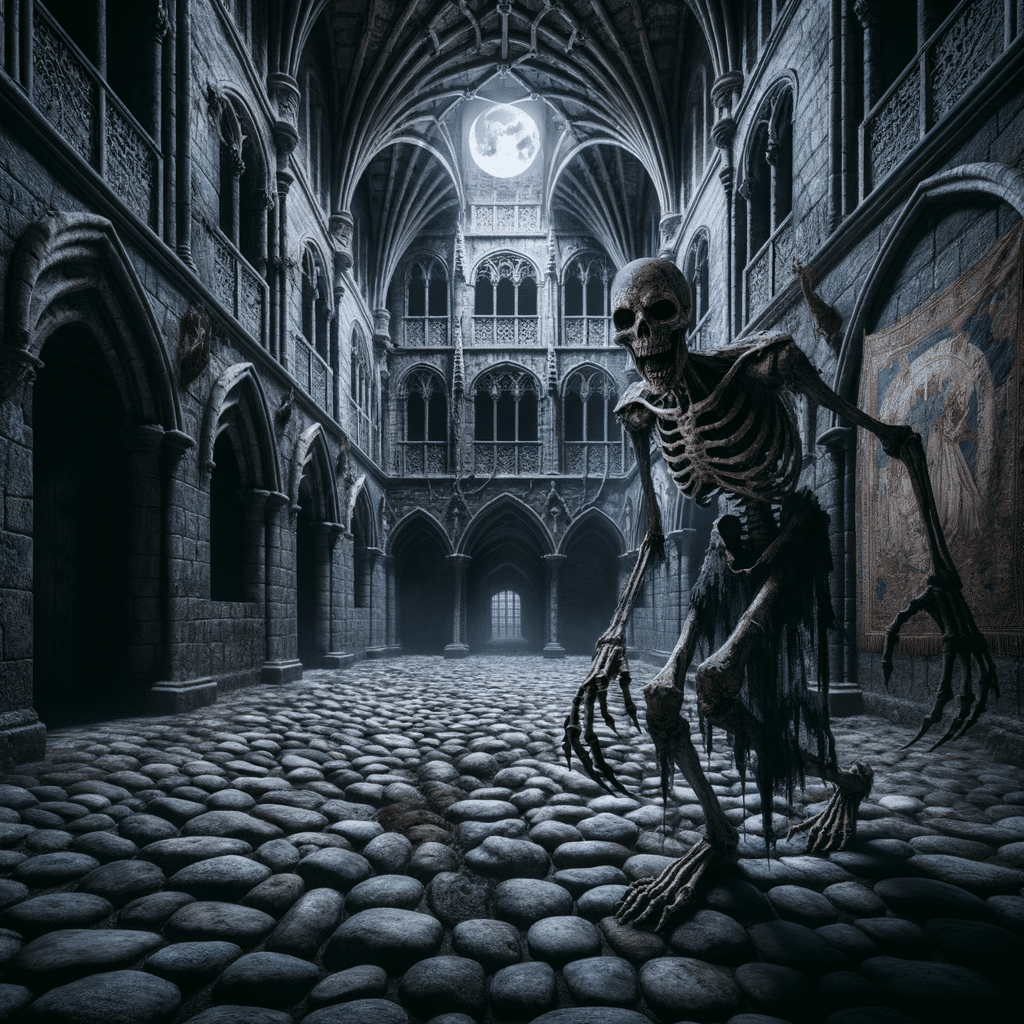
Skeletons are arguably the most recognizable of all the undead monsters that haunt stories and legends across cultures. Skeletons are fascinating and frightening creatures, easily identified by their bare bones clanking together as they hobble along. Skeletons appear pretty much as one might anticipate: thin, fleshless corpses with gaping eye sockets and smiling fangs. People frequently depict them wearing frayed robes or armor to give them a more menacing appearance. Skeletons are devoid of muscles and organs, yet they are nevertheless capable of jerky, unpredictable movements. Supernatural forces animate their bones, enabling them to move, grasp, and strike. Their bony limbs and fingers are sharp weapons that can do harm.
History
There are numerous ancient cultures that have contributed to the interpretation of the skeletal undead, each with their own beginnings. The Epic of Gilgamesh is the first written record to address the concept of animated bones as a punishment in the underworld. There are multiple references to skeletons in Greek mythology. For example, the story of Jason and the Argonauts describes the hero’s conflict with a skeleton army. This specific portrayal established the foundation for the widespread belief that skeletons are terrifying undead beings that follow orders mindlessly.
The Middle Ages greatly influenced the idea of the skeleton as a symbol of death and the afterlife, as shown in a variety of creative representations such as Danse Macabre, or Dance of Death. During this time, the practice of depicting death as a skeletal figure brandishing a scythe gained traction and remains frequently used in art today.
Dungeons and Dragons
Skeletons are frequent undead minions in the fantasy tabletop roleplaying game Dungeons & Dragons. In D&D, skeletons are mindless automatons brought to life by evil magic, such as necromancy. Typically, liches, wicked wizards, or other strong undead lords are in charge of them. In D&D, skeletons are low-level enemies that adventurers frequently encounter in groups. Even though skeletons are simple to eliminate one at a time, their quantity might overwhelm adversaries. In D&D, there are many different kinds of skeletons: bigger skeletal giants, skeletal dragons, and typical humanoid skeletons!
In terms of attributes and talents, skeletons possess the magical capacity to move even after they pass away. Common methods, such as bleeding or drowning, cannot kill them because they are painless. The only way to stop a skeleton is to destroy its bones completely. Despite their lack of intelligence, they have a nebulous goal and the intention to terrorize, harass, and murder people, thanks to some evil necromantic magic. Skeletons are unwavering in their desire to finish whatever mission their creator calls upon them for, even if it takes millennia. Characters typically portray them as possessing superhuman strength and speed, enabling them to easily outpace or overwhelm live victims. Some skeletons exhibit magical abilities, often linked to necromancy or dark magic. For instance, some have the ability to manipulate or call forth other undead beings, or they can drain their victims’ life essence or instill terror in them.

Popular Culture
Popular culture has always portrayed skeletons as undead monsters, but with significant variations. Skeletons are prevalent foes in video games, such as the well-known Dark Souls series and the Elder Scrolls franchise. They provide players with both a challenge and a source of fear. Traditional mythology and legend have an impact on their portrayal, which further solidifies the idea that they are ferocious, unrelenting beasts. Skeletons have played a variety of roles in movies and television shows, from funny characters to horrifying creatures. Cursed pirates transform into skeletons in the moonlight, a well-known feature of the Pirates of the Caribbean television series. They are an exciting visual display, as well as a formidable foe for the main character. The animated film The Nightmare Before Christmas portrays Jack Skellington, the well-meaning king of Halloween Town, as a more humorous yet spooky skeleton.
Conclusion
Additionally, the idea of an undead skeleton is popular in literature. Authors like Terry Pratchett use skeletal figures in his Discworld novels, not only as symbols of impending doom but also as multifaceted characters that enhance the narrative’s humor and depth. In summary, the skeleton has a lengthy and intricate history spanning from the ancient world to the present day as an undead monster. The skeleton of the of the undead remains an enduring representation of gloom, horror, and death. They reflect, nevertheless, our obsession with the idea of life after death, the paranormal, and the human predicament in general. Audiences worldwide are still enthralled, terrified, and fascinated by the various interpretations and representations of these creatures.
References
Danse Macabre [Medieval artistic motif]. (15th century). Various European artworks.
Dark Souls [Video game]. (2011). FromSoftware.
Dungeons & Dragons [Tabletop role-playing game]. (1974). TSR.
Epic of Gilgamesh [Epic poem]. (ca. 2100 BCE). Ancient Mesopotamia.
Elder Scrolls [Video game series]. (1994–present). Bethesda Softworks.
Jason and the Argonauts [Film]. (1963). Columbia Pictures.
Pirates of the Caribbean [Film series]. (2003–2017). Walt Disney Pictures.
The Nightmare Before Christmas [Film]. (1993). Touchstone Pictures.
Pratchett, T. (1983–2015). Discworld [Book series]. Corgi Books.

Leave a Reply