
Plato wrote on a wide range of topics. Few people are aware that he also wrote about werewolves. He wrote specifically about the transformation of humans into werewolf creatures.
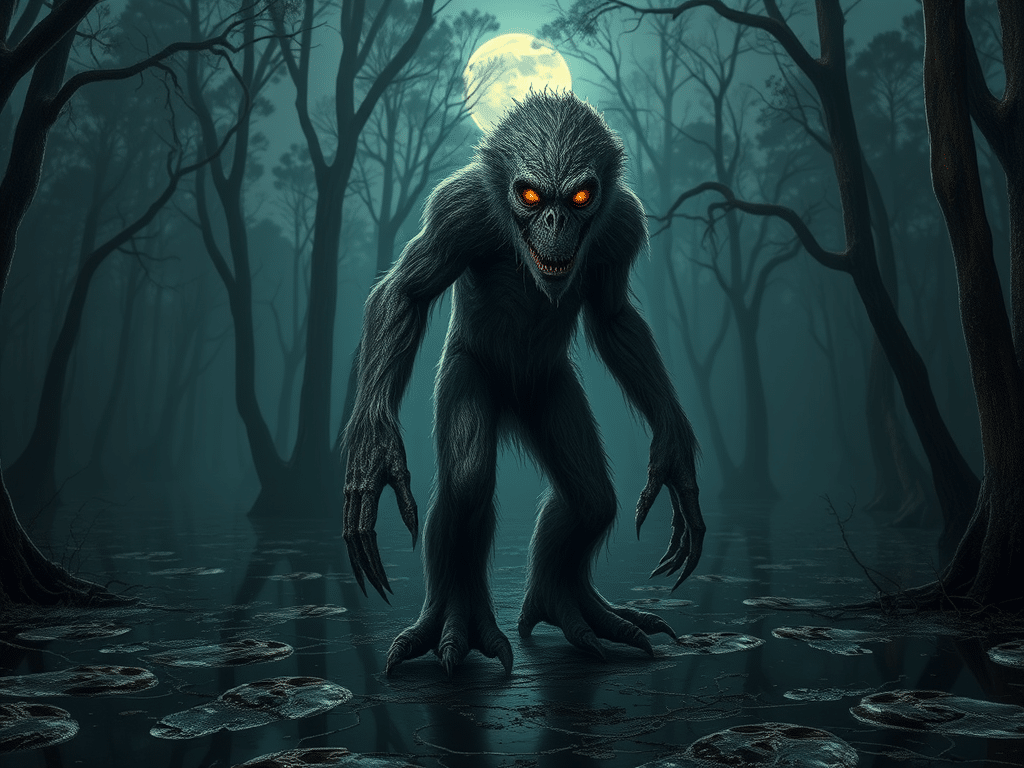
The mythology surrounding werewolves, who are hybrid animals that blend wolf and human forms, is primarily associated with medieval Europe. However, these lycanthropic tales have their roots in antiquity, specifically in Greek civilization. The Greeks created a complex system of mythology that included parts of the natural and supernatural. Among these, their views about werewolves reflected their conceptions of humans, nature, and the divine. This film will explore the werewolf myths of ancient Greece, providing an understanding of their cultural views and the ways in which these notions changed over time. We will also cover Plato’s perspective on werewolves.
Greek Werewolves
Ancient Greece is where the idea of lycanthropy first appeared. The Greek words lykos, meaning wolf, and anthropos, meaning man, are the origins of lycanthropy. The epic poem The Iliad, penned by Homer around the eighth century BCE, has one of the earliest documented mentions of werewolves. It describes the Trojan spy Dolon as donning a wolf’s hide, signifying his metamorphosis into a crafty and deceitful monster akin to a wolf.
The Arcadian royal family, however, is the source of the most well-known story. King Lycaon and his fifty sons, who were infamous for their impiety, reportedly incensed Zeus when they fed him a dinner prepared by a slaughtered child. The Roman poet Ovid recounts in his Metamorphoses that Zeus punished Lycaon by transforming him into a wolf. This story is a prime example of ancient Greek mythology’s recurring subject of divine punishment and change.
The werewolf was more than simply a terrifying animal to the ancient Greeks. The transformation into a wolf was a symbolic event that often carried spiritual, intellectual, or moral implications. Lycaon’s story served as a warning against sacrilege and hubris, showing how disobedience to the gods could lead to a loss of humanity represented by turning into a beast.
When it comes to Dolon from the Iliad, his transformation into a wolf symbolizes a descent into a more primitive state, signifying slyness and betrayal. We can interpret the werewolf transformation in this instance as a metaphor for a person’s ability to summon more primitive, darker tendencies when faced with dire circumstances.
The werewolf myths were more than just folklore; they represented the social and psychological issues that the ancient Greeks faced. There was a genuine and palpable fear of wolves. They posed a risk to cattle and, consequently, to those who depended on farming for a living. Thus, the werewolf was a powerful representation of nature’s unpredictability and terror.
Moreover, lycanthropy might have been a reflection of how the Greeks perceived mental illness and antisocial behavior. The Greeks would have labeled individuals displaying aggressive or animalistic tendencies as werewolves, providing an archaic rationale for mental health issues.
Legends about werewolves also had religious overtones in ancient Greece. Religious rites, particularly in Arcadia, linked the transformation of humans into wolves to the worship of Zeus Lycaeus. It was customary to consume sacrificial meat as part of the Lykaia festival, and it was thought that consuming human flesh would cause one to transform into a wolf. These religious acts reinforced the ancient Greeks’ belief in the thin veil separating humans from the wild.
The previously mentioned King Lycaon established the cult festival of Lycaea, where members of the cult were known to participate in human sacrifice. Zeus once sacrificed a young boy’s internal organs, forcing festival-goer Damarchus to eat them.
As soon as the man tasted the prohibited flesh, Zeus transformed him into a wolf and commanded him to abstain from devouring humans for the following nine years. If he didn’t stop, he would be a wolf forever. Damarchus suppressed his hunger for human flesh long enough to eventually change back into a human. Pausanias then claims that he went on to win an Olympic gold medal.
The ancient Greek geographer claims that Damarchus was only one of many individuals who underwent wolf transformations as part of Zeus Lycaeus’ sacrifices. He claimed that many guys in similar circumstances changed, and only a small number managed to abstain from consuming human flesh during their nine years of wolf roaming.

Plato
This is where Plato, the philosopher, enters the picture. Plato describes the process of turning into a werewolf in his textbook, The Republic. He stated, “The story goes that he who tastes of the one bit of human entrails minced up with those of other victims is inevitably transformed into a wolf.”
This alludes to the previously discussed ancient Greek legend of Lycaon. It also alludes to the Lykaia festival’s religious customs.
According to Plato, he utilizes the tale to highlight the corrupting influence of authority, contending that when leaders forfeit their virtue, they have the capacity to turn into even more ferocious creatures than the actual monsters, losing all trace of human decency and morality.
It also demonstrates that Plato took the subject of werewolves seriously, and that the ancient Greeks believed in the concept of werewolves.
In his writings, Plato is renowned for his use of metaphors and allegories. These works include his writings on Atlantis, a purportedly lost metropolis that was supposedly submerged beneath the sea. In a similar vein, Plato also discussed werewolves in a few of his literary works. It’s crucial to remember that these allusions do not necessarily indicate that one believes in the existence of these beings or locations.
It is more likely that Plato employed these tales as allegories to communicate ideas and concepts that delve deeper into philosophy. For instance, the narrative of Atlantis could symbolize the fall of a great society due to its own conceit or lack of morality. Werewolves may also represent our animalistic tendencies and innate urges, which we have to learn to suppress.
Therefore, Plato’s references reflect a more symbolic interpretation than a literal one, even though some ancient Greeks may have believed in werewolves as genuine beings with extraordinary talents or curses placed upon them by gods or witches.
Conclusion
In ancient Greece, werewolves were a fascinating intersection of religion, mythology, societal anxieties, and psychological research. They represented a variety of ideas, such as the consequences of hubris toward the gods, the shadowy part of human nature, or actual anxieties about the unknown and the wilderness.
Despite their ostensibly supernatural undertones, these stories provide an insightful look at how the ancient Greeks understood the world. The werewolf is a timeless example of how human civilizations have been able to externalize their fears, hopes, and worldviews into legendary beings and tales.
References
Arruzza, C. (2016). Philosophical Dogs and Tyrannical Wolves in Plato’s Republic. Philosophy and Political Power in Antiquity, 10, 41.
Buxton, R. (2014). Wolves and werewolves in Greek thought. In Interpretations of Greek Mythology (Routledge Revivals) (pp. 60-79). Routledge.
Gordon, R. (2015). Good to think: wolves and wolf-men in the Graeco-Roman world. In Werewolf histories (pp. 25-60). London: Palgrave Macmillan UK.
Leathers, K. R. (2016). Metamorphosis and Metaphysics: An Exploration of Man and Beast, Good and Evil, Christian and Pagan through Dichotomous Werewolves of the Middle Ages (Doctoral dissertation, Doctoral dissertation, California State University, Bakersfield).
Ogden, D. (2021). The Werewolf in the Ancient World. Oxford University Press, USA.

Leave a Reply