
Most people are familiar with werewolves. Fewer people will be familiar with the terms “Lycan” or “lycanthrope,” yet both of these terms are sometimes used instead of “werewolf.” Although they are often used interchangeably, it should be emphasized that the lycanthrope of folklore tradition and the werewolf of myth, literature, and modern culture are quite dissimilar.
But why are people attracted to wolves? We will look at that first to understand how werewolves are thought to differ from werewolves.
Wolves
The wolf has a variety of stunning traits. It is devoted to the other wolves in its pack and guards their territories. They are social creatures by nature, just like us. However, some of them make the conscious decision to break away from their groups and become “lone wolves”.
But these wolves don’t want to be left alone. According to wolf biologists, this behavior—leaving their own family to find a partner and start a new pack—is just as vital to the genetic survival of the species as any growth inside the original pack.
This type of wolf behavior frequently appeals to people the most since it is, in many ways, a reflection of our own desires: Although they mostly travel in packs, wolves are independent of their packs. They are therefore devoted and still truly wild and free, states that researchers have found to be essential to their survival.
This kind of connection to freedom and a sense of one’s own basic self and desires is thus extremely alluring in the human world when commitments to jobs, families, and daily tasks may feel confining.
Cherokee
One of the seven clans is known in the prehistoric Cherokee society as the wolf. Each of these clans had the names of a bird or animal, and all Cherokee people were born into one of them. The numerous animals showed traits, characteristics, and ways of thinking that allowed the clan people to obey and adhere to the magnificent design of the Creator. The animals, living in harmony with their surroundings, behaved in a way that suggested they understood their mission in life, according to the ancient knowledge. This was in contrast to persons who frequently caused annoyance or pain and troubles without cause.
The Cherokee wolf clan, known as wahaya in the local language, was renowned for its valor and skill in battle. The largest of the seven clans, this one had great respect and influence within the village, especially since the majority of the War Chiefs belonged to it.
The Wolf Clan also served as the wolf’s guardian, and only members of the Wolf Clan were permitted to kill wolves if necessary.
The wolf was adored by many ancient cultures, including the Cherokees, who also considered it as a symbol of living in harmony with one’s surroundings and one’s actual self. The wolf was revered as a spirit animal in both Viking and Celtic cultures, where it was thought to possess wisdom and an innate intelligence that humans might learn from. Once more, the wolf was known for its bravery and power, and warriors frequently invoked its spirit to help them in conflict.

Werewolf vs. Lycanthrope
How are werewolves different from lycanthropes? The transformations that the lycanthrope and werewolf go through are where they most obviously diverge.
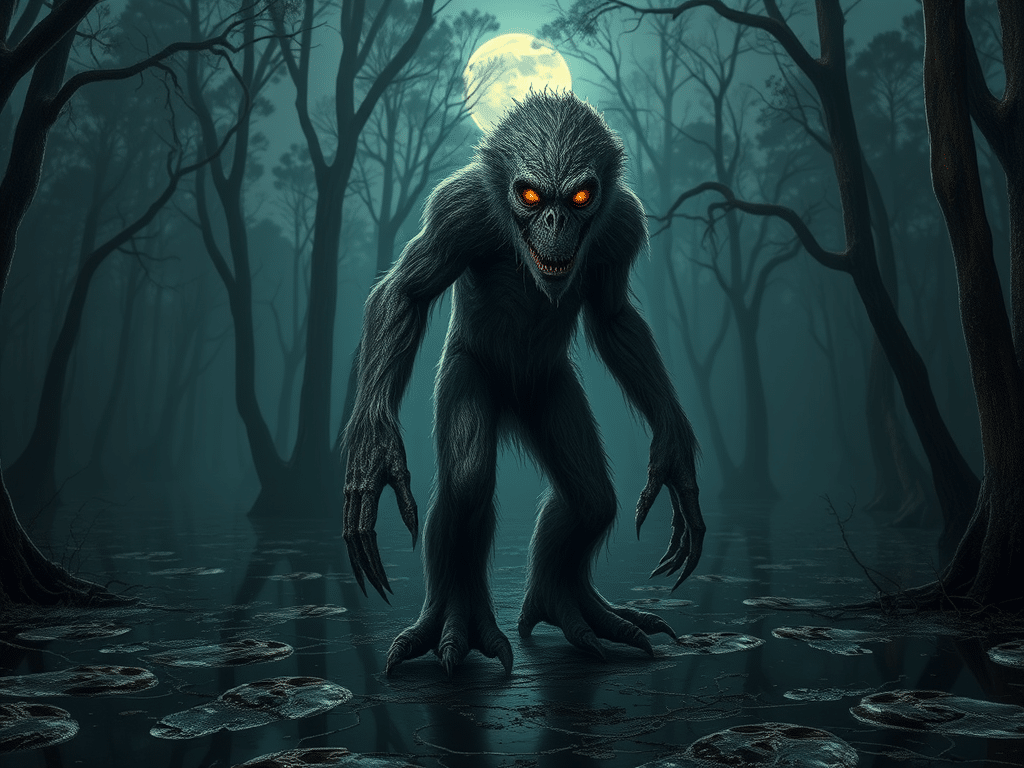
The transformation of werewolves during a full moon has been a subject of fascination and fear for centuries. The idea that the mystical power of the moon can alter human beings is not limited to werewolf lore, but it is perhaps one of the most well-known examples. In ancient times, such alterations were seen as unsettling and even dangerous, leading to the development of words like “lunacy” and “lunatic” which had negative connotations attached to them.
The association between lunar cycles and transformations in humans can be traced back to Greek and Roman mythology, as well as ancient Native American culture. These stories were based on observations of how real wolves behaved during different phases of the moon. Because they are nocturnal animals, wolves howled with their heads raised toward the sky and the moon in order to improve their communication with other pack members. This behavior was interpreted by some cultures as evidence that wolves were particularly attuned to lunar energy.
According to werewolf mythology, during a full moon, this same lunar energy takes over completely, causing an involuntary transformation from human form into that of a wolf-man hybrid. Unlike lycanthropes who may have more control over their transformations due to spells or personal willpower; werewolves are at the mercy of these forces beyond their control.
Despite being similar in many ways- both possessing superhuman abilities – lycanthropes tend towards greater wisdom whilst werewolves lean towards aggression when transformed according to folklore legends passed down through generations.
While both werewolves and lycanthropes are exceptionally strong beings after transforming into wolf-human forms; there is a difference between them – Lycanthrope is an equal mixture while Werewolf specifically refers to a person who transforms into a wolf (the word “werewolf” originates from Old English). According to legends from past times, werewolves tend to go on rampages killing anyone who crosses paths with them out of pure animal instinct or intention – taking revenge upon those who have harmed them in any
A lycanthrope is a being that is an equal mixture of human and wolf, possessing traits from both species. They are often depicted as more in control of their transformations than werewolves, able to shift forms at will or through the influence of others. However, it’s important to note that lycanthropes may occasionally need to take some sort of action to break a spell in order to return back into their human form.
On the other hand, werewolves are humans who transform into wolves either voluntarily or involuntarily during certain times (usually during full moons). The transformation can be triggered by multiple factors such as emotion or external stimuli like moonlight. Unlike lycanthropes who have control over their abilities, werewolves tend to lose themselves completely once transformed- becoming consumed by animalistic instincts and going on rampages where they attack anything in sight.
The legends surrounding werewolves and lycanthropes often depict them as possessing immense physical strength, agility, and speed that are far beyond what any regular human could achieve. These creatures are also known for their incredible regenerative abilities that allow them to heal quickly from injuries.
One of the most significant aspects of both lycanthropy and werewolfism is the lasting effect they have on humans – according to fiction and tradition alike, a bite from either creature will permanently turn a human into one of them. This transformation is not only physical but also mental as it changes the individual’s behavior, instincts, and even personality in some cases.
Conclusion
Overall, these supernatural creatures continue to capture our imaginations through literature and film adaptations today because they represent something primal within us all – our connection to nature’s untamed forces beyond our understanding or control.
References
Baring-Gould, S. (1865). The book of were-wolves: Being an account of a terrible superstition. London, England: Smith, Elder & Co.
Douglas, A. (1966). The beast within: A history of the werewolf. London, England: Cassell.
Frayling, C. (1992). Vampyres: Lord Byron to Count Dracula. London, England: Faber and Faber.
Graves, R. (1966). The Greek myths. Harmondsworth, England: Penguin Books.
Otten, C. F. (1986). A lyric of the wolf: Studies in literary transformation. New York, NY: Garland Publishing.
Summers, M. (1933). The werewolf in lore and legend. London, England: Kegan Paul, Trench, Trubner & Co.

Leave a Reply