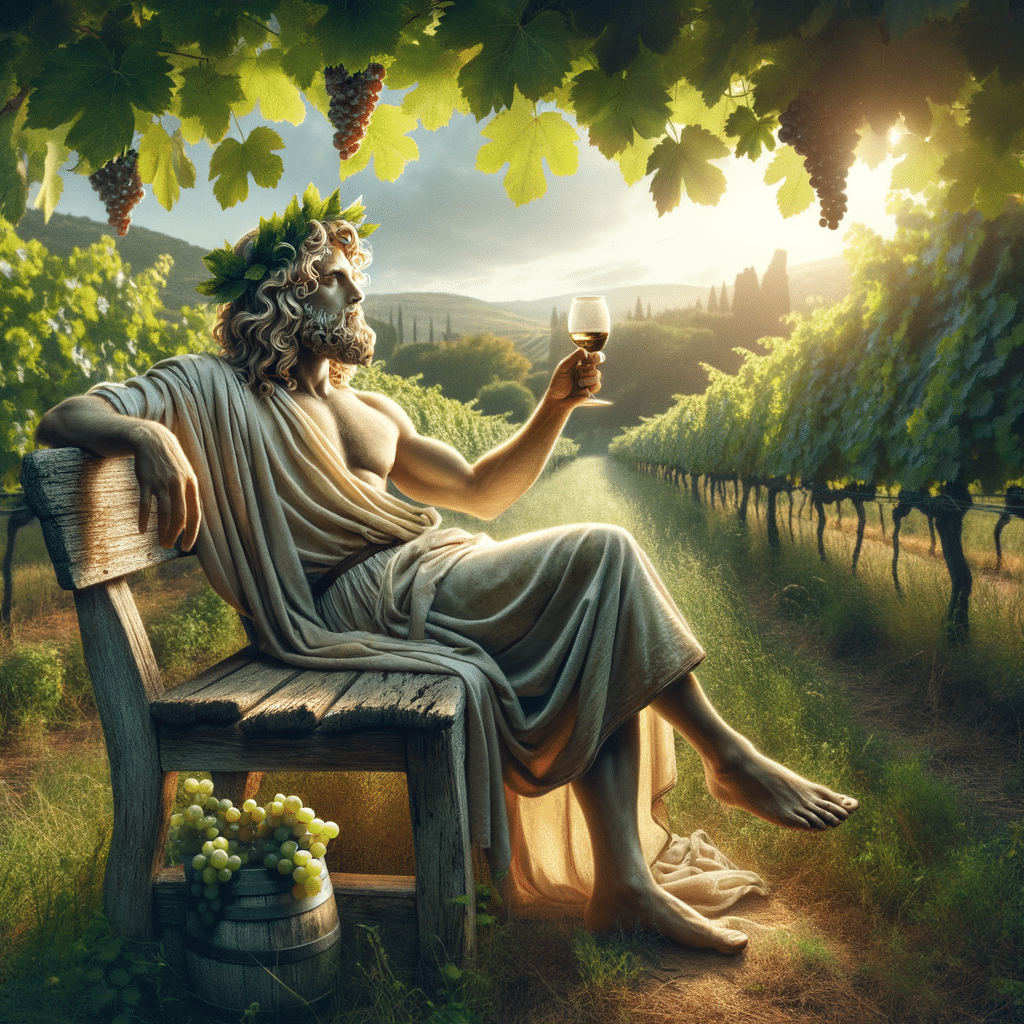
The mysterious god of the Greek pantheon, Dionysus, is a figure veiled in the opposing veils of pandemonium and joy. Dionysus, the god of wine, partying, and intoxication that frees the soul from the bonds of the ordinary, symbolizes not only the search for joy and celebration but also the powerful ideas of metamorphosis, rebirth, and the wild energies that exist inside the human spirit. His story is a profound commentary on the cyclical cycle of existence and the inherent duality that characterizes the human experience, in addition to being a tale of divine joy in ancient Greece.
Dionysus’s Duality
Dionysus’s beginnings are just as remarkable as his character. Zeus, the king of the gods, and Semele, a mortal princess, are central characters in this tragic and intriguing story of his birth. Hera, Zeus’s wife, sets a trap for Semele out of jealousy, which causes her to doubt who her true love is. Semele dies because she is unable to endure the majesty and grandeur of Zeus’s divine presence. Zeus has made an unbreakable promise to fulfill Semele’s wish to see his true form.
Dionysus rises from the ashes of this tragedy, first from Semele and then, in a most amazing turn of events, from Zeus himself. Zeus stitches the unborn child into his own thigh after rescuing him from the dead Semele’s womb. As a result of his second birth from Zeus, Dionysus possesses a mysterious dual nature that allows him to exist in both the temporal and eternal domains.

The Early Years of Dionysus and the Finding of Wine
Hera’s unrelenting retaliation throughout Dionysus’s early years is a source of danger that forces him to hide—either in the bosom of the messenger god Hermes or the nymphs of Mount Nysa, depending on the story. Here, in the nourishing embrace of the natural world, Dionysus discovers the alchemy of winemaking and the mystery of the vine.
His discovery is a revolution that transforms civilization, not just another gourmet delight to add to the pantheon. Dionysus gives humanity viticulture, but he gives more than just a new drink—he gives a means of achieving divine ecstasy, a means of escaping the confines of civilization, and a ritual that unites people in mutual bliss.
The Wanderer
Dionysus sets off on an incredible voyage, a wandering mission that takes him all over the world to spread the knowledge of winemaking. Some people, like King Pentheus of Thebes, reject the god and his gifts, while many others have accepted them. They reject the god’s divinity and his religion, an action that incites heavenly vengeance, befitting Dionysus’s contradictory nature as both benevolent and destructive.
One of the key ideas of Dionysus’s mythology is the existence of both kindness and fury in the divine and in nature itself. The conflicts he encounters and the retaliation he exacts on those who disagree with him serve as evidence of this. This contradiction is a recurrent theme that serves as a cautionary tale about what happens when the inherent balance of existence is denied.

Ascension
Dionysus is closely associated with death and rebirth cycles, symbolizing the everlasting cycle of growth and destruction in nature. The myths in which he is severed from his body and then raised again clearly depict this symbolism. It serves as an allegory for the steps involved in producing wine, from crushing grapes to fermenting the juice until it reaches maturity. Dionysus is therefore a symbol of the transformational force of life, the transformation from the unrefined to the refined, from chaos to harmony.
Dionysus’s voyage comes to an end when he ascends Mount Olympus and takes his proper place among the Olympian gods. His ascent stands for society’s acceptance of the fundamental values he represents—joy, wine, celebration, and the innate human need for emancipation and renewal. It is evidence of the understanding of the complexity of existence, which Dionysus personifies.
Dionysian Legacy
Dionysus is a multifaceted figure, entwined with themes of creativity and destruction, joy and terror. He embodies the dual duality of creation and destruction that is fundamental to both humanity and the natural world. Because Dionysus captures the core of life’s dualities, his fascination endures over the ages. In addition to providing a portal to the elemental and divine, he also provides an escape into the world of the euphoric. The essence of our worries, our wants, and the never-ending cycle of change that characterizes our world are all reflected in the figure of Dionysus. Dionysus is a timeless representation of life’s strength and the bittersweet flavor of its transient beauty.
Further Reading
For those fascinated by the multifaceted nature of Dionysus and the rich tapestry of Greek mythology, the following books offer valuable insights and scholarly depth. Each book provides a unique perspective on ancient myths, the cultural significance of Dionysus, and the broader context of Greek religious practices and beliefs.
Burkert, W. (1985). Greek Religion. Cambridge, MA: Harvard University Press.
Walter Burkert’s Greek Religion is considered one of the most comprehensive studies of ancient Greek religion, encompassing the minutiae of ritual practices and the broader mythological narratives. The inclusion of Dionysus within the context of Greek religious practice provides readers with a scholarly yet accessible understanding of where the god fits within the pantheon and society.
Otto, W. F. (1995). Dionysus: Myth and Cult. Bloomington, IN: Indiana University Press.
Dionysus: Myth and Cult by Walter F. Otto delves into the cult of Dionysus and the myths surrounding him, painting a vivid picture of his influence on ancient Greek culture. Otto’s examination of Dionysus as a figure of both myth and religious worship explains why he was one of the most important deities in the Greek pantheon and remains a compelling subject of study.
Detienne, M. (2006). Dionysos at Large (Trans. Arthur Goldhammer). Cambridge, MA: Harvard University Press.
Marcel Detienne’s Dionysos at Large offers an anthropological and historical look at the god of wine and ecstasy. This work, which Arthur Goldhammer translated, examines the various facets of Dionysus’s worship and his devotees, offering useful insights into the social and religious dynamics of ancient Greece. Detienne’s interpretation of Dionysus’s role in Greek mythology and culture makes this a pivotal read for understanding the complexities of this deity.
These books offer a range of perspectives—from the religious and historical to the cultic and mythological—providing a comprehensive view of Dionysus’s role in Greek mythology and his enduring influence on Western culture. Each work is a testament to the intricate and enduring nature of Greek myths and their capacity to inform and enrich our understanding of the ancient world.



Leave a Reply