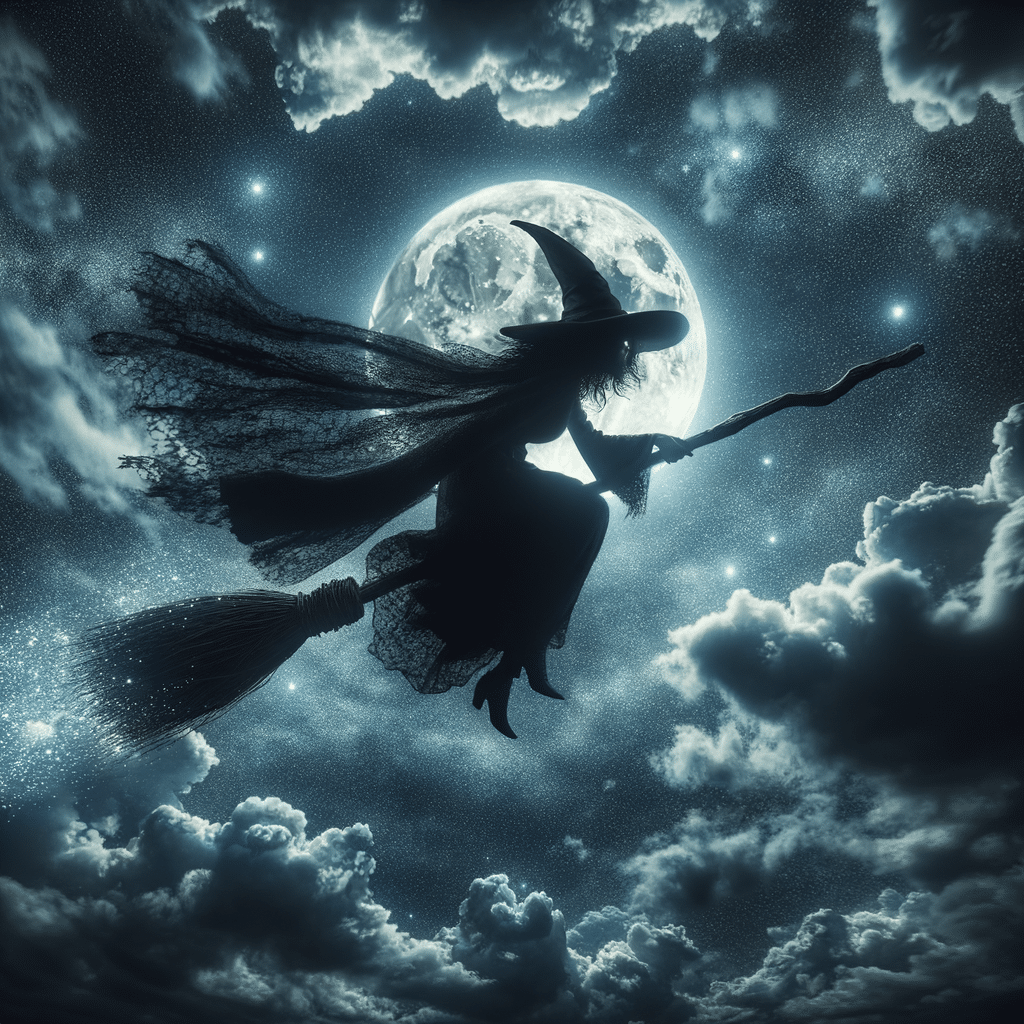
Throughout history, the natural world has been infused with mystical rites of magic, with plants being essential to both black and white magic traditions. The idea of witches’ flight sticks out among the many ceremonies; it includes both the intricate usage of psychotropic herbs, which may have enabled these paranormal experiences, and the old folklore of flying.
Flying in Story
The ability to fly and mythological gods have been linked for a very long time. Norse mythology describes Freya’s flight of the falcon, and the story of Old Mother Goose echoes Holda’s metamorphosis into a goose. The Valkyries with their wings and Morrigan in her crow form represent the celestial connection between the skies and the power of warriors’ spirits. In a similar vein, it was thought that Artemis, the Greek goddess of hunting, soared across the night sky.
One of the first characters to be connected to broomstick flying is Baba Yaga, the Slavic witch—a striking representation that has endured over time. Predating the Christian era, historical writings such as Homer’s The Iliad and Argonautica allude to the employment of particular oils and ointments to induce flight. Stories of witches like Pamphile turning into owls were prevalent during the time of the Roman Empire.
During the dark ages of the Middle Ages, there were witch trials, during which time admissions of flying ointments surfaced—often obtained under duress. According to these stories, witches would anoint themselves and change into birds—a behavior that is now thought to be entirely hallucinogenic. The question of whether these flights were physical or just mental travel raised debates among the clergy.

Flying Ointment
These flying ointments are thought to be closely connected to the witch and her broomstick connotation. During the questioning of accused witches, the absorption of these mixtures through mucous membranes—especially vaginal—became a whispered rumor. This approach and the smearing of ointments all over the body depict a process shrouded in secrecy and misinformation.
These ointments frequently included psychotropic plants, including datura, belladonna, mandrake, and henbane. Their alkaloids might arouse people, which would feed the sleazy stories about witches battling demons. These tales, which frequently originate from the vile or the desperate, most certainly have more to do with the potent effects of these herbs than any real-life interactions.
These flying ointments may help to partially reveal the mystery behind the use of hallucinogens. Imagine the wide variety of plants and ingredients that would be on display at a witch’s apothecary, such as the well-known gypsum weed with its explosive seed heads. Careful blending and infusion were used in the production of these ointments, demonstrating a profound understanding of plant qualities and how they affect human health.
This legacy is also reflected in modern flying ointments, albeit with an emphasis on safety and avoiding dangerous plants such as hemlock, foxglove, and aconite, which were reputedly used in old recipes as a lethal deterrent against the inquisitive or the disloyal. In modern forms, the classic tropane alkaloid plants are frequently combined with sedative herbs like mugwort, vervain, and valerian.
The pharmacology of these ointments is intriguing; studies suggest that they act on the pineal gland, causing melatonin to be released and causing a trance-like state akin to a dream. Reports of experiencing flight are common, with heightened perceptions and exhilaration following early symptoms like pupil dilation and dry mouth.
Conclusion
In conclusion, the legend of the witches’ broomstick trip is a tale steeped in mythology and folklore, as well as an account of old botanical knowledge and human curiosity about transcendent experiences. We discover a rich tapestry of beliefs, science, and the continuing human interest in the secrets of flight and altered states of consciousness as we explore the historical and contemporary practices around flying ointments.
Further Reading
Harner, M. J. (1973). Hallucinogens and Shamanism. New York: Oxford University Press.
This book is a seminal piece of literature exploring the use of hallucinogenic plants in shamanic practices, which parallels the study of witches’ flying ointments. Authored by an eminent anthropologist, it provides a cross-cultural perspective that can enrich the understanding of the use of psychotropic substances in various rituals, including those associated with witchcraft. Harner’s theories on shamanic journeys and altered states of consciousness have influenced later interpretations of witches’ flights and their potential origins.
Kors, A. C., & Peters, E. (1972). Witchcraft in Europe, 400-1700: A Documentary History. Philadelphia: University of Pennsylvania Press.
This collection of primary source documents gives readers access to the texts and trial records from the period when beliefs about witches’ flight were widespread. It provides context for understanding how witches and their supposed abilities were viewed and treated in medieval and early modern Europe. The book includes analysis by the editors, both respected historians, which helps to frame the documents in the broader narrative of European witchcraft beliefs.
Russell, J. B. (1980). A History of Witchcraft: Sorcerers, Heretics, and Pagans. London: Thames and Hudson.
Russell’s work delves into the evolution of witchcraft from its pagan roots to the Christian reinterpretation and persecution, shedding light on the origins of the mythos surrounding witches’ flight. The book takes a multi-disciplinary approach, discussing theological, sociological, and historical aspects, which is beneficial for readers who are interested in the multifaceted nature of witchcraft accusations, including the use of flying ointments. Written for a general audience, it provides an engaging narrative that makes complex historical and cultural concepts more accessible to those new to the topic.


Leave a Reply