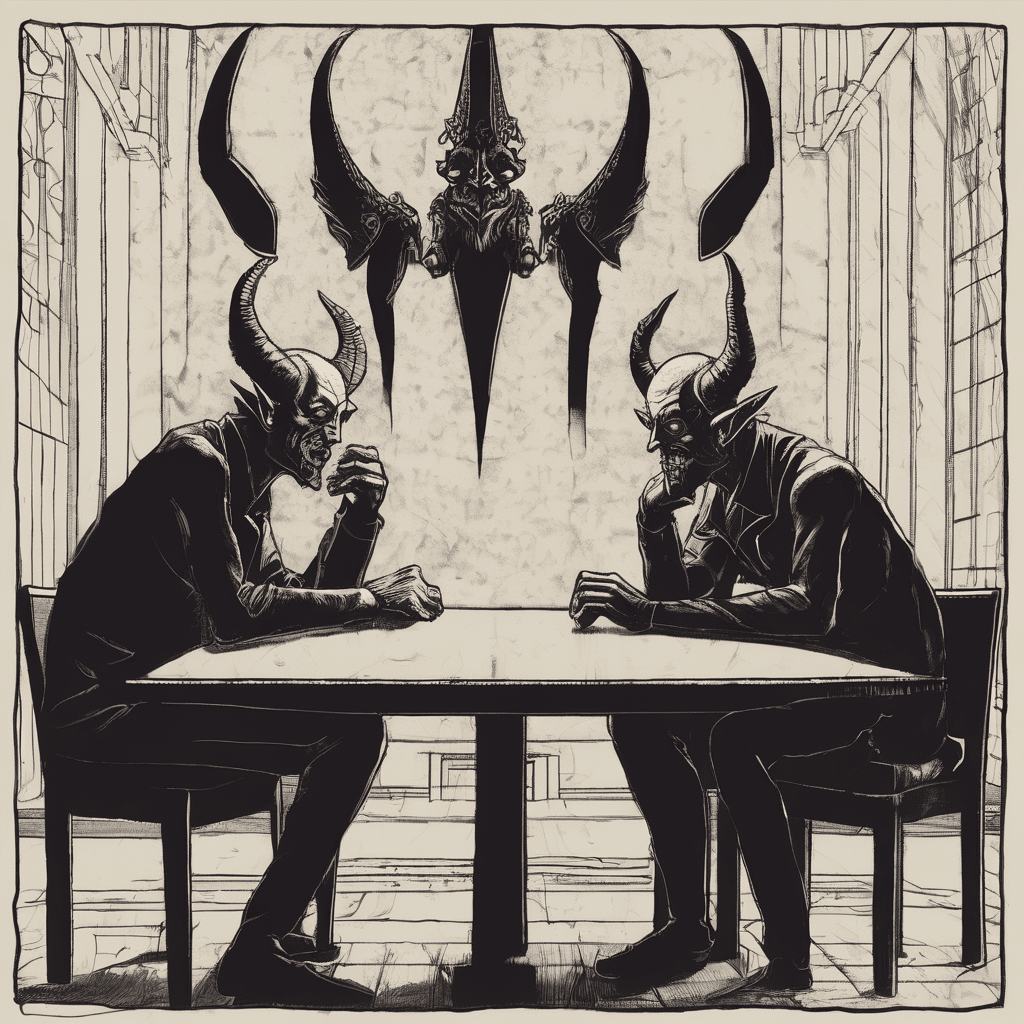
People believed in werewolves, witches, vampires, and demons during the 19th century.
Letters on Demonology and Witchcraft is a collection of letters written by Sir Walter Scott in 1830 to J. G. Lockhart, Esq., his son-in-law. At the time of this work, science and reason were beginning to supplant superstition and fear of the paranormal in Europe, which was moving from a period of extreme superstition to an age of enlightenment. Renowned author Scott, who is best known for his poetry and novels, took an antiquarian interest in the topic and investigated the historical and cultural backgrounds of witchcraft and demonology. His letters provide commentary on the human tendency to find meaning in the unexplainable, in addition to reflecting on the customs and beliefs of bygone ages.
Scott Biography
Born in Edinburgh on August 15, 1771, Sir Walter Scott is a towering figure in the canon of literature, especially for his contributions to the historical fiction genre. His interest in Scottish folklore and history extended beyond the idealized accounts of his well-known novels, such as Rob Roy and Ivanhoe. It also encompassed the occult and paranormal domains. The rich cultural legacy that permeated Scott’s writings served as a perfect transition point for his examination of folklore’s darker facets in Letters on Demonology and Witchcraft.
Towards the end of his career, Scott relentlessly pursued literary endeavors despite personal troubles and health issues, culminating in this contemplative work. Scott worked tirelessly to pay off his obligations after a financial crisis that could have devastated lesser men, writing his way out of financial despair. His careful attention to historical detail in Letters on Demonology and Witchcraft is indicative of his scholarly attitude and determination. Scott wrote the work barely two years before his death in 1832, demonstrating his persistent intellectual interest and his dedication to logical investigation into topics long shrouded in lore and mystery.

The Book
Letters on Demonology and Witchcraft is a collection of ten letters that explore various facets of the supernatural as perceived during the times when such beliefs were prevalent. Among other things, Scott looks into the beginnings and development of demonology, witchcraft trials, fairy mythology, and spectral apparitions. He takes a logical approach to the topic, frequently criticizing the legal, social, and superstitious structures that enabled the punishment of accused witches and sorcerers. He investigates the ways that many civilizations’ views on witchcraft, magic, demons, and sorcery have changed over time. Despite being non-fiction, Scott’s vivid descriptions and narrative approach make the letters readable and enjoyable.
Letter I: Scott provides background information by describing the history of the belief in witchcraft and otherworldly beings, tracing its origins from classical times to the Middle Ages. He discusses how these ideas influenced religion and the law. Scott talks about the different kinds of spirits and demons found in Norse, Roman, and Egyptian mythology.
Letter II: The emphasis now shifts to the early modern European witch trials, with particular attention to the notorious trials in North Berwick, Scotland. Scott describes the admissions and the frequently brutal methods employed to get them.
Letter III: This letter discusses the English witch trials and the part played by people like Matthew Hopkins, the self-described Witchfinder General. Scott examines the societal processes that fueled the popular belief in witchcraft. In his book, Daemonologies, Scott explains the demon classifications that King James developed.
Letter IV: Scott investigates witchcraft rituals and the purported abilities of witches, debunking many myths by providing logical explanations for phenomena associated with witchcraft. Scott talks about how the decrease in witch hunts coincided with a decline in religious fervor and the rise of Enlightenment values.
He discussed fairies and their legends in Letter V. Scott elucidates the representation of social ideals in fairy stories and the frequent connection of fairy mythology to prehistoric religious beliefs. He discusses magical arts other than witchcraft, such as alchemy, necromancy, and sorcery. Scott also examines the psychology of people who believe in magical abilities.
Letter VI delves into the investigation of haunted houses and ghost stories. Scott balances a genuine belief in paranormal events against explanations such as optical illusions.
In Letter VII, Scott discusses the folklore that gave rise to the werewolf and vampire beliefs, examining how these tales were utilized to justify violent or antisocial behavior.
Letter VIII: Discusses demonology and literary depictions of demons, including those found in Paradise Lost, The Faerie Queene, and documents from witch trials.
Letter IX: The penultimate letter talks about the motif of the covenant with the devil, the devil’s involvement in demonological lore, and how authorities have utilized these ideas to justify persecutions.
Letter X: In his concluding letter, Scott discusses his observations on the fall in the practice of witchcraft and demonology, attributing this shift to the growth of scientific knowledge and critical thinking.

Analysis
An early skeptic’s treatise on the topic, Scott’s Letters on Demonology and Witchcraft, predates modern scientific methods of comprehending paranormal events. His historically contextualized research sheds light on the psychological and societal elements that contributed to the witch frenzy. Scott’s writing is known for its examination of how power organizations used superstition for control and suppression, as well as its critique of the legal procedures that resulted in the deaths of numerous innocent individuals.
Scott uses an anthropological perspective to investigate the intricate social and psychological processes that led to the popular belief in witches and demons while avoiding passing judgment. Scott, despite being a man of his day, takes an empirical approach to the subjects. As an impartial observer, he tracks the evolution of supernatural beliefs throughout literature and history.
Scott’s letters demonstrate his deep understanding of esoteric mysticism, religious history, and folklore. Despite writing before the establishment of sociology and psychology, Scott had a basic understanding of how societal prejudices and phobias of strangers led to periods of widespread hysteria, such as the witch hunts.
One of the most comprehensive summaries of folk magic and witchcraft written in the early 19th century. The book benefited from scholarly analyses of the mass psychology and social dynamics behind phenomena such as the witch hysteria. Scott’s objective empirical method would have a significant impact on the shift in witchcraft research from theology to social science.
Conclusion
The letters significantly altered Victorian perceptions of the paranormal. They helped dispel long-held beliefs in the paranormal and added to the era’s rising cynicism. The work had an impact on authors both then and in the future, such as Charles Dickens and Nathaniel Hawthorne, who both dealt with supernatural themes in their own writing.
Sir Walter Scott’s Letters on Demonology and Witchcraft are still an important historical record that provides insight into the thinking of a time when superstition gave way to reason. The letters highlight the enduring human fascination with the unknown, even as they question historical ideas and customs. Scott’s logical take on witchcraft and demonology offers a framework for comprehending how such beliefs may rule cultures and serves as a helpful reminder of the value of critical thinking when confronted with unexplained phenomena.
References
Boatright, M. C. (1933). Witchcraft in the novels of Sir Walter Scott. Studies in English, (13), 95-112.
Mong, A. (1994). Imaginative and Rationalistic Values in the Works of Sir Walter Scott. International Review of Scottish Studies, 19.
Oufle, C. (1830). Demonology and Witchcraft. The National Magazine, 1(5), 585-598.
Parsons, C. O. (1933). Demonological Background of” Donner-Hugel’s Narrative” and” Wandering Willie’s Tale”. Studies in Philology, 30(4), 604-617.
Scott, W. (1830). Letters on demonology and witchcraft (No. 11). J. & J. Harper.

Leave a Reply