
In science fiction, fantasy, and folklore, portals have always been significant. They now play a significant role in the current scientific understanding of the cosmos.
Portal Lore
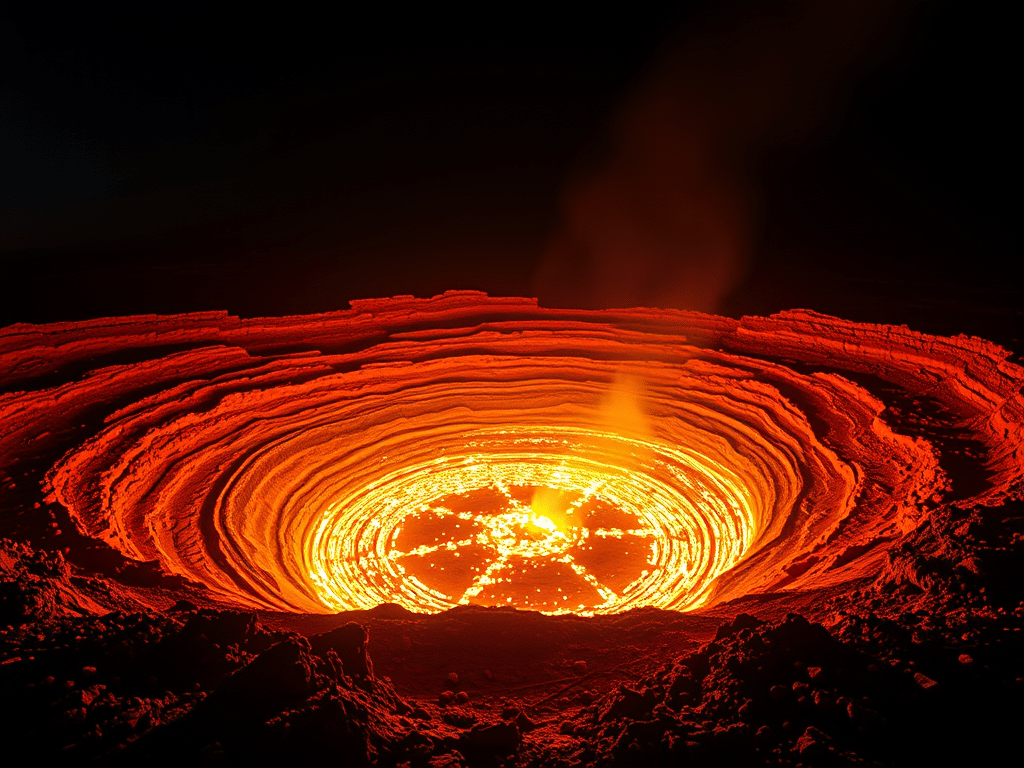
The paranormal community frequently portrays portals as openings that connect other worlds, eras, or realms of existence. Usually, people think of these portals as mysterious, often extraterrestrial events that enable movement between entities, energies, or even entire realms. Many paranormal investigators and aficionados believe that some haunted places contain gateways. These are believed to be portals for ghosts or other supernatural beings to enter our reality. For instance, people frequently mention the notorious Skinwalker Ranch in Utah as a hub for various paranormal occurrences, including the existence of these portals.
According to certain tales and accounts, portals can transport people to alternate eras where they can experience time slips. People sometimes describe these as moments when they unexpectedly find themselves in a different age, only to swiftly return to the present. UFO folklore occasionally suggests portals as a means for alien creatures to traverse great distances across the universe. These portals might be wormholes or other types of space-time abnormalities, according to some hypotheses.
Many cultures have myths and traditions about gates to other planets. Celtic tradition, for instance, describes the “Otherworld,” a domain that is reachable via specific enchanted gateways that are frequently located in pristine settings like caves or historic stone circles. Even though these tales are fascinating, there isn’t much empirical data to back up the existence of paranormal gateways. The majority of reports are anecdotal and mostly based on firsthand accounts, which are frequently arbitrary and challenging to corroborate with scientific evidence.

Portal Locations
Folklore from many civilizations frequently associates the locations of paranormal portals with enchanted, mysterious historic and natural locales. It is thought that these portals lead to different worlds, like the afterlife, the faerie world, or other dimensions.
The following are some of the typical places where these portals are believed to be located:
Many traditions claim to find portals in old forests or hallowed groves. People often perceive these natural environments as areas of transition, making it challenging to distinguish between one realm and another. Celtic mythology reveres certain trees, such as oak, ash, and hawthorn, and believes them to be portals to the Otherworld. The well-known Glastonbury Tor in England is one such location where people believe the veil between realms is very thin.
Stone circles, such as the Ring of Brodgar in Scotland and Stonehenge in England, are sometimes associated with paranormal portals. Prehistoric rites frequently connect these megalithic buildings, believed to be potent energy centers. According to folklore, these locations may act as gateways to other worlds, particularly around specific seasonal points like the solstices and equinoxes.
Caves are another typical location for folklore portals. People often view them as portals to secret worlds or the underworld. For instance, Greek mythology housed the Oracle of Delphi in a cave, believed to be a doorway to the divine. In many Native American beliefs, caves and underground passages act as a conduit between the material and spiritual realms.
People frequently mention wells, rivers, and lakes as potential paranormal entry points. Given that water is frequently associated with the unconscious and the unknown, it makes sense to include stories about otherworldly portals. One such tale is that of the Lady of the Lake from Arthurian legend, in which a mysterious lake acts as a gateway to the fabled island of Avalon. Irish tradition also views the loughs (lakes) as portals to the fairy world.
It’s common knowledge that haunted places, including castles, old homes, and ruins, have portals that let spirits and other creatures travel between dimensions. Some people believe that the presence of tragedy and history in these locations creates an ideal environment for the formation of a portal. The Winchester Mystery House in California is a contemporary example of a place where some paranormal investigators claim to have discovered portals.
The crossroads, often perceived as locations where various energies and routes converge, serve as another potent metaphor in folklore. Many cultures regard them as places where the curtain between worlds is thin. For instance, Southern American mythology associates crossroads with paranormal activities and beings, as exemplified by the tale of striking a bargain with the devil.
In Celtic and Scandinavian traditions, fairy mounds, sometimes called sidhe mounds or elf mounds, are believed to be portals to the faerie or elven realms. Whether man-made or natural, people respect or avoid these hills, with numerous tales cautioning against disturbing these hallowed places. It’s thought that these mounds have the ability to open up at specific periods, letting faeries pass between their realm and ours.

Faeries, Ghosts, and Bigfoot
In several subfields of folklore and paranormal research, portals are a common motif, especially when discussing faeries, ghosts, and Bigfoot. People frequently perceive these enigmatic portals, thought to link our world with other realms and allow these elusive beings to arrive and vanish seemingly at will.
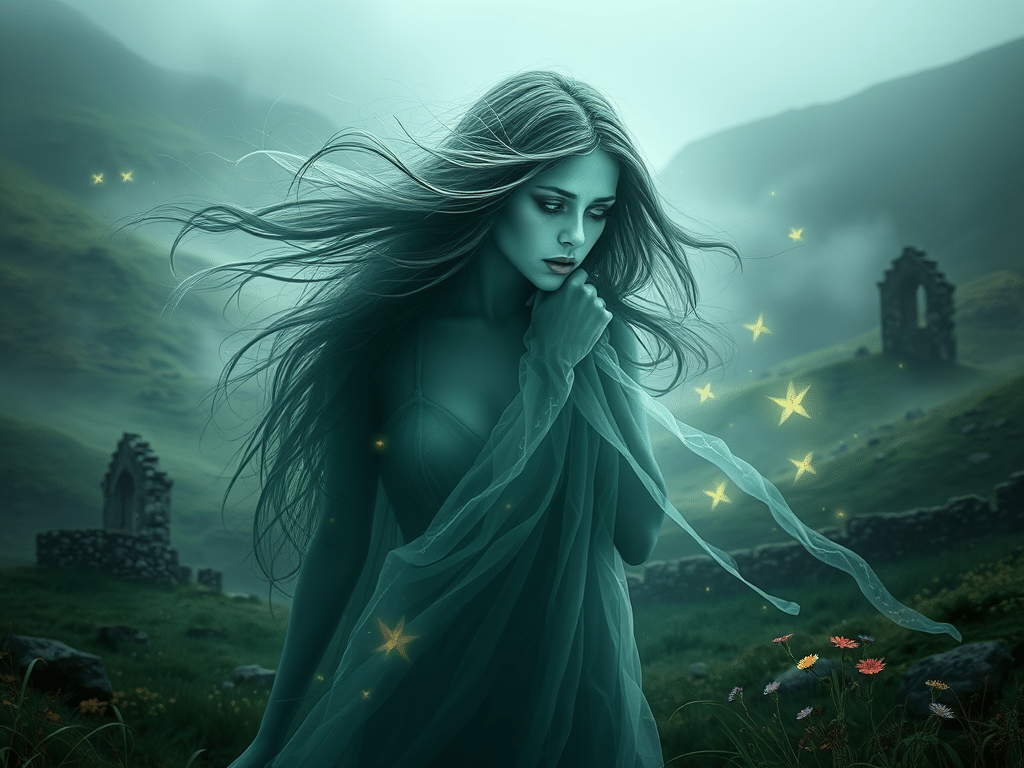
Portals are an important part of faerie folklore. Folktales often depict obscure portals to the faerie world, often found in scenic locations such as hills, woods, or prehistoric stone circles. People believe that these portals open under specific conditions or at specific times, allowing faeries to transition between their world and ours. Celtic mythology is full of tales like this, in which the Otherworld is a mystical realm that is accessible via these secret portals. People who come into contact with faeries frequently stumble onto these portals, imagine themselves in an otherworldly and magical place, and then, often with time warped, return to their own reality.
In the context of ghosts, portals are believed to be points of entry and departure for ghostly entities. Paranormal investigators sometimes postulate that these gateways are what cause high levels of paranormal activity at haunted sites. It is believed that these portals provide a conduit for communication between the living and the dead. For instance, throughout their investigations, some mediums and psychics report sensing or even seeing these portals, characterizing them as energy vortexes that spirits utilize to traverse between dimensions.
Bigfoot, the elusive cryptid, is another rare connection between portals and North American folklore. According to some experts and fans, Bigfoot is still very elusive, and sightings of it are rare because it travels through portals between different worlds or locales. People frequently use this theory to explain why tangible evidence of Bigfoot remains elusive despite numerous recorded encounters. According to this theory, portals would enable Bigfoot to emerge in isolated locations and disappear instantly, avoiding discovery and apprehension.
Science and Portals
The scientific world views the concept of portals through a different prism than the paranormal perspective. Physics describes a wormhole as a hypothetical space-time conduit that could shorten lengthy universe-wide travels. Scientists like Nathan Rosen and Albert Einstein propose these speculative structures as solutions to the general relativity equations. Although theoretically possible, the existence and stability of wormholes remain conjectural due to their lack of observation or experimental testing.
Quantum physics presents the concept of quantum entanglement, where particles can entangle and instantly change each other’s states, regardless of their distance. According to some academics, there may be a quantum hint to this phenomenon regarding a type of connectedness that resembles a “portal.” Still, this is a very theoretical and abstract topic of research.
Another sophisticated idea in theoretical physics is string theory, which suggests that there are more dimensions beyond the well-known three spatial dimensions and one temporal dimension. Should these additional dimensions be real, they might make it possible for “portals” or secret routes to connect various parts of space-time. But like quantum entanglement and wormholes, these concepts are still theoretical and outside the purview of contemporary experimentation.
Conclusion
Although the idea of portals piques interest in both paranormal and scientific contexts, the absence of difficult data guarantees that they will always be a source of fascination rather than an acknowledged scientific fact. The interaction of these two viewpoints blurs the distinctions between myth, mystery, and scientific investigation, hence piqueing interest and encouraging discovery.

Leave a Reply