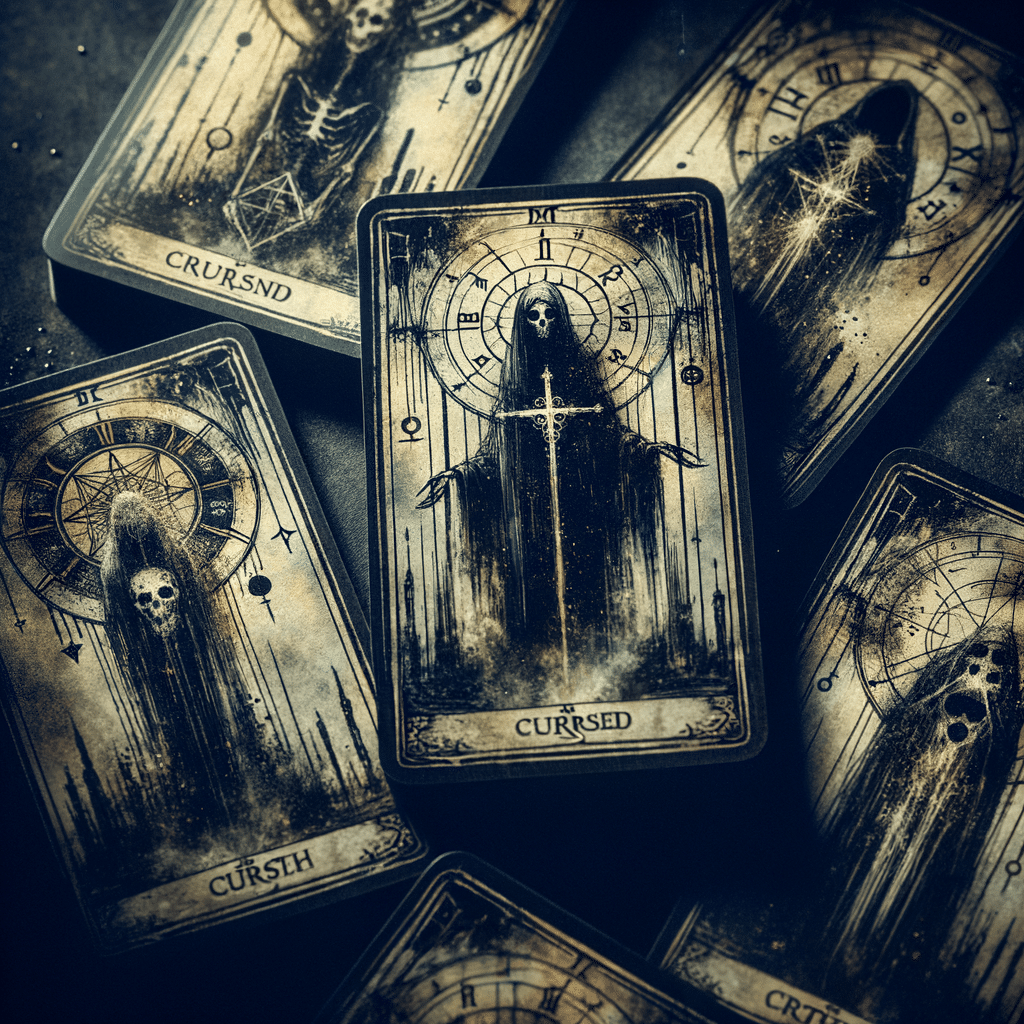
For a very long time, mystery and superstition have surrounded the tarot. Its dense symbolism and ancient origins have given it an air of the occult, which has contributed to its reputation as dark tarot. Throughout its long and illustrious history, a darker undercurrent has consistently linked the tarot to more evil rituals. This is despite the fact that many people presently consider tarot cards to be harmless tools for spiritual meditation or entertainment purposes involving fortune-telling.

Tarot Cards and Evil
The majority of academics believe that the Tarot may have originated in Italy during the Renaissance period, despite its actual origins being unknown. In the 15th century, decks with intricate illustrations began to appear among wealthy households. These early tarot decks likely served as a playful form of entertainment and divination. In spite of this, as the tarot became more well known throughout Europe, it began to acquire more mystical and arcane connotations, merging in with folk magic traditions, alchemy, astrology, and other occult belief systems (Decker & Dummett, 2013.)
By the end of the 18th century, the tarot had become deeply ingrained in the realm of the occult. Secret societies and self-proclaimed mystics were creating intricate symbolic interpretations of the cards for divination and ritual magic. Certain occult practitioners adopted the darker and more feared aspects of the tarot symbology, employing certain decks and cards for the purpose of hexes, curses, or attempts to commune with demonic beings.
Occult and esoteric traditions give origin to many of the symbols and iconography found in typical tarot decks, such as the Major Arcana cards, which include The Magician, The High Priestess, and The Devil (Wirth, 2013). These traditions were sometimes associated with witchcraft and pagan beliefs. The practice of divination and fortune-telling has been one of the most common applications of tarot cards throughout history. During times when witchcraft was investigated and punished, such as during the witch trials that took place from the 16th to the 18th century, tarot reading had the potential to be regarded as a sort of esoteric practice that was prohibited. It was consider dark tarot and evil.
Certain occult practices, such as ceremonial magic and ritual magic, incorporated the symbolism and iconography of the tarot cards. These rituals occasionally overlapped with folk magic traditions associated with witchcraft and intelligent people. Hermeticism, Kabbalah, alchemy, and other esoteric beliefs and practices had a resurgence of interest during the Renaissance period, which coincided with the rise in popularity of tarot cards. Cross-pollination of these concepts with tarot may have formed connotations with witchcraft. The Romani people, some of whom engaged in folk magic and fortune-telling and were often persecuted as supposed witches, are the subject of various ideas that suggest the Tarot may have originated from or been influenced by the Romani people (Sway, 1975).

Modern Views
Tarot usage for immoral purposes has persisted into modern times. It was common for dishonest con artists and con artists to use tarot cards as a tool to influence and take advantage of superstitious people. They would make claims that they could commune with evil powers or lift curses in order to coerce their victims into financial transactions (Maille, 2021). Accusations against certain fringe occult groups for using tarot symbology in rituals intended to summon or enslave terrible supernatural powers are even more terrifying.
The persistent stories and urban legends that surround tarot decks that are said to be cursed or haunted and that are loaded with evil energies are maybe the most unsettling phenomenon out there. Some tarot historians and collectors have said that they have acquired decks that appeared to bring with them streaks of adverse luck, weird phenomena, or an unpleasant presence. This is despite the fact that the vast majority of tarot experts consider such stories to be nothing more than pure fantasy. There is still a lot of strange talk about whether these supposedly cursed decks are really cursed because of focused evil intent and energies, the accidental discovery of layouts that mirror harmful esoteric symbology, or just people’s overactive imaginations.
Disinformation, sensationalism, and deeply ingrained cultural superstitions mostly form the foundation of current beliefs about the tarot’s alleged evil nature. Despite the tarot’s ancient roots and complex history associated with mysticism and the occult, these beliefs persist. A portion of this occurs as a result of religious conservatism, which holds that any kind of divination or occult practice is intrinsically sacrilegious or diabolical. Fundamentalist Christians’ beliefs, in particular, have perpetuated the notion that tarot is a devil’s device, designed to entice and deceive the faithful. The moral panic that occurred around the “satanic panic” of the 1980s played a significant role in intensifying this attitude (Panic, 2013).
A number of contemporary concerns over the tarot’s potentially malevolent nature originate from pure superstition or urban legends concerning “cursed decks.” Sensationalized stories about tarot users experiencing eerie phenomena or streaks of ill luck after acquiring particular decks have spawned creepypasta tales on the internet. Although the majority of people who are interested in tarot cards consider such claims to be fictions, they do contribute to the aura of mystery and potential danger that surrounds tarot cards in the common imagination.
Another factor that contributes to the perception of the Tarot as a malevolent tool is its association with witchcraft, paganism, and other forms of folk magic. The esoteric symbolism of the cards, as well as their historical use by occultists and mystics, have contributed to the perpetuation of the widespread misconception that the Tarot is intrinsically anti-Christian or a portal to the demonic. Both slasher films and horror clichés have exploited and heightened the significance of these tropes.
Conclusion
Although the tarot’s mysterious history likely prevents it from completely escaping its associations with the unpleasant and taboo, current perceptions are still evolving. The public widely accepts tarot as a risk-free method for creative self-exploration and achieving a healthy level of self-discovery. Persistent fears about the potential for evil in tarot cards reveal more about our attempts to overcome ancient superstitions than any hidden malicious intent.
The black tarot continues to be an object of morbid fascination and anxiety because of its persistent air of mystery and occult associations. This is despite the fact that the vast majority of people who are interested in tarot cards today consider them as instruments for introspection, self-discovery, and a symbolic metaphor for the journeys that people take in their lives. As is the case with many facets of the occult and the unknown, the door is still open for those individuals who are willing to allow their mind to roam towards more dark possibilities. Ultimately, it may be prudent to refrain from delving into the truths about the tarot’s most dire possibilities.
References
Decker, R., & Dummett, M. (2013). The History of the Occult Tarot. Prelude Books.
Maille, P. (2021). The Cards: The Evolution and Power of Tarot. Univ. Press of Mississippi.
Panic, S. (2024). The Devil in the Details. American Conspiracism: An Interdisciplinary Exploration.
Sway, M. (1975). Gypsies as a perpetual minority: a case study. Humboldt journal of social relations, 48-25.
Wirth, O. (2013). Tarot of the Magicians: The Occult Symbols of the Major Arcana that Inspired Modern Tarot. Weiser Books.


Leave a Reply