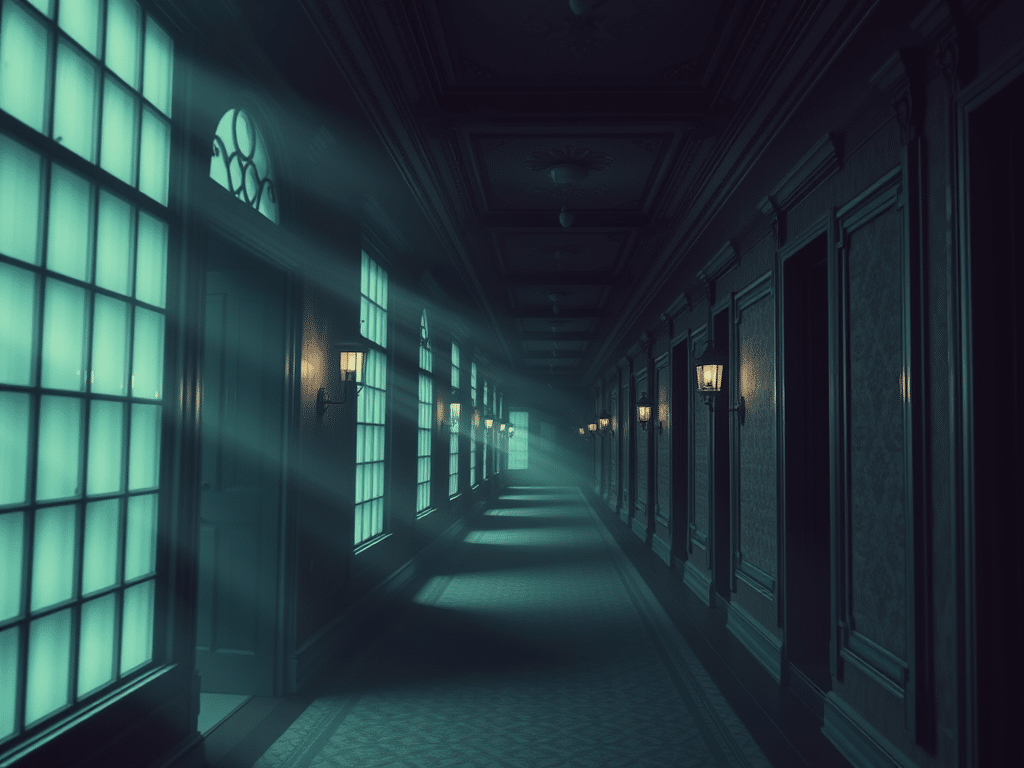
Ghosts and Hotels: Key Points
-
Hotels are temporary lodging establishments where countless human stories have unfolded, making them particularly associated with ghost stories and paranormal folklore.
-
Reported paranormal activity includes footsteps in empty hallways, doors opening on their own, cold spots, apparitions, and disembodied voices, most commonly in older hotels.
-
Famous haunted hotels include the Stanley Hotel in Colorado, the Hollywood Roosevelt Hotel with celebrity ghosts, and the Crescent Hotel in Arkansas, with similar examples worldwide.
-
Paranormal theories suggest traumatic events leave energetic imprints, while skeptics point to sleep paralysis, environmental factors, and the power of suggestion.
-
Haunted hotels have become profitable through ghost tours and paranormal packages, while also serving cultural functions by preserving local history.
-
The fascination with haunted hotels reflects how these liminal spaces make us receptive to unusual experiences and our complex attitudes toward death and history.

Introduction
Hotels are a special part of people’s lives because they are temporary homes for millions of travelers every year. These places can be anything from small roadside motels to immense historic buildings that have been around for hundreds of years and have seen many human stories unfold within their walls. Due to their constant presence of guests, emotional events, and sometimes poignant histories, hotels serve as ideal settings for ghost stories and other paranormal legends that provoke contemplation and blur the boundaries between the living and the dead.
Overview
To comprehend the prominence of hotels in ghost folklore, it is essential to examine the nature and societal role of hotels. A hotel is a business that offers guests a place to stay, usually for a short time, as well as a number of other services and amenities. Hotels can be small family-run businesses with only a few rooms or massive complexes with thousands of rooms, restaurants, conference rooms, and places to have fun. Hotels differ from private homes in that they serve as social hubs, host temporary spaces for personal dramas, and blur the boundaries between public and private life (Kermeen, 2024).
Because of their very nature, hotels are excellent places to report paranormal activity. Guests and staff have reported a wide range of strange things that can’t be explained. People often note they hear footsteps in empty hallways, doors that open and close on their own, and the feeling of being watched in guest rooms. People think they’ve felt cold spots in some places, seen lights flicker for no reason, and seen things move for no reason. Some witnesses say they had more dramatic experiences, like seeing full-bodied ghosts of people in period clothing, hearing voices or music coming from empty rooms, or feeling like they were being touched by invisible hands. Older hotels with long histories often experience these things, but even newer hotels have been known to host them.
Both the paranormal community and popular culture have numerous well-known stories about hotel ghosts. The Stanley Hotel in Estes Park, Colorado famously inspired Stephen King’s The Shining (1975). People say that the original owners, F.O. and Flora Stanley, still haunt the hotel, and their piano music and laughter can still be heard in the halls. The Hollywood Roosevelt Hotel in Los Angeles says it has a number of famous ghosts, such as Marilyn Monroe, who is said to show up in a mirror that used to hang in her favorite suite, and Montgomery Clift, whose ghostly trumpet playing is said to come from room 928. The Crescent Hotel in Eureka Springs, Arkansas, was built in 1886 and is known as “America’s Most Haunted Hotel.” It has many ghosts, including a nurse who worked there when it was a fake cancer hospital in the 1930s and a stonemason who fell to his death while building it.
International hotels also have their own ghosts and scary stories. People say that a Victorian doctor killed his wife on their honeymoon and then jumped out of a window at the Langham Hotel in London. They also say they saw a German prince jump out of a fourth-floor window. People claim that a woman who drowned in a nearby river haunts Ryokan Fukuju in Japan. She shows up in traditional clothes to guests late at night. The Fairmont Banff Springs Hotel in Canada has a bride who is said to have died falling down the marble stairs on her wedding day. People say they can still see her dancing in the ballroom in her fiery wedding dress. These stories are told in many cultures and on many continents, which suggests that people all over the world are interested in the idea that hotels can hold the spirits of people who died there (Parvis, 2008).
Theories
There are many different ideas about why strange things happen in hotels, from supernatural beliefs to psychological and environmental factors. People who believe in the paranormal say that traumatic events like murders, suicides, or sudden deaths can leave an energetic mark on a place, creating “residual hauntings” that play back like recordings. Some people say that the spirits of dead people stay in places where they had strong feelings or unfinished business. Hotels are one of those places where people have strong experiences. Some paranormal investigators think that the fact that people come and go from hotels creates a unique energy that draws or keeps spiritual activity going. Others think that the limestone and other building materials used in historic hotels can somehow store and release energy. Some other explanations say that electromagnetic fields, infrasound, or other environmental factors in old buildings can make people feel things that they think are ghostly encounters.
From an anthropological standpoint, belief in ghosts transcends mere superstition; it constitutes a substantial cultural phenomenon that influences communal narratives and individual identities. Baker and Bader (2014) say that belief in ghosts is common in many cultures, including modern Western ones. In these societies, younger people are especially interested in “ghost hunting” and stories about the supernatural as a way to meet new people. This evidence shows that hotels are often places where these beliefs take root, and guests interact with the ghost stories that are part of the hotel’s history. Eaton (2018) advances this discourse by introducing a narrative development process that demonstrates how the stories and shared experiences of a haunting are collaboratively created by guests and local lore, fostering a communal sense of belonging and experiential authenticity at these locations.
The term “hauntology,” as discussed by Lincoln and Lincoln (2015), also shows how ghosts can be used as symbols of past traumas and memories that won’t go away. This lets people and groups deal with social and historical problems through stories that include haunting as a theme. The research indicates that in a hotel setting, such narratives can modify a guest’s experience, converting the ordinary into the extraordinary through the evocation of these spectral tales.
Skepticism regarding hotel hauntings presents alternative explanations rooted in scientific and psychological frameworks. Sleep paralysis is a condition in which individuals awaken unable to move and frequently experience hallucinations. This phenomenon is especially prevalent in unfamiliar sleeping environments, such as hotel rooms, and may elucidate numerous ghostly encounters in bedrooms. Pareidolia is a psychological phenomenon that makes people see familiar patterns, especially faces, in random things. This phenomena could explain why people see ghosts in shadows or reflections. Carbon monoxide leaks, electromagnetic fields from old wiring, and infrasound from ventilation systems have all been shown to make people feel uneasy, see things that aren’t there, and feel like they are being watched without any paranormal reason. Furthermore, the influence of suggestion is potent. Guests who know that a hotel is haunted may be more likely to think that normal things are supernatural, and confirmation bias makes people remember the strange things that happened while forgetting the normal ones.

Impact
Hotel ghost stories have a big effect on culture and the economy in many ways. Many hotels have embraced their haunted reputations and offer ghost tours, themed rooms, and special paranormal investigation packages that draw in tourists and ghost fans who are willing to pay a lot of money. The haunted hotel business has become a niche market. For example, the Stanley Hotel makes a lot of money from its supernatural connections and hosts annual events based on paranormal themes. These ghost stories also serve important cultural purposes. They give communities local legends that help them feel connected to their history and sense of place, and they satisfy our deep psychological need for mystery and the idea that death is not the end. There are now a lot of TV shows, books, and movies about haunted hotels. Such activity has created a feedback loop: the more media attention a hotel gets, the more famous it becomes, which brings in more visitors looking for their own paranormal experiences.
The effects on the hotel industry are enormous, especially when it comes to making guests’ stays better and more enjoyable. Research in the hospitality sector underscores the pivotal role of service quality perceptions in shaping guest satisfaction and loyalty. For example, Pinho et al. (2025) say that guests often provide hotels high marks when they do a satisfactory job of including local stories in their services. Incorporating these eerie tales can distinguish hotels, particularly those situated in historically significant or reputedly haunted areas. This can make them more appealing to a small group of guests who are looking for adventure.
The phenomenon of hotel hauntings also prompts intriguing inquiries regarding memory, history, and the preservation of the past. Ghost stories can be like unofficial historical records, keeping the memory of people and events alive even if the details change over time. When hotels say they are haunted by people who died in historical tragedies, these stories ensure that guests learn about and talk about events like fires, murders, or epidemics that changed the building’s history. Some people say that making money off of ghost tourism can be disrespectful to the people who actually suffered, turning real human pain into entertainment. Hotels that advertise their haunted status must always contemplate the moral issues that come with balancing the need to protect history, honor the dead, and make money from supernatural interest (Mathe-Soulek, Aguirre, & Dallinger, 2016).
Conclusion
Whether or not you believe in ghosts, the fact that people are still interested in haunted hotels says a lot about human nature and how we feel about temporary spaces. Hotels exist in a space that is both public and private, as well as familiar and foreign. This in-between quality makes them psychologically resonant spaces where we feel both vulnerable and curious. The combination of being in a new place, being cut off from our usual support systems, and knowing that many other people have been in the same room creates a unique mental state that makes us more open to strange experiences and ideas. Ghost stories help people cope with the strange feelings they often have in hotels by turning vague unease into clear stories with characters and reasons.
The connection between hotels and ghost stories shows how complicated our feelings are about death, history, and the places we live. These stories endure because they fulfill various roles: they amuse us, link us to history, present the alluring prospect that consciousness endures after death, and convert mundane commercial structures into sites of intrigue and importance. Ghosts are now a big part of hotel culture worldwide, whether real, fake, or just a marketing gimmick. As long as people travel, sleep in strange beds, and think about the people who lived in the same rooms before them, hotels will always feel like places where the line between the living and the dead is thin. Every creaking floorboard and flickering light could be a sign of a supernatural event.
References
Baker, J. O. and Bader, C. D. (2014). A social anthropology of ghosts in twenty-first-century america. Social Compass, 61(4), 569-593. https://doi.org/10.1177/0037768614547337
Eaton, M. A. (2018). Manifesting spirits: paranormal investigation and the narrative development of a haunting. Journal of Contemporary Ethnography, 48(2), 155-182. https://doi.org/10.1177/0891241618756162
Kermeen, F. (2024). Ghostly encounters: True stories of America’s haunted inns and hotels. Hachette+ ORM.
King, S. (1977). The shining. Doubleday.
Lincoln, M. and Lincoln, B. (2015). Toward a critical hauntology: bare afterlife and the ghosts of ba chúc. Comparative Studies in Society and History, 57(1), 191-220. https://doi.org/10.1017/s0010417514000644
Mathe-Soulek, K., Aguirre, G. C., & Dallinger, I. (2016). You look like you’ve seen a ghost: A preliminary exploration in price and customer satisfaction differences at haunted hotel properties. Journal of Tourism Insights, 7(1), 1.
Parvis, S. (2008). Haunted Hotels. Bearport Publishing.
Pinho, T. R. R., Andrade, D. A. d. C., Ferreira, L. B., & Silva, G. G. W. M. d. (2025). Guest experience in the hotel industry and the practice of hospitality in the post-pandemic era. Applied Tourism, 9(2), 88-100. https://doi.org/10.14210/at.v9i2.20652
Leave a Reply