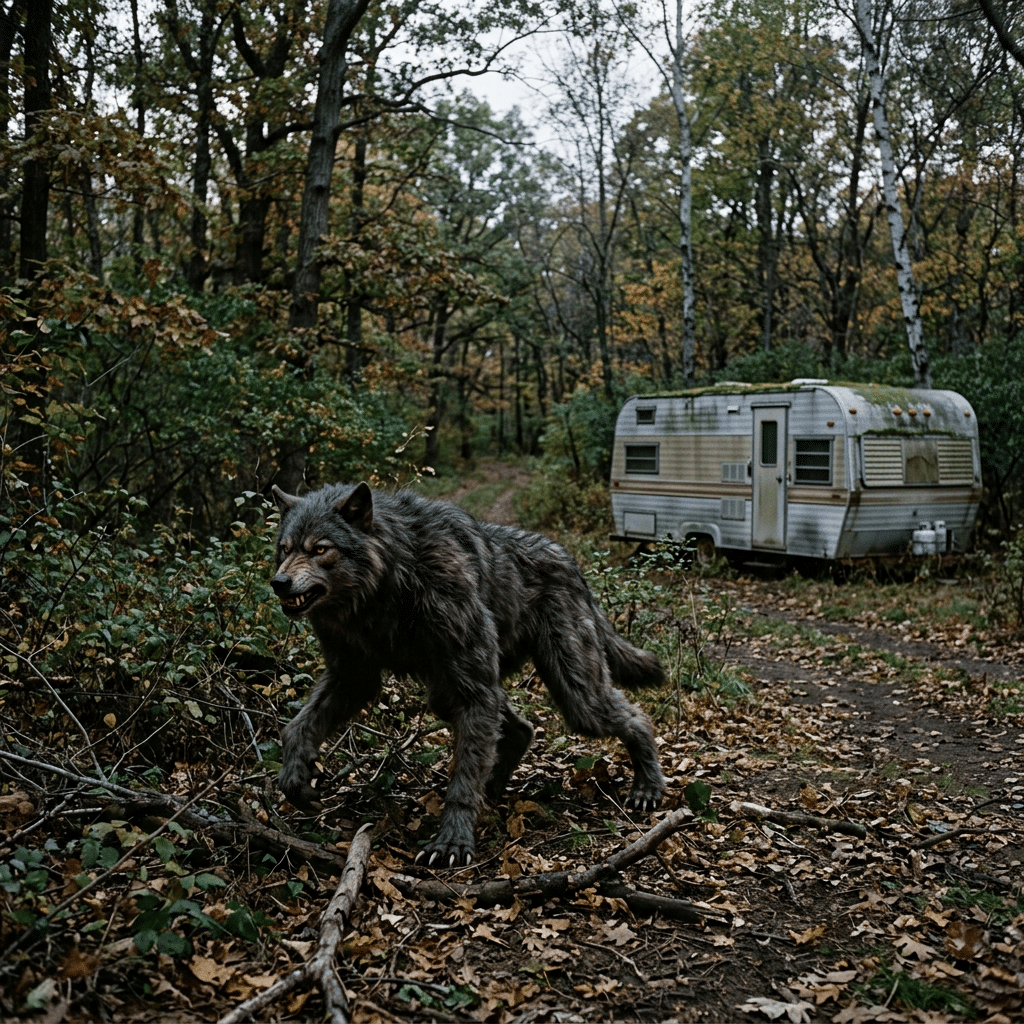
Brooklyn, Schuyler County, Illinois, is a little rural hamlet that became the center of one of the most meticulously recorded clusters of dogman cryptid encounters in the American Midwest. Between 2020 and 2021, numerous residents and visitors of a rural property in Brooklyn claimed ongoing and more intense encounters with enormous, bipedal, dog-faced beings. These experiences were carefully recorded through interviews with locals by archivists at Western Illinois University, creating an intriguing and very detailed study of dogmen as cryptids.

Dogmen as Cryptids
Dogmen are classified as cryptids, entities whose existence remains unverified by conventional science, although they are documented globally through eyewitness testimonies and folklore. Cryptozoology examines claims regarding unknown animals through empirical methods, with dogmen being one of the most remarkable and consistently reported types of cryptid in North America. They are generally characterized as colossal bipedal beings with pronounced canine traits, such as a short snout, pointed ears, and large eyes that frequently exhibit a yellow, orange, or red luminescence, alongside a robust humanoid physique enveloped in dark fur, capable of swift movement both upright and on all fours. In contrast to the werewolf of European legend, characterized as a person who metamorphoses during a full moon, the dogman is typically depicted as a stable, non-transforming physical being that amalgamates human form with canine traits. Documented heights vary from six to nine feet, and the creatures’ behavioral repertoire, as recounted by witnesses, encompasses whistling communication, strategic observation, seasonal activity patterns, and a propensity to approach human settlements with curiosity rather than immediate hostility (O’Connor, 2024a; O’Connor, 2025).
Chronicles of Cryptids in West Central Illinois
West central Illinois possesses a more extensive and diverse history of cryptid encounters than is generally acknowledged, featuring reports of both Bigfoot-like entities and dogmen throughout multiple counties in the area. Richard Mason, a taxidermist from Colchester in McDonough County, attributed his fascination with cryptids to a terrifying incident in the early 1980s in Pike County, close to the small town of Fish Hook. During this event, an extraordinarily loud and physically resonant sound disrupted the pre-dawn silence near his deer stand, which he later associated with Bigfoot vocalizations he encountered in a television documentary (O’Connor, 2024a). Subsequent years saw Mason catalog numerous encounter locations throughout the region, notably one at Argyle Lake in McDonough County, where a couple observed an eight-foot black entity chasing what they presumed to be a raccoon along a waterline adjacent to the boat ramp before it ascended the hillside and vanished. The following morning, Mason examined the site under drought conditions and discovered a walking stick and an arrowhead at the base of a large oak tree (O’Connor, 2024a). Track casts were retrieved from various sites throughout the region, including one from a squirrel hunting trail near Argyle Lake and another located north of Macomb, exhibiting discernible dermal ridges; both were subsequently donated to the Special Collections and Archives at Western Illinois University (O’Connor, 2024a). Mason got accounts from a woman in Hancock County who reported a family of Sasquatches observing her from behind trees and left three sets of tracks in single-file across her snow-covered yard before retreating from her residence in terror (O’Connor, 2024a). Mason received secondhand reports regarding a landowner south of Meridosia on the Illinois River who had obtained over 200 trail camera images of two separate entities: a large gray dominant male and a black individual, after they commenced hurling rocks and sticks at individuals on his property during a year of flooding (O’Connor, 2024a). Mason overheard farmers at a McDonald’s in Havana discussing two families of Bigfoot residing near Chandlerville, adjacent to Jim Edgar State Park, which encompasses approximately 35,000 acres of undisturbed habitat (O’Connor, 2024a). This composite image indicates that the river corridors, cave systems, and wooded bluffs in west central Illinois may offer a conducive habitat for the numerous big, unclassified monsters reported by independent witnesses throughout the region for decades.
The Case of Brooklyn, Schuyler County
The Brooklyn dogman case pertains to a rural property in Brooklyn, Schuyler County, located adjacent to a creek, an ancient forest, a cemetery, and a system of caves that witnesses assert to be the principal habitat of the creatures. Reports of strange noises at this location started as early as 2020 and have since grown to include physical interactions with the property’s structures. Entities have been seen approaching trailers and a camper during the night and early morning hours. Richard Mason, who was both a main witness and an unofficial investigator, used photos, track analysis, and a child’s drawing from the property to guess that the group was made up of five people. He identified what seemed to be a dominant male, a female, two juvenile twins, and an older juvenile, all standing between six and six and a half feet tall (O’Connor, 2024a; O’Connor, 2026). The property’s proximity to the LeMoyne River corridor was deemed crucial by Mason and others, as river systems and bottomland wood are often linked to cryptid activity in the area, offering both concealment and pathways for large animals traversing between habitats. Trail cameras positioned on the property ultimately recorded partial images of the entities; however, all five cameras were discovered deactivated one afternoon under circumstances inexplicable to the property occupants, suggesting a level of intelligence and situational awareness among the subjects (O’Connor, 2024a).
The interviews chronicling the Brooklyn case were carried out under the aegis of the Archives and Special Collections at Western Illinois University as a component of a formal oral history initiative. Dr. Michael Lorenzen, the University Archivist and a professor, acted as the principal interviewer in all sessions, contributing academic authority and a respectful, open-minded demeanor to discussions that could have been overlooked in less demanding environments. Bruce Ackers, a Senior Library Associate at WIU, supported Dr. Lorenzen during the project by documenting notes, posing additional inquiries, and managing the incorporation of donated physical evidence, such as plaster casts, photographs, and hair samples, into the university’s permanent collection (O’Connor, 2024a; O’Connor, 2025). Recorded sessions occurred on several dates in 2021, specifically May 4th, May 10th, and October 17th. The transcripts were subsequently published with minimal editing on the Connect Paranormal Blog, thereby rendering the accounts available to a wide public audience while still being preserved in an institutional archive. The formal academic support for this documentation endeavor imparts an uncommon level of credibility to the history of paranormal and cryptid research, ensuring that the testimony will remain accessible to future scholars, irrespective of the ultimate resolution of the broader inquiries concerning dogmen.

Witnesses and Their Accounts
Donald Jackson, a 60-year-old Brooklyn resident, was one of the initial witnesses questioned for the project, and his testimony was remarkable for the numerous contacts he reported. He reported observing entities he directly likened to werewolves almost weekly, estimating over a dozen encounters over several weeks, consistently throughout the late-night hours between one and three a.m. on clear evenings (O’Connor, 2025). Jackson characterized the beings as almost six feet in height, possessing authentic black hair, and observed that his dogs seemed to repel the entities when he took them outdoors, implying that the animals could sense the presence of the dogmen and respond accordingly. He remembered a peculiar and profoundly disconcerting whistling sound that the entities used for communication, unlike anything he had encountered before, and which he was unable to replicate when Bruce Ackers prompted him during the interview. He observed that the creatures positioned themselves near trees with their arms elevated, seemingly inquisitive about their environment. Although he recognized the encounters were unsettling, he affirmed that the creatures did not pose a direct threat during any of his observations (O’Connor, 2025).
Maya Harper, a 24-year-old woman residing at the Brooklyn property for roughly six or seven months during her interview, recounted a series of encounters that commenced with inexplicable rustling around the trailer and intensified to increasingly concerning occurrences. An especially alarming incident occurred when the rear of her trailer was violently shaken and propelled while she was in her bedroom at night, prompting her to hasten to her mother in the front of the house (O’Connor, 2025). She additionally recounted observing the outlines of the entities along the treeline, depicting them as colossal and incongruous with any recognized species. Harper and her mother saw a remarkable incident while returning from the hospital late one night, as their headlights revealed brilliant yellow eyes at the rear of the house; she observed that on previous occasions, the animals’ eyes had appeared red instead of yellow. She noted that the property dogs would invariably decline to venture past a specific spot in the yard while the creatures were there, perhaps instinctively cognizant of a boundary occupied by the dogmen (O’Connor, 2025).
Richard Mason, a 58-year-old taxidermist from Colchester, Illinois, referred to in the source material as the late Richard Mason, was pivotal in the investigation of the Brooklyn dogman case, contributing substantial field expertise to the endeavor. His friend Tammy, a resident of the Brooklyn property, initially reached out to him with a frantic late-night message indicating that the property was under siege, with entities striking the camper walls, frequently spotted in the yard, and one noted peering into a bathroom window situated seven and a half feet above the ground (O’Connor, 2024a; O’Connor, 2026). Mason found muddy fingerprints on the outside wall of the trailer. The marks were about a foot wide and made four parallel lines, which were much wider than any human hand. Additionally, tracks were evident in the tall grass, with depressions indicating that the creatures had rested in positions that afforded them a clear view of the property (O’Connor, 2024a). He effectively cast a sizable footprint found adjacent to a gnawed asparagus plant in the garden, which he subsequently recognized as possibly belonging to one of the juvenile twins based on its dimensions and the physical evidence collected during following visits. Following a consultation with researcher Wes and a meticulous analysis of the photographs and the child’s drawing created during a notably vigorous night, Mason determined that the Brooklyn entities were dogmen rather than Bigfoot, a reclassification prompted by their pointed ears, facial morphology, and overall physique (O’Connor, 2024a). He posited that a local Bigfoot population served as a mitigating influence on the dogmen’s possible hostility towards humans, a perspective he employed to dissuade the apprehensive residents from harming the creatures, contending that such actions would merely provoke retaliation from the group (O’Connor, 2024a). In a distinct hunting event in 2018 on timberland west of Plymouth in Hancock County, Mason and his son encountered a series of wood knocks followed by nonsensical vocalizations, often referred to as Sierra calls, which seemed to encircle his son’s tree stand during the early darkness of opening morning. When Mason subsequently texted to inquire if his son felt frightened, the young man responded that he saw no cause for fear while seated in a tree with 12-gauge slugs (O’Connor, 2024a; O’Connor, 2026).
Russ Egnew, a 51-year-old individual whose camper was situated around 20 feet from Brandy Snyder’s trailer on the Brooklyn site, had one of the most vivid first claims of a straight dogman encounter. On a summer evening at dusk, a friend visiting Egnew observed an unusual figure leaning against a nearby tree. Upon inspection, Egnew discerned a large bipedal entity resembling a canine, characterized by full body hair, pointed ears, and an approximate height of seven feet. Once the creature became aware of Egnew’s observation, it swiftly retreated into a nearby ravine on all fours (O’Connor, 2024b). Egnew recounted later evenings characterized by whistling sounds that seemed to encircle the campsite, and he described observing silhouettes traversing six-foot-tall grass, rising to peer over the blades before retreating, a behavior he compared to playing peekaboo. He approximated the largest male to be between seven and a half and eight feet tall, weighing over 370 pounds, and consistently described the creatures as inquisitive rather than hostile, emphasizing that he had spent numerous nights alone on the property at all hours without ever feeling physically threatened (O’Connor, 2024b). He recounted the disconcerting experience of traversing in darkness while perceiving a presence walking beside him, halting in tandem with his movements, accompanied by subdued grunting noises. He juxtaposed the dogmen’s intimidating visage with his interpretation of their inherently nonviolent disposition towards the humans on the premises. In a distinct account from Ohio, Egnew recounted an inadvertent encounter with a diminutive Bigfoot-like entity, approximately four to five feet in height, in a cemetery near Steubenville while maneuvering his vehicle one evening; the creature emerged from behind a tombstone, regarded him and his companion with an unwavering gaze, and subsequently retreated to a nearby tree, an incident that ignited his enduring fascination with cryptid research (O’Connor, 2024b).
Brandy Snyder, a 34-year-old inhabitant of the Brooklyn residence, recounted how the dogman activity had increasingly become more invasive over time, adversely impacting the daily well-being of all residents on the premises. She described the first occurrence of the encounters as a series of whistles moving from one side of the trailer to the other, suggesting synchronized movement, before ending with a forceful impact against the structure that shook the entire trailer and caused the household to flee outside (O’Connor, 2024c). During a notable early encounter, which she shared with Russ Egnew, she witnessed a creature approximately eight to nine feet tall leaning against a tree. It was covered in black fur and possessed orange eyes, pointed ears, and a robust muscular physique before it departed when Egnew entered to fetch a flashlight. Over time, tangible evidence of the creatures’ presence amassed, including a discarded couch that was shredded shortly after being placed outside, with its cushions dragged across the yard into the woods; scratch marks on the trailer’s exterior that emerged overnight; persistent scraping sounds on window screens that ultimately compelled her mother to forsake her bedroom; and fresh deer carcasses discovered in a neighboring yard on several occasions (O’Connor, 2024c). Snyder recorded a distinct seasonal pattern in the activity, noting the creatures’ complete absence during winter, their return in spring, and their sustained activity throughout the warmer months, occurring nearly every night. She found this pattern perplexing, as colder months would ostensibly impose greater hunger pressures on large predators. She described a foul odor linked to the creatures, resembling a mixture of decaying flesh, damp canine, and skunk. She identified the cave systems adjacent to the cemetery at the end of the property’s gravel road as the probable source of both the odor and the creatures’ daily activities (O’Connor, 2024c).
Tammy, whose last name is absent from the researched sources, was the principal occupant of the Brooklyn property who initially informed Richard Mason of the activities there and whose family became the focal point of the earliest interactions. She messaged Mason late one night in a state of palpable fear, informing him that the property was under siege and detailing creatures striking the camper walls, appearing repeatedly in the yard, and one observed peering through the bathroom window at a height of seven and a half feet (O’Connor, 2024a; O’Connor, 2026). On that same night of heightened activity, her daughter, deeply terrified by her observations, created a drawing of one of the creatures that significantly impacted Mason’s analysis, as its portrayal of pointed ears was crucial to his reclassification of the entities from Bigfoot to dogmen (O’Connor, 2024a). Mason recorded that Tammy eventually vacated the Brooklyn property prior to completion of the interviews and opted not to have her full name publicly linked to the case, choosing to be absent from any published documentation. He observed that the plaster cast of the toe print obtained from the asparagus garden was provided to Tammy, along with duplicates of all images captured throughout the investigation, and that her daughter continued to reside in the Rushville region following Tammy’s departure (O’Connor, 2024a).
Red, a friend of the Brooklyn property tenants whose full name is not disclosed in the sources, is recognized as an extra witness to one of the most vividly recounted instances in the entire case. During a bonfire gathering, the group noticed a creature peering into the bathroom window from a height of seven and a half feet. When Red got up from his seat by the fire, the creature quickly dropped to all fours and ran around the trailer’s corner (O’Connor, 2024a; O’Connor, 2026). This scenario is consistently detailed in two distinct interview accounts, by Richard Mason in his primary interview and reiterated in the wood knocks and camper attack piece, thus providing further corroboration across sources. The movement of Red and the creature’s prompt retreat illustrate the dogmen’s heightened sensitivity to human actions and their ability to swiftly evaluate a shifting scenario.
Collectively, the reports indicate that the dogman activity at the Brooklyn, Schuyler County property exhibits a regular behavioral pattern maintained over a prolonged duration and corroborated by numerous independent witnesses. The creatures primarily engaged through observation, repeatedly approaching the property to monitor the activities of its human inhabitants, with specific and recurring interest in bonfires, cookouts, and other social gatherings that produced noise, light, and food aromas (O’Connor, 2024a; O’Connor, 2024b; O’Connor, 2024c; O’Connor, 2025). Physical encounters with the buildings involved shaking and swaying trailers, striking walls and camper sides, scratching the exterior with markings significantly broader than human hands, and observing through windows at heights over seven feet without any standing platform. The creatures exhibited a systematic whistling communication, and their strategy of diverting human attention to one individual while others maneuvered indicated a coordinated collective intelligence functioning throughout the area (O’Connor, 2024a; O’Connor, 2024b). Despite prolonged physical interaction with the property and its inhabitants over several months, no individuals were directly harmed, and no dogs were damaged, a pattern that prompted numerous witnesses to deduce that the animals were inherently inquisitive rather than predatory in nature. Physical evidence gathered at the location, comprising plaster casts of a substantial toe print and a Bigfoot track, extensive scratch marks, hair samples retrieved from elevated tree heights, and trail camera images depicting partial body profiles, has been recorded, with some portions donated to the permanent archival collection at Western Illinois University (O’Connor, 2024a).
Conclusion
The Brooklyn, Schuyler County dogman case is one of the most thoroughly documented examples of prolonged cryptid activity in Illinois history, notable for the convergence of numerous independent witnesses, consistent physical descriptions among them, and the formal academic framework that safeguarded the accounts for future reference. Numerous residents and visitors to the property reported creatures of nearly identical size, physical characteristics, and behavioral patterns, exhibiting no discernible coordination. The archival efforts undertaken by Dr. Lorenzen and Bruce Ackers guarantee that these accounts will be preserved as formal institutional records rather than mere informal rumors. The dogmen of Brooklyn may signify an unidentified biological species, a misidentification of familiar animals under atypical conditions, or a phenomenon that defies easy classification. This case prompts legitimate and unresolved inquiries regarding the potential inhabitants of the creek bottoms, cave systems, and ancient timbered lowlands of west central Illinois (O’Connor, 2024a; O’Connor, 2024b; O’Connor, 2024c; O’Connor, 2025; O’Connor, 2026). Brooklyn, a modest and relatively obscure village, has, via this documented testimony, attained true relevance in the ongoing endeavor to comprehend what, if anything, exists at the periphery of the known natural world in the American Midwest.The Brooklyn, Schuyler County dogman case stands as one of the most extensively documented instances of sustained cryptid activity in Illinois history, remarkable for the convergence of multiple independent witnesses, consistent physical descriptions across those witnesses, and the formal academic infrastructure that preserved the accounts for posterity. Multiple residents and visitors to the property described creatures of nearly identical size, physical appearance, and behavioral patterns without apparent coordination, and the archival work led by Dr. Lorenzen and Bruce Ackers ensures these testimonies will endure as a matter of institutional record rather than informal rumor. Whether the dogmen of Brooklyn represent an undiscovered biological species, a misidentification of known animals under unusual circumstances, or something more difficult to classify, the case raises genuine and as yet unanswered questions about what may inhabit the creek bottoms, cave systems, and old-growth timbered bottomlands of west central Illinois (O’Connor, 2024a; O’Connor, 2024b; O’Connor, 2024c; O’Connor, 2025; O’Connor, 2026). Brooklyn, a small and largely unknown community, has through this documented body of testimony become a place of genuine significance in the ongoing effort to understand what, if anything, moves at the margins of the known natural world in the American Midwest.
References
O’Connor, J. (2024a, December 5). Bigfoot and dogmen in west central Illinois: Richard Mason interview. Connect Paranormal Blog. https://connectparanormal.net/2024/12/05/bigfoot-and-dogmen-in-west-central-illinois-richard-mason-interview/
O’Connor, J. (2024b, December 9). Dogmen of Brooklyn, Illinois: An interview with Russ Egnew. Connect Paranormal Blog. https://connectparanormal.net/2024/12/09/dogmen-of-brooklyn-illinois-an-interview-with-russ-egnew/
O’Connor, J. (2024c, December 20). Werewolves in west Illinois: Brandy Snyder’s encounter. Connect Paranormal Blog. https://connectparanormal.net/2024/12/20/werewolves-in-west-illinois-brandy-snyders-encounter/
O’Connor, J. (2025, January 6). Dogmen encounters: Brooklyn’s werewolf tales. Connect Paranormal Blog. https://connectparanormal.net/2025/01/06/dogmen-encounters-brooklyns-werewolf-tales/
O’Connor, J. (2026, April 11). Bigfoot encounter: Wood knocks, gibberish & camper attack! Connect Paranormal Blog. https://connectparanormal.net/2026/04/11/bigfoot-encounter-wood-knocks-gibberish-camper-attack/




Leave a Reply