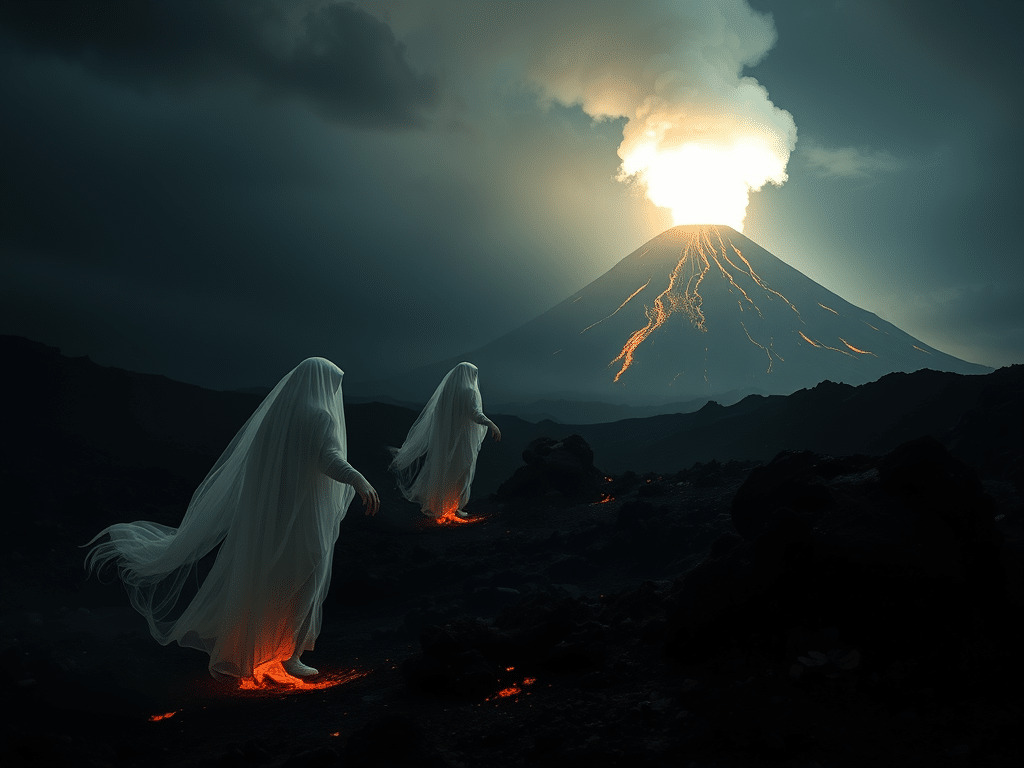
Ghosts and Volcanoes: Key Points
-
Ghosts are believed to be spirits of deceased individuals that manifest through apparitions, sounds, or unexplained presences, representing a universal human tendency to perceive experiences beyond the material realm.
-
Paranormal volcanoes are geological sites where supernatural activity allegedly occurs, with famous examples like Mount Vesuvius, Kilauea, and Mount Fuji accumulating centuries of ghost stories.
-
The connection between ghosts and volcanoes stems from the tragic loss of life during eruptions and the otherworldly appearance of volcanic landscapes that evoke mystery and fear.
-
Some theories about ghostly encounters say that fear can have psychological effects, that electromagnetic fields from geological activity can change how the brain works, or that volcanic gases can cause hallucinations.
-
Cultural traditions have long viewed volcanoes as dwelling places of gods or spirits, with beliefs like the Hawaiian goddess Pele blending divine forces with ghostly manifestations.
-
Ghost-volcano connections influence modern tourism, literature, and scientific inquiry while revealing humanity’s need to locate meaning in tragedy and mystery in powerful natural forces.

Introduction
The connection between supernatural events and geological processes has long fascinated people, especially the link between ghosts and volcanoes. Across the ages, civilizations have spun stories of ghostly apparitions appearing near volcanoes. This story has resulted in a vibrant collection of legends, linking the supernatural realm of spirits with the Earth’s fiery heart. This essay explores the nature of ghosts, examines the idea of paranormal volcanoes, and investigates the theories and cultural impacts that arise when these two mysterious phenomena interact.
Overview
Ghosts are commonly understood as the spirits or appearances of people who have died, appearing in the physical world. They often show up as transparent figures, shadowy shapes, or unexplained presences. These entities are typically associated with specific places, physical objects, or unresolved emotional ties from their past lives. Accounts from those who’ve experienced these events describe a range of eerie occurrences. These include sudden drops in temperature, strange noises, objects seemingly shifting on their own, and direct sightings that challenge established scientific understanding. The belief in ghosts is a widespread phenomenon, found in many cultures and places. The phenomenon indicates that individuals universally possess an inherent inclination to perceive and comprehend experiences transcending the physical realm (Roland, 2022).
People claim that supernatural events occur near paranormal volcanoes, regardless of whether they are currently erupting. Rumors suggest that these geological formations harbor a unique spiritual energy. Witnesses have described ghostly apparitions, strange lights, disembodied voices, and intense feelings of either terror or wonder. They assert that the inherent risks of the volcanic landscape cannot fully explain these experiences. Mount Vesuvius in Italy, Kilauea in Hawaii, and Mount Fuji in Japan have all been the subject of ghost stories and supernatural tales for many years (Cashman & Cronin, 2008). The history of many volcanoes, including deadly eruptions that have caused many deaths, creates a story that supports these paranormal claims.
Historically, people have often viewed volcanoes as divine symbols or as portals to a supernatural realm. In many cultures, volcanic activity is often considered a sign of divine communication or a warning from gods. Consider Mt. Baekdu, straddling the border of North Korea and China. Its eruptions have long been tied to a host of spiritual and mystical beliefs. Reports of unusual atmospheric conditions and strange sightings related to the volcano have led to the belief that these observations have a meaning beyond just natural events (Yun et al., 2023). These occurrences support the idea that volcanoes are more than just geological features; they are also deeply connected to cultural identity and religious beliefs.
Several factors combine to link ghosts and volcanoes, making volcanic areas particularly prone to supernatural interpretations. The devastating toll of volcanic eruptions mirrors the circumstances that give rise to ghost stories. When people die unexpectedly and violently, it’s often thought that their spirits become stuck, unable to move on. The striking and otherworldly qualities of volcanic landscapes, marked by sulfurous fumes, unusual geological features, and unpredictable eruptions, naturally evoke feelings of mystery and fear. These landscapes then prime human perception to consider supernatural explanations. Furthermore, many ancient cultures considered volcanoes to be homes for gods or gateways to the underworld. This gave them a spiritual significance that still affects modern paranormal beliefs.

Theories
Several theories attempt to point out the prevalence of ghostly encounters near volcanoes, ranging from purely psychological to pseudo-scientific explanations. One psychological theory suggests that the heightened emotional state caused by volcanic environments, combined with cultural conditioning and expectations, makes witnesses more likely to interpret unclear sensory experiences as supernatural. Another theory suggests that electromagnetic fields, which are created by geological processes like magma movement and tectonic stress, could affect how the human brain works. The result could potentially lead to hallucinations or changes in consciousness. Certain researchers have posited that volcanic gases, especially carbon dioxide and sulfur compounds, could potentially induce subtle hypoxic states or other neurological effects, thereby playing a role in the phenomenon of paranormal experiences.
Cultural and historical theories often connect ghosts and volcanoes. Indigenous traditions and ancient myths, which view these mountains as either sacred or cursed, heavily influence these theories. In Hawaiian culture, the volcano goddess Pele is said to appear as a ghostly woman near Kilauea. She represents both the divine force of creation and the spirits of those who have died in the volcano. Roman writings tell of the souls of those who died in Pompeii and Herculaneum, victims of Mount Vesuvius’s fury. These spirits, it was said, roamed the desolate places, foretelling more calamities to come. These cultural stories serve two main purposes. They explain paranormal events and help people cope with shared trauma. At the same time, they show respect for natural forces that are beyond human control.
Many cultures often personify and accord spiritual importance to volcanoes. In Javanese mythology, for example, the volcano Merapi is considered more than just a geological feature. The local people often refer to it as a “grandparent,” suggesting they see it as a living being. This anthropomorphism reveals a fundamental conviction that volcanic eruptions constitute a component of a celestial life cycle, thereby linking the cultural identity of local populations with their comprehension of geological phenomena (Yusrifa & Danugroho, 2022). These spiritual beliefs show how myths help us understand natural disasters. They provide a way to make sense of these events and also support cultural strength during difficult times.
Ancient oral traditions about Merapi also emphasize the connection between volcanic activity and local earthquakes, highlighting a regional understanding of how natural hazards are interconnected. These local legends serve to communicate these dangers and educate communities about volcanic activity. They act as an ancient record of hazard knowledge, which helps with disaster preparedness and reducing risk (Troll et al., 2021). The interaction between folklore and scientific geological observations strengthens cultural practices and supports community resilience in the face of natural disasters.
In contrast, ghost stories often center on themes of memory and the lasting impact of past injustices. Toni Morrison’s work explores the idea of ghosts as representations of unresolved historical trauma. Instead of using traditional supernatural elements to create fear, Morrison’s ghostly figures represent how the past continues to affect the present (Troll et al., 2021). This approach highlights how ghosts act as carriers of shared memory, reflecting the complex cultural effects of trauma, including those caused by natural disasters.
The connection between volcanic activity and ghost stories suggests a broader cultural tendency to combine the physical and spiritual worlds. Many cultures frequently associate mythical beings and spirits with landscapes shaped by past geological events. These beings serve as important narrative elements, connecting communities with their histories and the natural world. Geological formations in Vanuatu are believed to be associated with spirits that have transformed into stone. This procedure creates a physical representation.
The connections between ghost volcanoes and modern society have a wide-ranging impact, influencing tourism, literature, scientific research, and the preservation of cultural heritage. Volcanic sites, often linked to the paranormal, attract ghost hunters, paranormal investigators, and curious tourists. This activity creates economic opportunities for local communities, but it can also unintentionally undermine the spiritual beliefs of indigenous peoples. These places have fueled a wealth of fiction, horror movies, and documentaries, all of which grapple with the unsettling blend of natural catastrophe and the supernatural. The ongoing debate between those who are skeptical and those who believe has also led to important scientific research. This research explores the psychological and environmental factors that could explain paranormal experiences. As a result, our understanding of human perception and how geological environments affect consciousness has improved.
Conclusion
The connection between ghosts and volcanoes ultimately reveals more about human nature than about the supernatural or geological processes themselves. These spectral experiences, regardless of their nature as authentic spiritual occurrences, psychological projections, or misreadings of natural events, underscore humanity’s persistent inclination to seek significance amidst adversity and to ascribe mystery to the potent forces that govern our existence. The stories we tell about volcanoes that are said to be haunted connect our scientific understanding of the Earth’s geology with our emotional and spiritual responses to death, danger, and the unknown. Volcanoes, with their capacity to both terrify and fascinate, will probably continue to serve as the backdrop for ghost stories. These tales allow us to grapple with our connection to nature’s most potent and destructive forces.
References
Cashman, K. V., & Cronin, S. J. (2008). Welcoming a monster to the world: Myths, oral tradition, and modern societal response to volcanic disasters. Journal of volcanology and geothermal research, 176(3), 407-418.
Roland, P. (2022). Hauntings: Unexpected True Tales of the Paranormal. Arcturus Publishing.
Schmudde, C. E. (1992). The haunting of 124. African American Review, 26(3), 409. https://doi.org/10.2307/3041913
Troll, V. R., Deegan, F. M., & Seraphine, N. (2021). Ancient oral tradition in central java warns of volcano–earthquake interaction. Geology Today, 37(3), 100-109. https://doi.org/10.1111/gto.12350
Yun, S., Lee, J., Chang, C., & Oppenheimer, C. (2023). A re-assessment of historical records pertaining to the activity of mt. baekdu (paektu, tianchi) volcano. Geoscience Letters, 10(1). https://doi.org/10.1186/s40562-023-00286-7
Yusrifa, F. and Danugroho, A. (2022). Regional resilience in post-disaster recovery efforts of merapi eruption based on local wisdom in sleman regency. Jurnal Sosiologi Dialektika, 17(2), 159-171. https://doi.org/10.20473/jsd.v17i2.2022.159-171

Leave a Reply